Arlo cameras are a popular choice for home security, offering a blend of wireless convenience and advanced features. But are Arlo cameras truly good enough for your needs? This in-depth guide explores their performance, features, and value proposition, helping you decide if they're the right fit for comprehensive home protection in 2025-26.
What Are Arlo Cameras?
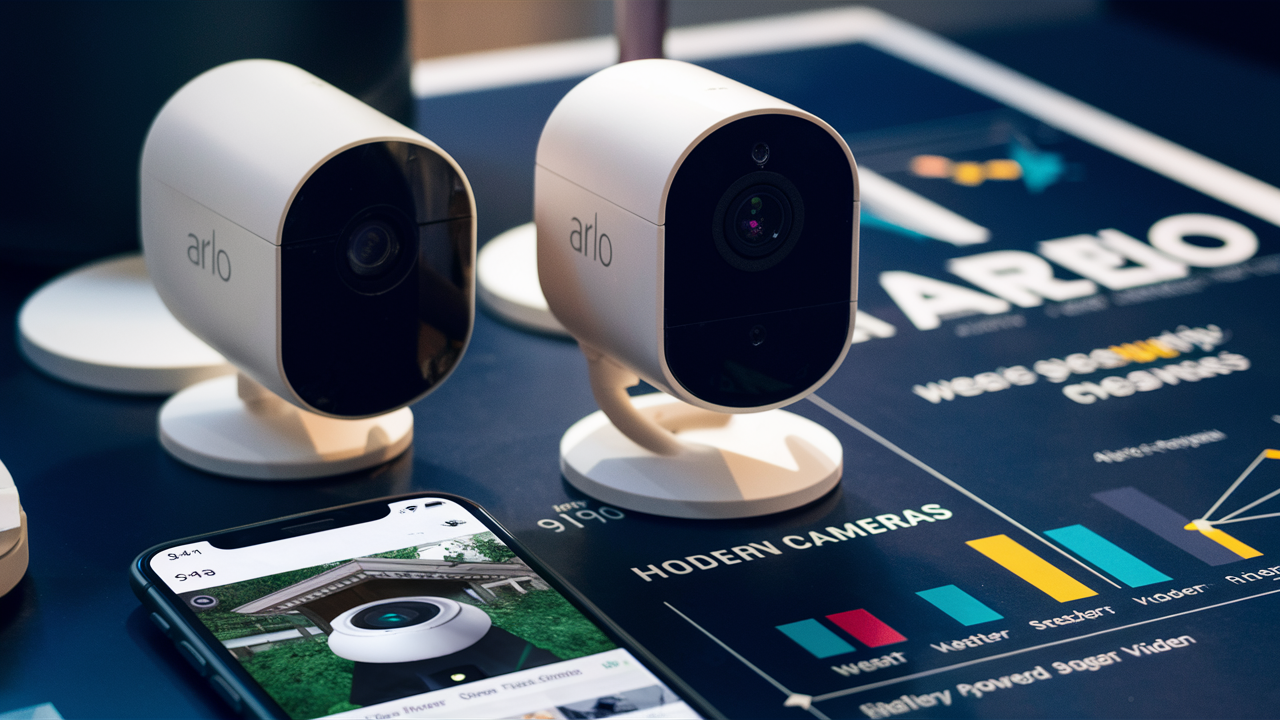
Arlo, a brand under Netgear, has established itself as a prominent player in the smart home security market. Their core offering revolves around a range of wireless, weather-resistant security cameras designed for both indoor and outdoor use. What sets Arlo apart is its emphasis on wire-free installation, allowing users to place cameras virtually anywhere without the hassle of running power cables. This flexibility is powered by rechargeable batteries, a key selling point for those seeking discreet and easy-to-deploy security solutions. Arlo cameras connect to a base station (in most models) or directly to your Wi-Fi network, feeding video streams and alerts to the Arlo mobile app.
The brand caters to a wide spectrum of users, from DIY enthusiasts who want a simple setup to homeowners seeking advanced features like 4K resolution, color night vision, and integrated spotlights. In 2025-26, Arlo continues to innovate, focusing on AI-powered detection, enhanced cloud storage options, and seamless integration with other smart home ecosystems. Understanding the fundamental design and philosophy behind Arlo cameras is the first step in evaluating their effectiveness and determining if they meet the evolving demands of modern home security.
Key Features and Technologies
Arlo cameras are packed with features designed to provide comprehensive security and user convenience. These technologies are crucial for understanding their performance and value.
Video Quality and Resolution
Arlo offers a range of resolutions, with many of their flagship models boasting 2K or even 4K HDR video. This ensures crystal-clear footage, allowing for detailed identification of individuals, vehicles, and objects. Higher resolutions are particularly beneficial for outdoor cameras where capturing fine details from a distance is essential. HDR (High Dynamic Range) further enhances video quality by balancing bright and dark areas, reducing blown-out highlights and deep shadows, which is critical for consistent visibility in varying lighting conditions.
Night Vision Capabilities
Beyond standard infrared night vision, Arlo has been a pioneer in offering color night vision. This feature uses ambient light or integrated spotlights to illuminate the scene, producing color footage even in low-light conditions. Color night vision significantly improves the ability to identify details like clothing color or distinguishing features of an intruder, which is often lost in traditional black-and-white infrared footage. For 2025-26, the clarity and range of their color night vision continue to be refined.
Field of View
The field of view (FOV) determines how wide an area a camera can capture. Arlo cameras typically offer wide-angle lenses, ranging from 130 to 180 degrees, depending on the model. A wider FOV means fewer cameras are needed to cover a large area, reducing installation costs and complexity. This is a significant advantage for monitoring expansive yards or multiple entry points.
Two-Way Audio
All Arlo cameras feature built-in microphones and speakers, enabling two-way communication. This allows users to speak with visitors, delivery personnel, or even deter potential intruders remotely via the Arlo app. The audio quality has seen consistent improvements, with noise reduction technologies enhancing clarity.
Motion Detection and Smart Alerts
Arlo cameras utilize advanced motion detection algorithms. Many models offer customizable motion zones, allowing users to focus detection on specific areas and ignore irrelevant movement (like passing cars or swaying trees). In 2025-26, Arlo's AI capabilities are further enhanced, offering sophisticated detection for people, packages, vehicles, and animals. This leads to more accurate and actionable alerts, reducing false alarms and ensuring users are notified of genuinely important events.
Weather Resistance
Designed for the rigors of outdoor environments, Arlo cameras are typically IP65 or IP67 rated, meaning they are protected against dust and water ingress. This weatherproofing ensures reliable operation in rain, snow, and extreme temperatures, a critical factor for outdoor security systems.
Battery Life and Power Options
The wire-free nature of Arlo cameras is a major draw. Battery life varies significantly by model and usage, but many can last several months on a single charge. Arlo also offers optional accessories like solar panels for continuous charging, further reducing the need for manual battery replacements. For 2025-26, battery optimization and faster charging solutions are key areas of development.
Smart Home Integration
Arlo cameras integrate with popular smart home platforms like Amazon Alexa, Google Assistant, and Apple HomeKit. This allows for voice control, integration into smart home routines (e.g., turning on lights when motion is detected), and viewing camera feeds on smart displays.
Arlo Camera Models in 2025-26: A Closer Look
Arlo offers a diverse lineup, each tailored to different needs and budgets. Here’s a look at some of their prominent models available in 2025-26, highlighting their strengths:
Arlo Ultra 2 / Arlo Ultra 3 (Hypothetical 2025-26 successor)
The Ultra series remains Arlo's premium offering. Expect models with 4K HDR resolution, advanced AI detection (people, packages, vehicles, animals), a 180-degree field of view, and integrated spotlights with color night vision. These are designed for users who demand the absolute best in image quality and intelligent detection for critical areas like front doors or driveways. The battery life is robust, and they often come bundled with a SmartHub for enhanced connectivity and local storage options.
Arlo Pro 4 / Arlo Pro 5 (Hypothetical 2025-26 successor)
The Pro series strikes a balance between advanced features and affordability. These cameras typically offer 2K HDR resolution, wide-angle lenses (around 160 degrees), color night vision, and smart AI detection. They are excellent all-around performers for both indoor and outdoor use, providing a significant upgrade over basic security cameras without the premium price tag of the Ultra line. They often connect directly to Wi-Fi, simplifying setup further.
Arlo Essential Series (e.g., Arlo Essential Spotlight, Arlo Essential Wire-Free)
The Essential series is Arlo's entry-level range, focusing on core functionality and affordability. These cameras usually provide 1080p HD resolution, decent night vision (often color with a spotlight), and basic motion detection. They are ideal for users looking for simple, reliable security for less critical areas or for those on a tighter budget. They connect directly to Wi-Fi and offer a streamlined user experience.
Arlo Go 2 (Cellular Security Camera)
For locations without reliable Wi-Fi, the Arlo Go 2 offers a compelling solution. This camera uses a cellular connection (requiring a data plan) to stream video and send alerts. It’s perfect for remote properties, RVs, construction sites, or anywhere traditional internet is unavailable. It typically offers 1080p resolution and battery power.
Arlo Doorbell (Wired and Wireless)
Arlo also offers smart video doorbells. These integrate seamlessly with the Arlo ecosystem, allowing you to see, hear, and speak to visitors from anywhere. They often feature wide-angle lenses, motion detection, and two-way audio, enhancing front-door security and convenience.
When choosing a model, consider the resolution you need, the field of view required for your specific location, whether you need advanced AI detection, and your budget. The higher-end models offer superior image quality and smarter features, while the Essential series provides solid performance for basic monitoring needs.
Performance and Reliability
Evaluating the performance and reliability of Arlo cameras involves looking at several key aspects:
Video Quality in Real-World Conditions
In 2025-26, Arlo's higher-end models (Ultra, Pro series) continue to impress with their 2K and 4K video. Daytime footage is sharp, vibrant, and detailed, allowing for easy identification of people and objects. The HDR capabilities effectively manage challenging lighting, such as direct sunlight or deep shadows, ensuring a balanced and viewable image. Night vision performance is a standout feature. The color night vision, especially on models with spotlights, provides remarkably clear and colorful images in near-total darkness, far surpassing traditional black-and-white IR night vision. Even standard IR night vision on the Essential series is generally sufficient for basic monitoring.
Motion Detection Accuracy and Alerts
Arlo's AI-powered motion detection is a significant advantage. By differentiating between people, packages, vehicles, and animals, it drastically reduces nuisance alerts. For instance, you'll get a notification when a person approaches your door but not when a car drives by on the street (unless configured to do so). Customizable activity zones further refine this, allowing you to draw specific areas on the camera's view to monitor. This accuracy is crucial for effective home security, ensuring you're alerted to genuine events without being overwhelmed by false positives. Reliability of alert delivery via the app is generally excellent, though dependent on a stable internet connection.
Audio Quality
The two-way audio functionality is robust. Users can clearly hear conversations and respond with good clarity, making it effective for communicating with delivery drivers or deterring unwanted visitors. Background noise cancellation has improved over generations, making the audio more usable in noisy environments.
Battery Life Expectations
Battery life is a critical factor for wireless cameras. Arlo's stated battery life is often optimistic and can vary significantly based on usage patterns (motion events, live streaming frequency, Wi-Fi signal strength, and temperature). For a heavily used outdoor camera, expect battery life to range from 2 to 6 months. For less active indoor cameras, it can extend to 6-12 months. The introduction of solar panels for continuous charging on many models mitigates this concern for outdoor installations. Regular software updates in 2025-26 are also focused on optimizing power consumption.
Connectivity and Wi-Fi Performance
Most Arlo cameras (Pro 4, Essential) connect directly to your Wi-Fi. Performance is generally good with a strong Wi-Fi signal. For models requiring a SmartHub or Base Station, this acts as a dedicated network for the cameras, often providing a more stable connection and extending Wi-Fi range. The cellular Arlo Go 2 relies on mobile network strength, which can be a limiting factor in remote areas.
Durability and Weather Resistance
Arlo cameras are built to last. Their weather-resistant design (IP65/IP67 ratings) means they can withstand rain, snow, heat, and cold without issue. Many users report reliable performance in diverse climates over several years. The build quality feels solid, contributing to their overall durability.
Reliability of the System
Overall, Arlo systems are considered reliable. The cameras are designed to be always-on, and the cloud service ensures recordings are saved and accessible. Occasional connectivity issues can occur, usually tied to home network problems or internet outages, but the hardware itself is generally dependable. Firmware updates are regularly pushed to improve performance and security.
Installation and Setup
One of Arlo's biggest selling points is its ease of installation, particularly for their wire-free models. This section breaks down the typical setup process.
Unboxing and Initial Charging
Upon receiving your Arlo cameras, the first step is to unbox them. Ensure all components are present: camera(s), batteries, mounting hardware, and (if applicable) the SmartHub/Base Station. It's highly recommended to fully charge the batteries before installation. This usually involves connecting the battery to a power adapter and plugging it into a wall outlet. Charging typically takes a few hours.
Downloading the Arlo App
The entire setup and management process is handled through the Arlo mobile app, available for iOS and Android. Download the app from your device's app store and create an Arlo account if you don't already have one. This app will guide you through each step.
Connecting the SmartHub/Base Station (if applicable)
For models that use a SmartHub or Base Station (e.g., older Pro models, some Ultra models), you'll need to connect it to your home router using an Ethernet cable. Then, plug in the power adapter. The app will guide you through pairing the SmartHub to your Arlo account.
Pairing the Cameras
Once the SmartHub is online (or if you're connecting directly to Wi-Fi), you'll proceed to pair each camera. This typically involves pressing a sync button on the camera and on the SmartHub (or following on-screen prompts for Wi-Fi pairing). The app will confirm when a camera is successfully paired and connected.
Mounting the Cameras
Arlo cameras come with various mounting options. For outdoor use, a simple screw-in mount is common. You'll need to choose a location that provides a good view of the area you want to monitor. Consider factors like sunlight (to avoid glare), potential for vandalism, and ease of access for battery charging or replacement. The wire-free design means you can mount them on eaves, walls, fences, or trees without needing to run power cables, offering immense flexibility. For indoor use, magnetic mounts or simple stands are often included.
Configuring Settings in the App
After physical installation, the Arlo app is where you customize your camera's behavior. This includes:
- Motion Detection Sensitivity: Adjust how sensitive the camera is to movement.
- Activity Zones: Define specific areas within the camera's view to trigger motion alerts.
- Notification Settings: Choose which types of alerts you want to receive (person, package, motion, etc.) and how you want to be notified (push notification, email).
- Video Quality Settings: Select resolution and frame rate (balancing quality with battery life/data usage).
- Night Vision Settings: Choose between auto, always on, or off, and configure spotlight behavior.
- Recording Schedules: Set times when the camera should be active.
Optional: Solar Panel Installation
If you've purchased a solar panel accessory, this is the time to mount it in a location that receives ample sunlight and connect it to your camera. This will help maintain a consistent charge, significantly reducing or eliminating the need to manually charge the battery.
The entire process, from unboxing to having a functioning camera system, can typically be completed in under an hour for a few cameras, making Arlo a very user-friendly option for DIY security.
Arlo App and Software Experience
The Arlo app is the central hub for managing your security system. Its usability, features, and reliability are paramount to the overall user experience. In 2025-26, the app continues to evolve with enhanced AI features and a more intuitive interface.
User Interface and Navigation
The Arlo app generally features a clean and modern interface. The main dashboard provides a quick overview of your cameras, their status (online/offline, battery level), and recent activity. Live feeds are easily accessible with a tap, and controls for pan, tilt, and zoom (on applicable models) are intuitive. Navigation between different settings, recordings, and modes is straightforward, making it accessible even for less tech-savvy users.
Live Viewing and Recording Access
Live streaming is a core function, offering a real-time view of your property. Recordings are stored in the cloud (with a subscription) or locally on a USB drive connected to the SmartHub. Accessing these recordings is simple; you can browse by date and time, filter by event type (person detected, motion, etc.), and download clips to your device. The playback quality of recorded footage mirrors the camera's resolution.
Smart Alerts and Notifications
As discussed, the AI-powered smart alerts are a key software feature. The app allows granular control over which alerts you receive. For example, you can set up notifications only for "Person" detection at the front door but enable "Motion" detection for a backyard fence. These alerts are delivered promptly as push notifications to your smartphone, often with a thumbnail image of the event.
Customization and Settings Management
The app provides extensive customization options. Users can adjust motion detection sensitivity, define motion zones, set up custom recording schedules, configure audio settings, and manage user access (e.g., granting access to family members). The ability to create different modes (e.g., "Armed," "Disarmed," "Home") and assign specific camera behaviors to each mode adds significant flexibility.
Ecosystem Integration
The Arlo app facilitates integration with other smart home devices. Linking with Amazon Alexa or Google Assistant allows for voice commands like "Show me the front door camera" or "Arm Arlo." This seamless integration enhances the convenience and functionality of the overall smart home setup.
Cloud Storage and Subscription Tiers
Arlo's cloud storage is managed through its subscription plans (Arlo Secure). The app provides access to these plans, allowing users to upgrade or manage their subscriptions. Different tiers offer varying amounts of cloud storage, longer recording durations, and access to advanced AI features. The app clearly outlines the benefits of each plan.
Firmware Updates
Arlo regularly pushes firmware updates to its cameras and SmartHubs through the app. These updates are crucial for security patches, performance improvements, and the introduction of new features. The app usually prompts users when an update is available and guides them through the installation process, which is typically done wirelessly.
While the Arlo app is generally well-regarded, some users have reported occasional minor bugs or slow loading times, especially with a large number of cameras or a weak internet connection. However, Arlo consistently works to improve the app's stability and functionality through regular updates.
Arlo Security Plans and Pricing
Arlo's business model relies heavily on its optional Arlo Secure subscription plans. While cameras can function without a subscription, many of their most advanced features, including cloud storage, are tied to these plans. Understanding the pricing and what’s included is crucial for a complete cost assessment.
Arlo Secure Plans Overview (2025-26)
Arlo typically offers two main tiers:
- Arlo Secure: This is the foundational plan. It usually includes cloud storage for a set number of cameras (often 1 camera per plan, with the option to add more for a fee), advanced AI detection (people, packages, vehicles, animals), and rich notifications with image previews. It also provides access to live streaming and two-way audio.
- Arlo Secure Plus: This premium plan typically offers all the features of the Secure plan but with extended cloud storage (e.g., 30 days vs. 7 days), support for more cameras (often unlimited or a higher cap), and potentially priority customer support or access to higher resolution cloud recordings.
Key Features Included in Subscriptions:
- Cloud Storage: Securely store recorded video clips in the cloud, accessible from anywhere. Without a subscription, recordings are typically limited to live viewing or local storage if supported by the model (e.g., USB on SmartHub).
- AI Detection: Differentiates between people, packages, vehicles, and animals, enabling more relevant alerts.
- Rich Notifications: Receive alerts with thumbnail previews of the event.
- Extended Recording History: Access recordings for a longer period (e.g., 7 or 30 days).
- 24/7 Continuous Recording (Optional Add-on/Higher Tier): For certain models, this allows for non-stop recording, similar to traditional CCTV systems.
Pricing Structure (Estimates for 2025-26)
Pricing can vary by region and promotions, but typical monthly costs are:
- Arlo Secure (Single Camera): Approximately $3 - $5 per month.
- Arlo Secure (Unlimited Cameras): Approximately $10 - $15 per month.
- Arlo Secure Plus (Unlimited Cameras): Approximately $15 - $25 per month.
Annual plans are usually available at a discounted rate compared to monthly billing.
What Happens Without a Subscription?
If you choose not to subscribe, you can still use Arlo cameras for live viewing and receive basic motion alerts. However, you will lose access to cloud storage, AI-powered detection, rich notifications, and extended recording history. Some models with local storage capabilities (like a USB drive connected to a SmartHub) might allow for local recording, but this is often less convenient and secure than cloud storage.
Value Proposition of Subscriptions
For many users, the Arlo Secure subscription is well worth the cost. The AI detection significantly improves the system's utility by reducing false alarms. Cloud storage provides peace of mind, ensuring that important footage is safely backed up and accessible even if the camera or your home network is compromised. The convenience and advanced features offered by the subscription plans are integral to the Arlo experience for most users.
Arlo vs. Competitors in 2025-26
The smart home security market is crowded. Arlo competes with established brands like Ring, Nest (Google), Wyze, Eufy, and others. Here’s how Arlo generally stacks up:
Arlo vs. Ring
- Arlo: Often positioned as a premium brand with higher resolution options (4K), better color night vision, and a more robust build quality. Subscription plans are generally more expensive.
- Ring: Known for its affordability and wide range of products, including video doorbells, floodlight cameras, and stick-up cameras. Subscription plans are typically cheaper. Video quality is generally good (up to 1080p or 2K), but color night vision and advanced AI might be less sophisticated than Arlo's top-tier models.
Arlo vs. Nest (Google)
- Arlo: Offers more wire-free options and greater installation flexibility. Some Arlo models boast wider fields of view.
- Nest: Excels in AI capabilities (person detection, familiar face detection with Nest Aware Plus) and seamless integration with the Google ecosystem. Most Nest cameras require a wired power source, limiting placement flexibility compared to Arlo's wire-free options.
Arlo vs. Wyze
- Arlo: Significantly higher price point, but offers superior build quality, weather resistance, higher resolutions, and more advanced features like color night vision and broader AI detection.
- Wyze: Extremely budget-friendly, offering basic smart camera functionality at a fraction of Arlo's cost. While they've improved significantly, Wyze cameras generally lag behind Arlo in terms of video quality, durability, advanced features, and reliability, especially in demanding outdoor conditions.
Arlo vs. Eufy
- Arlo: Strong emphasis on cloud storage and subscription services.
- Eufy: Often promotes local storage options (via HomeBase or SD card) as a primary alternative to subscription fees, appealing to users concerned about privacy or recurring costs. Eufy offers a good balance of features and price, with solid video quality and decent AI detection, often at a lower price point than Arlo for comparable features.
Arlo's Competitive Advantages:
- Wire-Free Flexibility: Arlo's battery-powered cameras offer unparalleled installation freedom.
- Premium Build Quality: Their cameras are generally more robust and weather-resistant.
- Advanced Video Features: 4K resolution and excellent color night vision are often industry-leading.
- Sophisticated AI Detection: Particularly in their higher-tier models and Secure Plus plans.
Arlo's Competitive Disadvantages:
- Higher Cost: Both the hardware and subscription plans tend to be more expensive.
- Subscription Dependency: Many key features are locked behind subscription fees.
- Battery Management: While convenient, batteries require periodic charging or solar assistance.
In 2025-26, Arlo continues to compete by focusing on its strengths in premium features, wire-free design, and advanced video technology, positioning itself for users who prioritize these aspects and are willing to pay a premium for them.
Pros and Cons of Arlo Cameras
To provide a balanced perspective on whether Arlo cameras are good, let's summarize their advantages and disadvantages.
Pros:
- Exceptional Wire-Free Convenience: The ability to install cameras virtually anywhere without wires is a major advantage for flexibility and aesthetics.
- Superior Video Quality: 2K and 4K resolution with HDR provides incredibly clear and detailed footage, especially in daylight.
- Excellent Color Night Vision: The ability to see in color at night significantly enhances identification capabilities.
- Robust Build Quality and Weather Resistance: Arlo cameras are designed to withstand various environmental conditions, making them reliable for outdoor use.
- Advanced AI Detection: Smart alerts for people, packages, vehicles, and animals reduce false alarms and provide more relevant notifications.
- User-Friendly App and Setup: The Arlo app is generally intuitive, and the initial setup process is straightforward.
- Wide Field of View: Many models offer wide-angle lenses, reducing the number of cameras needed to cover an area.
- Good Smart Home Integration: Works well with popular platforms like Alexa and Google Assistant.
- Optional Solar Charging: Reduces the hassle of battery maintenance for outdoor cameras.
Cons:
- Higher Price Point: Arlo cameras and their associated subscription plans are among the more expensive options on the market.
- Subscription Dependency: Many of the most valuable features (cloud storage, advanced AI) require an ongoing Arlo Secure subscription.
- Battery Life Variability: While advertised battery life can be long, actual performance depends heavily on usage, potentially requiring frequent charging for heavily monitored areas.
- Potential for Lag: Like all Wi-Fi-based cameras, performance can be affected by network speed and stability.
- Limited Local Storage Options: While some models offer USB storage, it's not as robust or convenient as cloud storage for many users.
- No Built-in Siren on Most Models: Unlike some competitors, many Arlo cameras lack an integrated siren to deter intruders directly.
Who Are Arlo Cameras Best Suited For?
Given their features, performance, and pricing, Arlo cameras are an excellent choice for specific types of users:
- Homeowners Prioritizing Flexibility and Aesthetics: If you want a clean look without visible wires and the freedom to place cameras precisely where needed, Arlo's wire-free design is ideal.
- Users Demanding High-Quality Video: Those who value crisp, detailed footage, especially for critical areas like entry points or valuable property, will appreciate Arlo's 2K and 4K capabilities.
- Individuals Seeking Advanced Night Vision: The color night vision feature is a significant draw for users who need clear visibility in low-light or dark conditions.
- Tech-Savvy Homeowners: Users who want advanced AI features, seamless smart home integration, and are comfortable with a subscription-based model will find Arlo's ecosystem appealing.
- Renters or Property Owners with Installation Restrictions: The wire-free nature makes Arlo cameras a practical solution where drilling holes or running cables is not feasible or permitted.
- Those Willing to Invest in Premium Security: Arlo is an investment. It's best suited for individuals who see home security as a priority and are willing to pay for advanced features, reliability, and convenience.
Conversely, if budget is your primary concern, or if you prefer a system with no recurring fees and robust local storage, you might find other brands like Wyze or Eufy to be more suitable. However, for a blend of cutting-edge features, wire-free convenience, and premium performance, Arlo remains a top contender in 2025-26.
Conclusion: Are Arlo Cameras Good?
Yes, in 2025-26, Arlo cameras are unequivocally good, and for many, they are excellent. They consistently deliver on their promise of high-quality, wire-free home security. Their strengths lie in their superior video resolution, impressive color night vision, robust build quality, and unparalleled installation flexibility. The advanced AI detection, coupled with the user-friendly Arlo app, provides intelligent and actionable security insights, significantly reducing the frustration of false alarms.
While the premium price point and the necessity of Arlo Secure subscriptions are valid considerations, the value proposition for users prioritizing these advanced features, convenience, and reliability is strong. If you're looking for a top-tier smart home security system that offers peace of mind without the hassle of wires, and you're willing to invest in advanced technology, Arlo cameras are an outstanding choice. They provide a comprehensive and sophisticated solution to protect your home and loved ones in today's evolving security landscape.