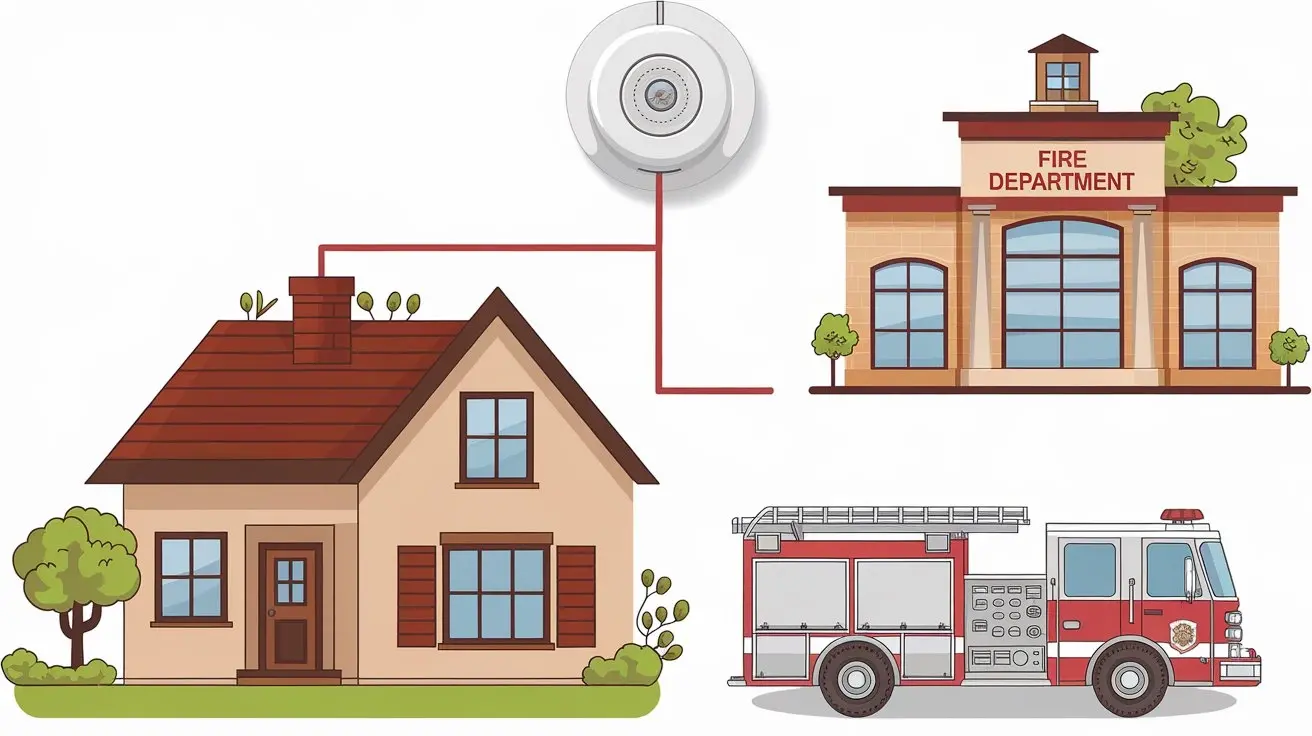
Understanding if your home fire alarm system directly notifies the fire department is crucial for safety. While many systems alert occupants, direct connection to emergency services varies significantly by technology and service provider. This guide clarifies the complexities and options available in 2025-26.
Direct Connection: The Myth and the Reality
The question, "Are home fire alarms connected to the fire department?" is a common one, often stemming from a desire for the highest level of safety. In many residential settings, the answer is not a straightforward "yes." Traditional smoke detectors, the kind commonly found in older homes or installed as standalone units, are typically designed to do one thing: sound a loud audible alarm within the premises. They alert the occupants, giving them precious time to evacuate. However, they do not possess the inherent capability to automatically transmit a signal to the local fire station or emergency dispatch center. This direct, automatic connection is a feature found in more advanced, professionally monitored systems.
The perception of a direct link is often a conflation of different technologies. Many people assume that if a fire alarm goes off, someone *must* be notified by an external entity. While this is often true for monitored systems, it’s not a universal standard for all home fire alarm setups. The critical distinction lies between a simple alarm and a comprehensive security or life safety system.
For instance, a basic smoke detector is a standalone device. When it detects smoke or heat above a certain threshold, it triggers a siren. Its job ends there. It doesn't have a communication module to send data wirelessly or via a phone line to a central monitoring station. The responsibility then falls on the occupants to call emergency services. This delay, even if minimal, can be critical in a rapidly spreading fire.
On the other hand, professionally installed and monitored fire alarm systems, often integrated with security systems, are designed with this direct communication in mind. These systems are connected to a central monitoring station. When the alarm is triggered, it sends a signal to this station. Trained operators at the station then verify the alarm (often by attempting to contact the homeowner) and, if necessary, dispatch the fire department. This process bypasses the need for someone inside the home to make the emergency call, potentially saving vital minutes.
It's also important to differentiate between a fire alarm and a medical alert system, though some systems can integrate both. Medical alert systems are specifically designed to signal for medical emergencies and are almost always connected to a monitoring service that dispatches appropriate help. Fire alarms, in their most basic form, are purely for local notification.
In 2025-26, the landscape of home safety technology is more sophisticated. Many homeowners are opting for smart home systems that include interconnected smoke and carbon monoxide detectors. These smart devices can send notifications to your smartphone, allowing you to alert emergency services yourself, or in some cases, can be integrated with professional monitoring services. However, the "direct connection" to the fire department still primarily refers to the automated dispatch initiated by a monitoring center.
The key takeaway is that simply having a smoke detector does not guarantee the fire department will be automatically notified. It depends on the type of system installed and whether it's linked to a professional monitoring service. Understanding this distinction is the first step in ensuring your home and family are adequately protected.
How Monitored Systems Work
Monitored fire alarm systems represent a significant upgrade in home safety compared to basic, standalone detectors. The "monitoring" aspect is what provides the crucial link to emergency services. These systems are not just about sounding an alarm within your home; they are designed to communicate with a third-party service that acts as an intermediary between your home and the fire department.
The process typically begins when a fire event is detected. This could be triggered by a smoke detector, a heat detector, or even a manual pull station integrated into the system. Once the sensor is activated, it sends a signal to a central control panel within the home. This panel is the brain of the system.
From the control panel, the signal is transmitted to a professional monitoring station. In 2025-26, this transmission can occur through several methods:
- Landline Phone Line: This is a traditional method where the system uses your home's phone line to dial the monitoring center.
- Cellular Communication: Increasingly popular, cellular transmitters use the mobile network to send signals. This is a robust option, especially if landlines are being phased out or if a fire could damage phone lines.
- Internet Protocol (IP) or Broadband: Many modern systems use your home's internet connection to transmit data. This is often the fastest and most reliable method, provided your internet is stable.
- Dedicated Radio Frequency: Some advanced systems might use dedicated radio transmitters for enhanced reliability.
Upon receiving the alarm signal at the monitoring station, trained operators follow a predefined protocol. This protocol is crucial for minimizing false alarms and ensuring a swift, appropriate response. The typical steps involve:
- Signal Reception: The monitoring station receives an alert indicating a fire alarm from a specific address.
- Verification Attempt: Operators will attempt to contact the homeowner or designated emergency contacts. This is usually done via a pre-arranged phone number or through a two-way voice communication system integrated into the alarm panel. The goal is to confirm if it's a genuine emergency or a false alarm (e.g., cooking smoke, burnt toast).
- Dispatch: If the homeowner cannot be reached, or if the operator confirms a fire emergency, they will immediately dispatch the local fire department to the address. They provide the fire department with critical information, such as the nature of the emergency (fire), the exact location, and potentially details about the type of alarm triggered.
- Follow-up: The monitoring station may continue to monitor the situation and provide updates to emergency responders if further information becomes available.
The speed of this process is paramount. Professional monitoring centers are designed for rapid response, operating 24/7/365. Their infrastructure is built to handle multiple alerts simultaneously and to prioritize emergency dispatches.
The effectiveness of monitored systems in 2025-26 is further enhanced by their integration with other smart home technologies. For example, a smart smoke detector might not only trigger the central panel but also send an alert to the homeowner's smartphone. This allows for a multi-layered notification system. However, the direct dispatch to the fire department is still primarily handled by the professional monitoring service.
It's important to note that even with monitored systems, false alarms can occur. These can be due to system malfunctions, environmental factors (like steam or dust), or user error. Most monitoring services have robust procedures to minimize these, as frequent false alarms can lead to fines from local fire departments. However, the safety net provided by a monitored system, where the fire department is alerted even if you can't call them yourself, is invaluable.
In summary, monitored fire alarm systems work by transmitting an alarm signal from your home to a central station, which then verifies the emergency and dispatches the fire department. This automated process significantly reduces response times and enhances overall safety, making it a critical consideration for homeowners seeking comprehensive fire protection.
Types of Home Fire Alarms and Their Connectivity
The world of home fire alarms is diverse, with various types of devices offering different levels of protection and connectivity. Understanding these distinctions is key to choosing the right system for your needs and knowing whether it connects directly to emergency services.
Standalone Smoke Detectors
These are the most basic and common types of smoke alarms. They operate independently and are powered by batteries or hardwired into the home's electrical system (often with battery backup).
- Functionality: Detect smoke or heat and sound a loud audible alarm within the home.
- Connectivity: No direct connection to the fire department. They only alert occupants. The responsibility to call 911 (or your local emergency number) falls on the residents.
- Pros: Affordable, easy to install, widely available.
- Cons: Limited notification capability, relies on occupants to take action.
Interconnected Smoke Detectors
These alarms are wired or wirelessly linked so that if one alarm detects smoke, all connected alarms in the home will sound. This significantly improves audibility throughout the house.
- Functionality: When one unit detects smoke, all units sound the alarm.
- Connectivity: Still no direct connection to the fire department. They enhance internal notification but do not transmit signals externally.
- Pros: Better alert coverage within the home.
- Cons: No external notification; relies on occupants to call emergency services.
Monitored Fire Alarm Systems
These are comprehensive systems, often part of a larger home security package, that include smoke detectors, heat detectors, and potentially carbon monoxide detectors, all connected to a central control panel.
- Functionality: Detect fire events and send signals to a central monitoring station.
- Connectivity: Yes, indirectly through a professional monitoring service. When an alarm is triggered, it alerts the monitoring station, which then contacts emergency services if necessary.
- Pros: Automatic dispatch of emergency services, 24/7 professional oversight, often integrated with other security features.
- Cons: Requires a monthly subscription fee, professional installation is often recommended.
Smart Smoke and CO Detectors
These modern devices connect to your home's Wi-Fi network and can send alerts to your smartphone or other smart devices. They often offer advanced features and integration capabilities.
- Functionality: Detect smoke/CO, sound an audible alarm, and send notifications to your mobile device.
- Connectivity: Direct notification to your phone, not directly to the fire department. You receive an alert and can then call emergency services yourself. Some smart systems can be integrated with professional monitoring services, enabling indirect dispatch.
- Pros: Remote alerts, smartphone control, integration with smart home ecosystems, often easy to install.
- Cons: Relies on Wi-Fi stability, requires a smartphone, direct dispatch to fire department is not automatic unless linked to a monitoring service.
Combination Smoke and Carbon Monoxide Detectors
These devices detect both smoke (for fires) and carbon monoxide (a colorless, odorless gas that can be deadly).
- Functionality: Detect both fire and CO.
- Connectivity: Varies by type. Standalone versions only alert occupants. Interconnected and monitored versions function as described above.
- Pros: Provides protection against two significant household hazards with a single device.
- Cons: Connectivity depends on the specific model and installation.
Comparison Table: Fire Alarm Connectivity in 2025-26
| Alarm Type | Primary Function | Direct Fire Dept. Notification | Requires Monitoring Service | Typical Cost Range (Unit) |
|---|---|---|---|---|
| Standalone Smoke Detector | Local audible alarm | No | No | $15 - $50 |
| Interconnected Smoke Detector | Wider local audible alarm | No | No | $20 - $70 |
| Monitored Fire Alarm System | Automatic dispatch via monitoring center | Yes (via service) | Yes | $300 - $1000+ (system) + $20-$60/month (service) |
| Smart Smoke/CO Detector | Local alarm + smartphone notification | No (unless integrated with monitoring) | Optional | $50 - $150 |
As of 2025-26, the most effective way to ensure the fire department is automatically notified is by installing a professionally monitored fire alarm system. While smart detectors offer convenience and enhanced personal awareness, they typically require your direct intervention to alert emergency services unless you opt for a monitoring plan.
Smart Home Integration and Remote Notifications
The advent of smart home technology has revolutionized how we interact with our living spaces, and fire safety is no exception. Smart smoke and carbon monoxide detectors, along with integrated security systems, offer advanced features that go beyond traditional alarms, providing enhanced awareness and control. However, it's crucial to understand how this "smart" connectivity translates to actual emergency response.
Smart smoke detectors are designed to connect to your home's Wi-Fi network. When they detect smoke or carbon monoxide, they perform the primary function of sounding a local alarm. But their intelligence lies in their ability to communicate wirelessly. This communication typically manifests in two key ways:
- Smartphone Notifications: The most common feature is the ability to send alerts directly to your smartphone or tablet via a dedicated app. This means that even if you are away from home, you can receive an immediate notification if a fire is detected. This is a significant advantage over traditional alarms, as it allows you to take action, such as calling the fire department yourself, even when you're not physically present.
- Integration with Smart Home Hubs: Many smart detectors are compatible with popular smart home platforms like Amazon Alexa, Google Assistant, or Apple HomeKit. This allows for voice control and the creation of automated routines. For example, you could set up a routine where if the smart smoke detector is triggered, your smart lights flash red, or your smart locks unlock.
While these features provide unprecedented awareness, it's important to reiterate that they generally do not constitute a "direct connection" to the fire department in the same way a professionally monitored system does. The smart detector alerts *you*, and you are then responsible for contacting emergency services.
However, the lines are blurring. Many smart home security systems, which often include fire detection capabilities, can be integrated with professional monitoring services. In these scenarios, the smart system, upon detecting a fire, sends a signal not only to your phone but also to a central monitoring station. This station then follows its protocol to dispatch emergency responders. This offers the best of both worlds: the convenience of smart notifications and the assurance of professional monitoring.
Consider the following scenarios in 2025-26:
- Scenario A: Standalone Smart Detector: You install a smart smoke detector that connects to your Wi-Fi. It alerts your phone if smoke is detected. You are miles away. You see the alert and call 911. Response time depends on how quickly you see the alert and make the call.
- Scenario B: Smart Detector Integrated with Professional Monitoring: You have the same smart smoke detector, but it's also linked to a paid monitoring service. Smoke is detected. The signal goes to your phone AND the monitoring service. The monitoring service attempts to verify and then dispatches the fire department automatically. Response time is significantly reduced.
- Scenario C: Integrated Smart Home Security System: You have a comprehensive smart security system that includes fire sensors. This system is professionally monitored. A fire is detected. The system alerts your phone, and simultaneously dispatches the fire department via the monitoring service.
The key advantage of smart home integration for fire safety is enhanced situational awareness and the ability to act remotely. For individuals who travel frequently or have multiple properties, this remote access is invaluable. It also empowers younger, tech-savvy homeowners who are comfortable managing their home's safety via their mobile devices.
Statistics from 2025 indicate that a growing percentage of new home installations involve smart fire detection devices. This trend is driven by consumer demand for convenience and advanced features. However, safety experts continue to emphasize that for the highest level of protection, especially for vulnerable populations or those who may not be able to react quickly to a smartphone alert, professional monitoring remains the gold standard.
When choosing a smart fire alarm system, always check the specifications regarding its connectivity options. Look for features like:
- Wi-Fi connectivity
- Compatibility with your preferred smart home ecosystem
- The option to add professional monitoring
- Battery backup for power outages
- Interconnectivity with other smart detectors in the home
In conclusion, smart home integration offers powerful tools for fire safety, primarily through remote notifications. While it doesn't automatically connect to the fire department by itself, it can be a crucial component of a comprehensive system that does, providing both immediate alerts to you and automated dispatch to emergency services.
DIY vs. Professional Installation: Connectivity Implications
When it comes to installing fire alarm systems, homeowners have a choice: a do-it-yourself (DIY) approach or professional installation. This decision has significant implications, particularly concerning the connectivity of the system to emergency services.
DIY Installation
DIY installation typically involves purchasing standalone smoke detectors, interconnected alarms, or smart detectors from retail stores and installing them yourself.
- What's typically installed: Basic smoke detectors, interconnected smoke detectors (wired or wireless), smart smoke detectors that connect to Wi-Fi.
- Connectivity:
- Standalone/Interconnected: No connection to the fire department. These systems only provide local alerts.
- Smart Detectors: Connectivity is to your home's Wi-Fi network, enabling smartphone notifications. Direct dispatch to the fire department is NOT automatic. You receive the alert and must call 911 yourself.
- Pros:
- Cost-Effective: Significantly lower upfront costs as you save on labor.
- Flexibility: You can choose exactly which products to buy and install them on your own schedule.
- Simplicity (for basic units): Battery-powered smoke detectors are generally very easy to install.
- Cons:
- Limited Connectivity: Most DIY systems do not offer automatic dispatch to emergency services.
- Potential for Errors: Incorrect installation (especially for hardwired systems or complex smart setups) can lead to system malfunctions or a false sense of security.
- Lack of Professional Advice: You don't benefit from the expertise of a professional who can assess your home's specific risks and recommend the optimal placement and type of detectors.
- Troubleshooting: If issues arise, you are solely responsible for diagnosing and fixing them.
Professional Installation
Professional installation involves hiring a certified technician or a security company to install and configure your fire alarm system.
- What's typically installed: Professionally monitored fire alarm systems, integrated security systems with fire detection, hardwired systems, and complex smart home setups.
- Connectivity:
- Monitored Systems: These are designed from the ground up to connect to a central monitoring station. When an alarm is triggered, the system automatically sends a signal to the station, which then dispatches the fire department. This is the most direct form of automated connection.
- Advanced Smart Systems: Professionals can ensure your smart fire detectors are properly integrated into a monitored system, bridging the gap between smart notifications and emergency dispatch.
- Pros:
- Guaranteed Connectivity: For monitored systems, professional installation ensures the link to the monitoring service and thus to emergency responders is correctly established.
- Expertise and Placement: Professionals understand optimal detector placement for maximum effectiveness, code compliance, and system integration.
- System Reliability: They ensure all components are working correctly and are properly configured.
- Reduced False Alarms: Proper installation and calibration can help minimize nuisance alarms.
- Peace of Mind: Knowing the system is installed and configured by experts provides significant reassurance.
- Cons:
- Higher Upfront Cost: You pay for the technician's time and expertise.
- Scheduling: You need to schedule appointments, which can sometimes be inconvenient.
- Ongoing Fees: Professionally monitored systems typically require monthly subscription fees.
Connectivity Comparison: DIY vs. Professional in 2025-26
| Feature | DIY Installation | Professional Installation |
|---|---|---|
| Automatic Fire Dept. Dispatch | Generally No (unless user manually calls) | Yes (with monitored systems) |
| Remote Smartphone Alerts | Yes (with smart detectors) | Yes (often integrated) |
| System Reliability & Accuracy | Variable; depends on user skill | High; expert installation |
| Initial Cost | Lower | Higher |
| Ongoing Fees | None (unless subscribing to a separate monitoring service for smart devices) | Yes (for monitoring services) |
| Code Compliance | User responsibility | Ensured by professional |
For homeowners whose primary concern is ensuring the fire department is automatically alerted in the event of a fire, professional installation of a monitored system is the most reliable and straightforward path. While DIY smart detectors offer valuable remote notifications, they do not replace the automated dispatch capability of a professional monitoring service. The choice ultimately depends on your budget, technical comfort level, and how critical automatic emergency dispatch is for your peace of mind.
Costs and Considerations for Connected Systems
Deciding on a home fire alarm system involves more than just understanding its connectivity features; it also requires a thorough evaluation of the associated costs and practical considerations. For systems that offer direct or indirect notification to the fire department, the investment is typically higher, but the benefits in terms of safety and peace of mind can be substantial.
Cost Breakdown
The costs associated with connected fire alarm systems can be broadly categorized into upfront equipment costs and ongoing service fees.
- Equipment Costs:
- Basic Smoke Detectors: As low as $15-$50 per unit.
- Interconnected Alarms: $20-$70 per unit.
- Smart Smoke/CO Detectors: $50-$150 per unit. These often require Wi-Fi and a smartphone.
- Monitored Fire Alarm Systems (Components): The control panel, sensors, and communication modules can range from $300 to over $1,000 for a comprehensive system, depending on the brand, features, and number of sensors.
- Installation Costs:
- DIY: Free, but requires your time and effort.
- Professional Installation: Can range from $100 to $500 or more, depending on the complexity of the system and the installer's rates. Some companies may offer free installation with a long-term monitoring contract.
- Ongoing Service Fees:
- Professional Monitoring: This is the primary ongoing cost for systems that connect to the fire department. Fees typically range from $20 to $60 per month. This covers the 24/7 monitoring service, signal transmission, and dispatch coordination.
- Smart Home App Subscriptions: Some smart device manufacturers may offer premium features or extended cloud storage for alerts and recordings for an additional monthly fee, though basic notifications are usually free.
Key Considerations for Connected Systems
Beyond the financial aspect, several factors are crucial when choosing and implementing a connected fire alarm system in 2025-26:
- Reliability of Communication:
- Cellular vs. IP vs. Landline: For monitored systems, understand how the signal is transmitted. Cellular is generally considered more reliable than landlines (which can be cut) and less susceptible to internet outages than IP-based systems. Many systems offer a combination for redundancy.
- Power Outages: Ensure the system has battery backup for the control panel and all sensors. Monitored systems should also have battery backup for their communication modules.
- False Alarm Policies and Fines:
- Local fire departments often charge fines for excessive false alarms. Understand your monitoring company's protocols for alarm verification and how they work to minimize false dispatches.
- Some municipalities have specific regulations regarding monitored alarm systems, including permits and testing requirements.
- Response Times:
- While a monitored system aims to reduce response times, actual dispatch times by the fire department can vary based on location, call volume, and traffic.
- The speed of the monitoring center's verification process is also a factor.
- Contract Lengths:
- Many professional monitoring services require a contract, often for 1 to 3 years. Be sure to read the terms and conditions carefully, including cancellation policies and any early termination fees.
- System Scalability and Integration:
- Can the system be expanded to include more sensors or other smart home devices (like security cameras or smart locks) in the future?
- Ensure compatibility with your existing smart home ecosystem if that's a priority.
- Privacy and Data Security:
- If using smart devices or monitored systems, understand how your data is collected, stored, and protected. Review the company's privacy policy.
- Maintenance and Testing:
- Regularly test your smoke detectors (monthly is recommended) and carbon monoxide detectors.
- Monitored systems typically require periodic testing to ensure the connection to the monitoring center is active. Follow your provider's instructions for testing.
In 2025-26, the decision to invest in a connected fire alarm system is a significant one. While the upfront and ongoing costs are higher than for basic alarms, the ability of these systems to automatically notify emergency services provides a critical layer of protection that can be invaluable. Weigh the costs against the peace of mind and the potential to save lives and property. Always research providers thoroughly and understand all terms and conditions before committing.
What to Do If You're Unsure About Your System
It's a common situation: you've lived in your home for a while, or perhaps you've recently moved in, and you're not entirely sure about the capabilities of your existing fire alarm system. Does it connect to the fire department? Is it just a local alarm? This uncertainty can be a source of anxiety, especially when it comes to something as critical as fire safety. Fortunately, there are straightforward steps you can take to determine your system's connectivity and ensure you have the protection you need.
Step 1: Visually Inspect Your Devices
Begin by examining the smoke and fire alarm devices installed in your home.
- Look for Branding: Note the manufacturer's name and model number on each device.
- Identify Device Type:
- Standalone Smoke Detectors: These are usually small, round units, often white, mounted on the ceiling or wall. They typically have a test button.
- Interconnected Alarms: These may look similar to standalone units but might have indicator lights showing they are part of a network.
- Smart Detectors: These often have a more modern design, may have a status light that communicates Wi-Fi connectivity, and might be branded with well-known smart home companies (e.g., Nest, Ring, First Alert).
- Control Panels: If you have a security system, look for a central keypad or control panel, often mounted near an entry door. This panel is the hub for many monitored systems. It might have buttons for arming/disarming, an indicator for system status, and possibly a small speaker or microphone for two-way communication.
- Check for Wiring: Are the detectors battery-powered, or are they wired into your home's electrical system? Wired detectors often have a battery backup.
Step 2: Consult Your Home's Documentation
If you have any paperwork related to your home purchase or previous renovations, check for manuals or installation records for security or fire alarm systems. This documentation should detail the type of system installed and its features.
Step 3: Search Online
Once you have the manufacturer and model number, perform an online search.
- Search for "[Manufacturer] [Model Number] smoke detector features" or "[Manufacturer] [Model Number] fire alarm system specifications."
- Look for information regarding:
- Connectivity: Does it mention Wi-Fi, cellular, or IP communication?
- Monitoring: Does it state it's compatible with or designed for professional monitoring?
- Smart Features: Does it mention smartphone alerts or app integration?
Step 4: Check for a Monitoring Service Contract
If you suspect you have a monitored system, look for any contracts or bills from a security or alarm monitoring company. This is a strong indicator that your system is connected to a central station. Companies like ADT, Vivint, SimpliSafe (with their professional monitoring plan), and local security providers are common.
Step 5: Test Your System (Carefully!)
Caution: Testing a monitored system incorrectly can result in a dispatch of emergency services. Always follow the manufacturer's or monitoring company's instructions for testing.
- For Standalone/Interconnected Alarms: Press and hold the test button on each detector. You should hear a loud, repeating alarm sound. This confirms the local alarm is working.
- For Monitored Systems:
- Contact Your Monitoring Company FIRST: Before testing, call your monitoring company and inform them you will be testing your system. They will likely put your system in "test mode" to prevent accidental dispatch.
- Follow Their Instructions: They will guide you on how to trigger a test signal (often by pressing a specific button on the control panel or by activating a sensor).
- Confirm Test Completion: Ensure the monitoring company confirms the test was successful.
- For Smart Detectors (Standalone): Use the test button. If it's designed to send smartphone alerts, you might receive a notification during testing (check the app settings).
Step 6: Contact the Manufacturer or Installer
If you're still unsure after the above steps, contact the manufacturer of your devices or the company that installed your system (if applicable). They can provide definitive information about your system's capabilities, including whether it's connected to a monitoring service.
Step 7: Consider an Upgrade if Necessary
If your inspection reveals that you only have basic, standalone smoke detectors, or if you have a system that does not offer automatic dispatch, it's highly recommended to consider an upgrade.
- For basic protection: Ensure you have interconnected smoke detectors throughout your home, with at least one on each level and inside/outside sleeping areas.
- For automatic dispatch: Invest in a professionally monitored fire alarm system. This provides the highest level of assurance that emergency services will be notified promptly.
- For smart features with monitoring: Combine the benefits of smart detectors with a professional monitoring service for both remote alerts and automatic dispatch.
Taking these steps will demystify your home's fire safety system and empower you to make informed decisions about your family's protection. In 2025-26, with the availability of advanced and connected systems, there's no reason to remain uncertain about your safety net.
Future Trends in Fire Safety Connectivity
The evolution of fire safety technology is a continuous process, driven by advancements in connectivity, artificial intelligence, and a growing emphasis on proactive prevention. As we look towards the mid-2020s and beyond, several key trends are shaping the future of how homes are protected from fire and how quickly emergency services can be alerted.
One of the most significant trends is the increasing integration of Artificial Intelligence (AI) and Machine Learning (ML) into fire detection systems. In 2025-26, we are already seeing early applications of this. AI-powered sensors can analyze patterns in smoke, heat, and even air quality with greater precision than traditional detectors. This allows for:
- Reduced False Alarms: AI can differentiate between a genuine fire and common false alarm triggers like cooking smoke or steam, leading to fewer unnecessary dispatches.
- Predictive Analytics: Advanced systems may be able to identify early warning signs of potential fire hazards before they escalate, perhaps by detecting unusual heat signatures or specific airborne compounds.
- Smarter Response Coordination: AI could potentially analyze the fire's spread and provide real-time data to emergency responders, optimizing their approach and resource allocation.
Enhanced Interconnectivity and the Internet of Things (IoT): The connected home ecosystem will continue to expand, with fire safety devices becoming more deeply integrated. This means fire alarms will not just communicate with monitoring centers but also with other smart devices in the home and potentially with city infrastructure.
- Vehicle-to-Infrastructure (V2I) Communication: In the future, traffic lights could be alerted to change to green for approaching fire trucks, and emergency dispatch systems could communicate directly with smart city networks to manage traffic flow and provide real-time road conditions to first responders.
- Drone Integration: While still in early development for widespread residential use, drones equipped with thermal imaging could be dispatched automatically by monitoring centers to provide visual confirmation of a fire before human responders arrive, offering critical situational awareness.
Advanced Sensor Technology: Beyond traditional smoke and heat detection, new sensor types are emerging.
- Air Quality Sensors: These can detect specific volatile organic compounds (VOCs) released during the initial stages of combustion, potentially providing earlier detection than smoke.
- Thermal Imaging: While currently more common in commercial settings, miniaturized thermal cameras integrated into home systems could offer a visual confirmation of heat sources.
- Acoustic Sensors: Some research is exploring the use of sound patterns to identify the early stages of fire or other emergencies.
Focus on Preventative Measures and Data Analytics: The trend is shifting from solely reactive detection to proactive prevention.
- Home Health Monitoring: Systems that monitor electrical loads, appliance performance, and even water leaks could identify potential fire risks before they become critical.
- Data-Driven Insights: Aggregated, anonymized data from connected fire safety devices could help fire departments and urban planners identify high-risk areas or common causes of fires, leading to targeted prevention campaigns and improved building codes.
Cybersecurity and Privacy: As systems become more connected, cybersecurity and data privacy will become even more critical. Manufacturers and service providers will need to implement robust security measures to protect against hacking and ensure user data is handled responsibly.
The future of home fire alarms is about more than just sounding an alarm; it's about creating an intelligent, interconnected network that can detect, predict, and communicate emergencies with unprecedented speed and accuracy. While the core principle of alerting occupants and dispatching emergency services will remain, the methods and sophistication will continue to evolve, offering homeowners greater peace of mind and a more resilient safety net.
In conclusion, the question of whether home fire alarms are connected to the fire department is complex. Traditional smoke detectors are not. However, professionally monitored fire alarm systems provide this crucial link by automatically dispatching emergency services via a central station. Smart home technology offers remote notifications, empowering homeowners to call for help themselves, and can be integrated with monitoring services for automated dispatch. While DIY installation is cost-effective, professional installation of monitored systems offers the highest assurance of automatic emergency response. Understanding the different types of systems, their costs, and the implications of DIY versus professional installation is vital for making an informed decision. If you're unsure about your current system, take steps to inspect it, research it, and if necessary, upgrade to a system that provides the level of connectivity and peace of mind you need. Prioritizing a system that ensures rapid notification to the fire department is paramount for the safety of your home and loved ones.