Different Types of Light Bulbs Explained
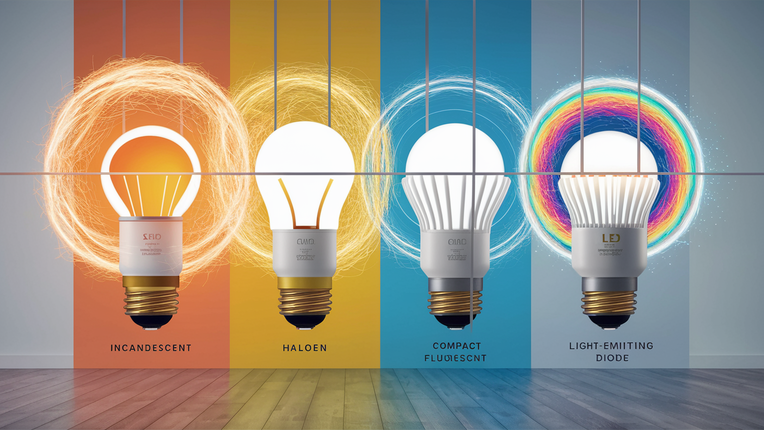
Navigating the world of light bulbs can be confusing, but understanding the different types is crucial for energy efficiency, ambiance, and cost savings. This guide demystifies the common bulb technologies, from incandescent to LED, helping you make informed choices for every room.
Understanding Incandescent Bulbs
The incandescent light bulb, a staple of homes for over a century, is a marvel of simple engineering. Invented by Thomas Edison and his contemporaries, it works by passing an electric current through a thin filament, typically made of tungsten, housed within a glass bulb filled with an inert gas or a vacuum. This filament heats up to such a high temperature that it glows, producing light. The glass bulb serves to protect the filament and prevent it from oxidizing, which would cause it to burn out quickly.
How Incandescent Bulbs Work
The fundamental principle behind incandescent lighting is incandescence – the emission of light by a body when it is heated. When electricity flows through the tungsten filament, its electrical resistance causes it to heat up. This heat energy is then converted into light and heat. The process is remarkably inefficient from an illumination perspective, with estimates suggesting that only about 5-10% of the energy consumed is converted into visible light, while the remaining 90-95% is lost as heat. This inefficiency is a primary reason for their decline in popularity and eventual phase-out in many regions.
Pros and Cons of Incandescent Bulbs
Despite their inefficiency, incandescent bulbs have historically been favored for several reasons:
- Warm, Familiar Light: They produce a warm, yellowish light that many people find pleasing and comfortable, closely mimicking natural daylight at dusk.
- Excellent Color Rendering: Incandescent bulbs have a Color Rendering Index (CRI) of 100, meaning they display colors exactly as they would appear under natural sunlight. This is crucial for tasks where color accuracy is important, such as in art studios or makeup application.
- Instant On: They provide full brightness immediately upon being switched on, with no warm-up period.
- Dimmable: They are easily dimmable with standard dimmer switches, offering excellent control over light intensity.
- Low Initial Cost: Incandescent bulbs are typically the cheapest to purchase upfront.
However, their drawbacks are significant:
- Extremely Inefficient: As mentioned, they consume a large amount of energy, leading to higher electricity bills.
- Short Lifespan: Their average lifespan is around 750 to 1,000 hours, meaning they need frequent replacement.
- Fragile: The glass bulb and filament are delicate and can break easily.
- Heat Generation: They produce a substantial amount of heat, which can increase the load on air conditioning systems in warmer months, further contributing to energy waste.
Incandescent Bulb Phase-Out and Current Status (2025-26)
Due to their energy inefficiency, many countries, including the United States, Canada, and those in the European Union, have implemented regulations to phase out the sale of traditional incandescent bulbs. While some specific types might still be available for niche applications (e.g., certain appliances, heat lamps), general-purpose incandescent bulbs are largely unavailable for purchase in major retail markets as of 2025-26. This regulatory shift has been a major driver for consumers to adopt more energy-efficient alternatives.
Exploring Halogen Bulbs
Halogen bulbs are a type of incandescent bulb that offers some improvements over their traditional counterparts. They are essentially an enhanced version of the incandescent bulb, using a similar principle of heating a filament to produce light. The key difference lies in the gas mixture within the bulb and the use of a quartz envelope instead of glass.
How Halogen Bulbs Work
Inside a halogen bulb, the filament is enclosed in a quartz glass envelope (to withstand higher temperatures) filled with a halogen gas, such as iodine or bromine. This halogen gas creates a chemical reaction called the "halogen cycle." When the filament heats up and releases tungsten atoms, these atoms combine with the halogen gas. As the gas circulates near the hot filament, the tungsten is redeposited back onto the filament. This process slows down the evaporation of the filament, allowing it to operate at a higher temperature and last longer than a standard incandescent filament. The higher operating temperature also results in a brighter, whiter light output.
Pros and Cons of Halogen Bulbs
Halogen bulbs offer several advantages:
- Brighter, Whiter Light: They produce a crisper, whiter light compared to the warm yellow of standard incandescents, with a higher lumen output for their wattage.
- Improved Lifespan: Their lifespan is typically around 2,000 to 4,000 hours, about twice that of traditional incandescents.
- Excellent Color Rendering: Like incandescents, they boast a CRI of 100, making them ideal for applications where accurate color representation is vital.
- Instant On and Dimmable: They offer immediate full brightness and are fully dimmable.
- Compact Size: Many halogen bulbs are smaller than traditional incandescents, making them suitable for fixtures with limited space.
However, they also have drawbacks:
- Still Inefficient: While more efficient than standard incandescents, they are still significantly less efficient than CFLs and LEDs, consuming more energy for the same light output.
- High Heat Output: They generate considerable heat, which can be a concern for energy consumption and in enclosed fixtures.
- Fragile Quartz Envelope: The quartz envelope is sensitive to oils from human skin. Touching it with bare hands can create hot spots that lead to premature failure. It's recommended to use gloves or a clean cloth when handling them.
- Higher Initial Cost: They are generally more expensive to purchase than standard incandescent bulbs.
Halogen vs. Incandescent: A Comparison
In essence, halogen bulbs are an evolutionary step from incandescent bulbs, offering better performance in terms of lifespan and light quality while retaining the core technology. However, their energy efficiency remains a significant limitation, especially when compared to newer lighting technologies. Many of the same regulatory pressures that affected incandescent bulbs are also impacting halogen bulbs, pushing them towards niche applications rather than general home lighting.
The Rise and Fall of Compact Fluorescent Lamps (CFLs)
Compact Fluorescent Lamps (CFLs) emerged as a popular energy-saving alternative to incandescent bulbs in the late 20th and early 21st centuries. They offered a significant reduction in energy consumption and a much longer lifespan, making them an attractive option for environmentally conscious consumers and those looking to cut down on electricity bills. However, their reign as the leading energy-efficient bulb was eventually challenged by the advent of LED technology.
How CFLs Work
CFLs operate on a principle similar to traditional fluorescent tubes but are designed to fit into standard light bulb sockets. Inside the glass tube of a CFL, there is a small amount of mercury vapor and an inert gas. When electricity is applied, an electric current passes through the gas, exciting the mercury vapor. This excitation causes the mercury to emit ultraviolet (UV) light. The inside of the glass tube is coated with a phosphor powder. When the UV light strikes this phosphor coating, it causes the powder to glow and emit visible light. A ballast, integrated into the base of the bulb, is crucial for regulating the current and voltage needed to start and maintain the arc within the tube.
Pros and Cons of CFLs
CFLs brought several advantages to the lighting market:
- Energy Efficiency: They use about 70-75% less energy than incandescent bulbs to produce the same amount of light, leading to substantial energy savings.
- Long Lifespan: CFLs typically last between 6,000 to 15,000 hours, significantly longer than incandescents and halogens, reducing the frequency of replacements.
- Variety of Color Temperatures: Available in a range of color temperatures, from warm white (similar to incandescents) to cool white and daylight, allowing for different moods and applications.
- Lower Heat Output: They produce less heat than incandescent and halogen bulbs, contributing to cooler indoor environments.
However, CFLs also have notable disadvantages:
- Mercury Content: CFLs contain a small amount of mercury, a toxic substance. This requires careful disposal and recycling to prevent environmental contamination. Accidental breakage can release mercury vapor, necessitating specific cleanup procedures.
- Warm-up Time: Many CFLs take a short time (from a few seconds to a minute) to reach full brightness, which can be inconvenient in certain situations.
- Color Rendering: While improved over early models, the CRI of most CFLs is lower than that of incandescents or LEDs, meaning colors might not appear as vibrant or accurate.
- Dimming Issues: Not all CFLs are dimmable, and those that are may not dim as smoothly or to as low a level as incandescent or LED bulbs. Special dimmable CFLs and compatible dimmer switches are required.
- Sensitivity to On/Off Cycles: Frequent switching on and off can shorten the lifespan of some CFLs, making them less ideal for areas where lights are turned on and off repeatedly.
- Environmental Concerns: Due to mercury content, proper disposal is essential, and not all regions have accessible recycling programs.
CFLs in the Current Market (2025-26)
While CFLs were a significant step forward in energy efficiency, their market share has been rapidly declining since the widespread adoption of LED technology. Many manufacturers have ceased production of CFLs in favor of LEDs, and retailers are phasing them out. The environmental concerns associated with mercury, coupled with the superior performance and ever-decreasing cost of LEDs, have made CFLs largely obsolete for general lighting purposes in 2025-26. They are still sometimes found in specific applications or older stock, but they are no longer the go-to energy-saving bulb.
The Dominance of Light Emitting Diodes (LEDs)
Light Emitting Diodes (LEDs) have revolutionized the lighting industry, becoming the dominant technology for energy-efficient and versatile lighting solutions. LEDs are semiconductor devices that emit light when an electric current passes through them. Their remarkable efficiency, longevity, and adaptability have made them the preferred choice for a vast array of applications, from residential homes to commercial spaces and even specialized industrial uses.
How LEDs Work
At its core, an LED is a semiconductor diode. When a voltage is applied across the diode in the forward direction, electrons within the semiconductor material recombine with electron holes. This recombination process releases energy in the form of photons, which are particles of light. The color of the light emitted depends on the semiconductor material used. For white light, LEDs typically use a blue LED coated with a yellow phosphor. The blue light excites the phosphor, which then emits a broad spectrum of light that appears white to the human eye. LEDs also require a driver, which is an electronic circuit that regulates the voltage and current supplied to the LED, ensuring optimal performance and longevity.
Pros and Cons of LEDs
The advantages of LED technology are numerous and compelling:
- Exceptional Energy Efficiency: LEDs are the most energy-efficient lighting option available, consuming up to 80-90% less energy than incandescent bulbs and significantly less than CFLs for the same light output. This translates to substantial savings on electricity bills.
- Incredible Lifespan: LEDs have an exceptionally long lifespan, typically ranging from 15,000 to 50,000 hours or more. This means they can last for decades with typical usage, drastically reducing replacement frequency and maintenance costs.
- Durability: Unlike incandescent bulbs with fragile filaments and glass bulbs, LEDs are solid-state devices, making them highly resistant to shock and vibration.
- Instant On and Full Brightness: LEDs provide immediate full brightness upon switching on, with no warm-up period required.
- Excellent Dimming Capabilities: Most LED bulbs are dimmable, and they offer smooth, consistent dimming performance when paired with compatible LED dimmer switches.
- Wide Range of Color Temperatures and CRI: LEDs are available in virtually any color temperature, from warm white to cool daylight, and offer excellent Color Rendering Index (CRI) values, ensuring colors appear natural and vibrant.
- Directional Light: LEDs emit light in a specific direction, which can be advantageous for focused lighting applications and reduces the need for reflectors, leading to greater efficiency.
- Low Heat Emission: While they do produce some heat, LEDs emit much less heat than incandescent or halogen bulbs, making them safer to handle and reducing the burden on cooling systems.
- Environmentally Friendly: LEDs do not contain mercury or other hazardous materials, making them safer for disposal and recycling.
Despite their overwhelming advantages, there are a few considerations:
- Higher Initial Cost: While prices have dropped dramatically, the upfront cost of LED bulbs can still be higher than traditional incandescent or even CFL bulbs. However, their long lifespan and energy savings quickly offset this initial investment.
- Compatibility with Older Dimmers: Some older dimmer switches designed for incandescent bulbs may not be compatible with LEDs, leading to flickering or poor dimming performance. Upgrading to LED-compatible dimmers is often necessary.
- Heat Management: While they emit less heat overall, the heat generated by the LED chip itself needs to be dissipated effectively. This is managed by heat sinks, and poor heat management can reduce the lifespan of the LED.
LEDs in 2025-26: The Standard for Modern Lighting
As of 2025-26, LEDs have firmly established themselves as the standard for residential, commercial, and industrial lighting. Their combination of unparalleled energy efficiency, extreme longevity, and versatility makes them the most cost-effective and environmentally responsible choice. The technology continues to evolve, with ongoing improvements in efficiency, color quality, and smart lighting integration. For anyone looking to upgrade their lighting, LEDs are the undisputed champion.
Types of LED Bulbs
LED technology has spawned various bulb formats to replace traditional types:
- LED A-Type Bulbs: These are the most common replacement for standard incandescent bulbs, designed to fit in the same sockets and mimic the familiar shape.
- LED Reflector Bulbs (R, BR, PAR): Used in track lighting and recessed fixtures, these LEDs offer directional light for accent or task lighting.
- LED Globe Bulbs (G): Ideal for decorative fixtures, vanity lights, and ceiling fans, offering a spherical shape.
- LED Candle Bulbs (B): Designed to mimic the shape of traditional candle bulbs, often used in chandeliers and sconces.
- LED Filament Bulbs: These bulbs feature visible LED filaments that replicate the aesthetic of vintage incandescent bulbs, offering a retro look with modern efficiency.
- LED Integrated Fixtures: Many modern light fixtures now come with integrated LEDs that are not replaceable but are designed to last the lifetime of the fixture.
Specialty Bulb Types and Their Uses
Beyond the main categories of incandescent, halogen, CFL, and LED, a variety of specialty bulbs cater to specific needs and applications. These bulbs often employ unique technologies or designs to achieve particular lighting effects, functionalities, or to operate in specialized environments.
Smart Bulbs
Smart bulbs are a subset of LED technology that offers advanced control and connectivity. They can be controlled remotely via a smartphone app, voice commands (through smart assistants like Alexa or Google Assistant), or programmed schedules. Features often include:
- Color Changing: Ability to select from millions of colors to set moods or match decor.
- Tunable White: Adjusting the color temperature from warm to cool white.
- Dimming: Precise control over brightness.
- Scheduling and Automation: Setting lights to turn on/off at specific times or in response to other smart home events.
- Energy Monitoring: Some smart bulbs can track energy consumption.
Smart bulbs are ideal for creating dynamic lighting environments, enhancing home security (by simulating occupancy), and adding convenience to daily routines. Their integration into smart home ecosystems is a major trend in 2025-26.
UV-B and UV-C Bulbs
These bulbs emit ultraviolet radiation. UV-B bulbs are often used in tanning beds and for certain medical treatments (like phototherapy for skin conditions), as they stimulate vitamin D production. UV-C bulbs, on the other hand, are used for germicidal purposes, as their shorter wavelength radiation can kill bacteria, viruses, and other microorganisms. They are commonly found in water purifiers, air sterilizers, and medical equipment. Proper safety precautions are essential when using these bulbs due to the potential harm of UV radiation to skin and eyes.
Infrared (IR) Heat Lamps
Infrared bulbs, often referred to as heat lamps, are designed to emit infrared radiation, which is perceived as heat. They work similarly to incandescent bulbs but are optimized to produce more heat than light. Common applications include:
- Food Service: Keeping food warm in restaurants and buffets.
- Therapy: Providing therapeutic heat for muscle pain relief.
- Animal Husbandry: Warming young animals in farms or pet enclosures.
- Industrial Processes: Drying paints, curing materials, or providing localized heat.
Bug Zapper Bulbs
These bulbs are designed to attract insects, typically using a specific light spectrum that appeals to them. Once attracted, the insects are then electrocuted by a high-voltage grid surrounding the bulb. While effective for insect control, their use is sometimes debated due to potential harm to beneficial insects.
Appliance Bulbs
Small, specialized bulbs designed to withstand the heat and vibrations within appliances like ovens, refrigerators, and microwaves. They are typically rated for higher temperatures and are often more robust than standard household bulbs.
Colored Light Bulbs
Available in various technologies (incandescent, LED), these bulbs are designed to emit colored light directly. They are used for decorative purposes, mood lighting, stage lighting, and signaling. Modern LED versions offer a wide spectrum of colors and can often be controlled for color changes.
Factors to Consider When Choosing a Light Bulb
Selecting the right light bulb involves more than just picking one that fits the socket. Several key factors influence performance, efficiency, and suitability for your needs. Understanding these elements will help you make the best choice for any given application.
Brightness (Lumens)
Lumens (lm) measure the total amount of visible light emitted by a bulb. This is the most accurate indicator of brightness. For years, wattage was used as a proxy for brightness, but this is misleading, especially when comparing different bulb technologies. For example, an 800-lumen LED bulb might consume only 9 watts, while an incandescent bulb producing the same 800 lumens would consume around 60 watts. When replacing old bulbs, look at the lumen output rather than the wattage to ensure you get the desired brightness.
General Guideline for Lumens (2025-26):
- General Room Lighting: 800-1100 lumens
- Task Lighting (e.g., desk, kitchen counter): 1100-1600 lumens
- Accent Lighting: 200-500 lumens
Color Temperature (Kelvin)
Color temperature, measured in Kelvin (K), describes the appearance of the light. It ranges from warm, reddish hues to cool, bluish hues.
- Warm White (2700K - 3000K): Emits a soft, yellowish light similar to incandescent bulbs. Ideal for living rooms, bedrooms, and creating a cozy atmosphere.
- Cool White / Bright White (3500K - 4100K): A neutral white light that is good for kitchens, bathrooms, and general-purpose areas where a balanced light is desired.
- Daylight (5000K - 6500K): Produces a crisp, bluish-white light that mimics natural daylight. Excellent for task lighting, workshops, garages, and areas where alertness is important.
Choosing the right color temperature significantly impacts the ambiance and functionality of a space.
Color Rendering Index (CRI)
CRI measures how accurately a light source reveals the true colors of objects compared to natural daylight. It's rated on a scale of 0-100, with 100 being perfect color rendering. For most home applications, a CRI of 80 or higher is recommended. For areas where color accuracy is critical (e.g., art studios, retail displays, makeup vanities), a CRI of 90+ is ideal.
Wattage and Energy Efficiency
Wattage (W) indicates the amount of energy a bulb consumes. While you should prioritize lumens for brightness, wattage is still important for understanding energy efficiency. Lower wattage for the same lumen output means a more efficient bulb. LEDs are the clear winner here, offering significant energy savings. Energy Star certification is a good indicator of a bulb's efficiency and performance.
Lifespan
The rated lifespan of a bulb, usually in hours, indicates how long it is expected to last. Longer lifespan means fewer replacements and lower long-term costs. LEDs far surpass other technologies in lifespan, often lasting 15-25 years or more.
Base Type
Ensure the bulb's base matches the fixture. The most common base is the medium screw base (E26 in North America, E27 internationally). Other types include candelabra (E12), intermediate (E17), and specialized bases for recessed lighting (GU10, MR16) or pin-based fixtures.
Dimmability
If you plan to use a dimmer switch, you must choose dimmable bulbs. Not all bulbs are dimmable, and using non-dimmable bulbs with a dimmer can cause flickering, buzzing, or premature failure. Always check the packaging for "dimmable" or "compatible with LED dimmers."
Fixture Type and Environment
Consider the fixture type. Some enclosed fixtures can trap heat, which can reduce the lifespan of certain bulbs, especially older CFLs or LEDs not rated for enclosed use. Also, consider the environment – for damp or wet locations (bathrooms, outdoors), you'll need bulbs specifically rated for those conditions.
Comparison Table: Key Bulb Characteristics (2025-26 Estimates)
| Feature | Incandescent | Halogen | CFL | LED |
|---|---|---|---|---|
| Energy Efficiency | Very Low (5-10 lm/W) | Low (15-20 lm/W) | Medium (50-70 lm/W) | Very High (80-150+ lm/W) |
| Lifespan (Hours) | 750 - 1,000 | 2,000 - 4,000 | 6,000 - 15,000 | 15,000 - 50,000+ |
| Brightness Consistency | Excellent | Excellent | Good (slight warm-up) | Excellent (instant) |
| Color Rendering (CRI) | 100 | 100 | 70 - 85 | 80 - 95+ |
| Heat Output | Very High | High | Low | Very Low |
| Initial Cost | Very Low | Low | Medium | Medium to High (decreasing) |
| Environmental Impact | High (energy use) | High (energy use) | Medium (mercury content) | Very Low (energy use, no mercury) |
| Dimmability | Excellent | Excellent | Limited (special bulbs required) | Good (LED-compatible dimmers required) |
The Future of Lighting Technology
The evolution of lighting technology is far from over. While LEDs currently dominate, research and development continue to push the boundaries of what's possible in illumination. The future of lighting promises even greater efficiency, smarter integration, and novel applications.
Advanced LED Technologies
Expect continued improvements in LED efficiency, with higher lumen output per watt. Technologies like Chip-on-Board (COB) LEDs offer higher light density and better heat dissipation for more powerful lighting solutions. Furthermore, advancements in phosphors and semiconductor materials are leading to LEDs with even better color quality and spectrum control, potentially mimicking natural light more closely than ever before.
Li-Fi (Light Fidelity)
Li-Fi is an emerging technology that uses light waves, rather than radio waves, to transmit data. LED lights equipped with Li-Fi capabilities can provide both illumination and high-speed wireless internet access. This technology offers potential advantages in security (as light signals cannot easily penetrate walls) and in environments where radio frequencies are restricted. While still in its early stages for widespread adoption, Li-Fi is poised to become a significant innovation in connected lighting.
Organic LEDs (OLEDs)
OLEDs are a type of solid-state lighting that uses organic compounds that emit light when an electric current is applied. Unlike LEDs, OLEDs emit light from a thin film of organic material, allowing for flexible, transparent, and extremely thin lighting panels. OLEDs offer excellent color uniformity and high contrast ratios, making them ideal for displays and decorative lighting applications. Their development for general illumination is ongoing, with potential for integration into building materials and furniture.
Human-Centric Lighting (HCL)
HCL focuses on designing lighting systems that support human health, well-being, and productivity. This involves dynamically adjusting the color temperature and intensity of light throughout the day to mimic natural circadian rhythms. For instance, cooler, brighter light in the morning can promote alertness, while warmer, dimmer light in the evening can encourage relaxation and sleep. Smart LED systems are the primary enablers of HCL, allowing for personalized and responsive lighting environments.
Sustainability and Circular Economy in Lighting
As environmental concerns grow, the lighting industry is increasingly focused on sustainability. This includes designing bulbs for longer lifespans, using recycled materials, and developing robust recycling programs. The concept of a circular economy, where products are designed for longevity, repairability, and eventual material recovery, is gaining traction. Future lighting solutions will likely emphasize minimal environmental impact throughout their lifecycle.
The trajectory of lighting technology is clear: towards greater efficiency, intelligence, and integration with our lives. As these advancements unfold, consumers will benefit from better quality light, reduced energy consumption, and enhanced control over their environments.
Conclusion
Understanding the diverse types of light bulbs available is essential for making informed decisions that impact your home's ambiance, energy consumption, and long-term costs. From the historical significance of incandescent bulbs to the current dominance and future potential of LEDs, each technology has its unique characteristics. Incandescent and halogen bulbs, while offering excellent color rendering, are largely phased out due to their inefficiency. CFLs provided a bridge to energy savings but are now overshadowed by the superior performance of LEDs. As of 2025-26, LEDs stand out as the most energy-efficient, longest-lasting, and versatile lighting solution, offering unparalleled benefits in terms of cost savings and environmental impact. When choosing bulbs, prioritize lumens for brightness, Kelvin for color temperature, and a high CRI for accurate color representation. Consider dimmability, lifespan, and fixture compatibility to ensure optimal performance. The future of lighting promises even smarter, more efficient, and human-centric solutions, with technologies like Li-Fi and OLEDs on the horizon. For immediate and impactful upgrades, embracing LED technology is the most sensible and cost-effective choice for virtually all your lighting needs.