Discover if your Blink cameras offer continuous 24/7 recording. This comprehensive guide breaks down Blink's recording capabilities, subscription options, and how to achieve round-the-clock surveillance for ultimate peace of mind.
Continuous Recording: Myth vs. Reality
The question "Do Blink cameras record 24/7?" is a common one for consumers looking for comprehensive home security. The straightforward answer is: Blink cameras, by default, do not offer continuous 24/7 recording in the way traditional DVR or NVR systems do. Their primary design is centered around battery efficiency and motion-activated recording. This approach conserves power, allowing their battery-powered models to last for extended periods, sometimes up to two years on a single set of batteries. However, this battery-saving strategy means recording is typically triggered by detected motion or initiated manually via Live View. Understanding this distinction is crucial for setting realistic expectations and choosing a security solution that aligns with your specific needs for constant surveillance.
Understanding Blink Camera Recording Modes
Blink's recording functionality is built around a few core modes, each with its own purpose and limitations. It's essential to grasp these to understand why true 24/7 recording isn't a standard feature out-of-the-box.
Motion-Activated Recording
This is the flagship recording mode for Blink cameras. When the camera's motion detection sensors are triggered by movement within their field of view, they initiate a recording. The duration of these clips is configurable, typically ranging from 5 to 120 seconds. The system then saves this clip to the cloud (with a Blink Subscription Plan) or locally to a Blink Sync Module (with a USB drive). This mode is highly effective for capturing events of interest, such as someone approaching your door or activity in your yard, without constantly draining the battery. However, it means that any activity occurring between motion events, or events that don't trigger the motion sensor sufficiently, will not be recorded. For instance, a slow-moving object or a person remaining stationary for an extended period might not be captured.
Key characteristics of motion-activated recording:
- Battery Efficiency: Maximizes battery life by only recording when necessary.
- Event-Driven: Captures specific incidents.
- Configurable Clip Length: Users can adjust how long each recording lasts.
- Potential for Missed Events: May not capture continuous activity if motion is intermittent or subtle.
Live View Recording
Blink cameras allow users to manually initiate a live stream of the camera's feed at any time through the Blink app. While viewing the live stream, users have the option to manually start and stop recording. This feature is invaluable for checking in on your property in real-time or for capturing specific moments as they happen. However, it's important to note that Live View recording is an active process. It requires the camera to be powered on and actively streaming, which consumes battery power more rapidly than motion-activated recording. Furthermore, the duration of a Live View session is often limited by Blink to prevent excessive battery drain and server load, typically capped at a few minutes per session. To achieve something akin to continuous recording, a user would theoretically need to keep initiating Live View and recording sessions, which is impractical for true 24/7 coverage.
Key characteristics of Live View recording:
- On-Demand: User-initiated recording for immediate needs.
- Real-time Monitoring: Allows for direct observation.
- Higher Battery Consumption: Drains batteries faster than motion detection.
- Session Limits: Typically has time restrictions per recording session.
Scheduled Recording Limitations
Some security systems offer scheduled recording, where the camera records continuously during specific times of the day, regardless of motion. Blink does not offer this feature in a true sense. While you can schedule "Armed" and "Disarmed" times for motion detection, this doesn't equate to continuous recording. When the system is "Disarmed," motion detection is turned off, and thus, no recordings are initiated by motion. The only way to record during disarmed periods would be through manual Live View recording, which, as discussed, is not a continuous solution. This limitation is a direct consequence of Blink's focus on battery-powered operation and event-based recording.
Blink Subscription Plans and 24/7 Recording
Blink offers two primary subscription plans: Blink Basic and Blink Plus. These plans significantly impact the features available, including cloud storage and the ability to save recorded clips. However, it's crucial to understand that even with a subscription, these plans do not unlock true 24/7 continuous recording for the cameras themselves. Instead, they enhance the functionality of the existing recording modes.
Blink Subscription Plans Overview (2025-2026)
As of 2025-2026, Blink continues to offer its tiered subscription structure to provide enhanced features for its camera systems. These plans are designed to offer more value beyond the basic functionality of the cameras, primarily focusing on cloud storage and extended warranties.
- Blink Basic Plan: This plan typically covers one Blink device per account. Its primary benefit is providing cloud storage for recorded video clips. Without a subscription, recorded clips are only accessible for a limited time (often 30 days) and are tied to the specific Sync Module they are saved to if using local storage. The Basic plan allows for longer cloud retention and easier access to footage from any camera covered by the plan.
- Blink Plus Plan: This is the premium tier, designed to cover an unlimited number of Blink devices on a single account. In addition to all the benefits of the Basic plan (cloud storage, longer retention), the Plus plan often includes additional perks such as extended warranties for all your Blink devices, 24/7 live view for all cameras, and sometimes early access to new features or firmware updates. The inclusion of "24/7 live view" in the Plus plan refers to the ability to initiate and maintain live view sessions for longer durations or more frequently without the same limitations as non-subscribers, but it does not enable continuous recording.
Does Blink Basic Plan Support 24/7?
No, the Blink Basic Plan does not enable 24/7 continuous recording. Its primary function is to provide cloud storage for motion-activated and Live View recordings. While it allows you to save and access these clips more conveniently, it does not alter the fundamental recording triggers of the Blink cameras. You will still rely on motion detection or manual Live View initiation to capture footage.
Does Blink Plus Plan Support 24/7?
No, the Blink Plus Plan does not enable 24/7 continuous recording either. The "24/7 live view" mentioned in the Plus plan's features refers to the ability to access live streams from your cameras at any time, potentially with fewer restrictions on session length or frequency compared to non-subscribers. This is a significant usability improvement for monitoring, but it does not mean the cameras are passively recording the entire day. Continuous recording remains outside the scope of both Blink subscription tiers.
Cost Analysis of Subscription Tiers
As of 2025-2026, the pricing for Blink subscription plans generally remains competitive within the smart home security market.
- Blink Basic Plan: Typically priced around $3 to $5 per month, or an annual subscription of $30 to $50. This is an economical choice for users with one or two cameras who primarily need cloud storage for motion-triggered events.
- Blink Plus Plan: Generally costs between $10 to $15 per month, or an annual subscription of $100 to $150. This plan offers significant value for users with multiple Blink devices, as the cost per camera becomes substantially lower than individual Basic plans. The added benefits like extended warranties and unlimited devices often justify the higher price for larger setups.
It's important to note that these prices are estimates and can vary based on region, promotions, and potential future adjustments by Blink. Always check the official Blink website for the most current pricing information.
Achieving Near-Continuous Recording with Blink
While true 24/7 recording isn't a native feature, you can employ several strategies to maximize the amount of footage your Blink cameras capture, creating a near-continuous surveillance experience. This involves optimizing settings and understanding the limitations.
Optimizing Motion Detection Settings
The effectiveness of motion-activated recording hinges on how well your motion detection is configured. By fine-tuning these settings, you can significantly increase the chances of capturing relevant activity.
- Sensitivity Adjustment: This is the most critical setting. Too low, and you'll miss events; too high, and you'll get excessive false alerts from minor environmental changes (like leaves blowing). Experiment with different sensitivity levels for each camera based on its environment. For a front door camera, you might need higher sensitivity than a camera overlooking a quiet backyard.
- Activity Zones: Many Blink models allow you to define specific "Activity Zones" within the camera's field of view. This is invaluable for ignoring common sources of false triggers, such as a busy street or a tree swaying in the wind, while still focusing on the areas where you want to detect motion (e.g., your driveway or porch). By drawing these zones precisely, you ensure that only movement in critical areas initiates a recording.
- Motion Frequency: This setting determines how often the camera checks for motion after a recording has ended. A shorter interval means the camera will be ready to record again sooner. However, setting this too short might lead to overlapping clips if motion persists. A balance is key.
- Detection Type: Newer Blink models may differentiate between person detection and general motion detection. Prioritizing person detection can reduce false alerts from non-human movement, ensuring recordings are focused on people.
By carefully calibrating these settings, you can make the motion-activated system much more robust and responsive, effectively capturing more of the events that matter.
Leveraging Live View Effectively
As mentioned, Live View allows for manual recording. While not ideal for 24/7, it can supplement motion-activated recording. Consider these uses:
- Scheduled Manual Checks: If you have a critical period where you need to ensure constant monitoring (e.g., during a delivery window), you can schedule reminders to manually check Live View and start recording periodically. This requires user intervention but can fill gaps.
- Responding to Alerts: When you receive a motion alert, immediately initiating Live View and starting a manual recording can capture events that might have occurred just before or after the initial motion clip, or provide a longer, more continuous record of the unfolding situation.
- Using Blink Plus for Extended Live View: If you have the Blink Plus subscription, take advantage of the extended live view capabilities. While still not continuous recording, it allows for longer, more frequent direct monitoring sessions, which you can then manually record.
Understanding Battery Life Implications
Any attempt to increase recording frequency or duration will inevitably impact battery life. Blink cameras are designed for longevity on battery power. Aggressively optimizing motion detection or frequently using Live View will shorten the time between battery replacements.
Strategies to manage battery life while maximizing recording:
- Use quality batteries: Always use high-quality lithium batteries (like Energizer Ultimate Lithium) for the longest life.
- Monitor battery levels: The Blink app provides battery status for each device. Keep an eye on these to avoid unexpected downtime.
- Consider wired power options: For cameras that are critical and frequently used, explore if Blink offers or supports wired power adapters (sold separately for many models). This eliminates battery concerns entirely, allowing for more aggressive recording settings or continuous Live View if needed, though it still doesn't enable automatic 24/7 recording.
- Optimize for the environment: A camera in a high-traffic area will naturally consume more power than one in a quiet space. Adjust settings accordingly.
Integrating with Other Devices for Extended Coverage
For truly comprehensive surveillance, especially if 24/7 recording is a non-negotiable requirement, consider integrating Blink with other smart home devices or security systems. While Blink itself doesn't offer direct integration for 24/7 recording, you can use its motion alerts as triggers for other systems.
- Smart Home Hubs (e.g., Alexa, Google Assistant): While limited, you can set up routines. For example, a Blink motion detection event could trigger a notification on an Alexa Echo Show or a Google Nest Hub, prompting you to check Live View. This doesn't record 24/7 but enhances awareness.
- Third-Party Security Systems: If you have a more robust security system that supports continuous recording (like a wired NVR system), you could potentially use Blink cameras as supplementary, battery-powered devices for specific areas where continuous recording isn't as critical, relying on the primary system for round-the-clock surveillance.
- Multiple Blink Cameras: Strategically place multiple Blink cameras to cover overlapping fields of view. This increases the chances that any movement is captured by at least one camera, even if the system is motion-activated.
Alternatives for True 24/7 Recording
If your security needs absolutely demand continuous, uninterrupted recording, Blink cameras, even with subscriptions and optimizations, are not the ideal solution. You will need to look at systems specifically designed for this purpose.
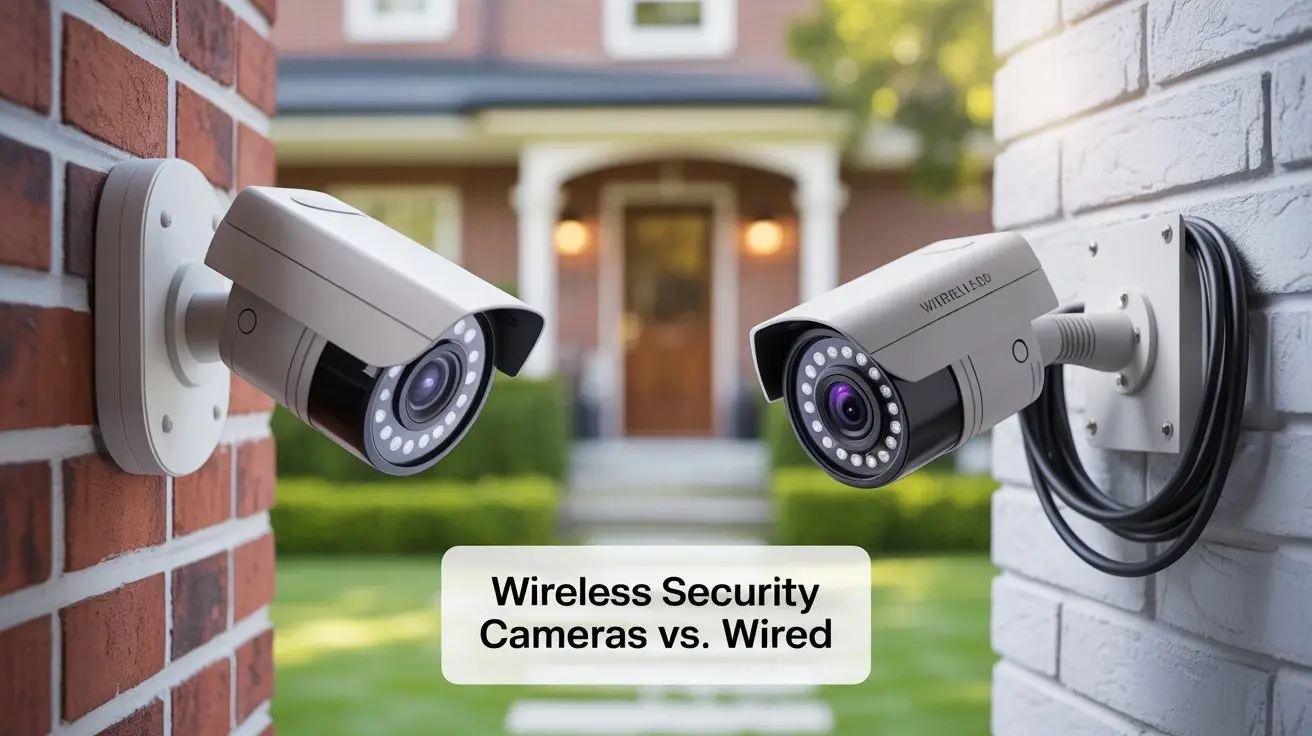
Wired Security Camera Systems
These systems, often referred to as DVR (Digital Video Recorder) or NVR (Network Video Recorder) systems, are the traditional gold standard for 24/7 surveillance.
- How they work: Cameras are physically wired to a central recording unit (DVR or NVR) which has a large internal hard drive. This unit continuously records footage from all connected cameras.
- Pros:
- True 24/7 continuous recording.
- Massive local storage capacity (easily expandable).
- No reliance on internet bandwidth for recording itself (only for remote viewing).
- Often higher resolution and frame rates.
- No subscription fees for basic recording functionality.
- Cons:
- Requires professional installation or significant DIY effort due to wiring.
- Higher upfront cost.
- Less flexible placement options due to wiring needs.
- Not typically battery-powered; requires constant power supply.
- Examples: Brands like Lorex, Swann, and Reolink offer comprehensive wired DVR/NVR systems.
Other Cloud-Based Systems with 24/7 Options
Some cloud-based security camera providers offer continuous recording as an optional feature, often at a higher subscription cost. These systems typically require a constant power source for the cameras.
- How they work: Cameras are connected to your Wi-Fi and continuously stream footage to the cloud. Subscription fees cover the storage and access to this continuous feed.
- Pros:
- True 24/7 recording to the cloud.
- Accessible from anywhere via app.
- No local DVR/NVR to manage.
- Often easier setup than wired systems.
- Cons:
- Requires a strong and stable internet connection for continuous streaming.
- Higher ongoing subscription costs compared to motion-activated cloud plans.
- Potential for internet outages to interrupt recording.
- Cameras typically need to be plugged in.
- Examples: Certain models from Nest (now Google Nest Cam with continuous recording option), Arlo (with specific plans and hardware), and Eufy (some models offer optional continuous recording).
When evaluating these alternatives, always check the specific recording capabilities and associated costs for each model and subscription tier.
Blink Camera Models and Recording Features Comparison
Blink offers a range of cameras, and while their core recording philosophy remains consistent, there are slight differences in features that might impact your experience. As of 2025-2026, the lineup typically includes:
| Feature/Model | Blink Outdoor 4 | Blink Indoor 4 | Blink Mini 2 | Blink Video Doorbell |
|---|---|---|---|---|
| Primary Recording Mode | Motion-Activated | Motion-Activated | Motion-Activated | Motion-Activated |
| 24/7 Continuous Recording | No | No | No | No |
| Live View Recording | Yes (with session limits) | Yes (with session limits) | Yes (with session limits) | Yes (with session limits) |
| Cloud Storage (with Subscription) | Yes (Basic/Plus) | Yes (Basic/Plus) | Yes (Basic/Plus) | Yes (Basic/Plus) |
| Local Storage (Sync Module 2) | Yes | Yes | No (requires subscription for cloud) | Yes |
| Battery Powered | Yes | Yes | No (Plug-in) | Yes (or wired) |
| Activity Zones | Yes | Yes | Yes | Yes |
| Person Detection | Yes | Yes | Yes | Yes |
Note: The Blink Mini 2, being a plug-in camera, offers the advantage of not being limited by battery life for its operational features like Live View, but it still relies on motion detection or manual Live View initiation for recording and does not offer 24/7 continuous recording. The Blink Video Doorbell can be battery-powered or wired, with wiring providing more consistent power.
Troubleshooting Recording Issues
If you're experiencing problems with your Blink cameras not recording as expected, here are some common troubleshooting steps:
- Check Subscription Status: Ensure your Blink Subscription Plan is active and correctly associated with your account and cameras. If you rely on cloud storage, a lapsed subscription will prevent clips from being saved.
- Verify Wi-Fi Connection: A stable Wi-Fi connection is crucial for both motion detection triggering and Live View functionality. Check your router and ensure the camera has a strong signal.
- Review Motion Detection Settings: As discussed, improper sensitivity or activity zone configuration is a frequent cause of missed recordings. Revisit these settings in the Blink app.
- Check Battery Levels: For battery-powered cameras, low battery levels can lead to reduced functionality, including recording. Replace batteries if they are low.
- Restart the Camera and Sync Module: Sometimes, a simple power cycle can resolve temporary glitches. Unplug the camera (or remove batteries) and the Sync Module, wait 30 seconds, and plug them back in.
- Update Firmware: Ensure your cameras, Sync Module, and the Blink app are running the latest firmware and software versions. Updates often include bug fixes that can resolve recording issues.
- Check Local Storage (if applicable): If using a Sync Module with a USB drive for local storage, ensure the USB drive is properly inserted, formatted correctly, and has sufficient free space.
- Contact Blink Support: If none of these steps resolve the issue, reach out to Blink's customer support for further assistance.
Future of Blink Recording Technology
While Blink has historically focused on battery efficiency and motion-activated recording for its consumer-friendly, affordable product line, the landscape of smart home security is constantly evolving. As of 2025-2026, there's a growing demand for more advanced features across all price points. It's plausible that Blink may explore options to enhance their recording capabilities in future product iterations or software updates.
Potential future developments could include:
- Enhanced AI Detection: More sophisticated AI could allow for smarter event triggers, reducing false positives and ensuring critical events are captured more reliably, even with shorter clips.
- Short-Term Continuous Recording Options: While full 24/7 might remain a premium feature, Blink could potentially introduce options for very short, continuous buffering periods (e.g., 30 seconds before and after motion) that are more efficient than constant recording.
- Wired Power as Standard for Certain Models: For cameras where battery life is less of a concern (like indoor or doorbell models), offering continuous power as a standard feature could open doors for more advanced recording modes.
- Integration with More Robust Storage Solutions: Future Sync Modules might support larger local storage capacities or different types of storage media, allowing for longer local recording archives, though still likely event-based.
However, it's important to manage expectations. Blink's core value proposition often lies in its affordability and ease of use for battery-powered surveillance. Introducing true 24/7 recording would likely require significant changes in hardware, power consumption, and potentially subscription models, which might shift its market position. For now, users seeking true 24/7 recording will likely need to consider dedicated systems.
In conclusion, the answer to "Do Blink cameras record 24/7?" is a definitive no. Blink cameras are engineered for battery efficiency, prioritizing motion-activated and on-demand Live View recording. While Blink's subscription plans, particularly Blink Plus, enhance the functionality of these modes by offering unlimited devices, extended Live View, and cloud storage, they do not unlock continuous, round-the-clock recording. For users who absolutely require 24/7 surveillance, investing in wired DVR/NVR systems or specific cloud-based alternatives with continuous recording options is necessary. By understanding Blink's recording modes and optimizing settings, you can achieve robust event-based coverage, but true 24/7 monitoring remains outside its current capabilities.