Deciding on a home security system involves many choices, and a common question is whether a traditional landline is still a requirement for ADT security. This guide will clarify ADT's current policies, explore alternatives, and help you make an informed decision for your home protection in 2025-26.
ADT Security and Home Phone Lines: An Overview
In the age of smartphones and ubiquitous internet, the question of whether a traditional home phone line is necessary for a robust security system like ADT is a pertinent one. For many years, a landline was the backbone of home security, providing a reliable communication channel to the monitoring center. However, technology has advanced significantly. ADT, a leader in home security, now offers multiple sophisticated monitoring solutions that do not rely on a traditional phone line. This shift reflects both technological evolution and changing consumer preferences, making it essential to understand the current landscape to ensure you are getting the best and most efficient protection for your home in 2025-26.
The Historical Role of Landlines in Security Systems
For decades, the standard for home security system monitoring was the analog telephone line. When a sensor was triggered – be it a door or window opening, motion detected, or a smoke alarm activated – the security panel would use the phone line to dial a pre-programmed number. This number typically connected to an ADT (or other security provider's) central monitoring station. The system would transmit a silent alarm code, indicating the type of event and the location of the trigger. Dispatchers at the monitoring center would then verify the alarm, often by calling the homeowner, and if necessary, dispatch emergency services like police or fire departments.
The landline was favored for several reasons:
- Ubiquity: In the late 20th and early 21st centuries, most homes had a landline. It was a common and accessible communication infrastructure.
- Reliability (perceived): While susceptible to physical line cuts, landlines were generally considered reliable for consistent voice and data transmission in normal conditions.
- Simplicity: The technology was straightforward and well-understood by both installers and consumers.
- Cost-Effectiveness: For many, the cost of a landline was already a household expense, so integrating a security system onto it added minimal incremental cost.
However, this reliance on landlines also presented vulnerabilities. A determined burglar could cut the phone line, disabling the alarm system. Power outages could also disrupt communication if the phone system wasn't adequately backed up. As technology progressed, these limitations became more apparent, paving the way for alternative communication methods.
ADT's Current Requirements for Home Phone Lines (2025-26)
As of 2025-26, ADT has significantly evolved its monitoring capabilities. The answer to "Do I need a home phone for ADT security?" is a resounding no for most modern ADT systems. ADT offers robust, reliable, and secure monitoring solutions that do not require a traditional landline. The primary methods of communication ADT utilizes are cellular and broadband internet.
Traditional Monitoring with a Landline
While not the primary focus for new installations, ADT may still offer or support landline monitoring for existing customers or in specific, limited circumstances. If your ADT system is older and was installed when landlines were the standard, it might be configured to use your phone line. However, ADT strongly encourages upgrades to their more advanced, landline-free systems for enhanced security and functionality. If you have a landline and are considering ADT, it's important to discuss whether your existing setup can be integrated or if an upgrade is recommended. In many cases, even if you have a landline, ADT will recommend their cellular or broadband solutions for superior performance.
Cellular Monitoring: The Landline-Free Solution
Cellular monitoring is ADT's most recommended and widely adopted landline-free solution. This system uses a dedicated cellular communicator built into the ADT security panel. This communicator functions much like a mobile phone, transmitting alarm signals wirelessly over cellular networks to ADT's monitoring centers.
Key benefits of cellular monitoring include:
- No Landline Required: This is the most significant advantage. You don't need a phone line at all.
- Tamper-Proof: Unlike landlines, cellular signals cannot be easily cut by intruders attempting to disable the system.
- Independent Power: The cellular communicator has its own backup battery, ensuring it functions even during power outages.
- Fast and Reliable: Modern cellular networks are fast and reliable, ensuring quick transmission of alarm signals.
- Remote Access: Often paired with ADT's mobile app, allowing you to control and monitor your system from anywhere.
For new ADT installations in 2025-26, cellular monitoring is often the default and preferred option, especially for those who have already cut their landline service or never had one.
Broadband Internet Monitoring
Another landline-free option ADT offers is broadband internet monitoring. This method uses your existing home internet connection (Wi-Fi or Ethernet) to send alarm signals to the ADT monitoring center.
Advantages of broadband monitoring:
- No Landline Needed: Leverages your existing internet service.
- Fast Signal Transmission: Internet connections are typically very fast.
- Cost-Effective: If you already have reliable internet, it can be a cost-effective solution.
Considerations for broadband monitoring:
- Dependence on Internet: If your internet service goes down (due to an outage, router issues, or service provider problems), your alarm system's primary communication channel is compromised.
- Power Outages: While the security panel has battery backup, your modem and router will also need power for the system to communicate.
To mitigate the risks associated with internet outages, ADT often recommends a dual-path system, which combines cellular and broadband monitoring. This ensures that if one communication path fails, the other can still transmit alarms.
Why ADT Offers Landline-Free Solutions
The shift away from landline dependency for home security is a strategic move by ADT, driven by several key factors that align with modern living and technological advancements.
The Decline of Landline Usage
Statistics consistently show a dramatic decrease in landline subscriptions across households worldwide. In 2025-26, a significant portion of homes, particularly younger demographics and those in urban areas, have "cut the cord" and rely solely on mobile phones and internet-based communication. ADT recognizes this trend and adapts its offerings to meet the needs of its customer base. Forcing customers to maintain an unnecessary landline for security would be a barrier to adoption and customer satisfaction. Data from the FCC in the US, for example, has shown a steady decline in residential landline connections for over a decade, with VoIP and mobile phones becoming the dominant communication methods.
Advantages of Cellular and Broadband Monitoring
Cellular and broadband monitoring offer distinct advantages over traditional landlines, making them superior choices for contemporary home security.
- Enhanced Security: As mentioned, cellular signals are much harder for intruders to disable compared to a physical phone line.
- Increased Reliability: While landlines can be affected by physical damage or line issues, cellular networks are robust and often have redundant infrastructure. Broadband offers high speed, though it's dependent on internet stability.
- Integration with Smart Home Technology: Cellular and broadband communicators are inherently digital and integrate seamlessly with modern smart home devices and apps. This allows for features like remote arming/disarming, live video feeds, and notifications.
- Future-Proofing: These technologies are the future of communication. Relying on them ensures that your security system remains compatible with evolving technologies.
Enhanced Reliability and Speed
Modern cellular networks (like 4G LTE and 5G) and high-speed broadband internet provide significantly faster and more reliable transmission of alarm signals. In a critical emergency, every second counts. A faster signal means quicker notification to the monitoring center and, consequently, faster dispatch of emergency services. This enhanced speed and reliability are crucial for effective protection. For instance, a cellular signal can typically transmit an alarm within seconds, whereas a landline might take slightly longer, and its vulnerability to physical tampering adds another layer of risk. Broadband is often the fastest, but its reliability hinges on the stability of your internet service provider.
Choosing the Right ADT Monitoring Option for You
Selecting the appropriate ADT monitoring method is a critical decision that impacts your home's security, convenience, and cost. It's not a one-size-fits-all answer, and several factors should guide your choice.
Key Factors to Consider
When deciding between landline, cellular, or broadband monitoring, consider the following:
- Your Existing Communication Infrastructure: Do you have a landline? Is your home equipped with reliable broadband internet?
- Reliability Needs: How critical is uninterrupted communication for your peace of mind? Are you in an area prone to power outages or internet disruptions?
- Budget: While initial costs might be similar, ongoing service fees and the cost of maintaining a separate landline can vary.
- Desired Features: Do you want to control your system via a mobile app, integrate with smart home devices, or view live video feeds? These features are often better supported by cellular or broadband systems.
- Home Location: In areas with spotty cellular reception, a broadband connection might be more reliable, or vice-versa.
Comparing Monitoring Methods (2025-26)
Here's a comparative look at the monitoring methods available through ADT in 2025-26:
| Feature | Landline Monitoring | Cellular Monitoring | Broadband Monitoring | Dual-Path Monitoring (Cellular + Broadband) |
|---|---|---|---|---|
| Requires Landline? | Yes | No | No | No |
| Vulnerability to Line Cutting | High | Very Low | Very Low (physical wires to modem) | Very Low |
| Reliability During Power Outages | Depends on phone company backup; panel needs power. | High (panel and cellular module have battery backup) | Low (requires modem/router and panel power) | Moderate (panel and cellular module have battery backup; modem/router needs power) |
| Speed of Signal Transmission | Moderate | Fast | Very Fast | Fastest (uses available path) |
| Smart Home Integration/App Control | Limited/None | Excellent | Excellent | Excellent |
| Typical Cost (Monthly Service) | Often bundled with landline, can be cheaper if landline already exists. | Slightly higher than landline, but no separate landline cost. | Similar to cellular, no separate landline cost. | Highest monthly cost due to dual redundancy. |
| ADT Recommendation (2025-26) | Discouraged for new installs; legacy support. | Highly Recommended (Primary) | Recommended (often with cellular backup) | Most Recommended for maximum reliability. |
Case Study: Cellular vs. Landline for a Modern Home
Consider the Smith family, who are homeowners in a suburban area in 2025. They have recently canceled their landline service, relying solely on their smartphones and home internet. They are looking for an ADT security system.
Option 1: Landline Monitoring (Not Applicable) The Smiths do not have a landline, so this option is immediately out. Even if they did, ADT would likely advise against it due to its vulnerabilities.
Option 2: Cellular Monitoring ADT installs a system with a cellular communicator. The system is connected to ADT's monitoring center via the AT&T or Verizon cellular network. If a break-in occurs, the alarm is triggered, and a signal is sent wirelessly. The cellular module has its own battery backup, so even if the power goes out and their internet modem fails, the alarm will still communicate. This provides peace of mind.
Option 3: Broadband Monitoring ADT installs a system that uses their home's Wi-Fi network. The alarm signals travel through their router to the internet and then to ADT. This is fast and efficient. However, if there's an internet outage, or if their router malfunctions, the system loses its primary communication.
Option 4: Dual-Path Monitoring ADT installs a system with both a cellular communicator and a broadband connection. If the internet is down, the system automatically switches to cellular. If the cellular signal is weak, it uses broadband. This offers the highest level of security and reliability.
For the Smiths, who value reliability and have embraced a landline-free lifestyle, cellular monitoring or dual-path monitoring would be the most suitable choices. Cellular offers a strong balance of security and cost, while dual-path provides ultimate peace of mind at a higher monthly service fee.
Installation and Setup Without a Landline
One of the most common concerns for those without a landline is the installation process. Fortunately, ADT has streamlined the setup for their landline-free systems, making it efficient and straightforward.
Cellular Installation Process
The installation of an ADT system with cellular monitoring is typically performed by a certified ADT technician.
- Site Survey: The technician will assess your home, identify optimal locations for sensors, cameras, and the main control panel.
- Panel Installation: The ADT control panel is installed, usually in a central, accessible location. The cellular communicator is integrated into or connected to this panel.
- Sensor Placement: Door/window sensors, motion detectors, glass break sensors, and other devices are installed.
- Configuration: The technician configures the system, ensuring all sensors are communicating with the panel. They will test the cellular signal strength to ensure optimal performance.
- System Testing: A comprehensive test is conducted to ensure all components are working correctly and that the system can successfully transmit signals to the ADT monitoring center via the cellular network.
- Customer Walkthrough: The technician will demonstrate how to use the system, including arming/disarming, understanding notifications, and using any associated mobile app.
The entire process is designed to be minimally invasive and can often be completed within a few hours.
Broadband Installation Process
For broadband-monitored systems, the process is similar, with a key difference in the communication setup.
- Site Survey & Panel Installation: Similar to cellular installation.
- Sensor Placement: Standard sensor installation.
- Network Connection: The ADT panel will be connected to your home's Wi-Fi network (requiring your Wi-Fi password) or via an Ethernet cable to your router.
- Configuration & Testing: The technician configures the system to use your internet connection for communication and performs thorough testing to ensure a stable link to the ADT monitoring center.
- Customer Walkthrough: Similar demonstration of system usage.
If you opt for a dual-path system, both cellular and broadband connection steps will be performed.
What If You Lose Internet or Cellular Signal?
This is a critical consideration for landline-free systems.
- Cellular Monitoring: If you lose cellular signal (e.g., due to a local tower outage or being in a dead zone), your system will likely alert you. ADT's cellular modules are designed to be robust, but signal interruption is possible. In such cases, the system may indicate a communication failure.
- Broadband Monitoring: If your internet service is down, your system will not be able to send alarms via broadband. This is a significant vulnerability if not mitigated.
- Dual-Path Systems: These are designed to overcome single-point failures. If your broadband fails, the system automatically switches to cellular. If cellular fails, it uses broadband. This redundancy significantly enhances reliability.
ADT's professional monitoring service includes constant supervision of your system's communication link. If a communication failure is detected (either cellular or broadband), you will typically be notified, and the system may display an error message. Regular testing of your system is recommended to ensure it's always ready.
Cost Considerations for ADT Monitoring
The cost of an ADT security system involves both the equipment and the monthly monitoring service. The choice of monitoring method can influence these costs.
Landline vs. Cellular vs. Broadband Costs
Landline Monitoring: If you already have a landline, the incremental cost for monitoring might be lower. However, the overall cost of maintaining a landline service (which can range from $20-$50+ per month) needs to be factored in. ADT's monitoring fees for landline systems might be competitive if bundled.
Cellular Monitoring: This typically involves a slightly higher monthly monitoring fee than basic landline monitoring, often ranging from $40-$60+ per month, depending on the package and equipment. However, you save the cost of a landline. The cellular communicator itself is usually included in the equipment cost or spread over the contract term.
Broadband Monitoring: Monthly costs are often comparable to cellular monitoring. The advantage is leveraging your existing internet service, which you are already paying for. The primary consideration is the stability of your internet service.
Dual-Path Monitoring: This is generally the most expensive option in terms of monthly service fees, as you are paying for the redundancy and enhanced reliability. Expect monthly costs to be at the higher end of the cellular/broadband range, potentially $50-$70+ per month.
It's important to note that ADT's pricing can vary based on promotions, the specific equipment package chosen, and the length of the monitoring contract. Always get a detailed quote from ADT for your specific needs.
Long-Term Savings and Value
While cellular and dual-path monitoring may have slightly higher monthly fees, they offer significant long-term value.
- Elimination of Landline Costs: For households that have cut the cord, avoiding the expense of a landline is a direct saving.
- Enhanced Security: The peace of mind that comes with a more secure and reliable monitoring system is invaluable. The potential cost of a burglary or home invasion far outweighs the marginal increase in monthly monitoring fees.
- Future-Proofing: Investing in modern, landline-free technology ensures your system remains relevant and effective for years to come, potentially avoiding costly upgrades down the line.
- Smart Home Integration: The ability to integrate with smart home devices and control your system remotely adds convenience and can contribute to overall home efficiency and security management.
In 2025-26, the trend is clearly towards integrated, connected home security. Choosing a landline-free solution aligns with this trend and provides a more robust, feature-rich, and secure experience.
Security System Features Beyond Monitoring
While the method of communication to the monitoring center is crucial, modern ADT systems offer a wealth of features that enhance security and convenience, most of which are best utilized with landline-free monitoring.
Smart Home Integration
ADT systems, particularly those utilizing cellular or broadband communication, integrate seamlessly with a wide range of smart home devices. This includes smart thermostats (like Nest or ecobee), smart locks (like August or Kwikset), smart lighting, and voice assistants (like Amazon Alexa or Google Assistant).
Benefits of integration:
- Automated Routines: For example, when you arm your ADT system, your smart lights can turn off, and your thermostat can adjust to an energy-saving mode.
- Remote Control: Lock or unlock doors, adjust lighting, and control your thermostat from the ADT mobile app, even when away from home.
- Enhanced Security: Integrate smart cameras to receive alerts with video clips when motion is detected, or use smart locks to grant temporary access to visitors.
This level of integration is far more sophisticated and reliable with digital communication paths like cellular and broadband compared to older landline systems.
Mobile App Control
The ADT Control app (or similar ADT mobile applications) is a cornerstone of modern home security. It allows users to:
- Arm and disarm their system remotely.
- Receive real-time alerts and notifications for any system events (e.g., alarm triggered, sensor activated, system armed/disarmed).
- View the status of all sensors and devices.
- Control integrated smart home devices.
- Access live video feeds from connected cameras.
This app functionality is a direct benefit of the system's ability to communicate wirelessly and digitally, which is standard with cellular and broadband monitoring.
Video Surveillance
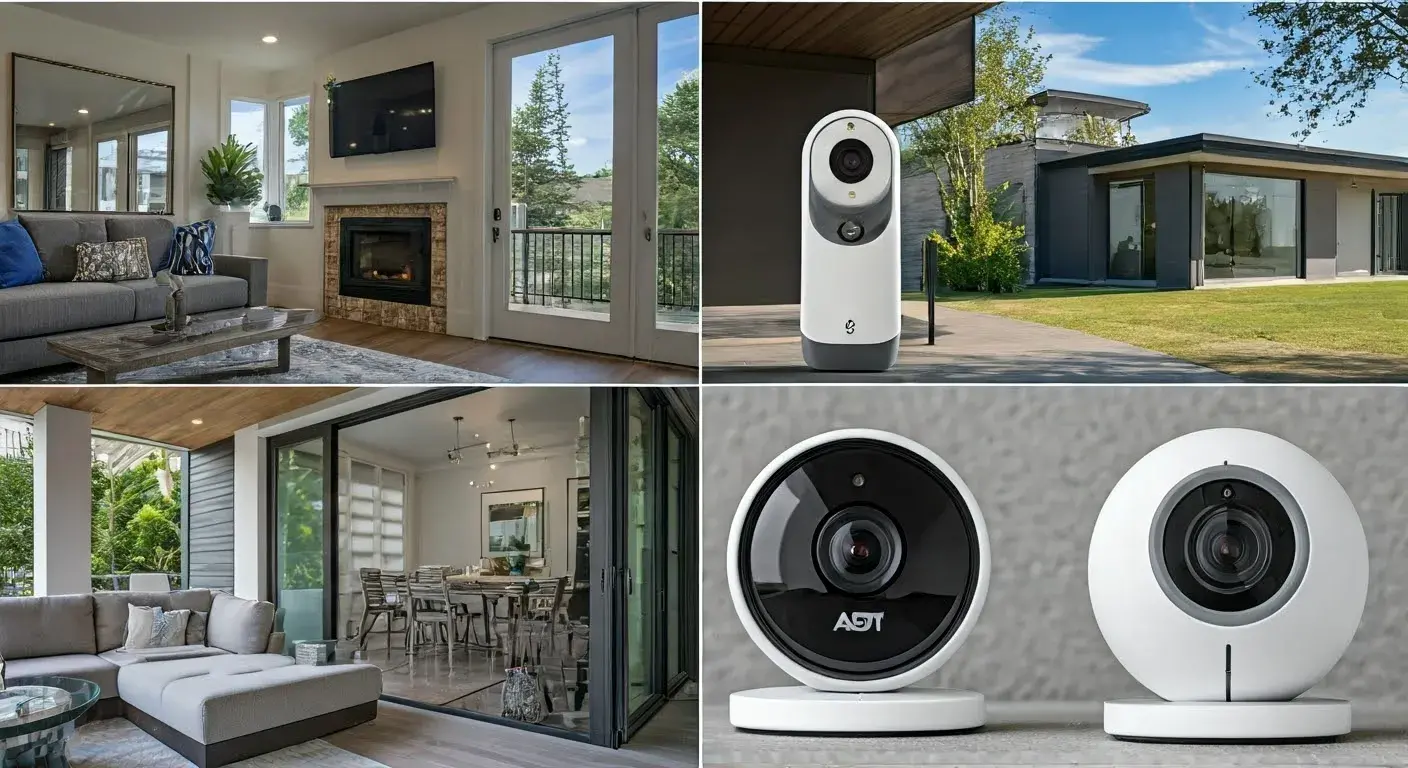
ADT offers a range of indoor and outdoor security cameras that can be integrated into your system. These cameras provide live streaming, motion-activated recording, and two-way audio capabilities.
How it works with landline-free systems:
- Video streams and recorded footage are transmitted over your broadband internet connection or, in some cases, via cellular data.
- Alerts with video clips can be sent directly to your mobile device via the ADT app.
- This allows you to visually verify alarms in real-time, helping to reduce false alarms and enabling a more informed response from emergency services.
The seamless integration of video surveillance with remote access and alerts is a significant advantage of modern, landline-free security systems.
Making the Final Decision
The question "Do I need a home phone for ADT security?" is definitively answered by ADT's modern offerings: no, you do not need a home phone for ADT security in 2025-26. ADT provides robust, reliable, and feature-rich security solutions that leverage cellular and broadband internet communication.
For most homeowners, especially those who have already "cut the cord" on their landline, cellular monitoring represents the ideal balance of security, reliability, and cost-effectiveness. It offers superior protection against tampering and functions independently of your home's internet service. For those who demand the absolute highest level of security and are willing to invest a bit more, ADT's dual-path monitoring, combining both cellular and broadband, provides an unparalleled layer of redundancy.
When choosing your ADT system, prioritize your specific needs and risk tolerance. Consider your existing communication infrastructure, your budget, and the smart home features you desire. ADT's commitment to technological advancement means their landline-free solutions are not just alternatives, but often superior options for comprehensive home protection in today's connected world. Consult with an ADT security expert to discuss your home's unique requirements and select the monitoring solution that best fits your lifestyle and provides the greatest peace of mind.