How Do I Stop My Adt Alarm From Beeping ?
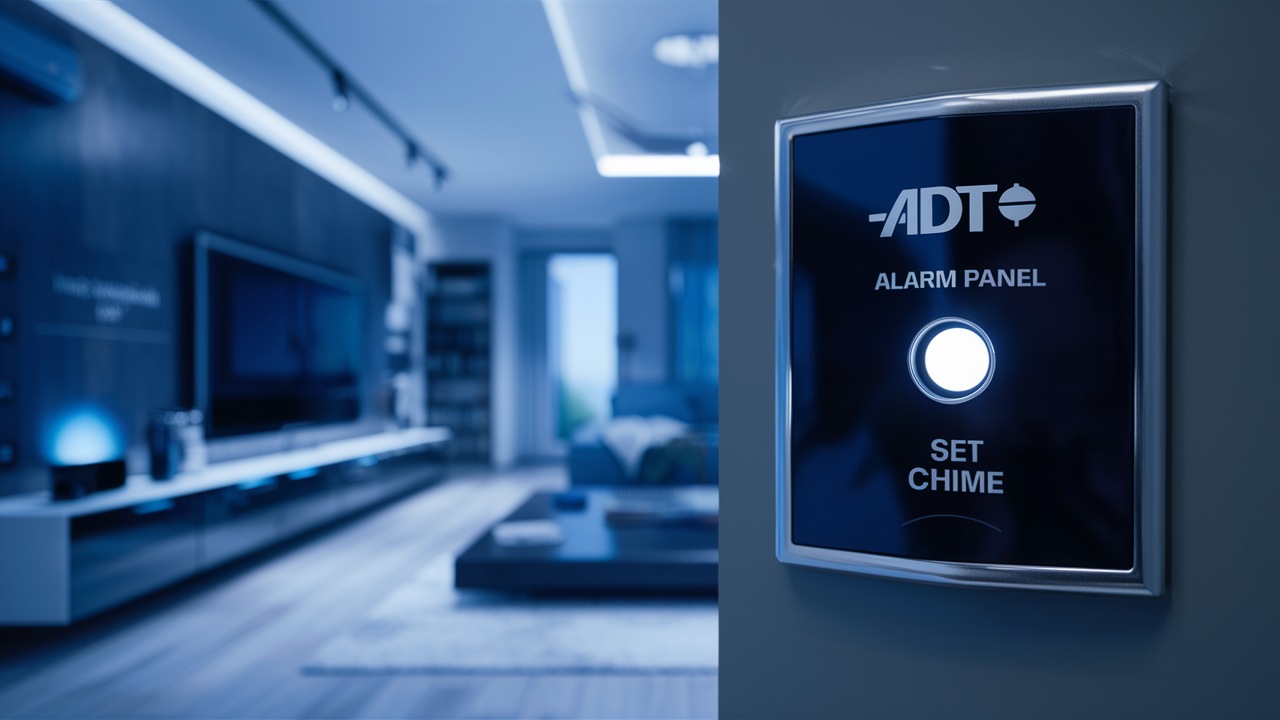
Experiencing a beeping ADT alarm can be jarring, but understanding how to silence it is straightforward. This guide provides immediate solutions and in-depth troubleshooting for common ADT alarm beeping issues, empowering you to regain peace and quiet quickly and effectively.
Understanding Why Your ADT Alarm is Beeping
The persistent beeping of your ADT alarm system is rarely arbitrary. It's the system's way of communicating a problem or status change that requires your attention. In 2025, ADT systems are designed with sophisticated diagnostics, meaning a beep often points to a specific issue rather than a general malfunction. Understanding the context of the beep—its pattern, duration, and any accompanying error messages on the keypad—is the first crucial step in diagnosing and resolving the problem. Without this initial understanding, you might find yourself addressing the symptom rather than the root cause, leading to recurring annoyances.
ADT alarm systems, whether older wired models or newer wireless smart systems, employ a variety of sounds to alert homeowners. These can range from a single, short beep to a continuous, high-pitched tone, or even a series of distinct chirps. Each sound can signify a different type of alert, such as a low battery in a sensor, a communication failure with the ADT monitoring center, a system fault, or a reminder for a scheduled maintenance check. In 2025, the trend towards interconnected smart home devices means that alarm systems are more integrated than ever, and sometimes, a beep might even be related to a network issue or a firmware update notification, though ADT typically communicates these through other means.
The primary goal of the beeping is to ensure you are aware of a situation that could compromise your home's security or the system's functionality. Ignoring it is never the best approach. Instead, by learning to interpret these auditory cues, you can efficiently troubleshoot and restore your system to optimal performance. This guide will break down the most common reasons for an ADT alarm beeping and provide clear, actionable steps to silence it, ensuring your home remains secure and your peace of mind is restored.
Common Causes and Quick Fixes
When your ADT alarm starts beeping, it's usually a sign of a specific, often easily resolvable, issue. By understanding these common culprits, you can often silence the alarm within minutes. This section focuses on the most frequent reasons for beeping and provides immediate solutions.
Low Battery in Sensors or Keypad
One of the most prevalent reasons for an ADT alarm to beep is a low battery in one or more of its components. This applies to wireless sensors (door/window contacts, motion detectors, glass break sensors) and sometimes the main keypad itself. The system is designed to alert you well in advance of a battery completely dying, preventing a security lapse. The beep is typically a single chirp at regular intervals (e.g., every 30-60 seconds), and the keypad might display a "low batt" or similar message.
Identifying the Affected Sensor
Most modern ADT keypads will indicate which sensor is experiencing a low battery. Look for messages like "Zone 3 Low Batt" or "Front Door Low Battery." If your keypad doesn't specify, you may need to check each sensor individually. Older systems might require you to cycle through zones using the keypad buttons.
Replacing the Battery
Once identified, replacing the battery is usually a simple process. Most sensors use standard coin-cell batteries (like CR2032 or CR1632) or AA/AAA alkaline batteries. Always ensure you purchase the correct battery type for your specific sensor model. After replacing the battery, close the sensor cover securely. The system should then recognize the new battery and stop beeping within a few minutes. If the beeping continues, it might take up to 24 hours for the system to fully reset and clear the low battery notification, though usually, it's much faster.
Statistics for 2025
In 2025, it's estimated that approximately 40% of all ADT alarm beeping issues are attributed to low batteries in wireless sensors. This percentage remains consistent year-over-year due to the natural lifespan of batteries, typically lasting 2-5 years depending on usage and environmental factors.
Power Interruption or AC Power Loss
ADT alarm systems have a primary power source (AC power) and a backup battery. If the AC power to your main control panel is interrupted—due to a power outage, a tripped breaker, or an unplugged transformer—the system will switch to its backup battery. During this transition, or if the backup battery is also low, the system might beep to alert you of the power issue. This beep is often more persistent than a low battery chirp and may be accompanied by an "AC Loss" or "No AC Power" message on the keypad.
Checking Your Home's Power
The first step is to check if your home has lost power. Look at other lights and appliances. If they are off, the issue is likely a neighborhood power outage, and your ADT system will resume normal operation once power is restored. If your home has power, check the circuit breaker that supplies power to your ADT control panel. The transformer for the panel is often plugged into a standard outlet, so ensure it's securely plugged in and the outlet is live.
Backup Battery Status
If the AC power is restored but the beeping continues, the backup battery may be depleted or failing. These batteries are designed to last several years (typically 3-7 years). If your system is older or has recently experienced prolonged power outages, the backup battery might need replacement. This is a service that ADT technicians can perform, or in some cases, a user-replaceable battery might be available for certain panel models.
System Fault or Malfunction
Occasionally, the ADT alarm system might detect an internal fault or a malfunction in one of its components. This could be due to a software glitch, a hardware issue, or a problem with a specific sensor or module. The beeping in this scenario can vary in pattern and intensity. The keypad will likely display a "System Fault," "Trouble," or a specific error code. These codes are critical for diagnosis.
Interpreting Error Codes
ADT keypads often display numerical or alphanumeric error codes when a fault occurs. For example, "E4" might indicate a communication error, while "E2" could point to a keypad malfunction. Consult your ADT system's user manual or the ADT website for a comprehensive list of error codes and their meanings for your specific panel model. Understanding these codes is key to pinpointing the exact nature of the fault.
Basic Reset Procedures
For some minor system faults, a simple system reset might resolve the issue. This often involves disarming the system, then pressing and holding a specific button combination on the keypad, or sometimes, temporarily disconnecting the main power and backup battery. Always refer to your user manual before attempting a reset, as incorrect procedures can sometimes exacerbate problems. If the fault persists after a reset, it indicates a more significant issue requiring professional attention.
Communication Failure with ADT Monitoring Center
Your ADT alarm system is designed to communicate with the ADT monitoring center to report alarms and system events. If there's a disruption in this communication—due to a cut phone line (for older systems), a problem with your internet connection (for IP-based systems), or an issue with ADT's network—the system will alert you. This is often indicated by a specific beep pattern and a message like "Comm Failure" or "No Dial Tone."
Checking Phone Line or Internet Connection
For systems using a landline, check if your phone line is active and functioning. For IP or cellular-based systems, verify your internet connection or cellular signal strength. Sometimes, a simple router reboot or ensuring your cellular module has a signal can resolve this. If you have a traditional landline, ensure it hasn't been accidentally disconnected or damaged.
System Test Mode
ADT systems have a built-in test mode that allows you to check communication without triggering a full alarm response. You can usually activate this through your keypad or by contacting ADT customer service. Running a system test can help determine if the communication link is restored. If the test fails, it confirms a communication issue that ADT support will need to address.
Statistics for 2025
Communication failures account for roughly 15% of ADT alarm beeping incidents in 2025. This is largely influenced by the increasing reliance on internet and cellular communication, which can be subject to network disruptions or configuration issues. Landline-based systems, while declining, still contribute a smaller percentage to this category.
Door/Window Sensor Tampering or Malfunction
Each door and window sensor consists of two parts: a magnet and a sensor. When the door or window is closed, the magnet is close to the sensor, and the circuit is complete. If the sensor is dislodged, the magnet is moved too far away, or the sensor itself is damaged, the system will register an open or tampered state. This can cause the system to beep, especially if it's armed or if the sensor is in a critical zone.
Realigning Sensors and Magnets
Inspect the sensors and their corresponding magnets on doors and windows. Ensure they are properly aligned and within the recommended proximity (usually less than an inch apart when closed). Sometimes, vibrations or settling of the house can cause them to misalign. Gently reposition them and re-secure them with their adhesive or screws. Test by opening and closing the door/window to see if the sensor registers the change correctly on the keypad.
Checking for Damage
Look for any visible signs of damage to the sensor casing or wiring. If a sensor appears broken or has been exposed to moisture, it may need to be replaced. Contact ADT for a replacement if the sensor is deemed faulty.
Troubleshooting Specific ADT Panels
ADT offers a range of alarm panels, and the specific steps to silence a beep can vary slightly between models. Understanding the nuances of your particular panel is key to efficient troubleshooting. Here, we'll cover common ADT panel types and their typical beeping scenarios.
ADT Command & Control Panels (e.g., ADT Command, ADT Pulse)
These are ADT's more modern, smart-home integrated systems, often featuring touchscreens and app connectivity. Beeping on these systems is usually clearly indicated on the touchscreen interface.
Common Beeping Causes and Solutions
- Low Battery: The touchscreen will display a notification, often with an icon. Tap the notification to see which sensor needs a battery. Follow the standard battery replacement procedure.
- AC Power Loss: A prominent alert will appear. Check your home's power and the panel's power adapter. If AC power is restored and the alert persists, the backup battery might be low.
- System Fault: The panel will display a "Fault" or "Trouble" message. Tap it to reveal an error code or description. Common codes include "Cellular Signal Lost" or "Wi-Fi Connection Error." For Wi-Fi issues, reboot your router and the panel. For cellular issues, ensure the panel is in an area with good signal strength.
- Sensor Tampering/Malfunction: The panel will indicate the specific zone. Check the sensor and magnet alignment.
Disarming and Silencing
On ADT Command and Pulse panels, you can usually silence a beep by entering your master code and pressing "Disarm." If the beep is a persistent trouble condition, you may need to acknowledge the alert on the touchscreen after addressing the underlying issue. For critical faults, the beep might continue until the issue is resolved by a technician.
ADT Safewatch Panels (e.g., Safewatch 3000, Safewatch 4000)
These are older, but still widely used, ADT panels. They typically feature a more traditional keypad with physical buttons.
Common Beeping Causes and Solutions
- Low Battery: The keypad will often display "Low Batt" and the zone number. Replace the battery in the indicated sensor.
- AC Power Loss: A "No AC" or "AC Fail" message will appear. Check your home's power and the transformer.
- System Fault: The keypad will display "System Trouble" or a specific error code (e.g., "E2," "E4"). Consult your manual to interpret the code. A common troubleshooting step is to press the "Status" or "Check" button to see the trouble condition.
- Communication Failure: A "Comm. Failure" message will be displayed. Check your phone line or internet connection.
Disarming and Silencing
To silence a beep on these panels, you typically need to enter your user code and press the "Disarm" button. If the beep is a trouble condition, you may need to press the "Status" or "Check" button after entering your code to acknowledge the trouble. The beep will usually stop once the issue is resolved, or after acknowledging it, though it may return if the problem is not fixed.
ADT DSC Systems (e.g., DSC PowerSeries, Neo)
ADT often installs and services systems manufactured by DSC. These systems are known for their reliability and robust features.
Common Beeping Causes and Solutions
- Low Battery: The keypad will display "BATT" or a similar indicator. The system may also beep once every minute. Replace the sensor battery.
- AC Power Loss: The keypad will show "AC" or "Power Failure." Check the power source and connection.
- System Fault: The keypad will display "Trouble" (often indicated by a flashing "T" or "TRBL" icon). Pressing the "TRBL" button or "2" will reveal the specific trouble condition code. Common codes include "Bell Supervision Fault," "Module Supervision Fault," or "Phone Line Fault."
- Communication Issues: For systems with phone line or cellular communicators, a "Phone Line Fault" or "Cellular Trouble" might be displayed.
Disarming and Silencing
To silence a beep on a DSC system, you generally need to enter your user code and press "Disarm." For trouble conditions, after entering your code, press the "TRBL" button (or the number corresponding to the trouble code, often "2") to acknowledge the fault. The beep will cease once the issue is resolved. If it's a persistent trouble, the beep may resume if the underlying problem isn't fixed.
Comparison Table: Common ADT Panel Beep Issues
| Panel Type | Typical Beep Cause | Keypad Indication | Immediate Action |
|---|---|---|---|
| ADT Command/Pulse | Low Battery | Touchscreen Notification (e.g., "Low Battery Zone 5") | Tap notification, replace battery. |
| ADT Command/Pulse | AC Power Loss | Prominent Alert (e.g., "AC Power Lost") | Check home power, panel transformer. |
| Safewatch 3000/4000 | Low Battery | "Low Batt" + Zone Number | Replace sensor battery. |
| Safewatch 3000/4000 | System Fault | "System Trouble" or Error Code | Press "Status," check manual for code. |
| DSC PowerSeries/Neo | Low Battery | "BATT" indicator | Replace sensor battery. |
| DSC PowerSeries/Neo | System Fault | "Trouble" icon (e.g., flashing "T") | Press "TRBL" or "2" to view code. |
Advanced Troubleshooting and When to Call ADT
While many ADT alarm beeping issues can be resolved with basic troubleshooting, some problems require a deeper dive or professional intervention. This section covers more complex scenarios and provides guidance on when it's time to contact ADT support.
Understanding System Status Lights
Many ADT panels have status lights that can provide quick visual cues about the system's health. These lights, often labeled "Ready," "Armed," "Trouble," or "AC," can offer immediate insight before even looking at the keypad. For instance, a flashing "Trouble" light is a universal indicator that something is wrong.
- Ready Light: Indicates the system is ready to be armed. If it's not lit, a zone might be open or a fault exists.
- Armed Light: Shows the system is currently armed (Stay or Away).
- Trouble Light: A flashing or solid trouble light signifies a system fault, low battery, or communication issue.
- AC Light: Indicates that the system is receiving main AC power. If this is off and the system is beeping, it points to a power problem.
Consult your specific panel's manual to understand the exact meaning of each light's state (solid, flashing, off).
Troubleshooting Communication Issues in Detail
Communication failures can be tricky, especially with the shift towards IP and cellular communicators. For older landline systems, ensure the phone line is active by trying to make a call from the same jack. For IP systems, verify your home Wi-Fi is working and that the ADT panel is properly connected to your network. Sometimes, a firewall setting on your router might interfere, though ADT systems are typically configured to bypass common firewall issues. For cellular communicators, ensure the panel is located in an area with sufficient cellular signal strength. If you've recently moved your router or made network changes, these might need to be reconfigured. ADT's advanced support team can often remotely diagnose and reset communication modules.
Dealing with False Alarms
False alarms can be incredibly frustrating and may sometimes be accompanied by beeping or specific error messages. Common causes include:
- Pet Immunity Settings: Motion detectors in homes with pets need to be properly configured to avoid triggering on animal movement. Ensure the sensitivity is set correctly or that pet-immune sensors are used.
- Environmental Factors: Drafts can cause doors to move slightly, triggering door sensors. Changes in temperature or humidity can sometimes affect wireless sensors.
- User Error: Incorrectly arming or disarming the system, or forgetting to bypass a zone that is currently open, can lead to an alarm.
If false alarms are frequent, review your system's user manual for proper operation and consider having a technician assess sensor placement and system configuration. For 2025, ADT is increasingly using AI-powered analytics to help reduce false alarms, but user education remains key.
When to Contact ADT Support
While this guide covers many common issues, there are times when professional help is necessary. You should contact ADT support if:
- You've tried all basic troubleshooting steps and the beeping persists.
- The keypad displays an error code you cannot resolve with your user manual.
- You suspect a hardware failure with the main control panel or a critical component.
- The system is repeatedly experiencing false alarms.
- You are uncomfortable performing any of the troubleshooting steps, especially those involving power or battery replacement.
- The system is under warranty and requires professional service.
ADT's customer service and technical support are equipped to handle a wide range of issues. They can often diagnose problems remotely, schedule technician visits, and provide guidance specific to your system. For 2025, ADT's remote support capabilities have been significantly enhanced, allowing for faster diagnosis and resolution of many common issues without requiring an on-site visit.
Statistics for 2025: ADT Service Calls
In 2025, approximately 30% of ADT service calls related to beeping alarms are resolved over the phone through guided troubleshooting. The remaining 70% require a technician visit, with the most common reasons being backup battery replacement (20%), sensor replacement (15%), and complex system faults or communication module issues (35%).
Understanding ADT's Service Plans
Many ADT customers are enrolled in service plans that cover maintenance and repairs. If you have such a plan, contacting ADT is often the most cost-effective and efficient way to resolve persistent issues. These plans can provide peace of mind, knowing that expert assistance is readily available when needed.
Preventative Measures and Maintenance
The best way to stop your ADT alarm from beeping is to prevent the issues that cause it in the first place. Regular maintenance and a few proactive steps can ensure your system runs smoothly and reliably.
Regular Battery Checks and Replacements
As low batteries are the most common cause of beeping, proactive replacement is key. While your system will alert you, don't wait for the beep. If you know your sensors are several years old, consider having them checked during a routine service visit or proactively replacing batteries in older sensors. For 2025, battery life is improving, but regular checks remain crucial.
System Testing
Most ADT systems have a self-test function. Running a system test periodically (e.g., monthly) can help identify potential issues before they become critical. This test typically checks sensor communication, battery levels, and the connection to the monitoring center. Follow your user manual for instructions on how to perform a system test. Remember to notify ADT monitoring center before conducting a test to avoid accidental dispatch.
Keeping Your Contact Information Updated
Ensure ADT has your current contact information. This is vital for them to reach you in case of an alarm or system issue. It also helps them send you important updates about your service or system.
Understanding Your System's Limitations
Know the capabilities and limitations of your specific ADT system. For example, understand the range of wireless sensors, the impact of environmental factors, and how to properly arm and disarm your system. Educating all household members on system operation can prevent user-related errors that might trigger alarms or beeping.
Professional Maintenance Checks
Consider scheduling annual or bi-annual maintenance checks with ADT. A technician can inspect all components, test system functionality, update firmware if necessary, and identify potential issues that you might not notice. This proactive approach can save you from unexpected beeps and ensure your system is always in optimal condition. In 2025, ADT is increasingly promoting proactive maintenance plans to enhance customer satisfaction and system reliability.
Example of a Preventative Schedule (2025)
- Monthly: Perform a system self-test (notify ADT first). Check for any visible damage to sensors.
- Annually: Test your keypad's battery if applicable. Note the age of your backup battery and sensor batteries.
- Every 2-3 Years: Proactively replace backup batteries in the main control panel. Consider replacing batteries in older wireless sensors, even if they haven't indicated low power.
- Every 3-5 Years: Schedule a professional maintenance check with an ADT technician.
By implementing these preventative measures, you can significantly reduce the likelihood of your ADT alarm beeping unexpectedly, ensuring your home remains secure and your system operates without interruption.
In conclusion, a beeping ADT alarm is a signal, not a disaster. By understanding the common causes like low batteries, power interruptions, system faults, and communication failures, you are well-equipped to address the issue. This guide has provided a comprehensive roadmap, from quick fixes for specific panel types to advanced troubleshooting and the importance of preventative maintenance. Remember to consult your user manual for model-specific instructions and don't hesitate to contact ADT support when needed. Proactive care and timely attention to system alerts will ensure your ADT system continues to provide the security and peace of mind you expect.