How To Jam Security Cameras
This guide explores the technical aspects and ethical considerations surrounding methods that might interfere with security camera functionality. We aim to provide a comprehensive understanding of potential camera vulnerabilities and countermeasures, empowering informed decision-making in security management.
Understanding Security Camera Technology
In 2025 and 2026, the landscape of security camera technology is more sophisticated than ever. Understanding the fundamental principles behind these systems is crucial for appreciating their vulnerabilities and the methods that might attempt to bypass them. Modern security cameras are not just simple recording devices; they are integrated components of complex surveillance networks. They range from basic analog cameras transmitting video over coaxial cables to advanced IP (Internet Protocol) cameras that stream data over networks, often wirelessly.
Analog vs. Digital Cameras
Analog cameras, while still in use in some legacy systems, transmit raw video signals. These signals are susceptible to interference, particularly if the cabling is not properly shielded or if external electromagnetic interference is present. Digital cameras, especially IP cameras, offer a higher level of security and functionality. They encode video into digital data packets, which are then transmitted. This digital format can be more resilient to certain types of interference but introduces new vulnerabilities related to network security.
Key Components of a Modern Surveillance System
A typical modern security camera system comprises several interconnected parts:
- Cameras: The primary image capture devices. These can be fixed, PTZ (Pan-Tilt-Zoom), dome, bullet, or specialized cameras with features like night vision, wide-angle lenses, and motion detection.
- Recording Devices: This includes Network Video Recorders (NVRs) for IP cameras and Digital Video Recorders (DVRs) for analog cameras. These devices store the captured footage.
- Networking Infrastructure: For IP cameras, this involves routers, switches, and Ethernet cables or Wi-Fi networks. The security of this network is paramount.
- Monitoring Stations: Where footage is viewed and managed, often involving monitors, computers, and specialized surveillance software.
The evolution towards higher resolutions (4K and beyond), AI-powered analytics (facial recognition, object detection), and cloud-based storage in 2025-26 has further increased the complexity and interconnectedness of these systems, presenting a wider attack surface.
Wireless vs. Wired Systems
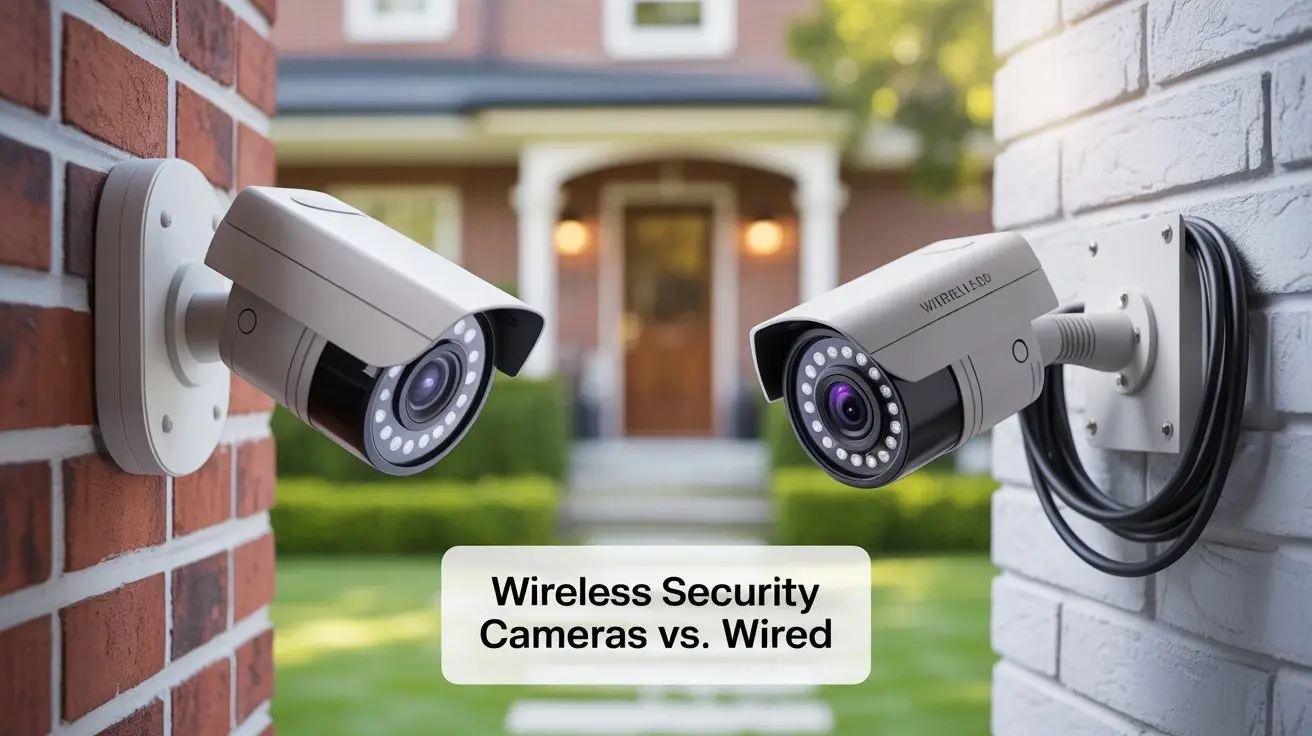
Wireless security cameras offer flexibility in installation but rely on radio frequencies for data transmission. This makes them inherently vulnerable to radio frequency jamming. Wired systems, typically using Ethernet cables for IP cameras, offer greater stability and are less susceptible to RF interference. However, the physical cables themselves can be a point of vulnerability if they are accessible.
Common Communication Protocols
IP cameras commonly use protocols like RTSP (Real-Time Streaming Protocol) for video streaming and ONVIF (Open Network Video Interface Forum) for interoperability between different manufacturers' devices. Understanding these protocols is key to comprehending how data flows and where potential disruptions can occur.
Overview of Potential Camera Interference Methods
The term "jamming security cameras" is broad and can encompass various techniques aimed at disrupting their normal operation. These methods range from simple physical obstructions to sophisticated electronic warfare. In 2025-26, as camera technology advances, so do the methods used to circumvent them. It's important to distinguish between legitimate security testing and malicious intent.
Categorizing Interference Techniques
Potential interference methods can be broadly categorized into three main areas:
- Electronic Interference: Disrupting the camera's electronic signals, either wirelessly or through wired connections.
- Physical Interference: Directly obstructing the camera's view or damaging its components.
- Network and Software Interference: Targeting the digital infrastructure that supports the cameras.
Distinguishing Intent: Security Testing vs. Malicious Activity
It is crucial to differentiate between legitimate security testing, often performed by ethical hackers or security professionals to identify vulnerabilities, and malicious activities intended to compromise security for criminal purposes. This guide discusses technical principles that could be applied in either context, but emphasizes the legal and ethical ramifications of unauthorized interference.
The Evolving Threat Landscape
With the proliferation of smart home devices and IoT (Internet of Things) security cameras, the attack surface has expanded significantly. Attackers are increasingly leveraging sophisticated tools and techniques, making it essential for security professionals and system administrators to stay ahead of emerging threats. The use of AI in surveillance also presents new avenues for disruption, such as overwhelming AI algorithms with manipulated data.
Radio Frequency (RF) Jamming Explained
Radio Frequency (RF) jamming is one of the most commonly discussed methods for interfering with wireless electronic devices, including wireless security cameras. This technique involves broadcasting a strong radio signal on the same frequencies used by the target device, effectively overwhelming its ability to receive or transmit legitimate signals.
How RF Jamming Works
Wireless security cameras, like many other wireless devices, operate on specific radio frequency bands. Common bands include 2.4 GHz and 5 GHz for Wi-Fi-enabled cameras. An RF jammer is a device that emits electromagnetic noise across these frequencies. When the jammer's signal is stronger than the legitimate signal from the camera or its access point, it can drown out the intended communication, causing the camera to lose its connection or stop transmitting video.
Types of RF Jammers
RF jammers can vary in sophistication:
- Broadband Jammers: These emit noise across a wide range of frequencies, making them effective against multiple types of wireless devices but potentially less efficient and more detectable.
- Narrowband Jammers: These focus their jamming power on a specific frequency band, making them more effective against a particular type of device but less versatile.
- Smart Jammers: More advanced jammers can analyze the target signal and adapt their jamming strategy, making them harder to detect and counter.
Impact on Wireless Cameras
When a wireless camera is subjected to RF jamming, several outcomes are possible:
- Loss of Connectivity: The camera can no longer connect to its Wi-Fi network or the NVR, ceasing to transmit live video or alerts.
- Intermittent Signal: The connection may drop in and out, leading to fragmented recordings or unreliable live feeds.
- Data Corruption: In some cases, strong interference might corrupt the data being transmitted, rendering the footage unusable.
- Alerts: Some advanced systems might detect jamming attempts and trigger alerts, although this is not always the case.
Limitations and Detectability
RF jamming is not a perfect solution for attackers. Key limitations include:
- Range: The effectiveness of a jammer is dependent on its power output and the distance to the target device.
- Directionality: Some jammers are omnidirectional, while others can be directional, requiring precise aiming.
- Detectability: Jamming devices often emit detectable signals themselves. Spectrum analyzers and intrusion detection systems can identify jamming activity.
- Legality: Operating RF jammers is illegal in most jurisdictions, carrying significant penalties.
In 2025-26, regulatory bodies continue to monitor and enforce regulations against unauthorized RF jamming. The FCC in the US, for example, has strict rules against the use of such devices.
Practical Considerations for RF Jamming
To effectively jam a wireless camera, an attacker would need to:
- Identify the specific frequencies the camera uses (e.g., 2.4 GHz or 5 GHz Wi-Fi).
- Acquire a suitable RF jamming device.
- Position the jammer within effective range of the camera's wireless signal.
- Operate the jammer, potentially needing to overcome encryption if present (though jamming primarily targets the physical layer of communication).
It is important to note that while RF jamming can disrupt wireless communication, it does not affect wired cameras or cameras that operate on independent, non-RF communication channels.
Optical Jamming Techniques
Beyond electronic interference, optical jamming methods target the camera's ability to capture clear visual data. These techniques are often simpler and more direct, relying on physical manipulation of the camera's environment or its lens.
Physical Obstruction
The most basic form of optical jamming is physically blocking the camera's field of view. This can be achieved by:
- Covering the Lens: Using tape, paint, or any opaque material to cover the camera's lens.
- Positioning Objects: Placing objects, such as furniture, plants, or vehicles, in front of the camera to obscure its view.
- Creating Visual Clutter: In some scenarios, overwhelming the camera's image processing with excessive movement or visual noise might be attempted, though this is less effective against modern AI-powered systems.
Light-Based Interference
Intense light sources can also be used to disrupt camera operation, particularly in low-light conditions or when cameras are equipped with infrared (IR) illuminators for night vision.
- Infrared (IR) Overload: Many security cameras use IR LEDs to illuminate the scene in darkness. Shining a more powerful IR light source directly at the camera's lens can saturate its sensor, creating a "whiteout" effect or rendering the image unusable. This is particularly effective against cameras that rely heavily on IR for night vision.
- Visible Light Overload: Similarly, extremely bright visible light sources, such as powerful spotlights or strobes, can temporarily blind or overwhelm a camera's sensor, especially if it lacks advanced dynamic range capabilities.
- Laser Interference: While more sophisticated and potentially dangerous, lasers can be used to disrupt camera sensors. A focused laser beam directed at the lens can cause permanent damage to the sensor or create significant visual artifacts. This is a highly illegal and dangerous practice.
Mirroring and Reflection Techniques
Sophisticated optical jamming can involve using reflective surfaces to confuse the camera.
- Mirror Placement: Strategically placing mirrors can reflect the camera's own view back at itself, or create misleading images that obscure the actual scene. This can be used to create a loop of footage or to hide movement.
- Specialized Reflective Materials: Materials designed to reflect light in specific ways, or even to emit their own light when illuminated, could theoretically be used to confuse camera sensors.
Impact on Different Camera Types
Optical jamming techniques are generally more effective against:
- Visible Light Cameras: Subject to blinding by bright lights or physical obstruction.
- Night Vision Cameras: Particularly vulnerable to IR overload.
- Cameras with Limited Dynamic Range: Easily overwhelmed by sudden changes in light intensity.
Cameras with advanced features like adaptive IR, superior low-light performance, and robust dynamic range are more resilient to these forms of optical interference.
Detection and Countermeasures
Detecting optical jamming often involves visual inspection of the camera's environment for obstructions or unusual light sources. Countermeasures typically involve physical security, robust camera design, and intelligent software that can detect anomalies in the image feed.
Network and Software Disruption
As security cameras become increasingly integrated into IP networks, their vulnerabilities shift from purely physical or RF-based to digital and software-related. Network and software disruption methods target the data flow, control signals, and operational integrity of the surveillance system.
Denial of Service (DoS) and Distributed Denial of Service (DDoS) Attacks
These attacks aim to overwhelm a network device or server with traffic, making it unavailable to legitimate users. In the context of security cameras:
- Targeting the NVR/DVR: A DoS/DDoS attack directed at the NVR or DVR can prevent it from receiving or storing video feeds, effectively disabling the recording aspect of the surveillance system.
- Targeting IP Cameras: Individual IP cameras can be targeted with DoS attacks to disrupt their streaming capabilities.
- Targeting the Network Infrastructure: Routers and switches that support the camera network can also be targeted, disrupting connectivity for all connected devices.
DDoS attacks, originating from multiple compromised sources, are particularly difficult to defend against. In 2025-26, botnets capable of launching massive DDoS attacks are more sophisticated than ever.
Man-in-the-Middle (MitM) Attacks
In a MitM attack, an attacker intercepts communication between two parties (e.g., a camera and the NVR, or the NVR and a monitoring station) without their knowledge. This allows the attacker to eavesdrop, alter, or inject malicious data.
- Intercepting Video Streams: An attacker could intercept video streams to view live footage or alter recordings.
- Injecting False Data: Malicious data could be injected to trigger false alarms or disable legitimate alerts.
- Gaining Control: In some cases, a MitM attack can be a stepping stone to gaining full control over the camera or NVR.
The effectiveness of MitM attacks often depends on the encryption protocols used. If communication is not properly encrypted (e.g., using TLS/SSL), it is more vulnerable.
Exploiting Software Vulnerabilities
Like any software, the firmware running on IP cameras and NVRs can contain vulnerabilities. Attackers can exploit these to gain unauthorized access or disrupt functionality.
- Firmware Exploits: Known or zero-day vulnerabilities in camera firmware can be exploited to take control of the device, disable it, or use it as a pivot point for further network intrusion.
- Default Credentials: A persistent problem in 2025-26 is the continued use of default or weak passwords on many devices, making them easy targets for brute-force attacks or credential stuffing.
- Malware/Ransomware: Compromised cameras or NVRs can be infected with malware or ransomware, leading to data loss, system lockout, or demands for payment.
Network Segmentation and Access Control
A critical aspect of network security for surveillance systems is proper segmentation. If cameras are on the same network as other sensitive devices, a compromise of a camera can lead to a broader network breach. Implementing strong access control lists (ACLs) and network segmentation is vital.
Impact on Wired and Wireless Systems
These network and software-based attacks are equally, if not more, relevant to both wired and wireless IP camera systems. While wireless systems have the added vulnerability of RF jamming, wired systems are still susceptible to network-level exploits if the network itself is not secured.
Detection and Prevention
Detecting these types of attacks involves network monitoring tools, intrusion detection/prevention systems (IDS/IPS), and regular security audits. Prevention strategies include strong password policies, regular firmware updates, network segmentation, and the use of encrypted communication protocols.
| Attack Type | Description | Impact on Cameras | Affected Systems |
|---|---|---|---|
| DoS/DDoS | Overwhelming with traffic | Disrupts connectivity, recording, or streaming | IP Cameras, NVRs/DVRs, Network Infrastructure |
| Man-in-the-Middle (MitM) | Intercepting communication | Eavesdropping, data alteration, control | IP Cameras, NVRs/DVRs (if communication is unencrypted) |
| Firmware Exploits | Leveraging software vulnerabilities | Unauthorized access, control, disabling | IP Cameras, NVRs/DVRs |
| Default Credentials | Using weak or default passwords | Unauthorized access, system takeover | IP Cameras, NVRs/DVRs |
Legal and Ethical Implications
The act of jamming or interfering with security cameras, regardless of the method employed, carries significant legal and ethical weight. In 2025-26, laws and regulations surrounding electronic surveillance and interference are robust and actively enforced.
Legality of Jamming Devices
In most countries, including the United States, the United Kingdom, and across the European Union, the possession, use, or sale of devices designed to jam radio frequencies is illegal. These laws are in place to prevent disruption of critical communication systems, including emergency services, aviation, and public safety networks. For instance, the Federal Communications Commission (FCC) in the US strictly prohibits the use of jammers, with penalties including hefty fines and imprisonment.
Unauthorized Surveillance and Privacy
Security cameras are often installed to protect property and ensure safety. Interfering with them can undermine these legitimate security measures. Furthermore, if the intent is to commit a crime, disabling cameras is often a precursor to illegal activities. This raises serious ethical questions about the right to privacy versus the right to security.
Consequences of Interference
The consequences of being caught interfering with security cameras can be severe:
- Criminal Charges: Depending on the jurisdiction and the intent, individuals may face charges ranging from property damage and obstruction of justice to more serious offenses if the interference facilitates another crime.
- Civil Lawsuits: Victims of camera interference may pursue civil action for damages, particularly if the interference leads to financial loss or other harm.
- Fines and Imprisonment: Penalties can include substantial fines and jail time, especially for operating illegal jamming devices or for interfering with law enforcement or critical infrastructure.
Ethical Considerations for Security Professionals
For security professionals and ethical hackers, understanding these methods is crucial for defensive purposes. However, any testing or probing of security systems must be conducted with explicit, written authorization from the system owner. Unauthorized access or interference, even for testing, is illegal and unethical.
The Balance Between Security and Privacy
The debate around surveillance technology often centers on the balance between public safety and individual privacy. While security cameras can deter crime and aid investigations, their misuse or interference raises concerns. Understanding the legal boundaries is paramount for anyone involved in security, whether as a provider, user, or tester.
Specific Regulations to Consider (Examples)
- USA: FCC regulations (Title 47 of the Code of Federal Regulations) prohibit the operation of jamming devices.
- UK: The Wireless Telegraphy Act 2006 governs the use of radio spectrum and prohibits unauthorized transmission, including jamming.
- EU: Similar regulations exist across member states, often harmonized through directives and recommendations from bodies like CEPT (European Conference of Postal and Telecommunications Administrations).
It is imperative for anyone considering or encountering such methods to consult with legal counsel to understand the specific laws applicable in their region. The information provided here is for educational purposes and does not constitute legal advice.
Countermeasures and Detection Strategies
Protecting security cameras from interference and jamming requires a multi-layered approach, combining technological solutions with robust security practices. In 2025-26, the focus is on proactive detection and rapid response.
For RF Jamming
Detecting and mitigating RF jamming involves:
- Spectrum Analysis: Using spectrum analyzers or specialized wireless intrusion detection systems (WIDS) to monitor the radio frequency spectrum for unusual activity, such as continuous high-power signals on camera communication bands.
- Signal Strength Monitoring: Continuously monitoring the signal strength of wireless cameras. A sudden, unexplained drop in signal strength can indicate jamming.
- Network Anomaly Detection: Implementing network monitoring tools that can identify unusual traffic patterns or a sudden loss of connectivity for multiple devices.
- Countermeasures:
- Frequency Hopping: Some advanced wireless systems use frequency hopping, rapidly changing channels to avoid jamming.
- Directional Antennas: Using directional antennas can help focus the signal and reduce susceptibility to omnidirectional jamming.
- Wired Alternatives: For critical areas, using wired IP cameras eliminates RF vulnerabilities entirely.
- Encrypted Communication: While encryption doesn't stop jamming, it prevents eavesdropping if jamming is overcome.
For Optical Jamming
Countering optical jamming involves:
- Physical Security: Ensuring cameras are installed in secure locations, out of easy reach, and protected from direct tampering.
- Tamper-Proof Housings: Using vandal-resistant and tamper-proof camera housings.
- IR Cut Filters and Wide Dynamic Range (WDR): Cameras with advanced IR cut filters and WDR capabilities are more resistant to light-based interference.
- AI-Powered Anomaly Detection: Modern surveillance software can use AI to detect anomalies in the video feed, such as prolonged periods of "whiteout," unusual shadows, or the presence of foreign objects in the frame, and trigger alerts.
- Regular Inspections: Routine physical checks of cameras and their surroundings to identify any potential obstructions or modifications.
- Lens Protection: Using protective covers or coatings that can reduce the impact of bright lights or lasers.
For Network and Software Disruption
Defending against digital attacks is paramount:
- Strong Authentication: Implementing strong, unique passwords for all cameras, NVRs, and network devices. Regularly changing default credentials is a must.
- Firmware Updates: Keeping all camera and NVR firmware up-to-date with the latest security patches.
- Network Segmentation: Isolating the surveillance network from other corporate or home networks. This limits the lateral movement of attackers.
- Firewalls and Intrusion Detection/Prevention Systems (IDS/IPS): Deploying robust firewalls and IDS/IPS to monitor and control network traffic, blocking malicious connections.
- Encryption: Ensuring that all video streams and control communications are encrypted using strong protocols like TLS/SSL.
- Access Control: Implementing strict access control policies, granting users and devices only the necessary permissions.
- Regular Security Audits: Conducting periodic vulnerability assessments and penetration testing of the surveillance system.
Integrated Security Management Platforms
In 2025-26, integrated security management platforms are becoming increasingly common. These platforms can aggregate data from various security systems, including cameras, network devices, and access control, providing a centralized view for monitoring and threat detection. They can correlate events from different sources to identify complex attack patterns that might be missed by individual systems.
Importance of Training and Awareness
Human awareness is a critical component of security. Training staff on security best practices, recognizing suspicious activities, and reporting potential threats can significantly enhance the overall security posture of a surveillance system.
Future Trends in Camera Security
The field of security camera technology and its associated security challenges is in constant flux. As we look towards the near future (2025-2027), several trends are shaping how cameras are secured and how they might be compromised.
AI and Machine Learning in Security
Artificial Intelligence (AI) and Machine Learning (ML) are revolutionizing security cameras. In 2025-26, AI is used for advanced video analytics, such as facial recognition, anomaly detection, predictive policing, and behavioral analysis. However, AI also presents new attack vectors:
- Adversarial AI: Techniques designed to fool AI algorithms, such as generating images or patterns that cause misclassification or trigger false positives/negatives. This could be used to bypass AI-based detection or to create chaos.
- Data Poisoning: Attackers could attempt to poison the training data used for AI models, leading to biased or flawed analytics.
Defenses will involve more robust AI models, adversarial training, and continuous monitoring of AI performance.
Edge Computing and Decentralization
More processing is moving to the "edge" – directly on the camera or in nearby devices – reducing reliance on central servers. This can improve response times but also means that each edge device becomes a potential point of failure or compromise.
- Securing Edge Devices: Ensuring that individual cameras with edge processing capabilities are hardened against physical and digital attacks is crucial.
- Decentralized Networks: While offering resilience, decentralized networks can be more complex to manage and secure comprehensively.
Enhanced Encryption and Quantum-Resistant Cryptography
As data breaches become more sophisticated, stronger encryption methods are being developed. The looming threat of quantum computing breaking current encryption standards is also driving research into quantum-resistant cryptography. In the coming years, we may see security cameras and systems adopting these more advanced encryption techniques to protect video data from future threats.
IoT Security Standards and Regulations
With the vast number of connected devices, including security cameras, there's a growing push for standardized IoT security protocols and stricter regulations. Governments and industry bodies are working to establish baseline security requirements for connected devices, aiming to reduce the prevalence of insecure products on the market.
The Rise of Cyber-Physical Attacks
The convergence of the physical and digital worlds means that cyber-physical attacks, which exploit vulnerabilities in interconnected systems to cause physical harm or disruption, will become more common. For surveillance systems, this could mean using network intrusions to manipulate camera views in critical infrastructure or to facilitate physical break-ins.
Privacy-Preserving Surveillance
As concerns about privacy grow, so does the demand for surveillance solutions that can provide security without compromising individual privacy. Technologies like differential privacy and homomorphic encryption are being explored to enable data analysis while preserving anonymity. This could lead to new types of surveillance systems that offer security insights without storing identifiable raw footage.
Continuous Evolution of Countermeasures
Just as attack methods evolve, so too will defensive strategies. Expect to see more sophisticated AI-driven detection systems, advanced network security architectures, and a greater emphasis on proactive threat hunting and incident response within surveillance operations.
The future of camera security is a continuous arms race between those who seek to exploit vulnerabilities and those who strive to protect them. Staying informed about emerging technologies and threats is essential for maintaining effective security in 2025-26 and beyond.
Conclusion
Navigating the complexities of security camera functionality and potential interference methods requires a deep understanding of the underlying technologies and the evolving threat landscape. In 2025-26, modern surveillance systems are sophisticated, integrating advanced features like AI analytics and cloud connectivity, but this sophistication also introduces new vulnerabilities. From radio frequency jamming and optical disruption to network-level attacks like DoS and Man-in-the-Middle, the methods to compromise cameras are diverse and constantly advancing.
It is imperative to recognize that any unauthorized interference with security cameras is not only technically challenging but also carries significant legal and ethical ramifications. Operating jamming devices is illegal in most jurisdictions, and the consequences can include severe penalties. For security professionals, ethical testing must always be conducted with explicit authorization. The primary goal should always be to enhance security, not to undermine it.
Effective countermeasures involve a layered defense strategy. This includes robust physical security, advanced network monitoring, strong authentication, regular software updates, and the implementation of encryption. Proactive detection through spectrum analysis, signal monitoring, and AI-driven anomaly detection is key to staying ahead of potential threats. As technology progresses, so too will the methods of both attack and defense, emphasizing the need for continuous vigilance and adaptation in securing surveillance systems.