Is Adt A Good Security System

When considering home security, ADT stands out as a prominent name. But is ADT truly a good security system for your needs? This comprehensive guide dives deep into ADT's offerings, pros, cons, and key features to help you make an informed decision in 2025 and beyond.
ADT Security System: An In-Depth Overview
ADT has been a household name in home security for decades, synonymous with protection and reliability. In the evolving landscape of smart homes and interconnected devices, ADT continues to adapt, offering a blend of traditional security services with modern technological advancements. Their core offering revolves around professionally monitored security systems, meaning that when an alarm is triggered, trained professionals at an ADT monitoring center are alerted and can dispatch emergency services. This level of professional oversight is a significant differentiator for many consumers seeking peace of mind. As of 2025, ADT provides a comprehensive suite of security solutions, ranging from basic alarm systems to sophisticated smart home integration, catering to a broad spectrum of user needs and preferences. Their extensive network of local technicians ensures widespread availability and support across the United States and Canada.
The company's longevity in the market is a testament to its established infrastructure and commitment to security. However, like any service provider, ADT comes with its own set of advantages and disadvantages. Understanding these nuances is crucial for anyone evaluating whether ADT is a good security system investment for their specific situation. This section will lay the groundwork by outlining what ADT generally offers, setting the stage for a more detailed examination of its features, costs, and competitive positioning.
The Pros and Cons of Choosing ADT
Deciding on a home security system is a significant choice, and weighing the benefits against the drawbacks is essential. ADT, with its long-standing reputation, presents a compelling case, but it's not without its limitations. Understanding these points will help you determine if ADT aligns with your security priorities and budget.
Advantages of ADT
ADT boasts several key strengths that make it a popular choice for homeowners and renters alike:
- Professional Monitoring: This is arguably ADT's strongest selling point. Their 24/7 monitoring centers are staffed by trained professionals who can quickly assess alarm events and dispatch police, fire, or medical services. This immediate response capability provides a high level of security and peace of mind, especially for those who are away from home frequently or have elderly family members. In 2025, ADT operates multiple monitoring centers across the country, ensuring redundancy and rapid response times.
- Brand Recognition and Trust: ADT has been in the security business for over 140 years. This extensive history has built a strong brand name and a reputation for reliability. Many consumers feel a sense of security simply by associating with a well-established company like ADT.
- Comprehensive System Options: ADT offers a wide array of equipment and services. From basic intrusion detection (door/window sensors, motion detectors) to advanced smart home integration (smart locks, thermostats, lighting, video surveillance), they can tailor a system to almost any need. This flexibility allows users to build a security ecosystem that fits their lifestyle.
- Professional Installation: Unlike many DIY systems, ADT systems are typically installed by certified technicians. This ensures that the equipment is set up correctly, optimally placed for detection, and integrated seamlessly. Professional installation minimizes the risk of user error and ensures the system functions as intended from day one.
- Mobile App and Remote Access: ADT's mobile app allows users to arm/disarm their system, view camera feeds, receive alerts, and control smart home devices remotely. This connectivity is crucial in today's world, offering convenience and control from anywhere.
- Integration with Smart Home Devices: ADT is increasingly integrating with popular smart home platforms and devices, such as Amazon Alexa and Google Assistant, as well as offering its own suite of smart home products. This allows for a more cohesive and automated home environment.
Disadvantages of ADT
Despite its strengths, ADT also has some drawbacks that potential customers should consider:
- Cost: ADT systems are generally more expensive than many DIY or self-monitored security systems. This includes higher upfront equipment costs (though often bundled into monthly fees) and potentially higher monthly monitoring fees. The long-term contracts can also add up significantly.
- Long-Term Contracts: Many ADT service plans require a multi-year contract, typically three to five years. Breaking these contracts can incur substantial early termination fees, which can be a deterrent for those who prefer flexibility or are unsure about their long-term housing situation.
- Proprietary Equipment: ADT often uses proprietary equipment that is not easily interchangeable with third-party devices. This can limit upgrade options and lock customers into ADT's ecosystem.
- Customer Service Variability: While ADT has a large customer base, experiences with customer service can vary. Some customers report excellent support, while others have encountered issues with response times or problem resolution. This is a common challenge for large service providers.
- Limited DIY Options: For individuals who prefer a hands-on approach to installation and management, ADT's emphasis on professional installation and monitoring might feel restrictive. While they offer some self-setup options in certain packages, their core strength lies in their full-service model.
Key Features and Technologies ADT Offers
ADT's security systems are built around a robust set of features designed to provide comprehensive protection and smart home integration. As of 2025, the company continues to innovate, offering cutting-edge technology to its customers. Here’s a breakdown of what you can expect:
Core Security Components
These are the foundational elements of most ADT systems:
- Control Panel: The central hub of the system, allowing users to arm/disarm, view status, and manage settings. ADT offers various panel options, including touchscreen interfaces and voice-activated controls.
- Door and Window Sensors: These magnetic sensors detect when a door or window is opened, triggering an alarm. They are essential for perimeter security.
- Motion Detectors: Placed strategically within the home, these sensors detect movement, ideal for covering larger areas or entry points like hallways. Pet-immune options are available to reduce false alarms.
- Glass Break Sensors: These listen for the specific frequency of breaking glass, providing an additional layer of security for windows.
- Key Fobs: Allow for easy arming and disarming of the system without needing to access the control panel.
Advanced Security and Smart Home Integration
ADT goes beyond basic intrusion detection with a range of advanced features:
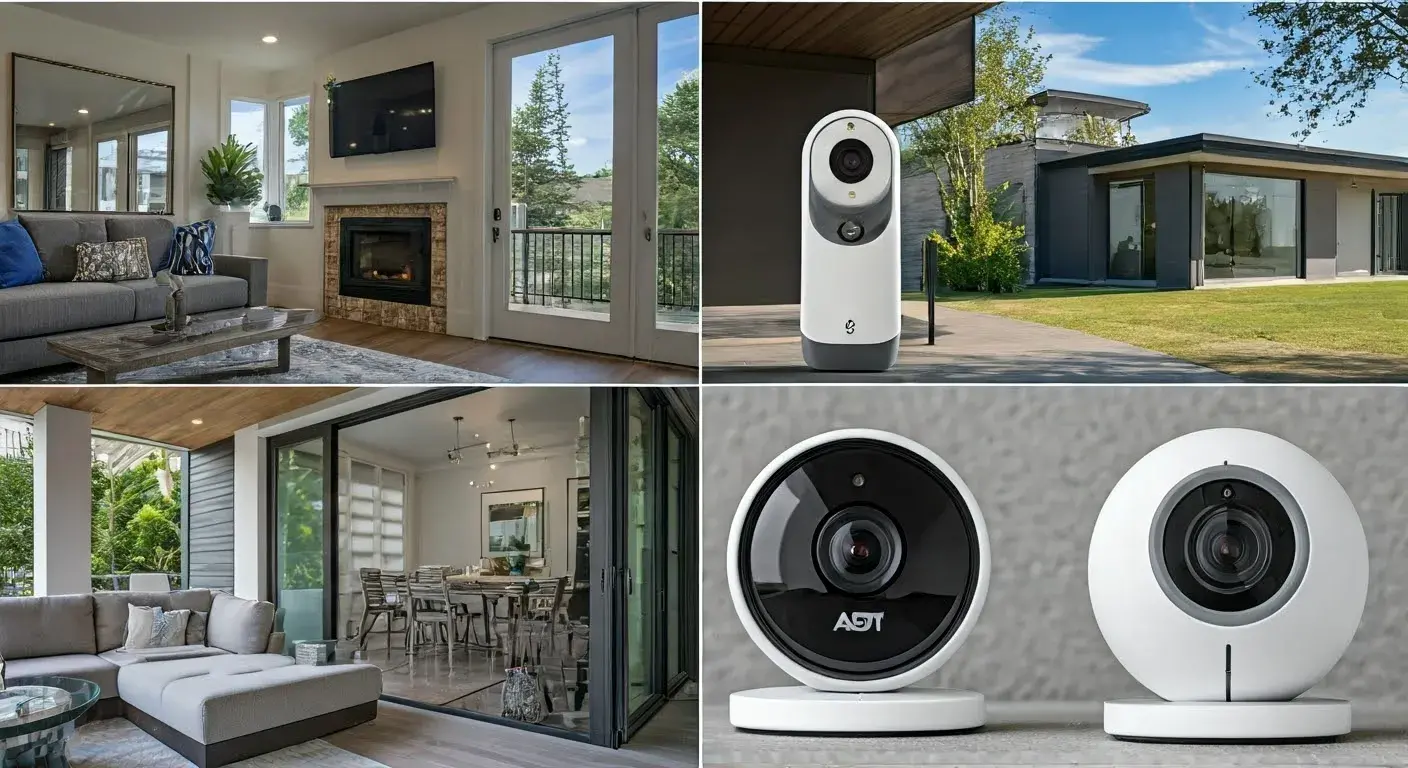
- Security Cameras: ADT offers indoor and outdoor cameras, including doorbell cameras. These can provide live streaming, motion-activated recording, and two-way audio. Many systems integrate with ADT's professional monitoring for video verification, which can expedite emergency response.
- Smart Locks: Integrate with your ADT system to allow remote locking/unlocking and provide activity logs. This is particularly useful for granting temporary access to guests or service providers.
- Smart Thermostats: Control your home's temperature remotely and can be programmed for energy savings. Some systems allow for integration with security modes (e.g., setting back the thermostat when the system is armed away).
- Smart Lighting: Control lights remotely, set schedules, and create "away" scenes that simulate occupancy when you're not home.
- Environmental Sensors: ADT offers smoke detectors, carbon monoxide detectors, and flood/freeze sensors. These are critical for life safety and property protection, and their integration with the central monitoring system ensures rapid notification in case of an emergency.
- Voice Control: Many ADT systems are compatible with voice assistants like Amazon Alexa and Google Assistant, allowing for hands-free control of arming/disarming, checking system status, and controlling integrated smart home devices.
- Mobile App (ADT Control): The ADT Control app (or similar, depending on the system package) is the command center for your security and smart home. It provides real-time alerts, remote access to cameras, system control, and automation capabilities.
Professional Monitoring Capabilities
The backbone of ADT's service is its professional monitoring:
- 24/7 Monitoring Centers: ADT's state-of-the-art monitoring centers are staffed by trained professionals who respond to alarm signals. They follow strict protocols to verify emergencies and dispatch the appropriate authorities.
- Video Verification: For systems with cameras, ADT can use video footage to verify an alarm event, helping to reduce false alarms and prioritize emergency responses.
- Cellular Backup: ADT systems typically use cellular communication for alarm signals, ensuring that the system remains connected even if your home internet or landline is cut. This is a crucial feature for reliable security.
Installation and Customer Service: What to Expect
The experience of setting up and maintaining your security system is as important as the technology itself. ADT's approach to installation and customer service is a significant factor in its overall value proposition.
Professional Installation Process
When you sign up for an ADT system, the installation process is typically handled by their certified technicians. This is a key differentiator from DIY systems:
- Scheduling: After you select your system and sign a contract, ADT will schedule an appointment with a local installation team. They usually offer flexible scheduling options.
- On-Site Assessment: The technician will arrive at your home to conduct a final assessment of your security needs and the best placement for sensors, cameras, and the control panel.
- Equipment Installation: The technician will install all the components of your chosen system. This includes mounting sensors, running wires (if necessary, though many systems are wireless), setting up the control panel, and connecting it to your home's network (for smart features).
- System Testing: Once installed, the technician will thoroughly test each component to ensure it's functioning correctly and communicating with the ADT monitoring center.
- Customer Walkthrough and Training: The technician will walk you through how to use the system, including arming/disarming, understanding alerts, and using the mobile app. They will answer any questions you have to ensure you are comfortable operating your new security system.
The benefit of professional installation is that it minimizes the chances of user error, ensures optimal placement for sensor coverage, and guarantees that the system is integrated correctly. This can save you time and frustration compared to a DIY setup.
Customer Service and Support
ADT's customer service is available through multiple channels, though experiences can vary:
- Phone Support: ADT offers 24/7 customer support for urgent issues and general inquiries.
- Online Resources: Their website provides a wealth of information, including FAQs, user manuals, and troubleshooting guides.
- Mobile App: The ADT Control app often includes direct links to support or chat features for quick assistance.
- Local Technicians: For hardware issues or system maintenance, ADT dispatches local technicians, which can lead to quicker on-site support than with some national providers.
While ADT has a large customer base, leading to potential for varied service experiences, their commitment to having local technicians available for service calls is a significant plus. In 2025, ADT continues to invest in its customer support infrastructure, aiming to streamline service requests and improve response times. It's always advisable to check recent customer reviews in your specific region to gauge local service quality.
ADT vs. The Competition: A 2025-26 Comparison
To truly understand if ADT is a good security system, it's essential to see how it stacks up against other major players in the market. The home security landscape in 2025-26 is diverse, with options ranging from DIY giants to other professionally monitored services.
Here's a comparative look at ADT against some of its closest competitors:
| Feature | ADT | Vivint | SimpliSafe | Ring Alarm |
|---|---|---|---|---|
| Monitoring Type | Professional (24/7) | Professional (24/7) | Professional (24/7) or Self-Monitored | Professional (24/7) or Self-Monitored |
| Installation | Professional (Required for most systems) | Professional (Required) | DIY (Easy setup) | DIY (Easy setup) |
| Contract Length | Typically 3-5 years | Typically 4-5 years | No Contract (Month-to-month optional) | No Contract (Month-to-month optional) |
| Equipment Cost | Can be high, often bundled into monthly fees | Can be high, often bundled into monthly fees | Moderate upfront cost, customizable packages | Low upfront cost, customizable packages |
| Monthly Monitoring Fee | Moderate to High | Moderate to High | Low to Moderate (depending on plan) | Low to Moderate (depending on plan) |
| Smart Home Integration | Strong (Google, Alexa, Z-Wave devices) | Very Strong (Proprietary ecosystem, Google, Alexa) | Moderate (Limited third-party integration) | Strong (Alexa, other Amazon devices) |
| Customer Service | Established, local technicians, but can be variable | Strong, integrated smart home support | Generally well-regarded, responsive | Good, primarily online and app-based |
| Video Surveillance | Integrated, professional installation | Integrated, professional installation | Add-on cameras, DIY setup | Integrated, DIY setup |
AVivint Vivint: Both ADT and Vivint offer professionally installed and monitored systems with a strong emphasis on smart home integration. Vivint often positions itself as a more modern, tech-forward option, with a highly integrated smart home ecosystem. ADT, while also embracing smart home tech, leans on its long-standing reputation and extensive network. Vivint's contracts can sometimes be longer, and their equipment is also proprietary. The choice often comes down to preference for brand legacy versus cutting-edge integration.
ADT vs. SimpliSafe: SimpliSafe is a leader in the DIY security space. Their systems are designed for easy self-installation, offer no-contract options, and are generally more affordable upfront and monthly. SimpliSafe provides professional monitoring as an optional service. ADT's advantage here is the professional installation and the guarantee of 24/7 monitoring without needing to opt-in separately. For those who want a hands-off approach and are willing to pay a premium for it, ADT is the choice. For those who value flexibility, cost savings, and DIY control, SimpliSafe is often preferred.
ADT vs. Ring Alarm: Similar to SimpliSafe, Ring Alarm (from Amazon) is a popular DIY system. It's known for its affordability, ease of use, and seamless integration with other Amazon/Ring devices. Ring offers professional monitoring through its Ring Protect Pro plan. ADT's strength over Ring lies in its dedicated, professional monitoring centers and the robust nature of its professionally installed systems. Ring is excellent for budget-conscious users who are already invested in the Amazon ecosystem or prefer a simple, DIY setup. ADT appeals to those who want a more comprehensive, professionally managed security solution.
In summary, ADT positions itself as a premium, full-service security provider. If your priority is professional installation, a well-established monitoring service, and you're willing to invest more for that peace of mind and don't mind a contract, ADT is a strong contender. If budget, flexibility, and DIY control are paramount, competitors like SimpliSafe and Ring Alarm might be a better fit.
Understanding ADT's Pricing and Contract Structures
One of the most significant considerations when evaluating ADT is its pricing and contract structure. ADT's model typically involves a combination of equipment costs and monthly monitoring fees, often tied to a long-term contract.
Equipment Costs
ADT's equipment costs can vary widely depending on the package and the number of devices you choose. While some basic packages might have lower upfront costs, more advanced systems with numerous sensors, cameras, and smart home devices will naturally be more expensive. It's common for ADT to bundle equipment costs into the monthly service fee over the contract term, meaning you don't pay a large sum upfront but rather amortize the equipment cost over several years.
Monthly Monitoring Fees
The monthly monitoring fee is the recurring cost for ADT's 24/7 professional monitoring service. These fees can range from approximately $30 to $60 per month, sometimes more, depending on the level of service and the complexity of your system. Factors influencing this cost include:
- Number of sensors: More sensors generally mean a higher monthly fee.
- Video surveillance: Systems with cameras and video recording capabilities will typically have higher monitoring fees.
- Smart home integration: Advanced smart home features can also contribute to higher monthly costs.
- Service plans: ADT may offer different tiers of service with varying features and corresponding prices.
Contract Length and Terms
ADT is well-known for its long-term contracts. The standard contract length is typically three to five years. This commitment is a significant factor for many consumers:
- Benefits of Contracts: Long-term contracts often allow ADT to offer more affordable upfront equipment costs or installation services, as the cost is spread over the contract duration. They also ensure a consistent level of service and commitment from the customer.
- Drawbacks of Contracts: The primary drawback is the lack of flexibility. If you move, want to switch providers, or are unhappy with the service, breaking an ADT contract can result in substantial early termination fees (ETFs). These fees can sometimes be as high as 75% of the remaining balance on the contract, so it's crucial to understand these terms before signing.
- Moving Policy: ADT does have a moving policy that allows customers to transfer their service to a new home, often with some associated costs. However, this is contingent on ADT service being available at the new location.
Understanding Your Quote
When getting a quote from ADT, it's essential to ask for a detailed breakdown of all costs:
- Equipment costs: Even if bundled, understand the value of the equipment.
- Installation fees: Are there separate installation charges?
- Monthly monitoring fees: What is included in this fee?
- Contract length: Confirm the exact duration.
- Early Termination Fees (ETFs): What are the penalties for breaking the contract?
- Any additional fees: Such as activation fees or system upgrade charges.
Given the contractual obligations, it's vital to be comfortable with ADT's service and pricing for the long haul. For those seeking short-term solutions or maximum flexibility, ADT's contract structure might be a deal-breaker.
Who is ADT the Best Security System For?
While ADT offers a robust security solution, it's not a one-size-fits-all answer. Based on its features, pricing, and service model, ADT is particularly well-suited for specific types of homeowners and renters:
- Those Prioritizing Professional Monitoring and Installation: If your primary concern is having a security system professionally installed and monitored 24/7 by trained experts, ADT excels. You want the peace of mind that comes with knowing a dedicated team is watching over your home, ready to respond to emergencies.
- Homeowners Seeking Comprehensive Smart Home Integration: ADT offers a wide range of smart home devices and integrations. If you want a system that can control your lights, thermostats, locks, and cameras, all managed through a single app and monitored by a professional service, ADT is a strong choice. They are well-equipped to build a connected home ecosystem.
- Individuals Who Prefer a Hands-Off Approach: If you don't want to deal with the complexities of DIY installation, troubleshooting, or managing your own monitoring, ADT's full-service model is ideal. They handle the setup, maintenance, and monitoring, allowing you to simply enjoy the security.
- Those Who Value Brand Reputation and Longevity: For consumers who associate security with established, trustworthy brands, ADT's over 140 years in the business provides a significant psychological advantage. They are a known quantity with a vast network.
- Homeowners Not Concerned About Long-Term Contracts: If you plan to stay in your current home for at least the next three to five years and are comfortable with a contractual commitment, ADT's pricing structure, which often bundles equipment into monthly fees, can be manageable.
- Renters Who Want a Professionally Installed System: While DIY systems are often favored by renters for their portability, ADT can be a viable option if your landlord permits professional installation and you are willing to have the system professionally removed or transferred if you move.
Conversely, ADT might not be the best fit for:
- Budget-Conscious individuals: Those looking for the absolute cheapest security solution will likely find ADT too expensive.
- Renters who move frequently: The long contracts and installation requirements can be problematic.
- DIY enthusiasts: People who enjoy setting up and managing their own technology will find ADT's mandatory professional installation restrictive.
- Those who want maximum flexibility: The lack of month-to-month options and significant ETFs for early termination are deterrents.
Making the Final Decision: Is ADT Right for You?
After dissecting ADT's offerings, it's clear that "is ADT a good security system" is a question with a nuanced answer. For many, the answer is a resounding yes, particularly if they value the unparalleled peace of mind that comes with 24/7 professional monitoring and installation by a trusted, long-standing brand. ADT's ability to integrate with a wide array of smart home devices in 2025-26 further solidifies its position as a comprehensive security and home automation solution. The convenience of a single app controlling your security, lights, and thermostat, all backed by a professional response team, is a powerful proposition.
However, the decision hinges on your individual priorities. The significant commitment of long-term contracts, coupled with potentially higher overall costs compared to DIY alternatives, means that ADT is an investment. It’s an investment in convenience, professional oversight, and a robust, established infrastructure. If you are planning to stay in your home for several years, are comfortable with a contract, and prioritize a hands-off, professionally managed security experience, then ADT is likely an excellent choice. Their extensive network of local technicians also ensures that support is readily available when needed, a critical factor for maintaining system integrity and user satisfaction.
Ultimately, the best security system is the one that meets your specific needs, budget, and lifestyle. Weigh the benefits of ADT's professional services against the flexibility and cost-effectiveness of other options. By understanding the trade-offs, you can confidently determine if ADT is the right security partner for your home in 2025 and beyond.