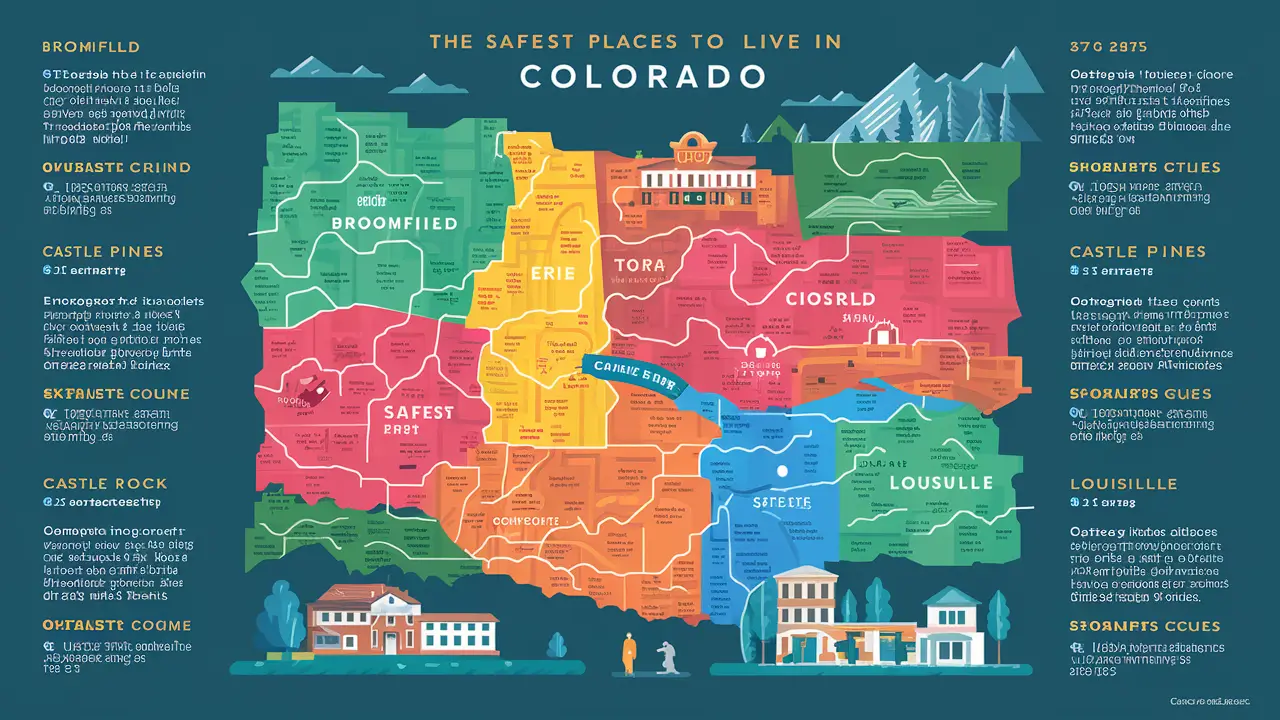
Discovering the safest havens in Colorado involves more than just looking at crime statistics. Our detailed guide explores communities prioritizing safety, quality of life, and affordability for 2025-26, helping you find your ideal Colorado home.
Understanding Safety Metrics in Colorado
When seeking the safest places to live in Colorado, it's crucial to look beyond simplistic crime statistics. While violent crime and property crime rates are primary indicators, a truly safe community is a multifaceted concept. For 2025-26, we've analyzed data from various sources, including the FBI's Uniform Crime Reporting (UCR) Program, local law enforcement reports, and community surveys, to paint a comprehensive picture. Safety is influenced by economic opportunity, community involvement, access to resources, and the overall quality of life. We aim to provide a nuanced view, recognizing that a low crime rate is only one piece of the puzzle.
Factors such as the number of law enforcement officers per capita, the effectiveness of community policing initiatives, and the presence of crime prevention programs all contribute to a community's perceived and actual safety. Furthermore, socioeconomic factors like poverty levels and unemployment rates often correlate with crime rates. Therefore, our analysis considers these interconnected elements to identify locations that offer a holistic sense of security and well-being. Understanding these metrics helps prospective residents make informed decisions about where to establish roots in the Centennial State.
The Safest Cities and Towns in Colorado for 2025-26
Colorado's diverse landscape offers a range of communities, each with its unique charm and safety profile. Based on our comprehensive review of 2025-26 data, the following cities and towns consistently rank high for safety, combining low crime rates with desirable living conditions. We've considered population size, crime data per 100,000 residents, and qualitative factors to provide a well-rounded list.
Fort Collins: A Blend of Nature and Security
Fort Collins, nestled at the foothills of the Rocky Mountains, is renowned for its vibrant culture, craft beer scene, and, importantly, its commitment to safety. In 2025-26, the city continues to demonstrate low crime rates, particularly in violent offenses. Its well-established community policing programs and active neighborhood watch initiatives contribute significantly to this security. The city boasts a strong economy, largely driven by Colorado State University and a thriving tech sector, which often correlates with lower crime. Outdoor enthusiasts will find paradise here, with extensive trail systems and proximity to natural wonders like Horsetooth Mountain Open Space. The median home price in Fort Collins for 2025-26 hovers around $550,000, reflecting its desirability.
Key Safety Highlights for Fort Collins:
- Consistent low violent crime rates.
- Active community policing and neighborhood watch programs.
- Strong economic base supporting community stability.
- Abundant recreational opportunities enhancing quality of life.
Boulder: Innovation Meets Tranquility
Boulder consistently ranks among the safest and most desirable cities in Colorado, and 2025-26 is no exception. Known for its progressive atmosphere, stunning natural beauty, and high concentration of educated residents, Boulder maintains exceptionally low crime statistics. The city's emphasis on environmental sustainability and active lifestyle fosters a strong sense of community well-being. While property crime can be a concern in any popular tourist destination, Boulder's overall safety index remains remarkably high. The median home price in Boulder is among the highest in Colorado, around $950,000 in 2025-26, reflecting its premium appeal and robust economy fueled by tech and research industries.
Key Safety Highlights for Boulder:
- Very low violent crime rates.
- High median income and education levels.
- Strong emphasis on community well-being and environmentalism.
- Exceptional access to outdoor recreation.
Loveland: The Sweet Spot for Safe Living
Often overshadowed by its larger neighbors, Loveland offers a compelling combination of affordability, safety, and a friendly atmosphere. For 2025-26, Loveland continues to report crime rates well below the state and national averages. Its steady growth has been managed with a focus on community development and public safety. The city is known for its arts scene, particularly its connection to Valentine's Day card postmarks, and a growing business sector. The median home price in Loveland for 2025-26 is approximately $480,000, making it a more accessible option for families and individuals seeking a secure environment without the premium price tag of Boulder or Fort Collins.
Key Safety Highlights for Loveland:
- Consistently low crime rates, especially violent crime.
- Affordable housing market compared to nearby cities.
- Strong sense of community and family-friendly atmosphere.
- Growing job opportunities.
Colorado Springs (North): Family-Friendly and Secure
While Colorado Springs as a whole is a large city, its northern regions have consistently demonstrated excellent safety metrics for 2025-26. This area benefits from well-planned neighborhoods, strong community associations, and a significant presence of military families, which often correlates with a stable and security-conscious population. Crime rates in these northern suburbs are notably lower than in other parts of the city, offering a secure environment for raising families. The median home price in North Colorado Springs for 2025-26 is around $450,000, offering good value.
Key Safety Highlights for North Colorado Springs:
- Lower crime rates compared to the city average.
- Family-oriented communities with good schools.
- Proximity to amenities and natural attractions like Garden of the Gods.
- Stable housing market.
Aurora (East): Diverse and Developing Safety
Aurora, Colorado's third-largest city, offers a diverse population and a developing landscape of safe neighborhoods, particularly in its eastern sections. For 2025-26, eastern Aurora has seen improvements in public safety initiatives and community development, leading to lower crime rates in many of its master-planned communities. The city's commitment to enhancing public services and infrastructure contributes to its growing reputation as a safe place to live. The median home price in East Aurora for 2025-26 is around $470,000, providing a more affordable entry point into the Denver metro area.
Key Safety Highlights for East Aurora:
- Improving safety metrics in newer developments.
- Diverse community with growing amenities.
- More affordable housing options within the metro area.
- Proximity to Denver International Airport and major employment centers.
Littleton: Historic Charm, Modern Safety
Located southwest of Denver, Littleton blends historic charm with modern suburban living, offering a high level of safety for its residents. In 2025-26, Littleton continues to be recognized for its low crime rates, excellent school district, and strong community spirit. The city boasts a well-maintained downtown area, numerous parks, and easy access to the Denver Tech Center, providing ample job opportunities. The median home price in Littleton for 2025-26 is approximately $520,000.
Key Safety Highlights for Littleton:
- Consistently low crime rates.
- Highly-rated public school system.
- Strong sense of community and historic preservation.
- Convenient access to Denver and employment hubs.
Highlands Ranch: Planned Community, Proven Safety
Highlands Ranch, a large master-planned community south of Denver, is consistently lauded for its safety and family-friendly environment. For 2025-26, its well-organized structure, active homeowner's association, and dedicated public safety services contribute to exceptionally low crime rates. The community offers extensive parks, trails, recreation centers, and highly-rated schools, making it an attractive place for families. The median home price in Highlands Ranch for 2025-26 is around $580,000.
Key Safety Highlights for Highlands Ranch:
- Very low crime rates due to planned development and HOA oversight.
- Abundant family amenities and recreational facilities.
- Excellent school district.
- Strong community engagement.
Parker: Small-Town Feel, Big-City Amenities
Parker, located southeast of Denver, offers a unique blend of small-town charm and access to big-city conveniences, all while maintaining a high level of safety. In 2025-26, Parker continues to see low crime statistics, supported by a proactive police department and engaged citizenry. The town center is vibrant, featuring shops, restaurants, and community events. Its master-planned neighborhoods are known for their well-kept appearance and family-friendly atmosphere. The median home price in Parker for 2025-26 is approximately $600,000.
Key Safety Highlights for Parker:
- Low crime rates and a strong police presence.
- Family-oriented community with excellent amenities.
- Vibrant downtown area and active community events.
- Well-planned neighborhoods.
Longmont: Community-Focused Security
Situated between Denver and Boulder, Longmont offers a more affordable option for those seeking safety and a strong community feel. For 2025-26, Longmont boasts a diverse economy and a growing population, with crime rates that remain competitive, particularly in its established neighborhoods. The city is committed to community engagement and public safety programs. Its location provides easy access to both urban centers and outdoor recreation. The median home price in Longmont for 2025-26 is around $510,000.
Key Safety Highlights for Longmont:
- Competitive crime rates and community safety initiatives.
- Diverse economic base and growing job market.
- Access to both urban amenities and natural landscapes.
- More affordable housing compared to Boulder.
Broomfield: A Balanced Approach to Safety
Broomfield, a relatively new city strategically located between Denver and Boulder, has established itself as a safe and well-managed community. For 2025-26, its planned development, robust local economy, and dedicated public services contribute to low crime rates. Broomfield offers a high quality of life with numerous parks, trails, and family-friendly activities. Its central location makes it an attractive option for commuters and families alike. The median home price in Broomfield for 2025-26 is around $560,000.
Key Safety Highlights for Broomfield:
- Consistently low crime rates.
- Well-planned infrastructure and amenities.
- Strong local economy and job opportunities.
- Central location within the Denver metro area.
Key Factors Beyond Crime Rates
While crime statistics are a critical component of safety, a truly secure and desirable living environment in Colorado for 2025-26 is shaped by a confluence of other factors. Prospective residents should consider the broader context of a community's health and stability. Understanding these elements can lead to a more fulfilling and secure life in the Centennial State.
Economic Stability and Job Market
A strong and stable economy is foundational to community safety. Areas with low unemployment rates and diverse job opportunities tend to have lower crime rates. When residents have access to good-paying jobs, there is less incentive for criminal activity driven by economic desperation. Colorado's economy in 2025-26 is robust, particularly in sectors like technology, aerospace, renewable energy, and tourism. Cities with a diversified economic base are more resilient to downturns, ensuring long-term stability for their residents.
Consider the following when evaluating economic stability:
- Unemployment rates compared to state and national averages.
- Presence of major employers and diverse industries.
- Job growth trends in the area.
- Average household income and cost of living.
For example, cities like Boulder and Fort Collins, with their strong tech and university presence, offer excellent job prospects and economic stability, contributing to their overall safety profile. Even smaller towns with a growing niche industry can offer significant security.
Community Engagement and Social Cohesion
The strength of a community's social fabric is a powerful, albeit often intangible, indicator of safety. Engaged communities, where residents know their neighbors, participate in local events, and look out for one another, tend to be safer. Strong social cohesion can deter crime and foster a sense of collective responsibility for public safety. Active neighborhood associations, volunteer programs, and community centers are signs of a healthy, engaged populace.
Look for indicators such as:
- Active neighborhood watch programs.
- Frequency of community events and festivals.
- Presence of community centers and public gathering spaces.
- Volunteer rates and civic participation.
Communities like Highlands Ranch and Parker excel in this area, with their structured environments and emphasis on resident involvement fostering a strong sense of belonging and mutual support.
Access to Amenities and Recreation
A high quality of life, characterized by access to parks, recreational facilities, cultural attractions, and shopping, contributes to overall community well-being and can indirectly impact safety. When residents have ample opportunities for leisure and recreation, they are more likely to be engaged with their community and less likely to be involved in negative activities. Colorado's natural beauty provides a significant advantage here, with most communities offering access to outdoor pursuits.
Assess the availability of:
- Parks and open spaces.
- Recreational centers and sports facilities.
- Cultural institutions (museums, theaters).
- Shopping and dining options.
- Public transportation networks.
Cities like Fort Collins and Boulder, with their extensive trail systems and outdoor recreation opportunities, are prime examples of how access to amenities enhances the living experience and contributes to a safe, active lifestyle.
Quality of Education
The quality of local schools is a significant factor for families and can also be an indicator of a community's overall investment in its future. Well-funded and high-performing school districts often correlate with stable, engaged communities and can contribute to lower crime rates by providing positive outlets and opportunities for young people. For 2025-26, parents are increasingly prioritizing educational excellence when choosing a place to live.
Investigate:
- School district rankings and test scores.
- Graduation rates.
- Availability of extracurricular activities.
- Parental satisfaction surveys.
Littleton and Highlands Ranch are frequently cited for their excellent school systems, making them attractive for families prioritizing education alongside safety.
Healthcare Access
Access to quality healthcare is an essential component of a safe and healthy community. Having readily available medical services, including hospitals, clinics, and specialized care, provides peace of mind and ensures residents can receive timely treatment when needed. For 2025-26, this factor is becoming increasingly important for individuals and families making relocation decisions.
Consider:
- Proximity to hospitals and emergency services.
- Availability of primary care physicians and specialists.
- Reputation and quality of local healthcare facilities.
- Access to mental health services.
Larger cities like Colorado Springs and Aurora, as well as well-established suburban areas like Broomfield, generally offer more comprehensive healthcare options.
How to Research Safety in Any Colorado Neighborhood
Choosing a safe place to live in Colorado requires proactive research. While this guide highlights top contenders for 2025-26, your ideal location might be elsewhere. Here's a step-by-step approach to thoroughly investigate the safety of any Colorado neighborhood:
-
Utilize Online Crime Mapping Tools: Many local police departments and third-party websites offer interactive crime maps. These tools allow you to view recent crime incidents by type and location. Look for patterns and compare statistics for the specific neighborhoods you are considering.
-
Check Official Crime Statistics: Visit the websites of local law enforcement agencies. They often publish annual crime reports or statistics. The FBI's Uniform Crime Reporting (UCR) Program data is also a valuable resource for state and national comparisons.
-
Consult Community Forums and Social Media: Online groups dedicated to specific Colorado towns or neighborhoods can offer candid insights from residents. While anecdotal, these discussions can reveal local concerns and perceptions of safety that official statistics might not capture.
-
Visit the Neighborhood at Different Times: Spend time in the area during both day and night, on weekdays and weekends. Observe the general atmosphere, the level of activity, and how well-maintained the properties are. A well-kept neighborhood often indicates a more engaged and safer community.
-
Talk to Local Law Enforcement: If possible, reach out to the local police department or sheriff's office. They can provide valuable information about crime trends, community policing efforts, and specific safety concerns in different areas.
-
Inquire About Community Programs: Ask about neighborhood watch programs, community policing initiatives, and local crime prevention efforts. Active programs suggest a community that prioritizes and works towards safety.
-
Research Local News Outlets: Local newspapers and news websites often report on crime and public safety issues. Reviewing their archives can give you a historical perspective on safety in the area.
-
Assess Infrastructure and Lighting: Well-lit streets and well-maintained public spaces can contribute to a feeling of safety. Observe the general condition of sidewalks, streetlights, and public areas.
-
Consider Socioeconomic Factors: Research local poverty rates, unemployment statistics, and median income. While not direct indicators, these factors can sometimes correlate with crime rates.
-
Evaluate Emergency Services Response Times: For critical areas like healthcare and fire services, research the average response times for emergency services. This is crucial for overall safety and well-being.
By combining quantitative data with qualitative observations and community feedback, you can build a comprehensive understanding of a neighborhood's safety profile for 2025-26 and beyond.
Finding Your Colorado Sanctuary
Selecting the safest place to live in Colorado for 2025-26 involves a thoughtful balance of statistical data and personal priorities. While cities like Fort Collins, Boulder, and Loveland consistently rank high due to their low crime rates and high quality of life, many other communities offer compelling safety features. Whether you prioritize a bustling city atmosphere or a tranquil mountain town, Colorado has a sanctuary for you. Remember to look beyond crime statistics and consider economic stability, community engagement, and access to amenities. By conducting thorough research and visiting potential neighborhoods, you can confidently find a place that offers not just safety, but a true sense of home and belonging in the beautiful Centennial State.