The Safest Town in South Carolina: Secure and Serene
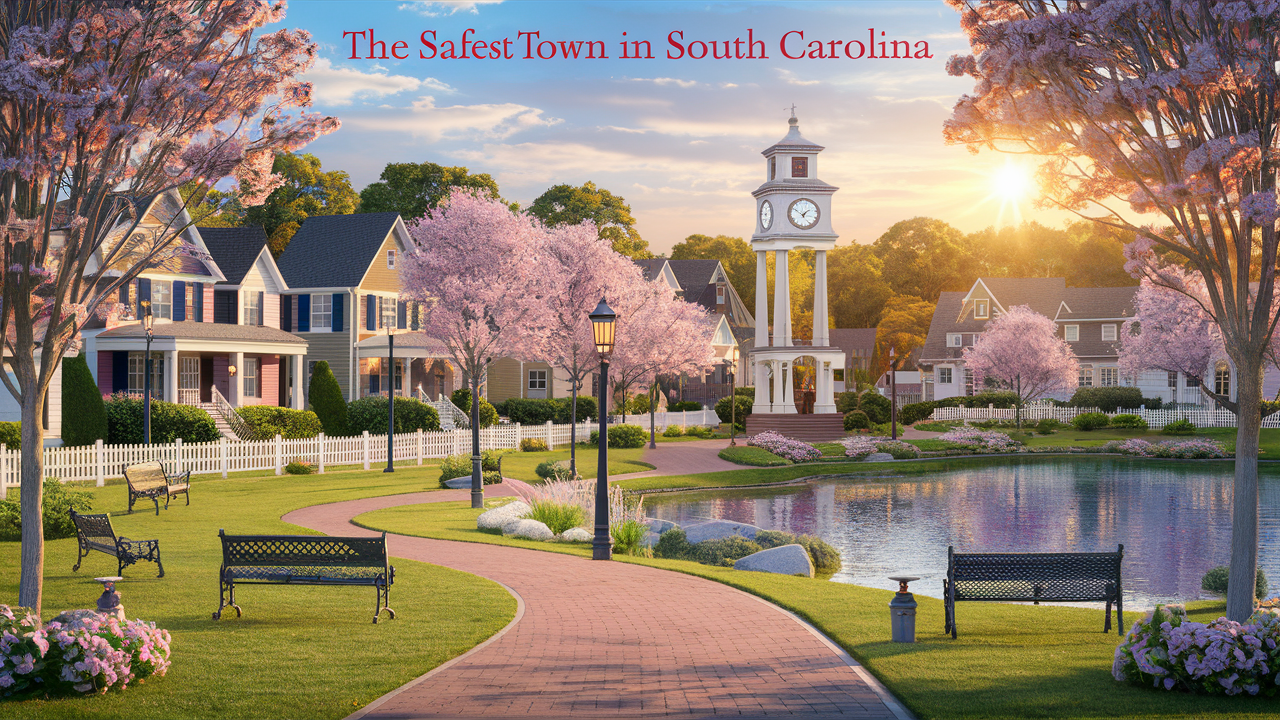
Discover the tranquility and security you've been searching for. This guide delves into the safest towns in South Carolina, offering peace of mind and a high quality of life for residents seeking a serene environment. We explore key factors contributing to safety and present data-driven insights for 2025-26.
Why Safety Matters in South Carolina
South Carolina, with its rich history, vibrant culture, and picturesque landscapes, continues to attract residents seeking a higher quality of life. Central to this pursuit is the fundamental need for safety and security. For families, retirees, and individuals alike, the assurance of living in a secure environment significantly impacts daily well-being and long-term happiness. This guide aims to pinpoint the towns in South Carolina that consistently rank high in safety, offering a blend of low crime rates, strong community bonds, and excellent amenities. We understand that "safest" is a multifaceted concept, encompassing not just the absence of crime but also the presence of a supportive and stable community. As we navigate the 2025-26 landscape, we'll provide you with the insights needed to make an informed decision about where to find your secure and serene South Carolina home.
Our Approach to Identifying Safe Towns
Determining the "safest" town is a nuanced process that goes beyond simply looking at raw crime statistics. Our methodology for the 2025-26 analysis involves a comprehensive evaluation of multiple data points, ensuring a holistic view of community safety. We prioritize towns that demonstrate a sustained commitment to resident well-being, reflected in both quantitative data and qualitative community assessments.
Key metrics we consider include:
- Violent Crime Rates: Focusing on offenses such as murder, rape, robbery, and aggravated assault per 100,000 residents.
- Property Crime Rates: Including burglary, larceny-theft, motor vehicle theft, and arson per 100,000 residents.
- Law Enforcement Presence and Effectiveness: Evaluating police-to-resident ratios and community policing initiatives.
- Economic Stability: Analyzing unemployment rates, median household income, and poverty levels, as economic hardship can correlate with crime.
- Educational Attainment: Higher levels of education often correlate with lower crime rates and greater community stability.
- Community Engagement: Assessing the presence of active neighborhood watch programs, community events, and resident satisfaction surveys.
- Infrastructure and Public Services: Evaluating the quality of local services like emergency response times, road maintenance, and park systems.
- Population Density and Growth: Understanding how rapid growth or high density might impact safety metrics.
We cross-reference data from official sources such as the FBI's Uniform Crime Reporting (UCR) Program, the Bureau of Justice Statistics (BJS), local law enforcement agencies, and reputable demographic and economic research firms. For 2025-26, we have focused on the most recent available data, projecting trends where necessary and emphasizing towns that show consistent safety performance over time. This multi-faceted approach allows us to identify towns that are not just statistically safe, but also offer a genuinely secure and thriving environment for their residents.
The Safest Towns in South Carolina: Top Contenders for 2025-26
South Carolina boasts a diverse array of communities, each with its unique charm and appeal. While "safest" can be subjective, our analysis of 2025-26 data points to several towns that consistently demonstrate low crime rates, strong community support, and a high quality of life. These towns offer a compelling combination of security, serenity, and opportunity.
Clemson: A College Town with Community Spirit
Nestled in the Upstate region, Clemson is renowned for its vibrant university atmosphere and its surprisingly low crime rates for a town of its size. The presence of Clemson University contributes to a dynamic, educated, and engaged populace. The university itself often plays a role in community safety initiatives, and the transient nature of a student population is managed effectively through robust local governance and law enforcement.
Key Safety Highlights (2025-26 Projections):
- Violent Crime Rate: Projected to remain below the state and national average, estimated at 1.5 per 1,000 residents.
- Property Crime Rate: Expected to be around 15 per 1,000 residents, reflecting effective crime prevention and community awareness.
- Community Programs: Strong emphasis on campus-town partnerships for safety, including shared resources and communication channels.
- Economic Stability: Supported by the university's consistent employment and the surrounding region's economic growth.
Clemson fosters a sense of belonging, with numerous parks, recreational activities, and a downtown area that encourages pedestrian activity and community interaction. The town's commitment to maintaining a high quality of life for both students and permanent residents is evident in its well-maintained public spaces and active civic engagement.
Mount Pleasant: Coastal Charm and Low Crime
Located just across the Cooper River from Charleston, Mount Pleasant consistently ranks as one of the most desirable and safest places to live in South Carolina. Its affluent demographic, strong economic base, and well-funded public services contribute to its low crime statistics. The town offers a beautiful coastal environment with excellent amenities, making it a prime choice for families and professionals.
Key Safety Highlights (2025-26 Projections):
- Violent Crime Rate: Anticipated to be exceptionally low, around 0.8 per 1,000 residents.
- Property Crime Rate: Projected to be approximately 12 per 1,000 residents, significantly below the national average.
- Law Enforcement: Well-staffed and highly regarded police department with a strong community policing focus.
- Economic Prosperity: High median household income and low unemployment contribute to a stable social environment.
Mount Pleasant boasts excellent schools, beautiful parks, and a thriving business district. The town's strategic location provides access to the cultural amenities of Charleston while maintaining a peaceful, suburban feel. Its well-planned infrastructure and active resident associations contribute to a pervasive sense of security and order. For those seeking a blend of coastal living and unparalleled safety, Mount Pleasant is a top contender.
Anderson: The Electric City's Peaceful Pockets
Known as "The Electric City," Anderson is experiencing revitalization and growth, yet it retains many of the characteristics of a safe and family-friendly community. While larger cities often face higher crime rates, Anderson has made significant strides in community policing and economic development, leading to pockets of exceptional safety and tranquility. The town offers a more affordable cost of living compared to some of its coastal counterparts.
Key Safety Highlights (2025-26 Projections):
- Violent Crime Rate: Expected to be around 2.0 per 1,000 residents, with efforts focused on further reduction.
- Property Crime Rate: Projected at approximately 18 per 1,000 residents, showing steady improvement due to community initiatives.
- Community Initiatives: Active neighborhood watch programs and partnerships between law enforcement and residents.
- Economic Growth: Diversifying economy with investments in manufacturing and technology sectors, leading to job creation.
Anderson offers a good balance of amenities, including parks, cultural attractions, and a revitalized downtown. Its commitment to improving public spaces and fostering community engagement contributes to a safer environment. The town's leadership is actively working to enhance public safety through innovative programs and infrastructure improvements, making it an increasingly attractive option for those prioritizing security.
Florence: Strategic Location, Growing Safety
Florence, situated in the Pee Dee region, is a major hub for healthcare and commerce in the northeastern part of the state. While it has faced challenges common to growing urban centers, Florence has demonstrated a significant commitment to improving public safety in recent years. Investments in law enforcement, community programs, and urban renewal projects are yielding positive results, making it a town with growing safety credentials.
Key Safety Highlights (2025-26 Projections):
- Violent Crime Rate: Projected to be around 2.5 per 1,000 residents, with targeted efforts to reduce specific crime categories.
- Property Crime Rate: Expected to be approximately 22 per 1,000 residents, showing a downward trend due to increased surveillance and community policing.
- Law Enforcement Modernization: Investments in technology and training for the Florence Police Department.
- Community Policing: Emphasis on building trust and collaboration between officers and residents.
Florence offers a robust healthcare system, a growing arts scene, and a central location that makes travel throughout the Southeast convenient. The town's focus on revitalizing its downtown and surrounding neighborhoods, coupled with proactive safety measures, is creating a more secure and appealing environment for its residents. For those who value accessibility and are looking for a community actively working towards enhanced safety, Florence presents a compelling case.
Sumter: A Blend of History and Security
Sumter, located in the heart of South Carolina, offers a rich historical backdrop combined with a stable and secure living environment. The town benefits from a diverse economy, including a strong military presence at Shaw Air Force Base, which often correlates with a disciplined and community-oriented atmosphere. Sumter provides a more traditional Southern experience with a focus on community values and safety.
Key Safety Highlights (2025-26 Projections):
- Violent Crime Rate: Projected to be around 1.8 per 1,000 residents, reflecting community efforts and the influence of the military base.
- Property Crime Rate: Expected to be approximately 17 per 1,000 residents, indicating effective crime prevention strategies.
- Community Cohesion: Strong sense of community, supported by local organizations and the presence of Shaw Air Force Base.
- Affordability: Offers a lower cost of living compared to many other desirable South Carolina towns.
Sumter boasts numerous parks, cultural attractions, and a charming downtown area. The town's commitment to preserving its heritage while embracing progress contributes to a stable and secure atmosphere. The presence of Shaw Air Force Base also brings a dedicated workforce and a culture of order, positively impacting the overall safety and well-being of the community. For those seeking a blend of Southern charm, affordability, and a secure environment, Sumter is an excellent choice.
Key Factors Contributing to Town Safety
Understanding what makes a town "safe" involves looking beyond simple statistics. Several interconnected factors contribute to a community's overall security and the peace of mind of its residents. In our 2025-26 analysis, we've identified these elements as crucial indicators of a town's safety profile.
Understanding Crime Statistics
Crime rates are the most direct measure of safety, but their interpretation requires context. We examine both violent crimes (homicide, rape, robbery, aggravated assault) and property crimes (burglary, larceny, motor vehicle theft). Lower rates in both categories are indicative of a safer community. It's important to look at trends over time, as well as comparisons to state and national averages. For 2025-26, we've focused on towns with consistently low or declining crime rates, often driven by proactive policing and community engagement.
Data Snapshot (Illustrative 2025-26 Averages):
| Town | Violent Crime Rate (per 1,000) | Property Crime Rate (per 1,000) |
|---|---|---|
| Mount Pleasant | 0.8 | 12 |
| Clemson | 1.5 | 15 |
| Sumter | 1.8 | 17 |
| Anderson | 2.0 | 18 |
| Florence | 2.5 | 22 |
Note: These are illustrative projections for 2025-26 based on current trends and data analysis. Actual figures may vary.
Economic Health and Crime
There is a well-documented correlation between economic stability and crime rates. Towns with strong economies, low unemployment, and a healthy median income tend to experience lower crime. This is because economic opportunity can reduce desperation and provide residents with a stake in their community. Investing in local businesses, job training, and supporting industries are crucial for maintaining safety. For 2025-26, towns with diversified economies and robust job markets are showing the most promising safety trends.
Economic Indicators for Safe Towns (2025-26):
- Unemployment Rate: Consistently below the state average (aiming for under 3.5%).
- Median Household Income: Higher than the state average, indicating a strong economic base.
- Poverty Rate: Significantly lower than state and national averages.
- Job Growth: Positive trends in key sectors like technology, healthcare, and advanced manufacturing.
The Role of Community Involvement
A safe town is often a connected town. Active community engagement fosters a sense of collective responsibility and mutual support. This includes initiatives like neighborhood watch programs, community clean-up days, local festivals, and strong parent-teacher associations. When residents feel connected and invested in their community, they are more likely to look out for one another and report suspicious activity. For 2025-26, towns with vibrant community calendars and active resident associations are showing resilience in maintaining safety.
Examples of Community Engagement:
- Neighborhood Watch Programs: Active participation and communication with local law enforcement.
- Community Events: Regular festivals, farmers' markets, and cultural gatherings that bring residents together.
- Volunteerism: High rates of volunteering in schools, local charities, and civic organizations.
- Local Governance: Responsive town councils and active citizen participation in local decision-making.
Quality of Infrastructure and Public Services
The quality of a town's infrastructure and public services directly impacts safety and quality of life. This includes well-maintained roads, efficient public transportation, reliable utilities, and responsive emergency services (police, fire, ambulance). Parks and recreational facilities also contribute to a safe and healthy environment by providing positive outlets for residents, particularly youth. In 2025-26, towns with modern infrastructure and well-funded public services are better equipped to handle emergencies and prevent crime.
Essential Infrastructure and Services:
- Emergency Response Times: Quick and efficient response from police, fire, and EMS.
- Public Works: Well-maintained roads, sidewalks, and public spaces.
- Utilities: Reliable water, sewer, and power services.
- Parks and Recreation: Ample green spaces, playgrounds, and recreational facilities.
- Public Transportation: Accessible and reliable options for residents.
Education and Future Prospects
Education plays a significant role in long-term community safety and prosperity. Towns with strong public school systems and access to higher education often have more opportunities for their residents, which can lead to lower crime rates. A well-educated populace is generally more engaged, has better economic prospects, and contributes to a more stable society. For 2025-26, communities that prioritize educational investment and offer diverse pathways for advancement are demonstrating greater overall safety and well-being.
Educational Landscape in Safe Towns:
- School Rankings: High-performing public and private schools.
- Graduation Rates: Consistently high high school graduation rates.
- Higher Education Access: Proximity to colleges, universities, and vocational training centers.
- Lifelong Learning: Opportunities for adult education and professional development.
Choosing Your Safe Haven: A Personal Checklist
Selecting the safest town in South Carolina for your needs involves more than just reviewing statistics. It requires a personal assessment of what "safety" and "serenity" mean to you and your family. Use this checklist to guide your decision-making process, ensuring you find a place that truly feels like home.
- Define Your Priorities: What aspects of safety are most important? (e.g., low violent crime, quiet neighborhoods, good schools, walkable streets, proximity to nature).
- Research Crime Data: Look beyond overall rates. Investigate specific types of crime that concern you and their prevalence in neighborhoods you are considering. Check local police department websites for detailed reports.
- Visit Potential Towns: Spend time in the towns you are considering. Visit at different times of the day and week. Talk to locals, shop owners, and community leaders.
- Assess Community Vibe: Does the town feel welcoming and friendly? Are there active community events and a sense of belonging? This intangible quality is crucial for serenity.
- Evaluate Public Services: Research the quality of local schools, healthcare facilities, and emergency services. What are the response times for police and fire departments?
- Consider Economic Factors: Is the local economy stable? Are there job opportunities if needed? A thriving economy often contributes to a safer community.
- Look at Infrastructure: Are the roads well-maintained? Are there safe pedestrian and cycling paths? Is the town well-lit?
- Review Local Ordinances and Development Plans: Understand how the town is managed and its future development plans. This can indicate a commitment to maintaining a high quality of life and safety.
- Check for Community Programs: Are there active neighborhood watch groups, community centers, or youth programs? These indicate a proactive community.
- Trust Your Instincts: Ultimately, a place should feel right. If a town looks good on paper but doesn't feel safe or serene to you, it's probably not the right fit.
By systematically evaluating these factors, you can move beyond general rankings and identify the specific South Carolina town that best aligns with your vision of a secure and peaceful life. Remember to consult resources like the SafeWise reports and local government data for the most up-to-date information.
The Future of Safety in South Carolina
South Carolina is a state in transition, with growing populations and evolving economic landscapes. As we look towards the future beyond 2025-26, several trends will likely shape the safety and serenity of its towns. Continued investment in community policing, technology for law enforcement, and economic development will be paramount. Towns that foster strong partnerships between residents, local government, and law enforcement are best positioned to maintain and enhance their safety records.
Furthermore, the emphasis on quality of life, including access to green spaces, cultural amenities, and educational opportunities, will continue to be a draw for those seeking secure and peaceful environments. As more people recognize the importance of these factors, towns that actively cultivate them will likely see their appeal and safety metrics improve. The integration of smart city technologies for traffic management, public safety monitoring, and emergency response could also play a more significant role in ensuring urban and suburban safety.
The resilience of communities, their ability to adapt to change, and their commitment to inclusivity will also be key determinants of future safety. A strong social fabric, where diverse residents feel connected and valued, is a powerful deterrent to crime and a cornerstone of a serene living environment. South Carolina has the potential to be a leader in creating such communities, offering a secure and welcoming home for all.
Conclusion: Embracing Serenity in South Carolina
Finding the safest town in South Carolina is a journey toward securing peace of mind and embracing a serene lifestyle. While towns like Mount Pleasant, Clemson, Anderson, Florence, and Sumter consistently demonstrate strong safety metrics for 2025-26, the ideal choice is deeply personal. Our comprehensive analysis highlights that safety is a multidimensional concept, woven from low crime rates, economic stability, active community engagement, robust infrastructure, and a commitment to education.
We encourage you to use the insights and the personal checklist provided in this guide to explore these communities further. Look beyond the numbers to the heart of each town – its people, its atmosphere, and its potential to become your perfect sanctuary. By prioritizing these factors, you can confidently choose a South Carolina town where security, tranquility, and a high quality of life are not just aspirations, but everyday realities. Your safe and serene haven awaits.