Finding a "good" video camera hinges on your specific needs, budget, and intended use. Whether you're a budding vlogger, a professional filmmaker, or simply want to capture precious family moments, understanding the landscape of available options is crucial. This guide will equip you with the knowledge to make an informed decision in 2025-2026.
Understanding Your Needs: The First Step to Finding a Good Video Camera
Before diving into specific models and specifications, the most critical step in identifying a good video camera is to thoroughly assess your own requirements. What will you be using the camera for primarily? This foundational question will steer you towards the most suitable category of devices and prevent you from overspending or underspending on features you don't need.
Defining Your Primary Use Case
Consider the following scenarios:
- Vlogging and Content Creation: If you plan to create content for platforms like YouTube, TikTok, or Instagram, portability, ease of use, good autofocus, decent low-light performance, and built-in microphones are often paramount. You'll likely want something that can shoot high-quality video (4K is becoming standard) and is easy to handle while on the move.
- Professional Filmmaking: For those aspiring to create short films, documentaries, or corporate videos, image quality, advanced manual controls, codec options, sensor size, and the ability to use external microphones and accessories will be key. Interchangeable lenses are often a must-have.
- Event Videography: Capturing weddings, conferences, or live performances requires reliable autofocus, good zoom capabilities, excellent low-light performance, and often, the ability to record for extended periods without overheating.
- Family and Travel Vlogging: If your focus is on capturing personal memories, ease of use, durability, and a compact form factor are likely priorities. High-resolution stills alongside video capabilities can also be a bonus.
- Sports and Action: For capturing fast-paced action, a camera with excellent image stabilization, high frame rates for slow-motion, and robust build quality is essential. Durability and weather resistance might also be important factors.
Assessing Your Skill Level
Your experience with cameras also plays a significant role. Are you a complete beginner, an intermediate user, or a seasoned professional?
- Beginners: Simplicity, intuitive menus, and helpful automatic modes are crucial. Cameras with good in-body stabilization and user-friendly interfaces will ease the learning curve.
- Intermediate Users: You might be looking for more manual control over settings like aperture, shutter speed, and ISO, as well as the ability to connect external accessories.
- Professionals: Advanced features, RAW video recording, extensive customization options, and robust build quality are typically expected.
Budget Realities
Your budget will, of course, be a major determining factor. While high-end professional cameras can cost thousands of dollars, excellent options are available at various price points. It's important to set a realistic budget early on, considering not just the camera body but also essential accessories like memory cards, batteries, and potentially a tripod or microphone. We will delve deeper into budget considerations later in this guide.
Types of Video Cameras: A Comprehensive Overview
The market offers a diverse range of video cameras, each designed with specific strengths and target users in mind. Understanding these categories will help you narrow down your choices significantly.
Camcorders
Traditionally, camcorders were the go-to for video recording. They are designed specifically for capturing video, offering features like:
- Ergonomics: Built for comfortable handheld shooting, often with a flip-out screen.
- Long Zoom Ranges: Many offer powerful optical zoom lenses, ideal for events or situations where you can't get close to the subject.
- Ease of Use: Generally user-friendly with intuitive controls.
- Continuous Recording: Designed for long recording sessions.
Sub-types:
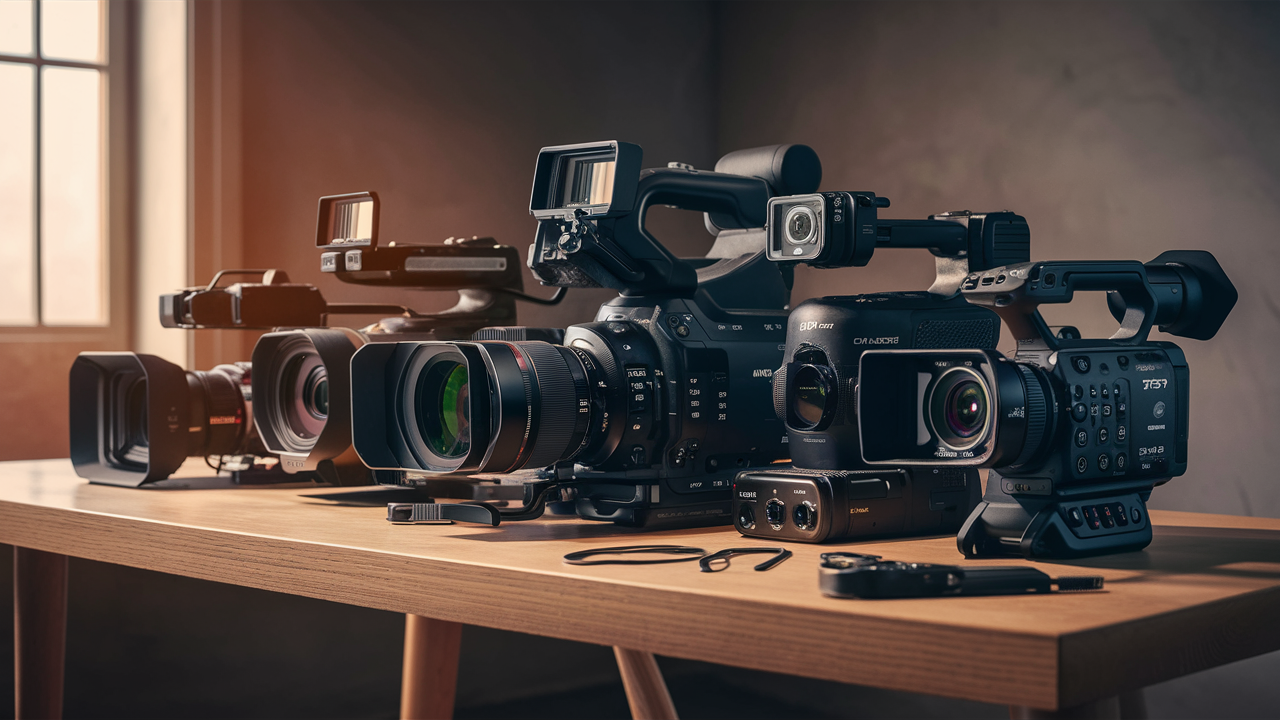
- Handheld Camcorders: The most common type, ranging from consumer-grade models to professional broadcast cameras.
- Professional Camcorders: Larger, more robust, with larger sensors, better audio inputs, and advanced features for broadcast and cinema production.
Pros: Excellent for dedicated video recording, long battery life, intuitive operation, often good built-in microphones. Cons: Often have smaller sensors compared to DSLRs/mirrorless, limited still photography capabilities, can be less versatile for creative shooting styles.
DSLR Cameras (Digital Single-Lens Reflex)
While primarily known for photography, DSLRs have become capable video recording devices. Their key advantage lies in their larger sensors and interchangeable lenses.
- Larger Sensors: Allow for better low-light performance and shallower depth of field (blurry backgrounds).
- Interchangeable Lenses: Offer immense creative flexibility, allowing you to choose the perfect lens for any situation.
- Image Quality: Capable of producing stunning video with cinematic qualities.
Pros: Excellent image quality, versatile with interchangeable lenses, good for both photos and videos. Cons: Can be bulkier, autofocus in video mode has historically been less advanced than mirrorless, recording limits can be an issue on some models.
Mirrorless Cameras
Mirrorless cameras have rapidly gained popularity for video production, often surpassing DSLRs in video features. They offer many of the benefits of DSLRs but in a more compact body.
- Advanced Autofocus: Many mirrorless cameras boast sophisticated phase-detection autofocus systems that excel in video, tracking subjects smoothly.
- Compact Size: Generally smaller and lighter than DSLRs.
- Electronic Viewfinder (EVF): Provides a real-time preview of your exposure and settings.
- High-End Video Features: Often include advanced codecs, higher frame rates, and better in-body stabilization.
Pros: Excellent video quality, superior autofocus for video, compact and lightweight, advanced video features, good for both stills and video. Cons: Battery life can be shorter than DSLRs, EVFs can struggle in very low light on some models.
Action Cameras
These rugged, compact cameras are designed for capturing video in extreme conditions and dynamic environments.
- Durability: Waterproof, shockproof, and dustproof.
- Wide-Angle Lenses: Capture a broad field of view, perfect for immersive shots.
- Image Stabilization: Advanced stabilization systems compensate for shake and movement.
- Portability: Extremely small and easy to mount on helmets, vehicles, or drones.
Pros: Extremely durable, portable, wide-angle perspective, excellent for sports and adventure. Cons: Small sensors limit low-light performance and depth of field, often have fixed lenses, audio quality can be a compromise.
Smartphones
Modern smartphones have become incredibly capable video recording devices, offering convenience and impressive quality for casual use.
- Ubiquity: Always with you, making spontaneous recording easy.
- Improving Quality: Many flagship phones now shoot 4K HDR video with advanced stabilization.
- Ease of Sharing: Seamless integration with social media and cloud services.
Pros: Extremely convenient, good for casual use and social media, improving video quality. Cons: Limited manual control, small sensors, fixed lenses, battery life can be an issue with heavy video use, audio quality is often basic.
Cinema Cameras
These are professional-grade cameras designed for high-end film production, offering the ultimate in image quality and control.
- Large Sensors: Often full-frame or Super 35mm, delivering exceptional detail and shallow depth of field.
- RAW Recording: Capture uncompressed footage for maximum flexibility in post-production.
- Advanced Color Science: Professional color grading capabilities.
- Robust Build and Connectivity: Designed for demanding production environments.
Pros: Unparalleled image quality, maximum creative control, industry-standard for professional filmmaking. Cons: Extremely expensive, complex to operate, require significant investment in accessories and post-production workflow.
Key Features to Consider When Choosing a Video Camera
Once you've identified the type of camera that best suits your needs, it's time to delve into the specific features that differentiate models and impact video quality and usability. For 2025-2026, certain features are becoming increasingly important.
Resolution and Frame Rates
Resolution: The number of pixels that make up the image.
- 4K (3840 x 2160): This is the current standard for high-quality video. It offers significantly more detail than Full HD (1080p) and allows for cropping or reframing in post-production without a major loss of quality. Most new cameras in 2025-2026 will offer 4K as a minimum.
- 8K (7680 x 4320): While still niche, 8K is appearing in higher-end cameras. It provides immense detail but requires powerful hardware for editing and significantly more storage space.
- Full HD (1920 x 1080): Still perfectly acceptable for many uses, especially for web content or if storage and editing power are limited.
Frame Rates: The number of frames displayed per second (fps).
- 24fps/25fps/30fps: Standard for cinematic and broadcast video.
- 60fps: Provides smoother motion, ideal for sports or action. It also allows for smoother slow-motion when played back at 24/25/30fps.
- 120fps/240fps (and higher): Essential for creating dramatic slow-motion effects. Higher frame rates often come with a resolution trade-off (e.g., 4K at 60fps, but 1080p at 240fps).
Sensor Size
The sensor is the heart of the camera, capturing light to form the image. Larger sensors generally offer:
- Better Low-Light Performance: They can capture more light, resulting in cleaner images with less noise in dim conditions.
- Shallower Depth of Field: Easier to achieve a blurred background (bokeh), giving footage a more professional, cinematic look.
- Wider Dynamic Range: Better at capturing detail in both the brightest highlights and darkest shadows of a scene.
Common sensor sizes include Micro Four Thirds (MFT), APS-C, Super 35mm, and Full-Frame. For general content creation and even professional work, APS-C and MFT offer a great balance of quality and cost. Full-frame is typically found in higher-end mirrorless and cinema cameras.
Autofocus System
A good autofocus system is critical for video, especially if you're shooting solo. Look for:
- Fast and Accurate Tracking: The camera should be able to lock onto and follow subjects smoothly without hunting or losing focus.
- Face/Eye Detection: Essential for ensuring people remain in sharp focus. Advanced systems can even differentiate between adult and child eyes.
- Customizable AF Speed and Sensitivity: Allows you to fine-tune how the camera reacts to focus changes.
Mirrorless cameras from brands like Sony, Canon, and Fujifilm generally lead the pack in autofocus performance for video in 2025-2026.
Image Stabilization
Crucial for smooth, professional-looking handheld footage. There are several types:
- Optical Image Stabilization (OIS): Built into the lens, it moves lens elements to counteract camera shake.
- In-Body Image Stabilization (IBIS): The sensor itself moves to compensate for shake. This is often more effective and works with any lens attached.
- Digital Image Stabilization (EIS): Achieved through software, often by cropping the image slightly. It can be effective but may reduce image quality.
Many cameras offer a combination of these. IBIS is highly desirable for handheld shooting.
Lens Mount and Interchangeability
If you choose a DSLR or mirrorless camera, the lens mount system is vital.
- System Versatility: Consider the range of lenses available for a particular mount. Do you want wide-angle, telephoto, prime lenses?
- Third-Party Support: Are there good quality, affordable third-party lenses available?
- Future-Proofing: Choosing a popular mount can ensure better compatibility with future lenses and accessories.
Audio Capabilities
Good audio is often more important than good video. Look for:
- External Microphone Input (3.5mm jack): Essential for connecting professional microphones, which will significantly improve your audio quality.
- Headphone Jack: Allows you to monitor audio levels in real-time, preventing distorted or inaudible recordings.
- Built-in Microphone Quality: While rarely professional-grade, some built-in mics are better than others for basic voiceovers or ambient sound.
Ergonomics and Build Quality
How the camera feels in your hand and how durable it is can significantly impact your shooting experience.
- Grip: A comfortable, secure grip is essential for handheld shooting.
- Button Layout: Are frequently used controls easily accessible?
- Screen: A flip-out or articulating screen is invaluable for vlogging and shooting from different angles.
- Durability: For outdoor or demanding use, weather sealing and robust construction are important.
Connectivity and Battery Life
- Ports: USB-C for charging and data transfer, HDMI for external monitoring.
- Wi-Fi/Bluetooth: For wireless file transfer and remote control via smartphone apps.
- Battery Life: Video recording is power-intensive. Check reviews for real-world battery performance and consider purchasing spare batteries.
Best Video Cameras for Different Users (2025-2026)
Based on current trends and anticipated releases for 2025-2026, here are some recommendations categorized by user type. These are general suggestions, and specific model availability and pricing may vary.
For Aspiring Vloggers and Content Creators
Focus on portability, ease of use, excellent autofocus, and good built-in audio/stabilization.
- Sony ZV-E10: A popular choice for its compact size, excellent autofocus, and vast E-mount lens selection. It offers good 4K video quality and features tailored for creators.
- Canon EOS R50/R10: These entry-level mirrorless cameras offer great value, good autofocus, and user-friendly interfaces, making them ideal for beginners stepping into 4K content creation.
- DJI Osmo Pocket 3: For ultimate portability and gimbal-stabilized shots, the Osmo Pocket 3 is unparalleled. Its small size belies its impressive 4K video capabilities.
- GoPro HERO 12 Black: If your content involves action, sports, or extreme environments, the GoPro remains the king. Its stabilization and ruggedness are unmatched.
For Intermediate Creators and Hobbyist Filmmakers
These users will appreciate more manual control, better low-light performance, and more advanced video features.
- Sony a6700: An evolution of Sony's popular APS-C line, offering advanced autofocus, excellent 4K video, and a robust feature set in a compact body.
- Fujifilm X-S20: Known for its excellent image quality and film simulations, the X-S20 offers strong 4K video capabilities, good autofocus, and a user-friendly design.
- Panasonic Lumix GH6: A powerhouse for video shooters, the GH6 offers incredible video features, including internal 10-bit 4K 120p recording, anamorphic modes, and excellent stabilization, all at a competitive price point for its capabilities.
For Professional Videographers and Filmmakers
These cameras offer the highest image quality, advanced codecs, and professional-grade features.
- Sony FX3 / FX30: These cinema-line cameras blend the best of Sony's mirrorless technology with professional video features like active cooling for unlimited recording, advanced color science, and robust connectivity. The FX30 offers a more accessible entry point with its Super 35mm sensor.
- Canon EOS C70: A compact and versatile cinema camera that utilizes Canon's RF mount. It offers excellent image quality, robust build, and professional audio/video features.
- Blackmagic Pocket Cinema Camera 6K G2/Pro: These cameras are renowned for their ability to shoot RAW video internally at an affordable price, offering incredible flexibility in post-production.
- Panasonic Lumix S5II / S5IIX: These full-frame mirrorless cameras offer exceptional video quality, advanced autofocus, and robust video features, including internal RAW recording on the S5IIX, making them strong contenders for serious filmmakers.
For Event Videography
Reliability, zoom, and low-light performance are key.
- Canon XA Series (e.g., XA70/XA75): These professional camcorders offer excellent image quality, powerful zoom lenses, good low-light performance, and professional audio inputs in a compact, ergonomic package.
- Sony HXR-NX80/PXW-Z90: Compact camcorders with large sensors, offering excellent autofocus, 4K recording, and professional features suitable for events.
- Panasonic AG-CX350: A higher-end professional camcorder offering superb image quality, advanced connectivity, and excellent low-light performance for demanding event coverage.
Comparison Table: Key Features Snapshot (Illustrative - Specific models will vary)
| Camera Type | Ideal User | Key Strengths | Potential Downsides | Typical Price Range (USD) |
|---|---|---|---|---|
| Mirrorless (Entry-Level) | Beginner Vlogger | Ease of use, good 4K, compact | Limited lens options, smaller sensor | $600 - $1200 |
| Mirrorless (Mid-Range) | Intermediate Creator | Advanced AF, better low light, manual control | Can be pricier, may need external mic | $1200 - $2500 |
| Action Camera | Adventure/Sports Creator | Durability, portability, wide-angle | Limited low light, fixed lens | $300 - $600 |
| Professional Camcorder | Event/Broadcast | Ergonomics, long zoom, continuous record | Smaller sensor, less cinematic look | $1500 - $5000+ |
| Cinema Camera (Entry) | Hobbyist Filmmaker | RAW video, cinematic quality, control | Steep learning curve, expensive accessories | $2000 - $4000+ |
Budget Considerations: Finding Value at Every Price Point
The "good" video camera is often the one that best fits your budget while meeting your essential needs. It's crucial to allocate your budget wisely.
Entry-Level (Under $700)
At this price point, you're likely looking at:
- Advanced Smartphones: Many flagship phones offer excellent 4K video.
- Entry-Level Action Cameras: Like the GoPro HERO series or DJI Osmo Action.
- Basic Camcorders: For straightforward home video recording.
- Older or Refurbished Mirrorless/DSLRs: Can offer great value if you're willing to compromise on the latest features.
Focus: Convenience, ease of use, and basic 4K capabilities. You might sacrifice low-light performance and advanced audio options.
Mid-Range ($700 - $2000)
This is where many aspiring creators and hobbyists find their sweet spot.
- Entry-level to Mid-range Mirrorless Cameras: Such as the Sony ZV-E10, Canon R50/R10, Fujifilm X-S10/X-S20.
- Higher-end Action Cameras: Offering more advanced features and better image quality.
- Mid-range Camcorders: With better sensors and more professional features.
Focus: A significant step up in image quality, autofocus, and manual control. You can start experimenting with different lenses and achieving more cinematic looks.
High-End ($2000 - $5000+)
This segment is for serious hobbyists, semi-professionals, and professionals.
- Advanced Mirrorless Cameras: Like the Sony a6700, Panasonic Lumix GH6/S5II, Canon EOS R7/R8.
- Entry-level Cinema Cameras: Such as Blackmagic Pocket Cinema Cameras or the Sony FX30.
- Professional Camcorders: Offering broadcast-quality features.
Focus: Professional image quality, advanced video codecs, superior low-light performance, and robust build for demanding shoots.
Premium/Professional ($5000+)
This is the domain of dedicated cinema cameras and top-tier professional mirrorless bodies.
- Sony FX3/FX6, Canon EOS C70, RED Digital Cinema cameras, ARRI Alexa.
Focus: Uncompromising image quality, RAW recording, extensive customization, and professional workflows. These cameras are part of a larger ecosystem of lenses, lighting, and support gear.
Don't Forget the Extras!
Your budget should also account for:
- Memory Cards: Fast, reliable SD cards (V60 or V90 recommended for 4K/high frame rates).
- Batteries: At least one spare battery is essential.
- Microphone: A good external microphone can transform your audio.
- Tripod: For stable shots.
- Lighting: Even a small LED panel can make a big difference.
- Editing Software and Hardware: Ensure your computer can handle video editing.
A common mistake is to spend the entire budget on the camera body and neglect these crucial accessories, which are vital for producing quality content.
Essential Accessories for Your Video Camera Setup
A camera is only part of the equation. The right accessories can dramatically improve your workflow, the quality of your footage, and your overall shooting experience.
Memory Cards
Video files, especially 4K and higher resolutions, are large and require fast write speeds.
- Type: SD cards are most common. Look for UHS-I or UHS-II, with V30, V60, or V90 speed classes. V60 and V90 are recommended for high-bitrate 4K and high frame rates.
- Capacity: 64GB is a minimum, but 128GB or 256GB are preferable for longer shoots.
- Reliability: Invest in reputable brands like SanDisk, Lexar, or ProGrade Digital.
Batteries
Video recording drains batteries quickly.
- Genuine vs. Third-Party: Genuine batteries offer guaranteed compatibility and performance, but third-party options can be significantly cheaper. Read reviews carefully for third-party batteries.
- Power Banks: Some cameras can be charged or powered via USB-C, making power banks a useful accessory for extended shoots.
Microphones
Built-in camera microphones are rarely sufficient for professional-sounding audio.
- Shotgun Microphones: Mount on your camera and are directional, capturing sound from the front while rejecting ambient noise. (e.g., Rode VideoMic series, Sennheiser MKE 400).
- Lavalier (Lapel) Microphones: Clip onto clothing and are great for interviews or single-person recordings, providing clear voice capture. (e.g., Rode Wireless GO II, DJI Mic).
- Wireless Microphone Systems: Offer freedom of movement for both the subject and the camera operator.
Tripods and Stabilizers
Essential for stable shots and smooth pans/tilts.
- Tripods: Vary from lightweight travel tripods to heavy-duty fluid-head tripods for professional motion. Look for a tripod with a suitable weight capacity for your camera and lens setup.
- Gimbals: Electronic stabilizers that provide incredibly smooth, cinematic footage, especially for tracking shots and dynamic movement. (e.g., DJI Ronin series, Zhiyun Crane series).
Lighting
Good lighting can transform your video from amateur to professional.
- LED Panels: Portable and versatile, offering adjustable brightness and color temperature.
- Ring Lights: Popular for vlogging and beauty content, providing soft, even illumination.
- Softboxes: Create diffused, flattering light for interviews and studio setups.
Camera Bags and Cases
Protect your investment.
- Backpacks: Offer good weight distribution and ample space for camera, lenses, and accessories.
- Shoulder Bags: Quick access to your gear, suitable for shorter shoots.
- Hard Cases: For maximum protection during travel or shipping.
Maintaining Your Video Camera for Longevity
A good video camera is an investment, and proper maintenance will ensure it performs well for years to come.
Cleaning Your Camera and Lenses
- Sensor Cleaning: Dust on the sensor can appear as dark spots in your footage. Many cameras have built-in sensor cleaning functions. For manual cleaning, use a sensor cleaning kit and proceed with extreme caution or seek professional service.
- Lens Cleaning: Use a microfiber cloth and lens cleaning solution for smudges. A rocket blower can remove loose dust. Never touch the lens elements with your fingers.
- Camera Body: Wipe down the camera body with a dry or slightly damp microfiber cloth.
Storage and Handling
- Environment: Avoid extreme temperatures, humidity, and direct sunlight.
- Storage: Store your camera in a padded bag or case when not in use.
- Battery Care: Don't store batteries fully charged or fully depleted for extended periods.
Firmware Updates
Manufacturers frequently release firmware updates that can improve performance, fix bugs, and even add new features. Regularly check the manufacturer's website for updates for your camera and lenses.
Regular Checks
Periodically check all buttons, dials, ports, and connections to ensure they are functioning correctly. If you notice any issues, consult your camera's manual or contact customer support.
Conclusion: Making the Right Choice for Your Video Content
Selecting a good video camera in 2025-2026 is a journey of understanding your specific needs, exploring the diverse types of cameras available, and prioritizing the features that matter most to your creative vision and budget. Whether you're a beginner vlogger seeking ease of use and portability, an intermediate creator aiming for cinematic quality, or a seasoned professional demanding the utmost in image fidelity and control, there's a camera designed for you. Remember to consider essential accessories like memory cards, microphones, and stabilizers, as they are integral to producing high-quality video. By investing time in research and aligning your choice with your intended use, you'll empower yourself to capture compelling stories and achieve your video production goals.