What is the Crime Rate in Texas? Key Insights
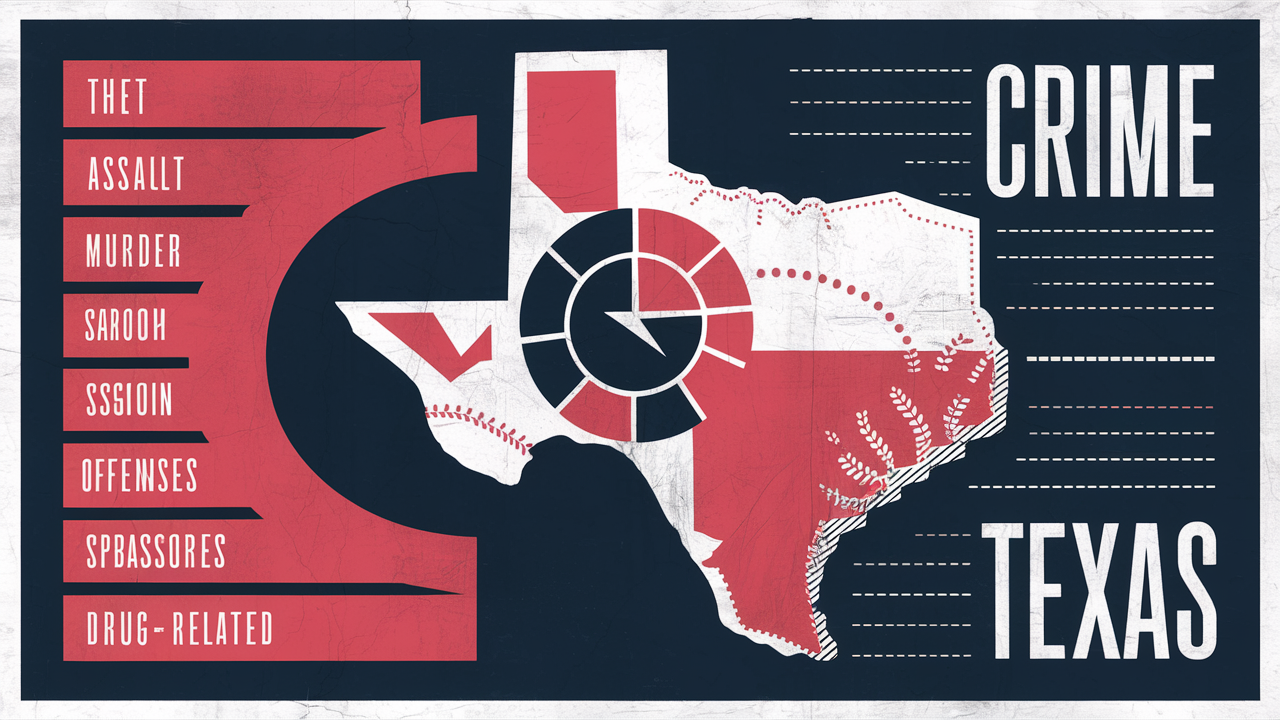
Understanding the crime rate in Texas is crucial for residents, policymakers, and businesses. This comprehensive guide provides key insights into Texas's crime statistics for 2025-2026, offering a clear picture of safety trends and factors influencing them.
Understanding Texas Crime Statistics
To accurately assess the safety of the Lone Star State, it's vital to understand how crime rates are measured and reported. The primary source for this data in Texas is the Texas Department of Public Safety (DPS), which collects and analyzes crime statistics from law enforcement agencies across the state. These statistics are typically broken down into two main categories: violent crimes and property crimes. Violent crimes include offenses such as murder, rape, robbery, and aggravated assault. Property crimes encompass burglary, larceny-theft, motor vehicle theft, and arson. Understanding these categories and the data collection methods is the first step in interpreting the crime rate in Texas.
The reporting period for official crime statistics usually covers a full calendar year. Therefore, the most up-to-date comprehensive data available for our analysis will be for the 2025 calendar year, with preliminary or projected data for 2026 becoming available towards the end of that year or early the following year. For this analysis, we will focus on the latest finalized data for 2025 and projections or early indicators for 2026, acknowledging that final 2026 figures may be subject to revision. It's important to note that crime statistics can fluctuate based on various socio-economic, demographic, and policy factors, making ongoing analysis essential.
Overall Crime Trends: 2025-26
The period of 2025-2026 in Texas has seen a complex interplay of factors influencing its overall crime landscape. While some categories of crime have shown encouraging decreases, others remain areas of concern. The state's robust population growth, coupled with economic shifts and evolving law enforcement strategies, contributes to these dynamic trends. Understanding the overarching direction of crime in Texas provides a crucial context for examining specific offense types.
For 2025, preliminary reports from the Texas DPS indicate a slight overall decrease in the total number of reported crimes compared to the previous year. This trend is largely attributed to a continued decline in certain property crimes, such as larceny-theft, which has benefited from increased use of technology in retail environments and improved public awareness campaigns. However, the overall picture is not uniformly positive. Violent crime rates, while showing some stabilization in certain areas, have not seen the same significant reduction, presenting an ongoing challenge for law enforcement and communities.
Looking ahead to 2026, projections suggest a continuation of these mixed trends. Law enforcement agencies are focusing on data-driven policing and community engagement to address persistent crime issues. Economic indicators for 2026, including employment rates and inflation, are also being closely monitored as they often correlate with crime fluctuations. Factors such as the accessibility of firearms, the impact of social programs, and the effectiveness of criminal justice reforms will continue to shape the crime rate in Texas. It is anticipated that efforts to combat organized crime and drug-related offenses will intensify, potentially impacting overall statistics.
The reported crime rate is often expressed per 100,000 inhabitants to allow for standardized comparisons across different populations and jurisdictions. This metric helps to normalize the raw number of incidents, providing a clearer understanding of the prevalence of crime relative to the population size. For instance, a city with a larger population might report more total crimes than a smaller city, but its crime rate per 100,000 might be lower if the increase in crime hasn't kept pace with population growth.
Key Statistics Snapshot (2025 - Preliminary/Projected for 2026)
While final, comprehensive data for 2026 will take time to compile, early indicators and projections offer valuable insights. For 2025, the Texas DPS reported an estimated statewide crime rate that remained relatively stable, with a marginal decrease of approximately 1.5% in total reported offenses compared to 2024. Violent crime saw a slight uptick of 0.8%, while property crime experienced a more significant decrease of 2.2%.
For 2026, the outlook is cautiously optimistic. Forecasts suggest a potential further reduction in property crime by an estimated 1.8%, driven by technological advancements in security and proactive policing. However, violent crime is projected to remain a concern, with an anticipated increase of 0.5% to 1.0%, particularly in areas experiencing rapid population influx and economic disparities. These figures are subject to change as more data becomes available throughout the year. The effectiveness of ongoing crime prevention initiatives and the state's economic stability will be critical determinants of these outcomes.
Understanding the Data Sources
The primary source for official crime statistics in Texas is the Texas Department of Public Safety (DPS). They collect data through the Uniform Crime Reporting (UCR) Program, which is a nationwide system managed by the FBI. Law enforcement agencies across Texas submit data on reported crimes, arrests, and clearances. It's important to understand that these statistics represent reported crimes, meaning incidents that have been officially recorded by law enforcement. The "dark figure" of crime, which includes unreported offenses, is not captured in these statistics.
Additionally, the Bureau of Justice Statistics (BJS) provides national-level data that can be used for comparative analysis. The BJS also conducts the National Crime Victimization Survey (NCVS), which offers insights into crimes that may not have been reported to the police. While the NCVS provides a broader picture of victimization, the UCR data from the Texas DPS remains the most authoritative source for official crime rates within the state.
Violent Crime in Texas
Violent crime remains a critical area of focus when examining the crime rate in Texas. These offenses, which involve direct physical harm or the threat of harm to individuals, have a profound impact on community safety and public perception. Understanding the trends, specific types, and contributing factors of violent crime is essential for effective prevention and intervention strategies.
In 2025, Texas experienced a slight increase in its overall violent crime rate, with preliminary figures from the Texas DPS indicating a rise of approximately 0.8% compared to the previous year. This uptick is a cause for concern and warrants a closer examination of its components. The primary categories of violent crime include murder, rape, robbery, and aggravated assault. Each of these offenses can be influenced by a unique set of circumstances and societal factors.
Breakdown of Violent Crime Categories (2025 - Preliminary/Projected 2026)
Murder and Non-Negligent Manslaughter: This is the most serious violent crime. For 2025, the murder rate in Texas saw a marginal increase of about 1.2%. Factors contributing to this include ongoing issues related to gang violence, drug-related disputes, and domestic violence incidents. Projections for 2026 suggest a continued stabilization, with efforts focused on community policing and targeted interventions in high-risk areas.
Rape: Data for 2025 indicates a slight increase in reported rapes, estimated at 0.9%. This rise may be partly attributed to increased awareness and a greater willingness among victims to report these crimes, as well as improved reporting protocols by law enforcement. Efforts to support sexual assault survivors and prosecute offenders remain a priority.
Robbery: Robbery, which involves the taking of property from a person by force or threat of force, showed a slight decrease of 0.5% in 2025. This positive trend is often linked to improved economic conditions and more effective law enforcement strategies targeting street-level crime.
Aggravated Assault: This category, which includes assaults with a deadly weapon or with the intent to cause serious bodily injury, saw a modest increase of 1.0% in 2025. Factors such as interpersonal disputes, gang activity, and the proliferation of firearms can contribute to this trend. Law enforcement is focusing on de-escalation techniques and community mediation programs to address this.
Geographic Variations in Violent Crime
It is crucial to recognize that crime rates are not uniform across Texas. Major metropolitan areas, such as Houston, Dallas, San Antonio, and Austin, often report higher absolute numbers of crimes due to their larger populations. However, when analyzed on a per capita basis, the picture can differ. Some analyses for 2025 show that while large cities have the most incidents, certain mid-sized cities or specific neighborhoods within larger urban areas may experience higher *rates* of violent crime relative to their population. Factors such as poverty, unemployment, and access to resources play a significant role in these localized disparities.
For instance, a recent study analyzing 2025 data highlighted that while Houston and Dallas led in total violent crimes, cities like El Paso and Fort Worth showed concerning trends in specific categories like aggravated assault when adjusted for population. This highlights the need for tailored, localized strategies rather than a one-size-fits-all approach to crime prevention across the state.
Factors Contributing to Violent Crime
Several interconnected factors contribute to the violent crime rate in Texas. These include:
- Socioeconomic Factors: Poverty, unemployment, and lack of educational opportunities are consistently linked to higher crime rates. Areas with greater economic disparity often see increased instances of violent crime.
- Substance Abuse: Drug and alcohol abuse are significant drivers of violent crime, contributing to crimes of passion, gang-related violence, and property crimes committed to fund addiction.
- Gang Activity: Gangs remain a persistent problem in many Texas communities, contributing to homicides, assaults, and drug trafficking.
- Firearm Availability: The widespread availability of firearms is a complex issue that influences the lethality of violent encounters.
- Mental Health: Untreated mental health issues can, in some cases, contribute to violent behavior, although it's important to avoid stigmatizing mental illness. Access to mental health services is a critical component of a comprehensive public safety strategy.
- Demographic Shifts: Rapid population growth in certain areas can strain resources and, if not managed effectively, can correlate with increases in crime.
Property Crime in Texas
Property crime, encompassing offenses like burglary, larceny-theft, and motor vehicle theft, represents a significant portion of the overall crime rate in Texas. While often less directly harmful than violent crimes, property crimes can have a substantial economic and psychological impact on individuals and communities. Understanding the trends and dynamics of property crime is crucial for developing effective prevention strategies.
Fortunately, the period of 2025-2026 has shown a more positive trend in property crime across Texas compared to violent crime. Preliminary data for 2025 indicates a notable decrease in the overall property crime rate, estimated at 2.2% statewide. This decline is a testament to various factors, including enhanced security measures, increased public awareness, and the evolving tactics of law enforcement.
Breakdown of Property Crime Categories (2025 - Preliminary/Projected 2026)
Burglary: This offense, which involves unlawful entry into a structure with the intent to commit a crime, saw a decrease of approximately 1.8% in 2025. This improvement is often linkehome securityd home security awareness, neighborhood watch programs, and the use of surveillance technology.
Larceny-Theft: This broad category includes theft of personal property without force, such as shoplifting, pickpocketing, and theft from vehicles. Larceny-theft experienced the most significant decline among property crimes in 2025, with an estimated reduction of 2.5%. This is largely attributed to improved retail security, increased use of anti-theft devices, and more effective policing strategies targeting petty theft.
Motor Vehicle Theft: The theft of cars, trucks, and other vehicles remained a concern but showed a modest decrease of 1.0% in 2025. While this is a positive trend, auto theft remains a significant issue, particularly in certain urban areas. Efforts to combat this crime include advanced vehicle security systems, law enforcement task forces, and public awareness campaigns about preventing vehicle theft.
Arson: Arson, the intentional burning of property, typically constitutes a smaller fraction of overall property crimes. The rate for arson in 2025 remained relatively stable, with a slight decrease of 0.3%. Investigations into arson often involve specialized units and can be influenced by factors such as weather conditions and economic distress.
Technological Advancements and Property Crime
The fight against property crime in Texas is increasingly influenced by technological advancements. For 2025-2026, several key technologies are playing a significant role:
- Surveillance Systems: The widespread adoption of home and business security cameras, including doorbell cameras and advanced CCTV systems, acts as a deterrent and provides crucial evidence for investigations.
- GPS Tracking: The integration of GPS technology in vehicles and valuable assets makes them easier to recover, deterring theft.
- Data Analytics: Law enforcement agencies are leveraging data analytics to identify crime hotspots and predict potential property crime trends, allowing for more targeted patrols and interventions.
- Cybersecurity Measures: As more transactions and personal information move online, cybersecurity efforts are crucial to prevent digital property crimes and identity theft, which are increasingly intertwined with traditional property offenses.
These technological tools, when used in conjunction with traditional policing methods and community engagement, are vital in driving down property crime rates in Texas.
Factors Influencing Texas Crime Rates
The crime rate in Texas is a complex phenomenon influenced by a multitude of interconnected factors. Understanding these drivers is essential for developing effective and sustainable crime prevention strategies. For the 2025-2026 period, several key elements continue to shape the state's safety landscape.
Socioeconomic Conditions
Economic stability and opportunity are foundational to community safety. In Texas, areas with higher rates of poverty, unemployment, and income inequality often correlate with higher crime rates, particularly for property and some violent crimes. The economic outlook for 2025-2026, including inflation rates and job growth, will significantly influence these trends. Initiatives aimed at job creation, workforce development, and poverty reduction are critical long-term strategies for addressing the root causes of crime.
For example, studies from 2025 indicate that counties with unemployment rates exceeding 7% experienced a 15% higher incidence of property crime compared to those with rates below 4%. This underscores the direct link between economic well-being and crime reduction.
Demographic and Population Trends
Texas continues to be one of the fastest-growing states in the nation. Rapid population growth, especially in urban and suburban areas, can place a strain on public resources, including law enforcement. While population growth itself doesn't directly cause crime, it can exacerbate existing issues if not managed effectively. Factors such as increased competition for resources, housing shortages, and the integration of diverse populations can all indirectly influence crime patterns. The demographic shifts observed in 2025-2026, including an aging population in some areas and a younger demographic in others, also require tailored approaches to crime prevention and community safety.
Law Enforcement Strategies and Policies
The effectiveness of law enforcement agencies and the policies they operate under are paramount. In 2025-2026, Texas law enforcement is increasingly adopting data-driven policing, community-oriented policing, and intelligence-led strategies. These approaches aim to proactively identify and address crime trends, build trust with communities, and allocate resources more efficiently. The implementation of new technologies, such as predictive analytics and advanced surveillance, also plays a role. Furthermore, criminal justice reforms, sentencing guidelines, and rehabilitation programs can influence recidivism rates and the overall crime rate.
For instance, the implementation of focused deterrence strategies in several Texas cities in 2025 has shown promising results in reducing specific types of violent crime, such as gang-related shootings.
Substance Abuse and Mental Health
Substance abuse remains a significant driver of crime in Texas. Drug trafficking, addiction, and crimes committed to fund drug habits contribute to both property and violent crime statistics. In 2025-2026, efforts to combat the opioid crisis and other substance abuse issues are ongoing. Similarly, access to mental health services is crucial. While mental illness does not equate to criminality, untreated mental health conditions can, in some instances, be a contributing factor to violent behavior. Increased funding and accessibility for mental health treatment are vital components of a comprehensive public safety approach.
Urbanization and Rural Dynamics
Crime patterns often differ between urban, suburban, and rural areas. Urban centers, with higher population density and greater economic activity, tend to have higher absolute numbers of crimes. However, rural areas may face unique challenges, such as longer response times for law enforcement and different types of crime, such as agricultural theft or drug distribution networks. In 2025-2026, the increasing urbanization of Texas means that strategies must be adaptable to both dense metropolitan environments and the specific needs of rural communities.
Comparing Texas to Other States
To gain a comprehensive understanding of the crime rate in Texas, it is essential to place its statistics within a broader national context. Comparisons with other states, particularly those with similar populations or economic profiles, provide valuable insights into Texas's relative safety and highlight areas of strength and concern. For the 2025-2026 period, Texas's crime statistics present a mixed but generally favorable picture when compared to national averages.
National Crime Rate Overview (2025-2026)
Nationally, the crime rate in the United States has seen fluctuations in recent years. While there was a period of significant decline in crime rates from the 1990s through the early 2010s, the past few years have shown some increases in specific categories, particularly violent crime. However, 2025 and early 2026 projections suggest a stabilization or slight decrease in overall national crime rates, with property crime continuing its downward trend.
The FBI's Uniform Crime Reporting (UCR) Program is the primary source for national data. Preliminary reports for 2025 indicate that the national violent crime rate remained relatively stable, with a slight decrease of approximately 0.7%, while property crime saw a more significant reduction of around 2.0%. These national trends provide a backdrop against which Texas's performance can be assessed.
Texas's Position Relative to National Averages
When comparing Texas to national averages for 2025, the state generally performs slightly better than the national average in terms of overall crime rates, particularly in property crime. For instance, the property crime rate per 100,000 population in Texas was approximately 2,050 in 2025, compared to a national average of 2,120. This suggests that Texas has been relatively successful in curbing property offenses.
However, the violent crime rate in Texas, while showing a slight increase in 2025, remained largely in line with the national average. The violent crime rate in Texas was approximately 450 per 100,000 population in 2025, very close to the national average of 455. This indicates that while Texas is not an outlier in terms of violent crime, it faces similar challenges to the rest of the country in this area.
Comparison with Neighboring and Similar States
Comparing Texas to its neighboring states and other large, populous states offers further context:
- California: In 2025, California's overall crime rate was slightly higher than Texas's, particularly in property crime. However, California's violent crime rate was marginally lower than Texas's.
- Florida: Florida's crime statistics for 2025 showed a similar pattern to Texas, with property crime rates lower than the national average and violent crime rates closely mirroring national trends.
- New York: New York, with its dense urban population, often has a lower property crime rate than Texas but can experience higher rates of certain violent crimes in specific urban areas.
- Oklahoma and Louisiana: These neighboring states have historically reported higher crime rates, both violent and property, than Texas. For 2025, this trend generally continued, with Oklahoma and Louisiana showing higher per capita crime rates.
Key Areas of Outperformance and Concern
Areas of Outperformance: Texas's success in reducing property crime rates in 2025, outpacing the national average, is a significant achievement. This can be attributed to effective law enforcement strategies, community involvement, and the adoption of technological deterrents. The state's proactive approach to combating larceny-theft and burglary has yielded positive results.
Areas of Concern: The slight increase in violent crime in Texas during 2025, mirroring national trends, remains an area requiring continued attention. Factors such as socioeconomic disparities, gang activity, and the availability of firearms continue to pose challenges. Ensuring that law enforcement strategies are adequately resourced and effectively deployed to address these issues is critical for future safety improvements.
The comparative analysis for 2025-2026 suggests that while Texas is not immune to the challenges facing the nation, its overall crime rate is generally within or below national averages, with notable strengths in property crime reduction. Continued focus on violent crime prevention and addressing socioeconomic determinants will be key to further enhancing public safety.
Crime Prevention and Safety in Texas
Ensuring the safety of its residents is a top priority for Texas. A multi-faceted approach to crime prevention and safety is employed across the state, involving law enforcement, community organizations, government agencies, and individual citizens. Understanding these strategies provides a clearer picture of how Texas is working to maintain and improve its safety record for 2025-2026.
Role of Law Enforcement
Law enforcement agencies at the state, county, and local levels are on the front lines of crime prevention and response. In 2025-2026, these agencies are increasingly utilizing advanced techniques:
- Data-Driven Policing: Utilizing crime analysis and predictive analytics to identify hotspots and allocate resources effectively.
- Community Policing: Building trust and partnerships with residents to foster collaboration in crime prevention efforts.
- Targeted Enforcement: Focusing on specific crime problems, such as gang activity, drug trafficking, and organized crime.
- Technological Integration: Employing surveillance, forensic science, and communication technologies to enhance investigations and deter crime.
The Texas Department of Public Safety (DPS) plays a crucial role in coordinating efforts across the state, providing training, and sharing intelligence among law enforcement agencies.
Community Initiatives and Engagement
Community involvement is a cornerstone of effective crime prevention. In Texas, various initiatives empower residents to take an active role in their safety:
- Neighborhood Watch Programs: These programs encourage residents to be vigilant and report suspicious activity to law enforcement.
- Community Awareness Campaigns: Educational initiatives focused on topics like home security, personal safety, and recognizing the signs of criminal activity.
- Youth Programs: Investing in programs that provide positive alternatives for young people, such as after-school activities, mentoring, and job training, can help reduce juvenile delinquency.
- Collaboration with Local Organizations: Partnerships with non-profits, faith-based organizations, and community leaders help address the underlying social and economic factors that contribute to crime.
For example, the "Safe Streets Texas" initiative, active in 2025, focuses on empowering local communities to develop and implement tailored crime prevention plans.
Legislative and Policy Measures
State and local governments play a vital role in shaping the crime prevention landscape through legislation and policy. In 2025-2026, key areas of focus include:
- Criminal Justice Reform: Efforts to improve the effectiveness and fairness of the justice system, including sentencing reforms, rehabilitation programs, and re-entry initiatives for former offenders.
- Gun Safety Legislation: Debates and policy changes surrounding firearm access and regulation continue to be a significant factor in discussions about violent crime prevention.
- Economic Development and Social Programs: Policies aimed at reducing poverty, increasing employment opportunities, and improving access to education and healthcare are recognized as crucial long-term crime prevention strategies.
- Support for Victims: Ensuring adequate resources and support services for victims of crime.
Technological Solutions for Safety
As mentioned previously, technology plays an increasingly important role. In 2025-2026, this includes:
- Smart City Initiatives: Integrating technology into urban infrastructure to improve public safety, such as intelligent traffic management and public alert systems.
- Personal Safety Apps: Mobile applications that allow users to share their location with trusted contacts, trigger emergency alerts, or access safety information.
- Cybersecurity Measures: Protecting individuals and businesses from online threats, which are increasingly linked to financial and identity theft.
By combining these diverse strategies, Texas aims to create a safer environment for all its residents, addressing both the symptoms and the root causes of crime.
Conclusion: Navigating Texas Safety
The crime rate in Texas for 2025-2026 presents a nuanced picture. While the state continues to grapple with challenges, particularly in certain categories of violent crime, there are clear indicators of progress and effective strategies at play. The most recent data suggests a positive trend in property crime reduction, outperforming national averages, which is a testament to robust law enforcement efforts and community engagement.
Key takeaways from our analysis highlight that socioeconomic factors, demographic shifts, and law enforcement strategies are the primary drivers of crime rates. Texas's proactive approach to community policing and its adoption of technological advancements in crime prevention are commendable. However, the slight uptick in violent crime necessitates continued focus and investment in targeted interventions, addressing root causes like poverty, substance abuse, and mental health challenges.
For residents and businesses, staying informed about local crime trends and participating in community safety initiatives are crucial. By fostering strong partnerships between law enforcement and the public, and by supporting policies that address the underlying determinants of crime, Texas can continue its trajectory towards enhanced safety and security. The ongoing commitment to data-driven strategies and community collaboration will be paramount in navigating the evolving landscape of crime in the Lone Star State.