Understanding which security cameras record 24/7 is crucial for continuous surveillance. This guide explores the types of cameras, recording methods, and essential features that ensure uninterrupted monitoring for your home or business, providing peace of mind around the clock.
What Does 24/7 Recording Mean for Security Cameras?
When we talk about security cameras recording 24/7, it means they are actively capturing video footage continuously, throughout the entire day and night, without interruption. This is in contrast to cameras that only record when they detect motion or are triggered by an event. The primary benefit of 24/7 recording is the assurance that no activity, no matter how subtle or brief, will be missed. This level of surveillance is vital for high-security areas, businesses monitoring operations, or homeowners seeking comprehensive protection against theft, vandalism, or other incidents. In 2025-26, the demand for truly continuous monitoring solutions has surged, driven by an increasing awareness of potential security threats and the desire for irrefutable evidence when incidents occur. This constant vigilance ensures that you have a complete visual history of events, which can be invaluable for investigations, insurance claims, or simply for peace of mind.
Types of Security Cameras That Record 24/7
Not all security cameras are inherently designed for 24/7 recording. The capability often depends on the camera's technology, its intended use, and the recording infrastructure it's connected to. However, certain categories of cameras are best suited for this purpose:
Wired Security Cameras (CCTV Systems)
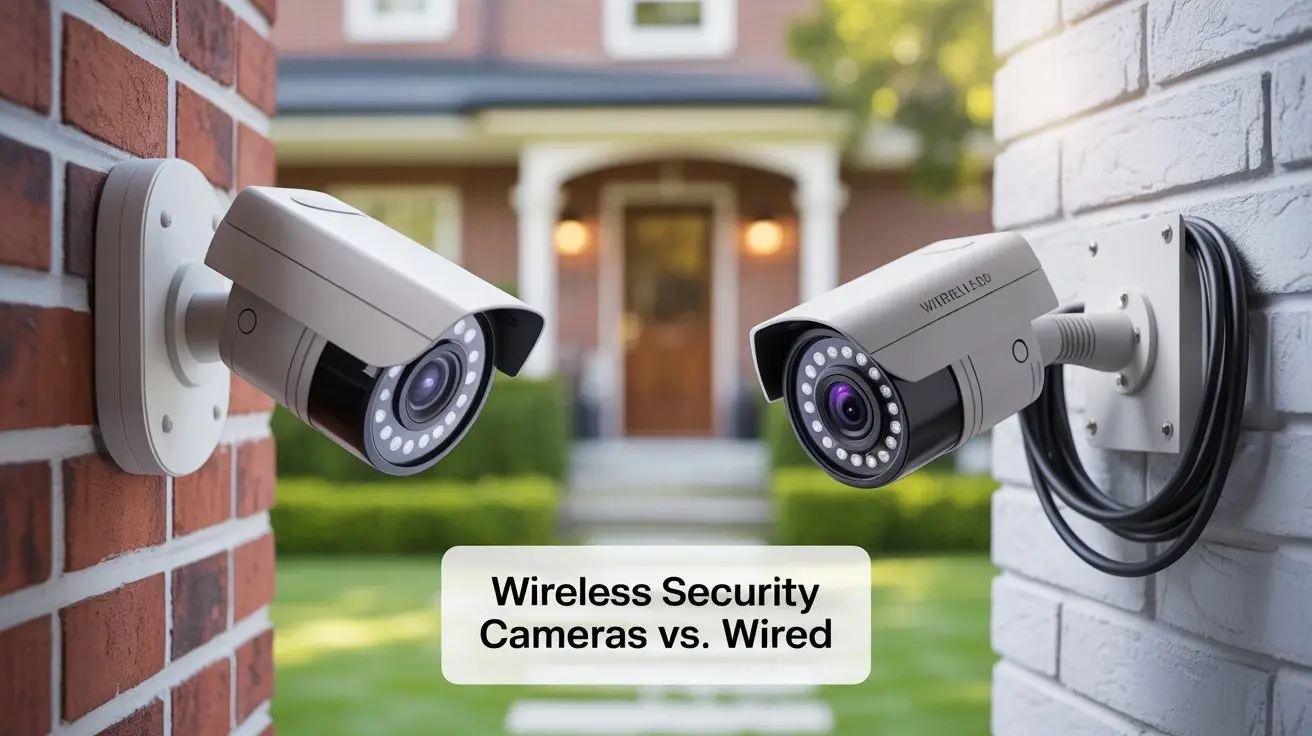
Traditional Closed-Circuit Television (CCTV) systems, which typically use wired cameras connected to a Digital Video Recorder (DVR) or Network Video Recorder (NVR), are the most common and reliable solution for 24/7 recording. These systems are designed from the ground up for continuous operation. The DVR/NVR acts as the central hub, receiving feeds from all connected cameras and storing the footage on a hard drive. This dedicated hardware ensures that recording is not dependent on external cloud services or Wi-Fi stability, making it a robust choice for uninterrupted surveillance.
Advantages of Wired Systems for 24/7 Recording:
- Reliability: Less susceptible to Wi-Fi interference or power outages (if on a UPS).
- Storage Capacity: DVRs/NVRs can accommodate large hard drives for extended recording periods.
- Bandwidth Independence: Footage is recorded locally, not relying on internet upload speeds.
- Data Security: Footage is stored on-site, reducing risks associated with cloud breaches.
Disadvantages:
- Installation Complexity: Running cables can be time-consuming and may require professional installation.
- Scalability: Adding more cameras might require upgrading the DVR/NVR.
- Initial Cost: Can be more expensive upfront compared to some wireless solutions.
IP Cameras with Local Storage (SD Card)
Many modern Internet Protocol (IP) cameras offer the flexibility of recording directly to a built-in microSD card. While these cameras can also stream live feeds over a network, their ability to record locally means they can function as standalone 24/7 recording devices, even if their network connection is temporarily lost. When connected to a Wi-Fi network, they can also upload footage to cloud storage or an NVR. For true 24/7 recording without relying on external infrastructure, a high-capacity SD card and a reliable power source are essential.
Advantages:
- Flexibility: Can operate wirelessly or wired, and record locally or to a network.
- Ease of Installation: Often simpler to set up than full CCTV systems.
- Cost-Effective: Individual cameras can be more affordable.
Disadvantages:
- Storage Limitations: SD card capacity is finite, requiring frequent offloading or overwriting.
- Durability: SD cards can fail over time and may be susceptible to theft if the camera is stolen.
- Power Dependency: Requires a stable power source.
NVR/DVR Systems with IP Cameras
This hybrid approach combines the flexibility of IP cameras with the robust recording capabilities of NVRs or DVRs. IP cameras connect to the NVR via a network (often through PoE - Power over Ethernet switches), and the NVR handles the continuous recording and storage. This setup offers a balance of modern camera features with the reliability of a dedicated recording system. These are a popular choice for businesses and advanced home security setups in 2025-26.
Advantages:
- High Resolution: IP cameras generally offer superior image quality.
- Scalability: NVRs can often support a larger number of cameras.
- Advanced Features: Supports smart analytics and remote access.
Disadvantages:
- Network Dependency: Requires a stable network infrastructure.
- Cost: Can be a significant investment.
Professional Surveillance Systems
For large-scale deployments in commercial or industrial settings, professional-grade surveillance systems are designed for 24/7 operation. These systems often feature redundant storage, advanced analytics, and centralized management platforms. They are built with enterprise-level reliability and scalability in mind, ensuring continuous operation even under demanding conditions.
How Security Cameras Achieve 24/7 Recording
The ability of a security camera to record continuously hinges on several key technological aspects and configurations. Understanding these methods is crucial for selecting a system that meets your specific needs for uninterrupted surveillance.
Continuous Recording (All the Time)
This is the most straightforward method for 24/7 recording. The camera or the connected DVR/NVR is configured to record footage non-stop. As new footage is captured, it overwrites the oldest footage on the storage medium (hard drive, SD card). This ensures that there is always a recent history of recordings available. The duration of this history is determined by the storage capacity and the recording resolution/frame rate.
How it works:
The recording device continuously receives video streams from the camera(s) and writes data to its storage. When the storage is full, the system automatically deletes the oldest files to make space for new ones. This is often referred to as "loop recording."
Considerations:
- Storage Space: Requires significant storage capacity. A 1TB hard drive can store approximately 30 days of footage from a single 1080p camera at 15 frames per second, but this varies greatly with resolution, compression, and activity.
- Power Supply: The camera and recording device must have a constant, reliable power source.
- System Performance: The DVR/NVR must be capable of handling the continuous data write operations without performance degradation.
Scheduled Recording
While not strictly "24/7" in the sense of continuous capture, scheduled recording allows users to set specific times of day or days of the week for recording to be active. This can be a compromise for systems where storage is a concern, or where continuous recording isn't always necessary. However, for true 24/7 needs, this method is insufficient on its own unless the schedule is set to cover all hours of the day.
How it works:
Users configure the recording software or device to initiate recording at pre-determined times and stop at others. For example, a business might schedule recording only during operating hours, or a homeowner might set it to record only during specific nighttime hours.
Relevance to 24/7:
To achieve 24/7 recording using scheduling, the schedule would need to encompass all 24 hours of every day. This is technically possible but less efficient than simply enabling continuous recording, as it adds an unnecessary layer of configuration.
Recording Based on Motion Detection (with continuous buffer)
Many modern cameras offer a "pre-record" or "buffer" feature. While the primary recording is triggered by motion, the camera continuously records a few seconds or minutes of footage *before* the motion event is detected. This buffer is stored temporarily and is only saved permanently when motion is detected. This method conserves storage space but ensures that the critical moments leading up to an event are captured.
How it works:
The camera is always buffering a short segment of video. When motion is detected, the system saves the buffered footage along with the subsequent recording. This allows you to see what happened *before* the trigger.
Limitations for True 24/7:
This method is excellent for capturing events but does not provide a continuous, searchable timeline of all activity. If your goal is to review every moment, this method alone is not sufficient. However, some systems allow for motion-triggered recording to be combined with a continuous background recording for backup.
Cloud Recording
Cloud-based security systems store footage on remote servers managed by the service provider. Many cloud-enabled cameras offer 24/7 recording options. The camera streams live footage to the cloud, where it is stored. This offers convenience and accessibility but relies heavily on a stable internet connection and the provider's service.
How it works:
Cameras continuously upload video streams to cloud servers. Users can access this footage remotely via a web browser or mobile app. Storage plans determine how long footage is retained.
Pros for 24/7:
- Accessibility: View footage from anywhere with an internet connection.
- Off-site Backup: Footage is stored remotely, protecting against on-site theft or damage.
- Scalability: Storage can often be increased by upgrading subscription plans.
Cons for 24/7:
- Internet Dependency: Requires a stable and robust internet connection for both uploading and viewing.
- Subscription Costs: Ongoing fees for cloud storage.
- Privacy Concerns: Footage is stored on third-party servers.
- Bandwidth Usage: Continuous uploading can consume significant internet bandwidth.
Essential Features for Reliable 24/7 Recording
To ensure your security cameras reliably record 24/7, several features are paramount. These go beyond just the recording method and delve into the hardware and software capabilities that support uninterrupted operation.
Storage Capacity and Management
The cornerstone of 24/7 recording is sufficient storage. This means having enough space to hold the desired length of footage. For systems using DVRs/NVRs, this translates to selecting hard drives with adequate capacity. For cameras with SD card slots, choosing high-capacity cards (e.g., 128GB, 256GB, or more) is crucial. Effective storage management, including loop recording (overwriting oldest footage), is essential to maintain continuous capture.
Considerations:
- Data Retention Policy: How long do you need to keep recordings? (e.g., 7 days, 30 days, 90 days).
- Recording Resolution and Frame Rate: Higher resolutions (4K vs. 1080p) and higher frame rates (30fps vs. 15fps) consume significantly more storage.
- Compression Technology: H.265 compression is much more efficient than H.264, reducing storage needs by up to 50%.
Power Source Reliability
Continuous recording demands a continuous power supply. For wired systems, this means ensuring the DVR/NVR and cameras are connected to a stable power source. For wireless IP cameras, a reliable Wi-Fi connection is necessary, but power is still a critical factor. Using Uninterruptible Power Supplies (UPS) for DVRs/NVRs and critical network equipment is highly recommended to bridge any short power outages and prevent data loss or system downtime. Power over Ethernet (PoE) for IP cameras simplifies power delivery by running data and power over a single Ethernet cable, reducing cable clutter and potential power issues.
Recommendations:
- UPS for DVR/NVR: Essential for maintaining operation during brief power interruptions.
- PoE Switches: For IP camera systems, PoE simplifies installation and power management.
- Backup Generators: For critical infrastructure, consider a backup generator for extended outages.
Night Vision and Low-Light Performance
24/7 recording means capturing footage day and night. Therefore, excellent night vision capabilities are non-negotiable. This includes infrared (IR) LEDs for black-and-white night vision and advanced sensors that can capture color footage in extremely low light conditions (ColorVu or similar technologies). The range and effectiveness of night vision will vary by camera model.
Key Aspects:
- IR Range: The distance at which IR illuminators can effectively illuminate a scene.
- Starlight/Low-Light Sensors: Cameras with larger sensors and advanced image processing can capture usable color images in very dim light.
- IR Cut Filter: An automatic filter that switches between day and night modes for optimal color accuracy and light sensitivity.
Durability and Environmental Resistance
If your cameras are installed outdoors, they must be built to withstand the elements. Look for cameras with high Ingress Protection (IP) ratings, such as IP66 or IP67, which indicate resistance to dust and water. Extreme temperatures can also affect performance and longevity. Choosing cameras designed for outdoor use ensures they can operate reliably 24/7 in various weather conditions.
IP Rating Explained:
- First Digit (Solids): 6 = Dust tight.
- Second Digit (Liquids): 6 = Protected against powerful water jets; 7 = Protected against immersion in water up to 1 meter for 30 minutes.
Remote Access and Monitoring
While not directly related to the recording mechanism itself, the ability to remotely access and monitor your 24/7 footage is a critical feature for most users. This allows you to check in on your property or business from anywhere, at any time, via a smartphone app or web browser. This feature is typically provided by the DVR/NVR manufacturer or the cloud service provider.
Benefits:
- Real-time View: Live stream monitoring.
- Playback: Access recorded footage remotely.
- Alerts: Receive notifications for motion detection or other events.
System Stability and Software Updates
A stable operating system for your DVR/NVR or camera firmware is crucial for uninterrupted recording. Regular software updates from the manufacturer are essential to patch security vulnerabilities, improve performance, and add new features. Choosing reputable brands that provide consistent support and updates is a wise investment for a 24/7 surveillance system.
Factors to Consider When Choosing a 24/7 Security Camera
Selecting the right security camera for 24/7 recording involves a careful assessment of your specific needs and the environment in which the camera will operate. Here are the key factors to consider:
Budget
Security camera systems range from a few hundred dollars for a basic wireless camera with local storage to thousands for professional-grade NVR systems with multiple high-resolution cameras. Determine your budget upfront, but remember that investing in a slightly more expensive, reliable system can save money and headaches in the long run by preventing missed events or system failures.
Budget Tiers (2025-26 Estimates):
- Entry-Level (under $300): Single wireless IP camera with SD card support, basic features.
- Mid-Range ($300 - $1000): 2-4 camera wired or wireless system, NVR/DVR, better resolution, some advanced features.
- High-End ($1000+): Multi-camera NVR/DVR systems, professional-grade IP cameras, advanced analytics, higher resolutions.
Coverage Area and Field of View
Consider the area you need to monitor. Wide-angle lenses (e.g., 120-180 degrees) are good for covering large open spaces, while narrower lenses offer more detail at a distance. For comprehensive 24/7 coverage, you might need multiple cameras with overlapping fields of view to eliminate blind spots.
Field of View (FoV) Examples:
- Narrow FoV (e.g., 30-60 degrees): Good for long-distance identification (e.g., a driveway entrance).
- Standard FoV (e.g., 70-90 degrees): Versatile for general surveillance.
- Wide FoV (e.g., 110-180 degrees): Ideal for covering large areas like backyards or parking lots.
Image Quality (Resolution and Frame Rate)
Higher resolution (e.g., 1080p, 2K, 4K) provides clearer images, allowing you to identify faces, license plates, and other details more easily. A higher frame rate (e.g., 25-30 frames per second) results in smoother video, especially for capturing fast-moving objects. For 24/7 recording, balancing image quality with storage requirements is crucial. H.265 compression is highly recommended to maximize storage efficiency.
Resolution Standards:
- 720p (HD): Basic clarity, suitable for general overview.
- 1080p (Full HD): Good balance of detail and storage.
- 2K (1440p): Enhanced detail over 1080p.
- 4K (2160p): Highest detail, but requires significant storage and bandwidth.
Connectivity (Wired vs. Wireless)
Wired (Ethernet): Generally offers the most stable and reliable connection, essential for continuous recording. PoE capability further simplifies installation. However, it requires running cables.
Wireless (Wi-Fi): Offers flexibility and easier installation, but is susceptible to signal interference, network congestion, and potential connection drops, which can interrupt recording. For critical 24/7 recording, a wired connection is almost always preferred.
Storage Options (Local vs. Cloud)
As discussed, local storage (SD card, DVR/NVR) provides direct control and no recurring fees, but requires physical management and is vulnerable to on-site theft. Cloud storage offers remote accessibility and off-site backup but incurs subscription costs and relies on internet connectivity. Many systems offer a hybrid approach, allowing both local and cloud backup.
Ease of Installation and Use
Consider your technical expertise. Some systems are plug-and-play, while others require more complex setup. If you're not comfortable with network configuration or cable running, professional installation might be necessary. User-friendly interfaces for viewing footage and managing settings are also important for day-to-day operation.
Brand Reputation and Support
Choose brands known for reliability, quality, and good customer support. Reputable manufacturers will offer firmware updates, clear documentation, and responsive technical assistance, which are vital for a system intended for continuous operation.
Installation and Setup for Continuous Recording
Proper installation and setup are critical for ensuring your security cameras record 24/7 without issues. This section provides a step-by-step guide and considerations for achieving reliable continuous recording.
Step-by-Step Installation Guide (General)
1. Planning Your System:
- Assess Your Needs: Determine the areas needing coverage, the required image quality, and the desired recording retention period.
- Choose Your System: Select between wired (DVR/NVR) or wireless IP cameras based on your environment and technical comfort.
- Camera Placement: Identify optimal locations for cameras to maximize field of view and minimize blind spots. Consider lighting conditions, potential obstructions, and power source availability.
- Storage Calculation: Estimate the storage space needed based on the number of cameras, resolution, frame rate, and desired retention time. Use online calculators provided by manufacturers.
2. Installing Cameras:
- Wired Systems:
- Run Ethernet (for IP cameras) or coaxial cables (for analog cameras) from the camera locations to the DVR/NVR.
- Use cable clips or conduits for a neat and protected installation.
- Mount cameras securely, ensuring they are pointed in the desired direction.
- Connect cameras to the DVR/NVR (or PoE switch for IP cameras).
- Wireless Systems:
- Mount cameras in their desired locations.
- Ensure they are within range of your Wi-Fi network and have a stable power source (plug-in adapter or battery).
3. Setting Up the Recording Device (DVR/NVR):
- Connect to Network: Connect the DVR/NVR to your router via an Ethernet cable for remote access.
- Install Hard Drive(s): If not pre-installed, install the hard drive(s) into the DVR/NVR. Ensure they are formatted correctly.
- Power On: Connect the power adapter and turn on the DVR/NVR.
4. Configuring Recording Settings:
- Access the Interface: Log into the DVR/NVR's web interface or use its on-screen display.
- Add Cameras: The system should detect connected cameras. Follow prompts to add them.
- Set Recording Mode: Crucially, select "Continuous Recording" or "Always Record" for each camera.
- Adjust Resolution and Frame Rate: Choose settings that balance image quality with storage capacity.
- Set Schedule: While continuous recording is selected, ensure no conflicting schedules are active.
- Configure Motion Detection (Optional): Even with continuous recording, you can enable motion detection for alerts.
- Format Storage: Ensure the hard drive or SD card is formatted correctly.
5. Setting Up Remote Access:
- Enable DDNS/P2P: Configure dynamic DNS or P2P services as per the manufacturer's instructions to allow remote access.
- Install Mobile App/Software: Download the manufacturer's app on your smartphone or tablet, or install desktop software.
- Add Device: Use the device's serial number or QR code to add it to your remote access account.
6. Testing the System:
- Verify Recording: Check if all cameras are recording and if footage is being saved.
- Test Playback: Review recorded footage to ensure quality and continuity.
- Test Remote Access: Ensure you can view live feeds and playback recordings remotely.
- Check Night Vision: Verify that night vision is functioning correctly in low-light conditions.
Important Considerations for Continuous Recording Setup
- Power Redundancy: As mentioned, a UPS for the DVR/NVR and critical network components is highly recommended.
- Network Stability: For IP cameras and remote access, a stable and robust home or business network is essential.
- Firmware Updates: Always check for and install the latest firmware updates for your cameras, DVR/NVR, and router.
- Storage Health Monitoring: Regularly check the health of your hard drives or SD cards. Many systems provide S.M.A.R.T. (Self-Monitoring, Analysis and Reporting Technology) status for hard drives.
- Bandwidth Management: If using cloud storage or remote access heavily, ensure your internet plan can handle the upload and download bandwidth requirements.
Maintenance and Troubleshooting for 24/7 Systems
To ensure your 24/7 security camera system continues to operate flawlessly, regular maintenance and prompt troubleshooting are essential. Neglecting these aspects can lead to downtime and missed recordings.
Routine Maintenance Tasks
1. Physical Cleaning:
- Camera Lenses: Periodically clean camera lenses with a soft, lint-free cloth and a mild lens cleaner to remove dust, dirt, and smudges that can degrade image quality.
- Camera Housings: Wipe down camera exteriors to prevent buildup of debris, especially for outdoor cameras.
- DVR/NVR Vents: Ensure the vents on your DVR or NVR are clear of dust to prevent overheating. Use compressed air for cleaning.
2. Software and Firmware Updates:
- Check for Updates: Regularly visit the manufacturer's website or use the system's update utility to check for the latest firmware for cameras, DVRs, NVRs, and mobile apps.
- Install Updates: Apply updates promptly, as they often include security patches, performance improvements, and bug fixes crucial for continuous operation.
3. Storage Health Check:
- Hard Drive Status: Access your DVR/NVR's system information to check the S.M.A.R.T. status of hard drives. Look for any warnings or errors.
- SD Card Health: For cameras with SD cards, periodically check their status and consider replacing them every 1-2 years, as they have a finite lifespan.
- Storage Capacity: Monitor available storage space to ensure it doesn't fill up unexpectedly, which would stop new recordings.
4. Network Connectivity Test:
- Ping Test: If using IP cameras, periodically ping the cameras from your NVR or a computer on the network to ensure they are responsive.
- Remote Access Test: Regularly test remote access to ensure you can still view live feeds and playback recordings from outside your local network.
5. Power System Check:
- UPS Status: If using a UPS, check its battery health and test its functionality by briefly unplugging the main power.
- Power Adapters: Ensure all power adapters are securely connected and functioning correctly.
Common Troubleshooting Scenarios
1. Camera Offline / No Video Feed:
- Check Connections: Ensure all cables (Ethernet, BNC) are securely connected at both ends.
- Power Supply: Verify the camera is receiving power. For IP cameras, check PoE status if applicable.
- Network Issues (IP Cameras): Reboot the camera, the switch, and the router. Check IP address conflicts.
- DVR/NVR Issues: Reboot the DVR/NVR. Check if the camera is enabled in the system's settings.
- Camera Failure: If other steps fail, the camera itself might be faulty.
2. Recording Gaps / Intermittent Recording:
- Storage Issues: Check hard drive health or SD card status. If full, ensure loop recording is enabled or increase capacity.
- Power Fluctuations: Ensure a stable power supply, ideally with a UPS.
- Network Instability (IP Cameras): Unstable Wi-Fi or network issues can cause recording interruptions. Consider a wired connection.
- System Overload: If the DVR/NVR is struggling to process multiple high-resolution streams, it might drop frames or stop recording. Ensure the system is adequately spec'd for the cameras.
3. Poor Image Quality (Blurry, Grainy, Dark):
- Dirty Lens: Clean the camera lens.
- Lighting Conditions: Ensure adequate lighting or check night vision settings.
- Incorrect Resolution/Frame Rate: Verify settings are appropriate for the scene.
- Camera Focus: Some cameras have manual focus adjustments.
- Low-Light Performance: If the camera is not performing well in low light, consider upgrading to a model with better low-light capabilities.
4. Remote Access Not Working:
- Internet Connection: Verify your home/business internet is working.
- Router Settings: Ensure port forwarding is correctly configured (if applicable) or that P2P/DDNS is enabled and functioning.
- Firewall: Check if your router or computer firewall is blocking the connection.
- App/Software Issues: Update the mobile app or desktop software.
- Device Status: Ensure the DVR/NVR is online and connected to the internet.
5. System Freezing or Crashing:
- Overheating: Ensure the DVR/NVR has adequate ventilation.
- Firmware Issues: Revert to a previous stable firmware version or update to the latest.
- Hardware Failure: This could indicate a failing hard drive, power supply, or the DVR/NVR unit itself. Contact support.
Future Trends in 24/7 Security Camera Technology
The security camera industry is in constant evolution, with advancements continually enhancing the capabilities of 24/7 surveillance systems. As we look towards 2026 and beyond, several key trends are shaping the future of continuous monitoring:
AI-Powered Analytics and Smart Detection
The integration of Artificial Intelligence (AI) is revolutionizing how security cameras interpret data. Beyond simple motion detection, AI is enabling cameras to distinguish between people, vehicles, animals, and even specific events like package deliveries or loitering. This reduces false alarms and provides more actionable intelligence, making 24/7 footage more valuable and easier to manage. Expect more sophisticated object recognition, facial recognition (with privacy considerations), and anomaly detection.
Examples of AI Advancements:
- Intrusion Detection: Identifying when someone crosses a virtual perimeter.
- License Plate Recognition (LPR): Automatically capturing and identifying vehicle plates.
- Person of Interest Detection: Alerting when a known individual is detected.
- Behavioral Analysis: Detecting unusual patterns of movement or activity.
Enhanced Low-Light and Night Vision Capabilities
Manufacturers are pushing the boundaries of low-light performance. Technologies like advanced starlight sensors, larger apertures, and AI-driven image enhancement are enabling cameras to capture clearer, more detailed color footage in near-total darkness, reducing reliance on IR illumination which can sometimes distort details or be detected. This significantly improves the quality and usefulness of 24/7 recordings during nighttime hours.
Increased Resolution and Detail
The push for higher resolutions, including 4K and even 8K, continues. While storage and bandwidth remain challenges, advancements in video compression (like H.266) and AI-powered smart codecs are making these higher resolutions more practical. The ability to zoom in on critical details within a 4K feed without significant loss of quality is invaluable for investigations and comprehensive monitoring.
Improved Cybersecurity Measures
As cameras become more connected, cybersecurity is a growing concern. Future systems will incorporate more robust end-to-end encryption, secure boot processes, multi-factor authentication for remote access, and regular, automated security updates to protect against unauthorized access and data breaches. Manufacturers are increasingly focusing on building security into the design from the ground up.
5G and Enhanced Wireless Connectivity
The rollout of 5G networks promises higher speeds, lower latency, and greater reliability for wireless security cameras. This could make high-resolution 24/7 wireless streaming more feasible, offering greater flexibility in deployment without sacrificing performance. This is particularly relevant for mobile surveillance or temporary installations.
Edge Computing and Local AI Processing
Instead of sending all raw video data to the cloud for processing, more AI analytics will be performed directly on the camera itself or on a local NVR (edge computing). This reduces bandwidth requirements, improves response times for alerts, and enhances privacy by processing sensitive data locally before transmitting only relevant information.
Sustainability and Energy Efficiency
With growing environmental awareness, manufacturers are focusing on developing more energy-efficient cameras and systems. This includes lower power consumption designs and the potential integration with renewable energy sources for remote deployments.
These trends indicate a future where 24/7 security cameras are not just passive recording devices but intelligent, integrated components of a proactive security ecosystem, offering unprecedented levels of awareness and protection.
Conclusion
For those seeking unwavering vigilance, understanding "What Security Cameras Record 24/7?" leads to a clear path: choose systems designed for continuous operation. Wired CCTV systems with DVRs/NVRs remain the gold standard for reliability, while modern IP cameras with robust local storage or cloud backup offer flexible alternatives. Key features like ample storage, dependable power, excellent night vision, and durable construction are non-negotiable for uninterrupted surveillance. By carefully considering your budget, coverage needs, and technical capabilities, you can select a system that provides the comprehensive security and peace of mind that only 24/7 recording can offer. Prioritize systems with strong support and consider future trends like AI analytics for enhanced intelligence. Investing in the right 24/7 security camera solution is an investment in continuous protection.