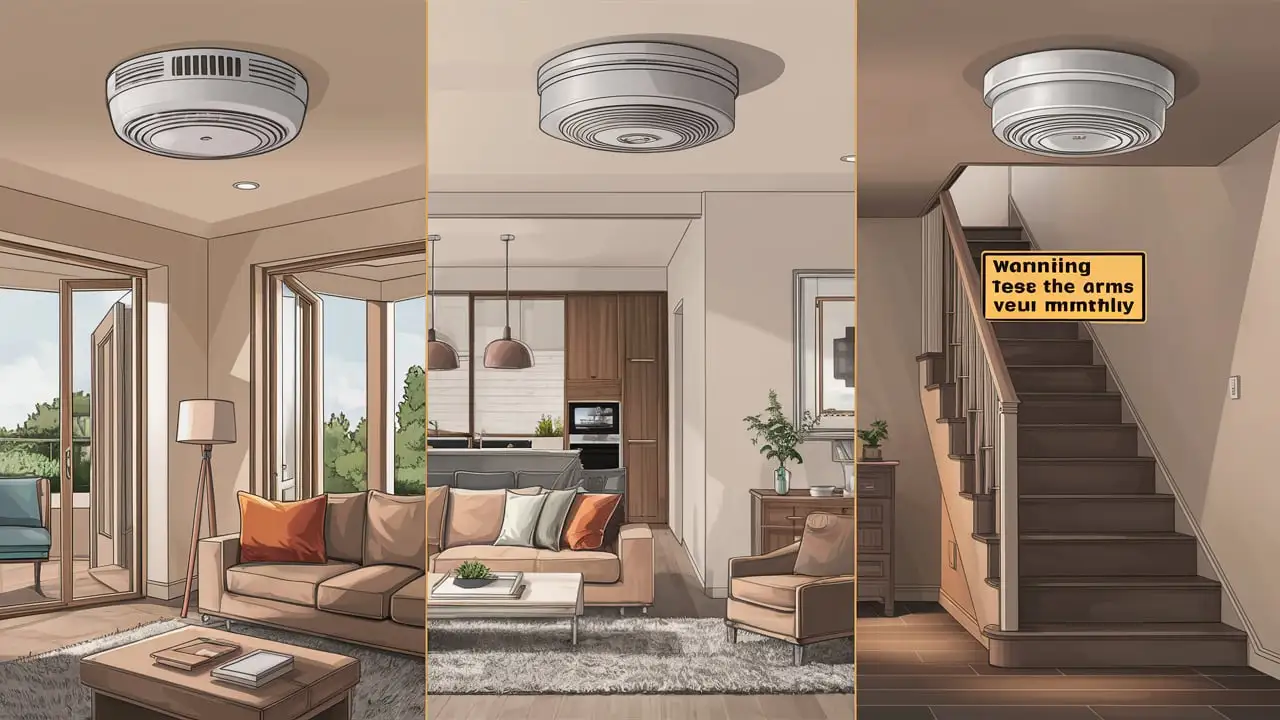
Proper smoke alarm placement is crucial for home safety, acting as your first line of defense against fires. This guide details exactly where to install smoke alarms in your home to maximize their effectiveness and ensure the safety of your loved ones.
Understanding Smoke Alarms: The Foundation of Home Fire Safety
Smoke alarms are indispensable devices designed to detect the presence of smoke, a primary indicator of a fire. Their early detection capabilities can significantly reduce the risk of injury and property damage by providing precious minutes for occupants to escape. Understanding how they work and the critical role of correct placement is the first step towards building a robust fire safety system within your residence. In 2025-26, the emphasis remains on proactive safety measures, and a properly functioning, well-placed smoke alarm system is paramount. These devices are not a luxury but a necessity, a silent guardian that can alert you to danger even when you are asleep. The technology behind smoke alarms has evolved, offering different detection methods and interconnected features, but their core purpose remains unchanged: to save lives.
There are two primary types of smoke detection technology: ionization and photoelectric. Ionization alarms are generally more responsive to fast-flaming fires, which produce smaller smoke particles. Photoelectric alarms, on the other hand, are better at detecting slow, smoldering fires that produce larger smoke particles. Many modern alarms are dual-sensor, combining both technologies for comprehensive protection. Regardless of the type, their effectiveness hinges entirely on their ability to "sense" smoke, which is directly influenced by where they are installed. Obstructions, dead air spaces, and proximity to cooking or bathroom vapors can all render a smoke alarm less effective or prone to nuisance alarms. Therefore, understanding these nuances is vital for optimal placement.
The National Fire Protection Association (NFPA) provides comprehensive guidelines for smoke alarm installation and maintenance. These recommendations are based on extensive research and real-world fire incident data. Following these guidelines ensures that your smoke alarms are positioned to detect smoke as quickly as possible, regardless of the fire's origin. This proactive approach is a cornerstone of modern home fire safety planning. The goal is to create a layered defense system, with smoke alarms acting as the initial alert mechanism, giving occupants the critical time needed to react and evacuate safely. This guide will delve deep into these recommendations, providing actionable advice for every homeowner.
General Smoke Alarm Placement Guidelines for Every Home
Effective smoke alarm placement is not arbitrary; it follows a set of scientifically-backed principles designed to maximize detection speed and minimize false alarms. These general guidelines form the bedrock of a comprehensive home fire safety strategy and are applicable to nearly all residential structures. Adhering to these principles ensures that your alarms are positioned to receive the earliest possible warning of a fire.
The NFPA, a leading authority on fire safety, recommends installing smoke alarms on every level of the home, inside each bedroom, and outside sleeping areas. This means that even if you have a single-story home, you need multiple alarms. For multi-story homes, this typically translates to an alarm on the main floor, one on any upper floors (including basements), and additional alarms near sleeping quarters. The rationale is simple: fires can start anywhere, and having alarms strategically located increases the likelihood of early detection regardless of the fire's ignition point or the occupants' location within the home.
Key General Placement Principles:
- Every Level: Install at least one smoke alarm on every story of your home, including basements.
- Inside Sleeping Areas: Place alarms inside each bedroom where people sleep. This is critical because fires often start at night when occupants are most vulnerable.
- Outside Sleeping Areas: Install alarms in the hallway or common area immediately outside each separate sleeping area. This provides an additional layer of protection for those sleeping in bedrooms.
- Ceiling vs. Wall Mounting: Smoke alarms can be mounted on the ceiling or on a wall.
- Ceiling Mount: Ideal for flat ceilings. Mount alarms at least 4 inches (10 cm) away from any wall or corner.
- Wall Mount: If mounting on a wall, place the alarm so that the top of the alarm is within 12 inches (30 cm) of the ceiling, but no closer than 4 inches (10 cm) from the wall or corner.
- Avoid Dead Air Spaces: Do not place alarms in "dead air spaces," such as the peak of vaulted ceilings or the corners where walls meet the ceiling. Smoke may not reach these areas quickly.
- Distance from Appliances: Keep alarms at least 10 feet (3 meters) away from cooking appliances to reduce nuisance alarms from normal cooking smoke.
- Ventilation: Avoid placing alarms near air vents, exhaust fans, or drafty areas, as these can blow smoke away from the alarm, delaying detection.
The concept of "dead air spaces" is crucial. These are areas where air tends to stagnate, and smoke might not be efficiently drawn towards the sensor. For cathedral or peaked ceilings, it's generally recommended to place alarms on the highest point of the ceiling, but not in the absolute apex if it creates a dead air pocket. For sloped ceilings, place the alarm within 4 inches of the highest point. The goal is always to ensure unimpeded access for smoke particles to reach the alarm's sensor.
Furthermore, consider the interconnectedness of alarms. Modern smoke alarm systems can be interconnected, meaning when one alarm sounds, all connected alarms in the home will also sound. This is a highly effective safety feature, especially in larger homes, as it ensures that everyone hears the alarm, regardless of where the fire starts. When installing interconnected alarms, ensure they are all placed according to the general guidelines.
The specific type of smoke alarm (ionization, photoelectric, or dual-sensor) can also influence placement, though the general principles remain the same. Dual-sensor alarms are often recommended for whole-home protection because they offer broad detection capabilities. Understanding these fundamental rules provides a solid framework for ensuring your home is adequately protected.
Specific Room-by-Room Smoke Alarm Placement Strategies
While general guidelines provide a framework, optimizing smoke alarm placement involves considering the unique characteristics and potential fire risks of each room in your home. This granular approach ensures that every area is covered effectively, addressing specific hazards and occupant behaviors.
Bedrooms
Bedrooms are arguably the most critical locations for smoke alarms. Fires that start at night pose the greatest threat because occupants are asleep and less likely to detect the fire early.
- Inside Each Bedroom: Install a smoke alarm on the ceiling or wall inside every bedroom. If the bedroom has a door that is kept closed at night, consider placing an additional alarm inside the room.
- Outside Sleeping Areas: Place an alarm in the hallway or common area immediately outside each separate sleeping area. This is vital for alerting occupants if a fire starts in the hallway or spreads from another part of the house while they are asleep.
- Near Doors: If a bedroom is particularly large or has multiple doors, consider placing the alarm in a central location or near the primary exit path.
For instance, in a master bedroom, an alarm should be centrally located on the ceiling. If there's a separate nursery, it also needs its own alarm. If a hallway connects multiple bedrooms, an alarm should be placed in that hallway, equidistant from the bedroom doors if possible.
Hallways and Stairways
Hallways serve as crucial pathways for escape and for smoke to travel throughout the home. Stairways are particularly dangerous as they can quickly become impassable in a fire.
- Hallways: Install alarms in the center of each hallway, especially those leading to bedrooms. If a hallway is longer than 40 feet (12 meters), install alarms at both ends.
- Stairways: Place an alarm at the top of the stairway leading from a lower floor to an upper floor, and at the bottom of the stairway leading from an upper floor to a lower floor.
Consider the airflow in hallways. Avoid placing alarms directly in front of air conditioning vents or return air grilles, as this can disrupt smoke detection. For a two-story home, an alarm at the top of the stairs on the second floor and at the bottom of the stairs on the first floor is a standard recommendation.
Living Areas (Living Room, Family Room, Den)
These areas are often where occupants spend significant time and can be locations for various fire hazards, such as electrical equipment or fireplaces.
- Central Location: Install an alarm in the main living area, typically on the ceiling in a central location, away from potential obstructions like ceiling fans.
- Near Potential Hazards: If there's a fireplace or significant electrical equipment in the room, ensure the alarm is placed within a reasonable distance (at least 10 feet) to detect any issues without being triggered by normal heat or minor smoke.
Kitchen
The kitchen is a high-risk area due to cooking activities, which can sometimes produce smoke. However, placement must balance detection with avoiding nuisance alarms.
- Outside the Kitchen: The primary recommendation is to place alarms *outside* the kitchen, typically in an adjacent hallway or dining area. This is to avoid nuisance alarms from normal cooking smoke.
- If Inside: If an alarm must be placed inside the kitchen, install it at least 10 feet (3 meters) away from cooking appliances (stove, oven, microwave). Use photoelectric alarms, which are less prone to nuisance alarms from cooking smoke than ionization alarms.
For example, if your kitchen is open to a dining area, place the alarm in the dining area, not directly over the stove. If your kitchen is a separate room, an alarm in the hallway just outside the kitchen door is ideal.
Basement
Basements often contain furnaces, water heaters, and laundry appliances, all of which can pose fire risks. They also tend to have fewer escape routes.
- At the Base of Stairs: Install an alarm at the bottom of the stairs leading up from the basement.
- Near Sleeping Areas (if applicable): If there is a bedroom or living space in the basement, ensure it has its own alarm inside.
- Central Location: If the basement is a large open area, consider a central location.
Ensure the alarm is not placed too close to the furnace or water heater, as the heat or minor fumes from these appliances could trigger a false alarm.
Garage
Garages can be a source of fires due to stored flammable materials, vehicles, and electrical equipment.
- Attached Garages: If the garage is attached to the home and has a door leading into the living space, install an alarm on the ceiling or wall near the door leading into the house. This is crucial for early warning if a fire starts in the garage and spreads towards the living area.
- Detached Garages: While not always mandated, installing a battery-operated smoke alarm in a detached garage can provide an extra layer of protection, especially if it stores valuable items or is used as a workshop.
Avoid placing alarms too close to exhaust fumes from vehicles.
Attic
Attics are less commonly occupied but can still be susceptible to fires from electrical issues.
- Access Points: If there is an attic access panel that leads into the living space, consider placing an alarm near this access point.
- Rarely Occupied: For attics that are rarely accessed and do not pose a direct risk to living spaces, the need for an alarm might be lower, but it's still a consideration for comprehensive protection.
Laundry Room
Laundry appliances, especially dryers, can be fire hazards due to lint buildup and electrical components.
- Outside the Room: Similar to the kitchen, it's often best to place an alarm in the hallway or adjacent area outside the laundry room to avoid nuisance alarms from dryer heat or minor dust.
- If Inside: If placement inside is necessary, ensure it's at least 10 feet away from the dryer and washing machine.
A common mistake is placing an alarm too close to a dryer vent, which can sometimes expel hot air or fine particles that could trigger a false alarm.
Other Considerations
Ceiling Fans and Air Vents: Always ensure alarms are not placed within 4 inches of the junction of the wall and ceiling, nor directly in the path of air currents from HVAC vents, ceiling fans, or open windows. These can disperse smoke, delaying detection.
High Ceilings: For ceilings over 8 feet high, wall mounting is often preferred. The top of the alarm should be within 12 inches of the ceiling. For very high ceilings (e.g., vaulted), place the alarm on the highest point of the ceiling, but not in a dead air space.
By meticulously considering each room and its potential fire hazards, you can create a highly effective, room-specific smoke alarm placement strategy that significantly enhances your home's safety.
Types of Smoke Alarms and Their Placement Considerations
The effectiveness of a smoke alarm is not solely determined by its placement but also by its detection technology. Understanding the different types of smoke alarms and their strengths and weaknesses can help you make informed decisions about which alarms to use and where to install them for optimal protection.
Ionization Smoke Alarms
How they work: Ionization alarms contain a small amount of radioactive material that ionizes the air between two electrically charged plates, creating a small current. When smoke particles enter the chamber, they attach to the ions, disrupting the current and triggering the alarm.
Best suited for: Ionization alarms are generally more responsive to fast-flaming fires, such as those caused by flammable liquids or paper. These fires produce smaller smoke particles.
Placement considerations:
- General areas: Suitable for most areas of the home, especially where fast-flaming fires are more likely.
- Avoid cooking areas: Due to their sensitivity to smaller particles, they are more prone to nuisance alarms from cooking smoke. It's best to place them at least 10 feet away from kitchens.
- Less ideal for slow smoldering fires: While they will eventually detect smoldering fires, they may be slower than photoelectric alarms.
Photoelectric Smoke Alarms
How they work: Photoelectric alarms use a light beam. In a dark chamber, the light beam is directed away from a sensor. When smoke enters the chamber, it reflects the light beam onto the sensor, triggering the alarm.
Best suited for: Photoelectric alarms are more responsive to slow, smoldering fires, which produce larger smoke particles. These are common in fires originating from upholstery, wiring, or cigarettes.
Placement considerations:
- Near sleeping areas: Excellent for bedrooms and hallways outside sleeping areas, as smoldering fires are common overnight.
- Kitchens (with caution): Can be used in kitchens if placed at least 10 feet away from cooking appliances, as they are less likely to be triggered by normal cooking fumes compared to ionization alarms.
- Areas with potential for smoldering fires: Good for areas with upholstered furniture or where electrical faults might lead to smoldering.
Dual-Sensor Smoke Alarms
How they work: These alarms combine both ionization and photoelectric sensors in a single unit, offering the benefits of both detection technologies.
Best suited for: Providing comprehensive protection against both fast-flaming and slow-smoldering fires. They are highly recommended for whole-home coverage.
Placement considerations:
- Everywhere: Dual-sensor alarms are the most versatile and can be placed in any location recommended for smoke alarms, including bedrooms, hallways, living areas, kitchens (with distance from appliances), and basements.
- Ideal for whole-house systems: When installing a system throughout the home, using dual-sensor alarms ensures the broadest range of detection.
Combination Smoke and Carbon Monoxide Alarms
How they work: These devices integrate smoke detection technology with a carbon monoxide sensor. They alert occupants to both fire and the presence of this odorless, colorless, and deadly gas.
Best suited for: Homes with fuel-burning appliances (furnaces, water heaters, fireplaces, gas stoves), attached garages, or homes where occupants might be exposed to CO.
Placement considerations:
- Follow smoke alarm guidelines: Place them in all locations recommended for smoke alarms (every level, inside/outside bedrooms).
- Consider CO sources: Place them near potential sources of carbon monoxide, such as near furnace rooms or attached garages, but still adhering to the minimum distance requirements to avoid nuisance alarms from normal operation.
- Central locations: For CO detection, central locations in living areas and near sleeping areas are crucial.
Important Note: A combination alarm is not a substitute for having separate alarms if required by local codes or if you have specific concerns about CO. Always check manufacturer instructions and local regulations.
Wireless Interconnected Smoke Alarms
How they work: These alarms communicate wirelessly with each other. When one alarm detects smoke, it signals all other connected alarms to sound simultaneously.
Placement considerations:
- Follow all standard placement guidelines: Each alarm must be placed according to the general and room-specific recommendations.
- Ensure clear signal paths: While wireless, thick walls or metal objects can sometimes interfere with signals. Test connectivity between alarms.
- Power source: Most wireless alarms are battery-powered or plug-in with battery backup. Ensure consistent power.
These are highly recommended for modern homes, especially larger ones, as they significantly increase the audibility of an alarm throughout the entire house.
Choosing the right type of smoke alarm for each location in your home, and then ensuring proper placement according to the guidelines, creates a robust and reliable fire safety system. For comprehensive protection in 2025-26, dual-sensor alarms or a mix of ionization and photoelectric alarms, ideally interconnected, are the best approach. Combination smoke and CO alarms are also increasingly important for holistic home safety.
Installation and Maintenance: Ensuring Ongoing Protection
Purchasing the right smoke alarms and placing them correctly is only part of the equation for effective fire safety. Proper installation and consistent maintenance are critical to ensure these devices function reliably when needed most. Neglecting these aspects can render even the best-placed alarms useless.
Installation Steps
1. Choose the Right Location: Refer to the specific room-by-room placement strategies and general guidelines discussed earlier. Ensure the location is free from obstructions and away from areas prone to nuisance alarms (kitchens, bathrooms, vents).
2. Gather Tools: You will typically need a drill, screws, wall anchors (if mounting on drywall), a screwdriver, and a ladder or sturdy step stool.
3. Mount the Alarm:
- Ceiling Mount: Use the mounting bracket provided with the alarm. Position the bracket on the ceiling and mark the screw holes. Drill pilot holes if necessary, insert anchors if needed, and secure the bracket with screws.
- Wall Mount: Position the alarm so its top is within 12 inches of the ceiling. Mark screw holes, drill, and secure the bracket.
4. Connect Power (if applicable):
- Hardwired Alarms: If you are replacing an existing hardwired alarm, turn off the power to that circuit at the breaker box first. Follow the manufacturer's wiring instructions carefully. If you are unsure about electrical wiring, it is highly recommended to hire a qualified electrician.
- Battery-Powered Alarms: Insert the battery according to the manufacturer's instructions. Ensure it's a fresh, high-quality battery.
5. Attach the Alarm to the Bracket: Most alarms twist or snap onto their mounting brackets. Ensure it is securely attached.
6. Test the Alarm: Press and hold the test button on the alarm until it sounds. This verifies that the battery, electronics, and alarm horn are working correctly. Test every alarm after installation.
7. Interconnect Alarms (if applicable): If you have interconnected alarms (wired or wireless), test the interconnection by triggering one alarm and ensuring all others sound.
Maintenance Schedule
Regular maintenance is not optional; it's a vital part of ensuring your smoke alarms are always ready.
Monthly: Test All Alarms
- Press the test button on each smoke alarm. The alarm should sound loudly. If it doesn't, check the battery and replace it if necessary. If it still doesn't work, the unit may need replacement.
Every 6 Months: Replace Batteries (for battery-powered and most hardwired alarms with battery backup)
- Even if the alarm is hardwired, it has a battery backup that needs to be fresh. It's a good practice to replace batteries every six months, or at least once a year. Many people find it easiest to do this when changing their clocks for daylight saving time.
- Use only the battery type recommended by the manufacturer.
Every Year: Clean the Alarms
- Dust and debris can accumulate inside the alarm's sensing chamber, reducing its sensitivity. Gently vacuum the exterior of the alarm using a soft brush attachment on your vacuum cleaner. You can also use a can of compressed air to blow out any dust.
- Never use cleaning sprays or solvents on or near smoke alarms, as they can damage the sensors.
Every 10 Years: Replace All Smoke Alarms
- Smoke alarms have a limited lifespan. Even with regular maintenance, their sensors degrade over time. The NFPA recommends replacing all smoke alarms, regardless of type, every 10 years from the date of manufacture.
- Look for the manufacture date on the back or side of the alarm. If it's 10 years old or older, it's time for a replacement. Do not simply replace the battery; the entire unit must be replaced.
Important Considerations
Manufacturer's Instructions: Always read and follow the specific installation and maintenance instructions provided by the manufacturer of your smoke alarms. Different models may have slightly different requirements.
Nuisance Alarms: If you experience frequent nuisance alarms, don't disconnect the alarm or remove the battery permanently. Instead, try to identify the cause. It might be a poorly chosen location (too close to the kitchen or bathroom), a dusty sensor, or a low battery. Consider relocating the alarm or switching to a photoelectric model if cooking smoke is the issue.
Professional Installation: For hardwired systems or if you are uncomfortable with electrical work, hire a qualified electrician for installation.
By committing to a regular maintenance schedule and replacing alarms as recommended, you ensure that your smoke alarm system remains a reliable guardian for your home and family.
Common Smoke Alarm Placement Mistakes to Avoid
Even with the best intentions, homeowners can make mistakes when placing smoke alarms that significantly reduce their effectiveness. Awareness of these common pitfalls is crucial for ensuring your home is truly protected.
Mistake 1: Insufficient Number of Alarms
The Problem: Installing only one or two alarms in a multi-level or multi-bedroom home.
Why it's wrong: Fires can start anywhere. A single alarm on one floor might not detect a fire on another floor quickly enough, or at all. Bedrooms without alarms are particularly vulnerable.
The Fix: Follow NFPA guidelines: install alarms on every level, inside every bedroom, and outside sleeping areas.
Mistake 2: Placing Alarms Too Close to Cooking Appliances
The Problem: Installing alarms directly in or too near the kitchen, especially above the stove or within a few feet of cooking surfaces.
Why it's wrong: Normal cooking activities (frying, broiling, toasting) can produce smoke and steam that can trigger ionization alarms, leading to frequent nuisance alarms. This can cause occupants to ignore or disable the alarms.
The Fix: Place alarms at least 10 feet (3 meters) away from cooking appliances. Consider using photoelectric alarms in or near the kitchen if placement is unavoidable.
Mistake 3: Placing Alarms in "Dead Air Spaces"
The Problem: Installing alarms in the peak of vaulted ceilings, corners where walls meet the ceiling, or under soffits.
Why it's wrong: Smoke rises and collects at the highest point, but these specific areas can create pockets where smoke doesn't reach the alarm sensor quickly or effectively.
The Fix: Mount alarms on the ceiling, at least 4 inches from any wall or corner. For sloped ceilings, place alarms on the highest point but not in the absolute apex if it creates a dead air space.
Mistake 4: Placing Alarms Near Bathrooms or High-Humidity Areas
The Problem: Installing alarms too close to shower stalls, bathtubs, or steamy bathrooms.
Why it's wrong: Steam and high humidity can sometimes trigger smoke alarms, leading to nuisance alarms.
The Fix: Keep alarms at least 10 feet away from bathrooms.
Mistake 5: Placing Alarms Near Air Vents or Fans
The Problem: Installing alarms directly in the path of airflow from HVAC vents, exhaust fans, or ceiling fans.
Why it's wrong: Strong airflow can disperse smoke away from the alarm sensor, delaying detection. It can also blow dust into the sensor.
The Fix: Ensure alarms are not placed directly in the path of significant airflow. Maintain a reasonable distance from vents and fans.
Mistake 6: Neglecting Maintenance and Testing
The Problem: Installing alarms and then forgetting about them until an emergency occurs.
Why it's wrong: Batteries die, dust accumulates, and sensors degrade over time. An untested or poorly maintained alarm is unreliable.
The Fix: Establish a routine for monthly testing, semi-annual battery replacement, and annual cleaning. Replace alarms every 10 years.
Mistake 7: Using Only One Type of Smoke Alarm
The Problem: Relying solely on ionization alarms for all locations, or solely on photoelectric alarms.
Why it's wrong: Ionization alarms are better for fast fires, while photoelectric alarms are better for smoldering fires. Using only one type leaves gaps in detection capabilities.
The Fix: Use dual-sensor alarms or a combination of ionization and photoelectric alarms throughout the home for comprehensive protection.
Mistake 8: Not Interconnecting Alarms
The Problem: Using multiple, independent smoke alarms.
Why it's wrong: If a fire starts in a remote part of the house, occupants in other areas might not hear the alarm in time to escape.
The Fix: Invest in interconnected smoke alarms (wired or wireless). When one sounds, they all sound, providing an audible alert throughout the entire home.
Mistake 9: Forgetting About Attached Garages
The Problem: Not installing an alarm near the door connecting an attached garage to the house.
Why it's wrong: Garages can be sources of fires due to flammable materials, vehicles, or electrical issues. A fire in the garage can quickly spread to the living space.
The Fix: Install an alarm on the ceiling or wall near the interior door of an attached garage.
Avoiding these common mistakes is as important as knowing where to place alarms. A well-placed, well-maintained, and correctly chosen type of smoke alarm system is a critical component of home fire safety.
Current Fire Safety Statistics (2025-2026) Informing Placement Decisions
Understanding current fire safety statistics provides crucial context and reinforces the importance of proper smoke alarm placement. These figures, reflecting data from 2025-2026, highlight the ongoing risks and the life-saving impact of functioning smoke alarms.
According to the latest available data from the NFPA and other fire safety organizations for the 2025-2026 period:
- Home fires continue to be a significant threat. While overall fire incidents may fluctuate, the impact of residential fires remains substantial in terms of both lives lost and property damage.
- Working smoke alarms are proven life savers. Homes without working smoke alarms are 2.5 times more likely to experience a fire fatality than homes with working alarms. This statistic underscores the direct correlation between alarm functionality and survival rates.
- Most fatal fires occur at night. A significant percentage of fatal fires occur between 10 PM and 6 AM, when occupants are asleep. This emphasizes the critical need for alarms inside and outside sleeping areas.
- Cooking remains the leading cause of home fires. Approximately 49% of reported home fires are caused by cooking. This highlights the importance of placing alarms away from kitchens to prevent nuisance alarms while still ensuring detection if a fire escalates.
- Electrical malfunctions and heating equipment are also major contributors. These types of fires can sometimes smolder before igniting, reinforcing the value of photoelectric and dual-sensor alarms in areas like basements or near appliances.
- The time to escape is limited. In fires where smoke alarms were present but not functioning, occupants had less time to escape. This reinforces the need for both correct placement and regular maintenance.
- Interconnected alarms save lives. While specific data for 2025-26 is still being compiled, trends from previous years show that interconnected alarms provide earlier and more widespread warnings, significantly improving escape times.
Key Takeaways from 2025-2026 Data for Placement:
- Prioritize Bedrooms: The high incidence of nighttime fires makes alarms inside and outside sleeping areas non-negotiable.
- Strategic Kitchen Placement: The prevalence of cooking fires necessitates careful placement away from immediate cooking zones to avoid false alarms, but close enough to detect a developing fire.
- Whole-Home Coverage is Essential: Fires can start anywhere, making alarms on every level and in all major living areas critical.
- Maintenance is Paramount: Statistics consistently show that non-functioning alarms are a major factor in fire fatalities. Regular testing and battery replacement are vital.
- Interconnection is Highly Recommended: The limited escape time in many fires makes interconnected alarms a vital component of a modern safety system.
These statistics are not just numbers; they represent real-life tragedies that could have been prevented with properly placed and functioning smoke alarms. By integrating this knowledge into your home safety plan, you are making the most informed decisions to protect your family and property.
In conclusion, understanding when and where to properly place smoke alarms in your home is a fundamental aspect of fire safety. By adhering to the guidelines provided by organizations like the NFPA, considering the specific layout and risks of each room, choosing the appropriate alarm technology, and committing to regular maintenance, you significantly enhance your home's ability to provide early warning in the event of a fire. The statistics from 2025-2026 continue to underscore the life-saving efficacy of these devices when installed and maintained correctly. Don't wait for an emergency; take proactive steps today to ensure your smoke alarms are optimally placed and fully functional, offering peace of mind and critical protection for your loved ones.