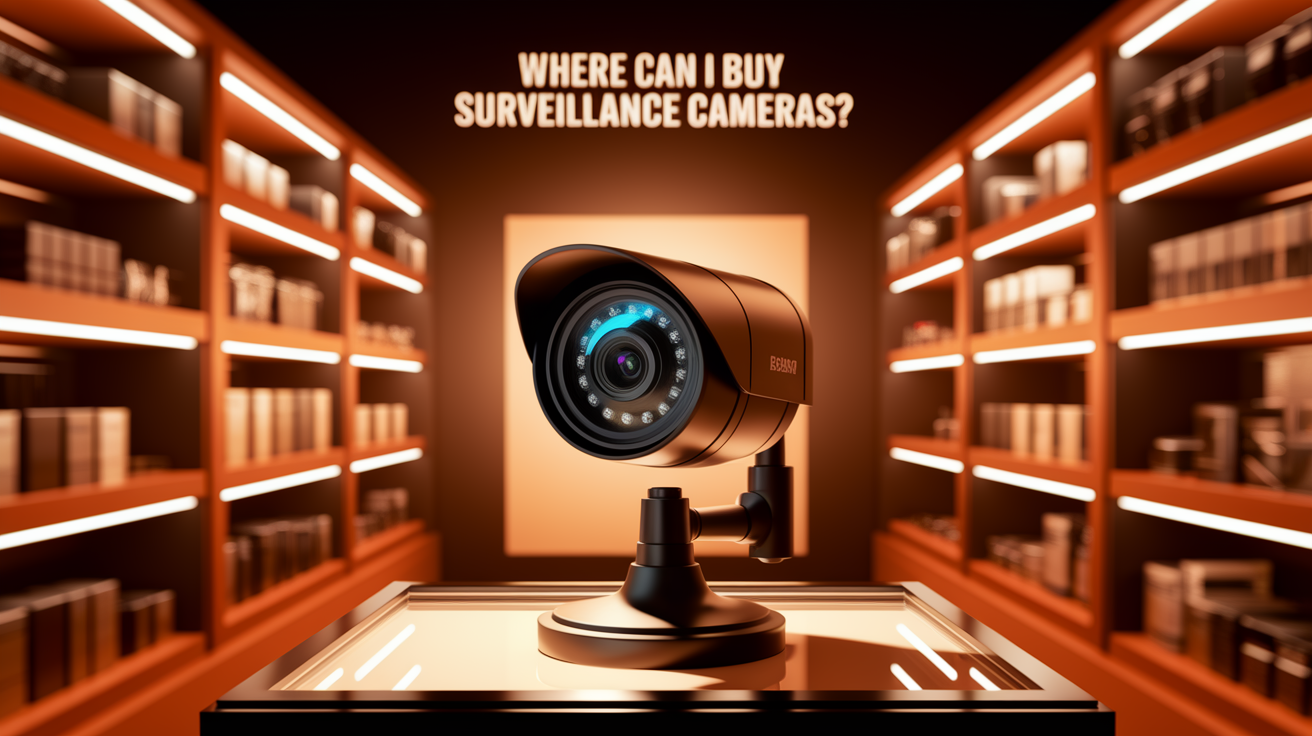
Looking for the best places to buy surveillance cameras? This guide provides a comprehensive overview of your options, from online retail giants and specialized security stores to local electronics shops, helping you make an informed decision for your home or business security needs in 2025-26.
Where to Buy Surveillance Cameras Online
The digital marketplace offers unparalleled convenience and variety when it comes to purchasing surveillance cameras. For many consumers in 2025-26, the first stop is often a major online retailer. These platforms are renowned for their vast selection, competitive pricing, and customer review systems, which can be invaluable for making informed choices.
Major Online Retailers
Platforms like Amazon, Best Buy (online), and Walmart (online) are prime destinations. They host thousands of surveillance camera models from a multitude of brands, ranging from budget-friendly options to high-end professional systems. The sheer volume of choices can be overwhelming, but it also means you're likely to find exactly what you need, often at a lower price point than you might find elsewhere.
Key advantages of buying from major online retailers:
- Vast Selection: Access to hundreds of brands and thousands of models.
- Competitive Pricing: Frequent sales, discounts, and price comparisons make it easy to find deals.
- Customer Reviews: Real-world feedback from other buyers helps gauge product performance and reliability.
- Convenience: Shop from home, with delivery directly to your doorstep.
- Easy Returns: Most major retailers have robust return policies.
Considerations:
- Lack of Hands-on Experience: You can't physically inspect the camera before buying.
- Overwhelm: The sheer number of options can make decision-making difficult.
- Support: While customer service is available, it might not be as specialized as a dedicated security store.
Manufacturer Websites
Many leading surveillance camera manufacturers, such as Ring, Arlo, Nest (Google), Wyze, and Reolink, sell their products directly through their own websites. This can be a great option for several reasons. You'll often find the latest models and exclusive bundles. Furthermore, purchasing directly from the manufacturer can sometimes lead to better customer support, as they have in-depth knowledge of their own products.
Advantages:
- Latest Models: Access to the newest releases and firmware updates.
- Exclusive Deals: Special offers and bundles not available elsewhere.
- Direct Support: Expert knowledge and support for their specific products.
- Warranty: Direct handling of warranty claims.
Disadvantages:
- Limited Brand Choice: You're restricted to the products offered by that specific manufacturer.
- Potentially Higher Prices: Without the competition of a large marketplace, prices might be less competitive.
Specialty Online Security Stores
Beyond the general giants, there are online retailers that specialize exclusively in security equipment. Websites like B&H Photo Video (which has a strong security section), Adorama, and dedicated security equipment suppliers offer a curated selection of professional-grade cameras, DVRs/NVRs, and accessories. These sites often cater to a more informed buyer and may offer more specialized advice.
Advantages:
- Expert Curation: Products are often selected for quality and performance.
- Specialized Advice: Staff are typically more knowledgeable about security systems.
- Professional-Grade Equipment: Access to higher-quality, more robust systems.
Disadvantages:
- Higher Price Point: Specialty equipment can be more expensive.
- Less Consumer-Friendly Interface: May be geared towards professionals rather than casual buyers.
Buying Surveillance Cameras from Physical Retail Stores
While online shopping dominates, brick-and-mortar stores still offer compelling reasons to buy surveillance cameras. The ability to see and handle a product before purchase, coupled with immediate availability, makes physical retail a viable option for many.
Big Box Electronics Stores
Stores like Best Buy, Micro Center, and sometimes even larger general retailers like Walmart and Target, have dedicated electronics sections where surveillance cameras are prominently displayed. These stores allow you to physically examine the cameras, compare sizes, and get a feel for build quality. Staff, while not always security experts, can often provide basic product information.
Advantages:
- See Before You Buy: Inspect build quality and size.
- Immediate Availability: Take your purchase home the same day.
- Easy Returns/Exchanges: Hassle-free returns to the physical store.
- Potential for In-Store Deals: Clearance items or special promotions.
Disadvantages:
- Limited Selection: Inventory is much smaller than online retailers.
- Higher Prices: Physical store overhead often leads to higher retail prices.
- Sales Staff Expertise: May lack in-depth knowledge of security systems.
Home Improvement Stores
Stores such as Home Depot and Lowe's are increasingly stocking smart home devices, including surveillance cameras. These are often geared towards DIY home security solutions. You might find popular brands like Ring, Nest, and various Wi-Fi camera systems. The advantage here is that you can often find these alongside other home improvement supplies, making it a convenient one-stop shop for some projects.
Advantages:
- Convenience: Purchase alongside other home improvement items.
- DIY Focus: Products are often selected for ease of installation.
Disadvantages:
- Very Limited Selection: Typically only a few popular brands and models.
- Basic Product Knowledge: Staff may not be specialized in security camera technology.
Specialty Security Stores and Installers
For those seeking professional-grade solutions, expert advice, or full installation services, specialty security stores and professional installers are the go-to. These businesses focus exclusively on security systems and offer a level of expertise that general retailers cannot match.
Local Security System Integrators
These businesses are experts in designing, selling, and installing comprehensive security systems. They often carry higher-end, more robust equipment than what's available in consumer retail. They can assess your specific needs, recommend the right cameras, and ensure they are integrated seamlessly into a complete security solution, including alarms, access control, and monitoring services.
Advantages:
- Expert Consultation: Tailored advice based on your property and needs.
- Professional Installation: Ensures optimal placement and functionality.
- High-Quality Equipment: Access to commercial-grade and specialized cameras.
- Integrated Solutions: Can combine cameras with other security measures.
- Ongoing Support: Often offer maintenance and support packages.
Disadvantages:
- Highest Cost: This is typically the most expensive option due to labor and premium equipment.
- Less Flexibility: You are often tied to their recommended brands and services.
Wholesale Security Equipment Suppliers
These are often B2B (business-to-business) suppliers, but some may sell directly to consumers or through authorized dealers. They carry a wide range of professional CCTV equipment, IP cameras, DVRs, NVRs, and accessories. If you have a good understanding of what you need and are looking for specific components, these suppliers can be a good source, especially for bulk purchases or hard-to-find items.
Advantages:
- Extensive Product Range: Access to a vast array of professional equipment.
- Bulk Pricing: Potentially better prices for larger orders.
- Specialized Components: Find niche products and accessories.
Disadvantages:
- Technical Knowledge Required: You need to know what you're looking for.
- Less Consumer Support: May not offer the same level of guidance as retail stores.
- Minimum Order Quantities: Some may have restrictions.
DIY vs. Professional Purchase Considerations
The decision of where to buy often intertwines with whether you plan to install the system yourself (DIY) or hire professionals. This choice significantly impacts your purchasing options and budget.
DIY Purchases
If you're comfortable with basic tools and technology, a DIY approach can save significant costs. For DIY, your best bet is often:
- Major Online Retailers: For the widest selection and competitive pricing on consumer-grade cameras.
- Big Box Electronics Stores: To see the cameras in person and get them immediately.
- Manufacturer Websites: For the latest models and direct support.
DIY systems are typically wireless or use simple plug-and-play setups. Examples include Wi-Fi cameras like those from Arlo, Ring, Nest, and Wyze, or simpler wired systems with easy-to-connect BNC cables.
Professional Purchases
If you opt for professional installation, the purchase process is often handled by the installer. They will:
- Recommend Equipment: Based on their expertise and the systems they are authorized to sell.
- Source Equipment: They may purchase from wholesale suppliers or directly from manufacturers.
- Bundle Costs: The price of the cameras will be part of a larger installation and service package.
This route is ideal for complex setups, businesses, or when you want a fully integrated, professionally managed security solution. The equipment purchased through professionals is often commercial-grade and designed for reliability and advanced features.
How to Choose Between DIY and Professional
Consider these factors:
- Technical Skill: Are you comfortable running cables, configuring networks, and troubleshooting?
- Budget: DIY is generally cheaper upfront, but professional installation offers peace of mind and potentially better long-term reliability.
- Complexity of Needs: A single camera for your front door is a DIY job. Securing a large property with multiple entry points and blind spots might require professional assessment.
- Time Commitment: DIY installation takes time. Professional installation is faster.
- Warranty and Support: Professional installers often provide warranties on both equipment and labor.
Key Factors to Consider When Buying Surveillance Cameras
Regardless of where you buy, understanding the technical specifications and features is crucial for making the right purchase. In 2025-26, the market offers advanced capabilities, but also requires careful consideration.
1. Camera Type and Form Factor
The physical design of the camera impacts its placement and purpose.
- Bullet Cameras: Iconic shape, often used outdoors, visible deterrent.
- Dome Cameras: Discreet, often vandal-resistant, suitable for indoor/outdoor use.
- Turret Cameras (Eyeball Cameras): Similar to domes but with a more adjustable lens, good balance of discretion and visibility.
- PTZ (Pan-Tilt-Zoom) Cameras: Offer remote control over camera movement, ideal for wide areas.
- Cube Cameras: Compact, often with built-in speakers/microphones, good for indoor monitoring.
- Doorbell Cameras: Integrated into doorbell units, offering front-door surveillance and two-way audio.
2. Resolution and Image Quality
Higher resolution means clearer images, crucial for identifying faces and details. In 2025-26, 1080p (Full HD) is the minimum standard, with 2K and 4K (UHD) becoming increasingly common and affordable.
- 1080p (1920x1080): Sufficient for most home use.
- 2K (2560x1440): Offers a noticeable improvement in detail.
- 4K (3840x2160): Provides exceptional clarity, ideal for large areas or where fine detail is paramount.
Look for cameras with good low-light performance (high lux rating or excellent infrared capabilities) and Wide Dynamic Range (WDR) for handling challenging lighting conditions.
3. Field of View (FOV)
This determines how wide an area the camera can see. A wider FOV means fewer cameras are needed to cover a given space. Standard lenses are around 90-110 degrees, while wide-angle lenses can exceed 150 degrees.
4. Night Vision
Essential for 24/7 surveillance. Infrared (IR) LEDs are common, providing black-and-white images in complete darkness. Check the IR range (how far the light reaches) and whether the camera has color night vision technology (which uses ambient light to produce color images in low light).
5. Connectivity and Power
- Wired (PoE - Power over Ethernet): Reliable, stable connection, power delivered through the Ethernet cable. Requires running cables.
- Wireless (Wi-Fi): Easy installation, but susceptible to signal interference. Requires a separate power source (adapter or battery).
- Battery-Powered: Ultimate flexibility for placement, but requires frequent recharging or battery replacement.
6. Storage Options
- Local Storage (SD Card): Convenient, no subscription fees, but limited capacity and vulnerable if the camera is stolen.
- Network Video Recorder (NVR) / Digital Video Recorder (DVR): Centralized recording for multiple cameras, higher capacity, more secure. NVRs for IP cameras, DVRs for analog cameras.
- Cloud Storage: Accessible from anywhere, off-site backup, but usually requires a monthly subscription fee.
7. Smart Features and Integration
In 2025-26, smart features are standard. Look for:
- Motion Detection: Triggers recording or alerts. Advanced AI detection can distinguish between people, vehicles, and animals, reducing false alarms.
- Two-Way Audio: Communicate with visitors or deter intruders.
- Mobile App Integration: Remote viewing, alerts, and control via smartphone.
- Smart Home Compatibility: Integration with platforms like Amazon Alexa, Google Assistant, or Apple HomeKit.
- Person/Vehicle/Package Detection: AI-powered alerts for specific events.
8. Durability and Weather Resistance
For outdoor cameras, look for an IP rating (e.g., IP65, IP66, IP67) indicating resistance to dust and water. Consider temperature ranges for extreme climates.
Understanding Different Types of Surveillance Cameras
Beyond the physical form, cameras are broadly categorized by their technology and intended use.
IP Cameras (Internet Protocol)
These are digital cameras that transmit data over a network. They are the modern standard for surveillance, offering higher resolutions, advanced features, and easier integration into smart systems. They can be wired (PoE) or wireless (Wi-Fi).
- Pros: High resolution, advanced features (AI, analytics), easy scalability, network connectivity.
- Cons: Can be more expensive than analog, Wi-Fi versions can suffer interference.
Analog Cameras (CCTV)
These older-style cameras transmit video signals over coaxial cables to a DVR. While being phased out, they can still be found in older installations or as a budget option for basic monitoring. High-definition analog (HD-TVI, HD-CVI, AHD) offers improved resolution over traditional analog but is still generally surpassed by IP cameras.
- Pros: Often cheaper, simpler to set up for basic systems, can use existing coaxial cabling.
- Cons: Lower resolution, limited features, less scalable, require separate power and video cables.
Wi-Fi Cameras
A sub-category of IP cameras that connect wirelessly to your home network. They are popular for their ease of installation, making them ideal for renters or those who don't want to run cables.
- Pros: Easy installation, no wires needed for data transmission.
- Cons: Dependent on Wi-Fi signal strength, can be subject to interference, still require a power source.
PoE Cameras
Power over Ethernet IP cameras receive both data and power through a single Ethernet cable. This offers a very stable and reliable connection, making them a favorite for professional installations. Requires a PoE-enabled switch or injector.
- Pros: Stable connection, single cable for power and data, reliable.
- Cons: Requires running Ethernet cables, need for PoE switch/injector.
Smart Cameras
This term often overlaps with IP and Wi-Fi cameras, referring to those with integrated AI, cloud connectivity, and advanced features like person detection, two-way talk, and integration with voice assistants.
Budget and Value: Getting the Most for Your Money
The cost of surveillance cameras can range from under $50 for a basic indoor Wi-Fi camera to several thousand dollars for a professional multi-camera system. Understanding where to allocate your budget is key.
Budget Tiers (2025-26 Estimates)
| Tier | Typical Price Range (per camera) | Key Features | Best For |
|---|---|---|---|
| Entry-Level ($) | $30 - $100 | 1080p resolution, basic motion detection, Wi-Fi, SD card storage, mobile app. | Basic indoor monitoring, single-point security (e.g., front door). |
| Mid-Range ($$) | $100 - $300 | 1080p/2K resolution, improved low-light performance, wider FOV, AI person detection, cloud storage options, two-way audio, outdoor rated. | Homeowners, small businesses needing comprehensive coverage. |
| High-End ($$$) | $300 - $800+ | 2K/4K resolution, superior low-light/color night vision, advanced AI analytics (vehicle, package), PTZ capabilities, robust build, PoE, NVR integration. | Businesses, large properties, security-conscious individuals demanding top performance. |
| Professional Systems ($$$$) | $1000+ (system) | Commercial-grade cameras, NVRs, expert design & installation, advanced features, ongoing support. | Large commercial properties, high-security needs. |
Maximizing Value
- Buy in Bundles: Many retailers offer multi-camera kits at a lower per-camera cost.
- Consider Refurbished: Reputable sellers offer refurbished cameras with warranties at a discount.
- Subscription Costs: Factor in ongoing cloud storage fees. Sometimes, a higher upfront cost for local storage (NVR) can be cheaper long-term.
- Future-Proofing: While it costs more now, investing in 4K cameras or PoE systems might save you from needing upgrades sooner.
- Read Reviews: Focus on reviews that discuss reliability, customer support, and long-term performance.
Making Your Final Purchase Decision
Choosing where to buy your surveillance cameras in 2025-26 depends on your priorities: convenience, price, selection, expertise, or immediate availability. By understanding the strengths of each purchasing channel and aligning them with your specific needs and budget, you can make an informed decision.
For the vast majority of consumers seeking a balance of price, selection, and convenience, major online retailers like Amazon, Best Buy online, and Walmart online remain the top choices. They offer an unparalleled breadth of products and competitive pricing, supported by a wealth of customer reviews. If you prioritize the latest technology and direct manufacturer support, buying directly from brands like Ring or Arlo is an excellent alternative.
For those who prefer a hands-on approach or need cameras immediately, physical retail stores such as Best Buy, Micro Center, Home Depot, and Lowe's provide the opportunity to see and touch the products before buying. However, expect a more limited selection and potentially higher prices compared to online counterparts.
When specialized advice, professional installation, or high-end commercial-grade equipment is required, local security system integrators and specialty online security stores are the definitive sources. While these options come at a higher cost, they deliver unparalleled expertise and tailored solutions.
Ultimately, the "best" place to buy surveillance cameras is the one that best fits your individual circumstances. Weigh the pros and cons of each channel, consider the essential features you need in a camera, and make a purchase that provides you with the security and peace of mind you deserve.
The landscape of home and business security is constantly evolving, with new technologies and features emerging regularly. Staying informed about the latest advancements, such as AI-powered analytics, improved low-light performance, and seamless smart home integration, will ensure your surveillance system remains effective. Whether you are a first-time buyer or looking to upgrade an existing setup, thoroughly researching your options and understanding your specific needs are the most critical steps. By leveraging the diverse purchasing channels available in 2025-26, you can confidently secure your property and assets.