Finding the right place to buy surveillance cameras can feel overwhelming. This guide cuts through the noise, offering direct pathways to purchase reliable security solutions, whether you're a homeowner, business owner, or tech enthusiast. We'll explore the best retailers and online platforms for 2025-26, ensuring you get quality and value.
Retail Stores: The Hands-On Approach
For many, the ability to see and touch a product before purchasing is invaluable. Retail stores offer this tangible experience, allowing you to physically inspect camera designs, build quality, and even interact with display models. This is particularly helpful for understanding the size and aesthetics of a camera, ensuring it fits your intended location without being obtrusive.
Electronics Superstores
Large electronics retailers are a prime destination for buying surveillance cameras. Stores like Best Buy, Micro Center, and Fry's Electronics (where available) typically stock a wide array of home security cameras, from entry-level Wi-Fi cameras to more advanced multi-camera systems. You can often find popular brands like Arlo, Ring, Nest (Google), Wyze, and Eufy on their shelves.
Pros:
- In-person inspection: See and feel the product.
- Immediate availability: Take your purchase home the same day.
- On-site assistance: Sales associates can offer basic guidance.
- Easy returns: Hassle-free returns if the product isn't suitable.
Cons:
- Limited selection: May not carry the full range of models or brands available online.
- Potentially higher prices: Brick-and-mortar overhead can sometimes lead to higher retail prices compared to online-only sellers.
- Less specialized knowledge: Sales staff may not be security experts.
Home Improvement Stores
Stores such as Home Depot and Lowe's are increasingly carrying home security solutions. While their selection might be more focused on DIY-friendly systems and outdoor cameras, they are excellent places to find robust, weather-resistant options. You'll often find brands that cater to both indoor and outdoor use, including wired and wireless kits.
Pros:
- Focus on durability: Good selection of outdoor and weather-proof cameras.
- Bundled solutions: Often offer starter kits for comprehensive home coverage.
- Convenient for home projects: Can purchase alongside other home improvement supplies.
Cons:
- Narrower brand variety: Selection is usually more curated than at electronics stores.
- Less advanced features: May lack the cutting-edge smart features found in dedicated electronics retailers.
Warehouse Clubs
Costco and Sam's Club occasionally offer surveillance camera systems, often in bulk packs or as part of special promotions. These can be excellent value if you're looking for a multi-camera setup and are a member. The models available can vary seasonally.
Pros:
- Excellent value: Often sold in multi-packs at competitive prices.
- Good for bulk purchases: Ideal if you need several cameras.
Cons:
- Limited selection: Inventory changes frequently and is not extensive.
- Membership required: You need a membership to shop.
- Model availability: Specific models might be exclusive to these clubs.
Major Online Retailers: Convenience and Choice
The digital marketplace has revolutionized how we shop for electronics, and surveillance cameras are no exception. Online retailers offer unparalleled convenience, vast selection, competitive pricing, and detailed product information, making them a top choice for many consumers in 2025-26.
Amazon
Amazon is arguably the largest online marketplace for almost anything, including surveillance cameras. With millions of products from thousands of sellers, you can find virtually any brand, model, or type of security camera imaginable. From budget-friendly options to professional-grade systems, Amazon provides extensive customer reviews, detailed specifications, and often next-day delivery.
Pros:
- Vast selection: The widest range of brands and models available.
- Competitive pricing: Frequent deals, discounts, and price comparisons.
- Customer reviews: Real-world feedback from thousands of users.
- Fast shipping: Especially with Amazon Prime.
- Easy comparison: Tools to compare features and prices side-by-side.
Cons:
- Counterfeit products: Risk of encountering fake or low-quality items from third-party sellers.
- Overwhelming choice: The sheer volume can be daunting for some users.
- Support variability: Customer support can vary depending on whether you buy directly from Amazon or a third-party seller.
Walmart.com / Target.com
Like their brick-and-mortar counterparts, online versions of major retailers offer a curated selection of popular surveillance camera brands. These platforms are good for finding well-known consumer-grade models and often have competitive pricing, especially during sales events. They also benefit from the trust associated with established retail names.
Pros:
- Trusted brands: Focus on reliable, popular consumer models.
- Convenient pickup options: Order online and pick up in-store.
- Competitive pricing: Good deals, particularly during holiday sales.
Cons:
- Limited niche products: Less likely to find highly specialized or professional equipment.
- Selection can be smaller than Amazon or dedicated tech retailers.
Newegg
Newegg is a popular online retailer for computer hardware and electronics, and it's an excellent source for surveillance cameras, especially for those looking for more technical specifications or business-grade solutions. They often carry brands that might be less common in general consumer electronics stores and cater to a more tech-savvy audience.
Pros:
- Tech-focused inventory: Good for advanced features and specifications.
- Competitive pricing: Often has good deals on electronics.
- Detailed product specs: Excellent for users who want to dive deep into technical details.
Cons:
- Less user-friendly for beginners: The interface and product descriptions can be more technical.
- Customer service experience can vary.
Specialty Security Stores: Expert Advice and Niche Products
For those who require more than just a basic consumer camera or need expert advice, specialty security stores are invaluable. These retailers focus exclusively on security and surveillance equipment, offering a depth of knowledge and product range that general retailers cannot match.
Dedicated Security System Retailers
Websites like ADT, Vivint (though often tied to their service plans), and smaller specialized online security stores offer a range of professional-grade equipment. These stores often have knowledgeable staff who can guide you through complex system designs, including IP cameras, NVRs (Network Video Recorders), and advanced analytics. They are ideal for businesses or homeowners with specific, high-level security needs.
Pros:
- Expert advice: Staff are knowledgeable security professionals.
- High-quality products: Focus on reliable, professional-grade equipment.
- Custom solutions: Can help design tailored security systems.
- Support for complex setups: Ideal for integrated systems.
Cons:
- Higher price point: Professional-grade equipment is typically more expensive.
- May require installation services: Some systems are not designed for simple DIY installation.
- Less variety in budget options: Focus is on performance and reliability over low cost.
Local Security Installers
Many local security companies offer camera sales as part of their installation and monitoring services. While you might not "buy" the camera in the same way you would from an online retailer, these companies often provide bundled packages that include hardware, installation, and ongoing support. This can be a good option if you prefer a hands-off approach and want a professionally managed system.
Pros:
- Full-service solution: Installation, setup, and support included.
- Professional expertise: Tailored recommendations for your specific property.
- Peace of mind: Rely on experts for system maintenance and troubleshooting.
Cons:
- Higher overall cost: You're paying for installation and service, not just the hardware.
- Less flexibility: May be tied to specific brands or equipment chosen by the installer.
- Contractual obligations: Often requires a service contract.
Direct from Manufacturer: Latest Models and Support
Purchasing directly from the manufacturer's website is another viable option, especially for accessing the latest product releases, exclusive deals, and direct manufacturer support. This route can be particularly beneficial for understanding the full capabilities of a product and ensuring you're getting genuine items.
Brand Websites
Most major surveillance camera brands, such as Arlo, Ring, Nest (Google Store), Eufy, Reolink, and Wyze, have their own e-commerce websites. Buying directly from them ensures you get the most up-to-date information, the newest models, and often special promotions or bundles not available elsewhere. It also provides a direct line to their customer support and warranty services.
Pros:
- Latest models: Access to the newest technology and features.
- Direct support: Excellent customer service and technical assistance.
- Warranty assurance: Direct handling of warranty claims.
- Exclusive deals: Sometimes offer special bundles or discounts.
Cons:
- Limited brand comparison: You can only compare within that specific brand.
- Potentially higher prices: Unless there's a specific sale.
- No hands-on inspection: Still an online purchase.
Used and Refurbished Options: Budget-Friendly Security
For budget-conscious buyers, looking at used or refurbished surveillance cameras can offer significant savings. These options can be found through various channels, but it's crucial to buy from reputable sources to ensure quality and functionality.
Manufacturer Refurbished Programs
Many manufacturers offer certified refurbished products directly on their websites. These are typically items that were returned, repaired, tested, and restored to full working order. They often come with a limited warranty, providing a good balance of cost savings and reliability.
Pros:
- Significant cost savings: Often 20-50% less than new.
- Quality assurance: Tested and certified by the manufacturer.
- Limited warranty: Provides some protection.
Cons:
- Limited availability: Stock can be unpredictable.
- Cosmetic imperfections: May have minor cosmetic flaws.
Online Marketplaces (eBay, etc.)
Platforms like eBay are popular for buying used surveillance cameras. You can find individual sellers or businesses clearing out inventory. It's essential to check seller ratings, read descriptions carefully, and understand return policies before purchasing.
Pros:
- Wide variety: Can find discontinued or hard-to-find models.
- Bargain prices: Potential for very low prices.
Cons:
- Higher risk: Less quality control, potential for faulty products.
- No warranty: Often sold "as-is."
- Requires careful vetting: Need to trust the seller.
Key Factors When Buying Surveillance Cameras
Before you click "buy," understanding the core features and considerations for surveillance cameras will ensure you make an informed decision. The market in 2025-26 offers a vast array of choices, but certain factors remain paramount.
Resolution and Video Quality
The resolution determines the clarity of the video feed. For general home use, 1080p (Full HD) is standard. For more detailed surveillance, such as identifying faces or license plates, consider 2K or 4K (Ultra HD) cameras. Higher resolution provides sharper images but also requires more storage space and bandwidth.
Field of View (FoV)
This refers to how wide an area the camera can see. A wider FoV (e.g., 130-180 degrees) is suitable for covering large areas like backyards or open rooms. Narrower FoV cameras are better for focusing on specific points, like a doorway or driveway.
Night Vision Capabilities
Essential for 24/7 surveillance. Most cameras use infrared (IR) LEDs for black-and-white night vision. Look for the IR range (how far the light can reach) and whether the camera offers color night vision, which uses ambient light to produce color images in low-light conditions.
Durability and Weather Resistance
For outdoor cameras, weather resistance is crucial. Look for IP ratings (Ingress Protection). An IP65 rating means it's protected against dust and low-pressure water jets, while IP67 offers protection against dust and immersion in water up to 1 meter. Consider temperature ratings as well.
Audio Capabilities
Many modern cameras include two-way audio, allowing you to speak and listen through the camera. This is useful for communicating with visitors or deterring intruders. Some cameras also offer audio recording, which may have legal implications depending on your location.
Motion Detection and Smart Alerts
Advanced motion detection can distinguish between people, vehicles, and animals, reducing false alarms. Smart alerts notify you via your smartphone when specific events are detected, allowing for quick response.
Power Source
Cameras can be powered by batteries, AC adapters, or Power over Ethernet (PoE) for wired systems. Battery-powered cameras offer flexibility but require recharging. Wired options are more reliable but require proximity to a power outlet or network cable.
Choosing the Right Camera Type for Your Needs
The surveillance market offers diverse camera types, each suited for different applications. Understanding these distinctions will help you select the best fit for your security goals in 2025-26.
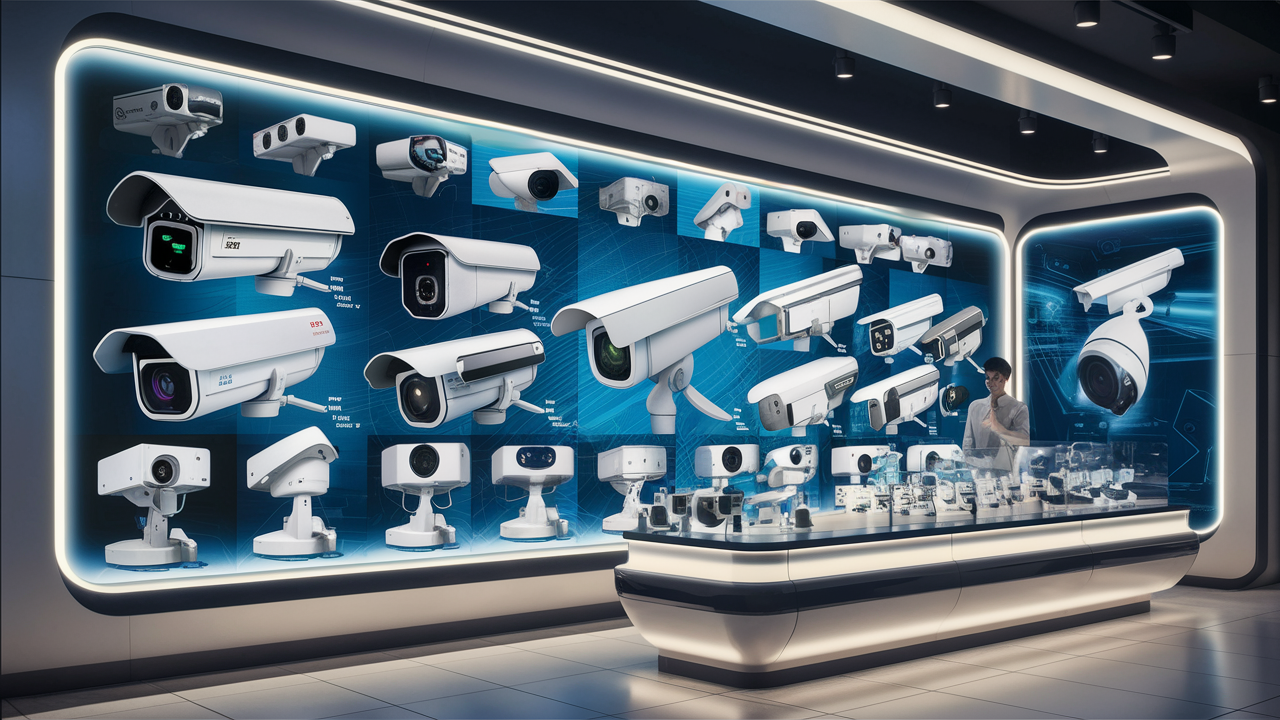
Bullet Cameras
These are the classic, elongated security cameras, often seen mounted on walls or eaves. They are typically weather-resistant and have a fixed lens, making them ideal for continuous monitoring of specific areas like entry points or perimeters.
Dome Cameras
Dome cameras are discreet and often vandal-resistant, with a semi-spherical casing. Their design makes it difficult to tell which way they are pointing, adding a deterrent effect. They are popular for indoor use in retail spaces, offices, and homes.
Turret Cameras
Similar to dome cameras but with a more exposed lens housing, turret cameras offer a good balance of discreetness and performance. They often feature advanced IR illumination and are suitable for both indoor and outdoor use.
PTZ (Pan-Tilt-Zoom) Cameras
These cameras offer remote control over their movement (pan, tilt) and zoom capabilities. They are ideal for covering large areas where you need to actively track movement or inspect specific details from a distance. Often used in commercial settings or for extensive property surveillance.
Wireless vs. Wired Cameras
Wireless cameras connect to your Wi-Fi network, offering easier installation without running cables. However, they rely on battery power or a nearby power outlet and can be susceptible to Wi-Fi signal interference. Wired cameras, especially those using PoE, offer a more stable and reliable connection but require running Ethernet cables, which can be more complex to install.
Indoor vs. Outdoor Cameras
Indoor cameras are designed for climate-controlled environments and may prioritize discreet design and smart features. Outdoor cameras must be rugged, weather-resistant, and often feature enhanced night vision and wider fields of view to monitor external perimeters.
Understanding Connectivity Options (Wired vs. Wireless)
The way your surveillance cameras connect to your network and storage is a critical decision impacting installation, reliability, and performance. In 2025-26, both wired and wireless solutions have evolved significantly.
Wi-Fi Cameras
How they work: Connect directly to your home or office Wi-Fi network. They require a power source (battery or AC adapter) and a strong Wi-Fi signal in their installation location.
Pros:
- Easy installation: No need to run data cables.
- Flexibility: Can be placed almost anywhere with Wi-Fi and power.
- DIY friendly: Ideal for renters or simple setups.
Cons:
- Signal interference: Can be affected by distance, walls, and other wireless devices.
- Battery life: Battery-powered models need regular charging or replacement.
- Security: Relies on the security of your Wi-Fi network.
PoE (Power over Ethernet) Cameras
How they work: These are wired cameras that use a single Ethernet cable to transmit both data and power. This cable connects to a PoE-enabled network switch or injector, which then connects to your router or NVR.
Pros:
- Stable and reliable: Less prone to interference than Wi-Fi.
- Consistent power: No need to worry about batteries.
- Higher bandwidth: Supports higher resolutions and frame rates.
- Simplified wiring: One cable for data and power.
Cons:
- Complex installation: Requires running Ethernet cables, which can be challenging.
- Limited placement: Placement is dictated by cable runs.
- Requires PoE switch/injector: Additional hardware cost.
Analog (Coaxial) Cameras
How they work: Older technology that uses coaxial cables for video transmission and separate power cables. They connect to a DVR (Digital Video Recorder).
Pros:
- Cost-effective: Generally cheaper than IP cameras.
- Mature technology: Reliable for basic surveillance.
Cons:
- Lower resolution: Significantly lower video quality compared to IP cameras.
- Separate cables: Requires both video and power cables.
- Limited features: Lacks advanced smart features.
- Becoming obsolete: Most new systems are IP-based.
Storage Solutions: Local vs. Cloud
Deciding where your surveillance footage is stored is as important as choosing the cameras themselves. Both local and cloud storage options have distinct advantages and disadvantages in 2025-26.
Local Storage (SD Cards, NVRs, DVRs)
SD Cards: Many standalone Wi-Fi cameras have an SD card slot for local recording. This is convenient for individual cameras but can be limiting for multi-camera systems.
NVR (Network Video Recorder): For IP cameras, an NVR is a dedicated device that records footage from multiple cameras onto internal hard drives. It's a robust solution for comprehensive surveillance.
DVR (Digital Video Recorder): Used with analog cameras, a DVR converts analog signals to digital and stores them on hard drives.
Pros:
- No recurring fees: One-time hardware purchase.
- Data privacy: Footage stays on your premises.
- Reliability: Not dependent on internet connectivity for recording.
Cons:
- Risk of theft/damage: If the NVR/DVR is stolen or damaged, footage is lost.
- Limited remote access: Accessing footage remotely can be more complex.
- Capacity limits: Storage is finite and may require drive upgrades.
Cloud Storage
How it works: Footage is uploaded and stored on remote servers managed by a service provider. This is common for Wi-Fi camera systems.
Pros:
- Accessibility: Access footage from anywhere with an internet connection.
- Off-site backup: Footage is safe even if local equipment is damaged or stolen.
- Scalability: Easily upgrade storage capacity as needed.
- Automatic updates: Often includes firmware and software updates.
Cons:
- Recurring fees: Most cloud services require a monthly or annual subscription.
- Internet dependency: Requires a stable internet connection for uploading and viewing.
- Privacy concerns: Data is stored on third-party servers.
- Bandwidth usage: Uploading high-resolution video can consume significant bandwidth.
2025-26 Trends: Hybrid solutions are becoming more popular, offering both local and cloud storage options, allowing users to benefit from the advantages of both.
Installation and Support Considerations
The ease of installation and the availability of reliable support can significantly impact your experience with surveillance cameras. Consider these aspects when making your purchase.
DIY Installation
Many modern consumer-grade cameras are designed for easy DIY installation. Wi-Fi cameras, in particular, often involve simply mounting the camera, downloading an app, and following on-screen prompts to connect. However, even DIY installations can sometimes present challenges, such as Wi-Fi signal issues or mounting difficulties.
Professional Installation
For complex systems, wired installations (especially PoE), or if you simply prefer not to handle the setup yourself, professional installation is recommended. This ensures the system is set up correctly, optimized for performance, and integrated seamlessly. Many specialty security stores and local installers offer this service.
Customer Support
When choosing a brand or retailer, investigate their customer support options. Look for:
- Phone support: For immediate assistance.
- Email/Chat support: For less urgent queries.
- Online knowledge bases: FAQs, troubleshooting guides, and video tutorials.
- Warranty services: Understand the warranty period and claims process.
Brands that offer robust support are generally more reliable in the long run. As of 2025-26, many leading brands provide 24/7 support or extensive online resources.
Budgeting for Your Surveillance System
The cost of surveillance cameras can range from under $50 for basic indoor cameras to thousands for professional-grade multi-camera systems. Your budget will significantly influence where and what you can buy.
Entry-Level (Under $300 for a basic setup)
This budget typically covers 1-2 Wi-Fi cameras with basic features like 1080p resolution, night vision, and motion alerts. Brands like Wyze, Eufy (basic models), and some Ring/Arlo models fit here. Purchase locations: Amazon, Walmart, Target, or directly from brand websites.
Mid-Range ($300 - $1000 for a more comprehensive setup)
This allows for 2-4 higher-resolution cameras (2K/4K), better build quality, wider fields of view, potentially two-way audio, and perhaps a basic NVR or cloud storage subscription. Brands like Arlo, Ring (higher-end), Eufy (advanced), and Reolink are good options. Purchase locations: Amazon, Newegg, electronics superstores, or brand websites.
High-End / Professional ($1000+ for advanced or multi-camera systems)
This budget is for professional-grade IP cameras, PTZ cameras, NVR systems, or comprehensive smart home security integrations. It often involves more robust features, superior image quality, and advanced analytics. Specialty security stores, direct from manufacturers (e.g., Hikvision, Dahua), or through professional installers are the primary purchase points.
Additional Costs to Consider:
- Cloud storage subscriptions: If opting for cloud backup.
- SD cards or hard drives: For local storage.
- Installation services: If not doing it yourself.
- Networking equipment: Routers, switches (especially for PoE systems).
Emerging Trends in Surveillance Technology (2025-26)
The surveillance camera market is constantly evolving. Staying aware of the latest trends can help you make a future-proof investment.
AI and Machine Learning Integration
Artificial intelligence is increasingly being integrated into cameras for more sophisticated motion detection (person detection, vehicle recognition), facial recognition, and anomaly detection. This leads to fewer false alarms and more actionable alerts.
Enhanced Cybersecurity
With growing concerns about data breaches, manufacturers are prioritizing robust cybersecurity measures, including end-to-end encryption, secure authentication protocols, and regular firmware updates to protect against hacking.
Improved Low-Light and Color Night Vision
Advancements in sensor technology are enabling cameras to capture clearer, more detailed color images even in very low light conditions, significantly improving nighttime surveillance effectiveness.
5G Connectivity and Edge Computing
The rollout of 5G networks is enabling faster data transmission for wireless cameras, while edge computing (processing data directly on the camera) reduces reliance on cloud processing, improving speed and privacy.
Sustainability and Energy Efficiency
There's a growing focus on developing cameras with lower power consumption, longer battery life, and more sustainable manufacturing practices.
Integration with Smart Home Ecosystems
Cameras are becoming more deeply integrated with smart home platforms like Google Home, Amazon Alexa, and Apple HomeKit, allowing for seamless control and automation with other smart devices.
These trends highlight a move towards smarter, more secure, and more user-friendly surveillance solutions, shaping where and how you'll buy cameras in the coming years.
Conclusion
Navigating the landscape of "where to buy surveillance cameras" in 2025-26 reveals a diverse marketplace catering to every need and budget. Whether you prefer the tactile experience of retail stores like Best Buy or Home Depot, the vast selection and convenience of online giants like Amazon and Newegg, the specialized expertise of dedicated security retailers, or the direct approach from manufacturers, there's a perfect avenue for your purchase. For budget-conscious buyers, refurbished options from manufacturers or marketplaces like eBay offer significant savings, provided you shop wisely. When selecting a purchase point, always consider the factors that matter most: camera resolution, night vision, durability, connectivity, storage, and the availability of reliable support. By understanding these elements and the various retail channels, you can confidently acquire the surveillance system that best protects your home or business.