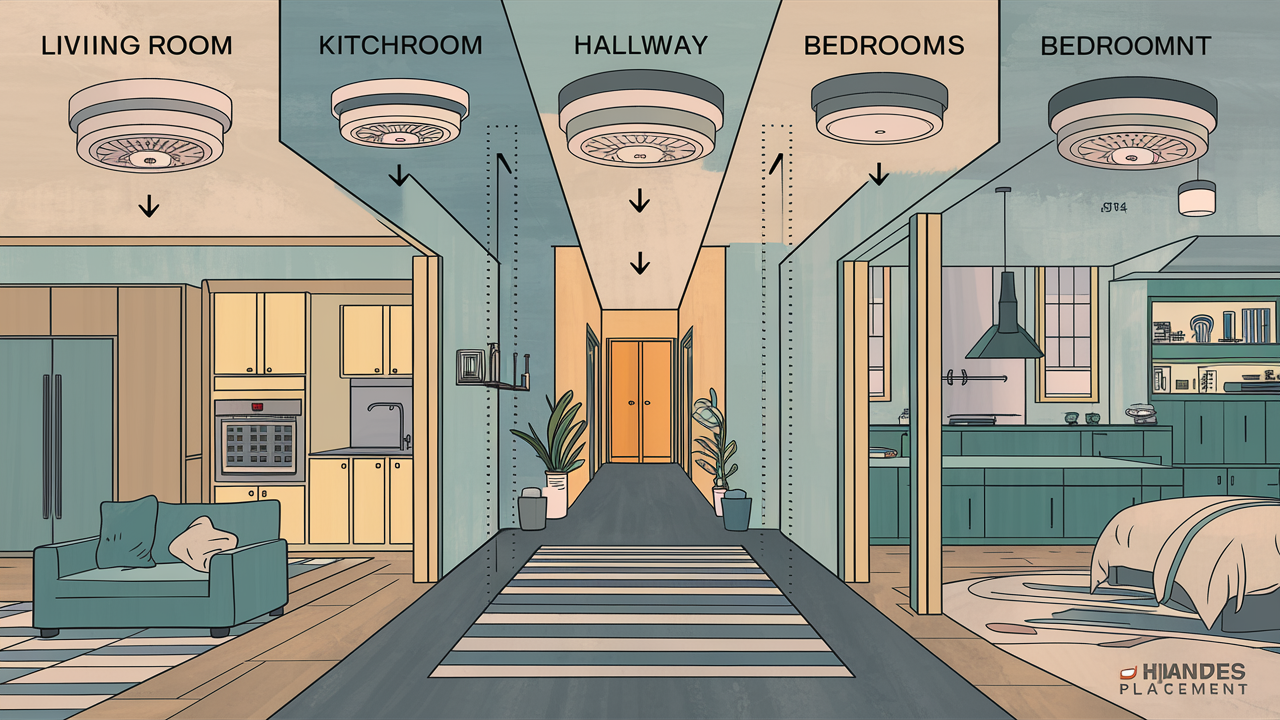
Discover the optimal placement for smoke alarms in your home to maximize safety and provide crucial early warnings. This guide offers expert advice, current statistics, and practical tips to ensure your family is protected against the devastating threat of house fires.
Understanding Smoke Alarms: Types and Importance
Smoke alarms are indispensable guardians of home safety, acting as the first line of defense against the insidious threat of fire. Their primary function is to detect the presence of smoke, a key indicator of a developing fire, and alert occupants with a loud audible alarm, providing precious time to escape. The importance of these devices cannot be overstated; according to the National Fire Protection Association (NFPA) 2025 report, homes without working smoke alarms are twice as likely to suffer a fatal fire. This stark statistic underscores the critical role that properly placed and maintained smoke alarms play in saving lives and minimizing property damage.
The effectiveness of a smoke alarm is directly linked to its type and its placement. Understanding the different types available is the first step towards making an informed decision for your home.
Types of Smoke Alarms
There are two primary types of smoke-sensing technologies used in residential smoke alarms:
- Ionization Alarms: These alarms are generally more responsive to fast-flaming fires, which produce smaller smoke particles. They work by using a small amount of radioactive material to ionize the air between two electrically charged plates. When smoke enters the chamber, it disrupts the flow of ions, triggering the alarm. While efficient for certain fire types, they can sometimes be prone to nuisance alarms from cooking smoke or steam.
- Photoelectric Alarms: These alarms are typically more responsive to slow-burning fires, which produce larger smoke particles. They work by using a light beam in a sensing chamber. When smoke enters the chamber, it scatters the light beam onto a sensor, activating the alarm. They are less likely to be triggered by cooking fumes but might be slower to detect fast-flaming fires.
For comprehensive protection, many experts and fire safety organizations recommend using dual-sensor alarms, which combine both ionization and photoelectric technologies. This approach offers the best of both worlds, providing a faster response to a wider range of fire types.
The Critical Role of Placement
Even the most advanced smoke alarm is ineffective if it's not positioned correctly. Smoke rises, and its path to the alarm is crucial. Incorrect placement can lead to delayed detection, false alarms, or even the alarm being rendered useless. The NFPA's 2025 guidelines emphasize that alarms should be installed on every level of the home, inside each bedroom, and outside sleeping areas. This layered approach ensures that no matter where a fire starts or where occupants are sleeping, an alarm will sound promptly.
The strategic placement of smoke alarms is not merely a suggestion; it's a life-saving necessity. Understanding where to place them is paramount to their function. This guide will delve into the specifics, ensuring your home is as safe as possible.
Strategic Smoke Alarm Placement: A Room-by-Room Guide
The effectiveness of smoke alarms hinges on their strategic placement. The goal is to ensure that smoke can reach the alarm sensor as quickly as possible, regardless of the fire's origin or the sleeping location of occupants. Fire safety experts and organizations like the NFPA provide clear guidelines, which we will break down for every critical area of your home.
General Placement Principles
Before diving into specific rooms, let's establish some universal rules for smoke alarm placement:
- On Every Level: Install at least one smoke alarm on each floor of your home, including the basement and any finished attics.
- Inside Sleeping Areas: Place an alarm inside each bedroom where people sleep.
- Outside Sleeping Areas: Install alarms in the hallway or common area immediately outside each separate sleeping area. For example, if bedrooms are on opposite ends of a hallway, place an alarm at each end.
- Ceiling vs. Wall: Smoke rises, so ceiling placement is generally preferred. Mount alarms on the ceiling, or on a wall no closer than 4 inches (10 cm) and no farther than 12 inches (30 cm) from the ceiling.
- Avoid Dead Air Spaces: Do not place alarms in "dead air" spaces, such as the peak of a vaulted ceiling or in corners where the wall meets the ceiling. These areas can prevent smoke from reaching the sensor.
- Away from Obstructions: Ensure there are no obstructions like ceiling fans, light fixtures, or furniture that could block smoke from reaching the alarm.
Placement in Key Areas
Bedrooms
Given that most fatal fires occur at night, bedrooms are a critical location for smoke alarms.
- Inside Each Bedroom: A smoke alarm must be installed within the confines of every room where someone sleeps. This ensures that if a fire starts in a bedroom (e.g., from faulty wiring in a lamp, an overloaded outlet, or a dropped cigarette), occupants are alerted immediately.
- Consideration for Larger Bedrooms: For very large bedrooms, or bedrooms with an 'L' shape, consider placing an alarm in each section to ensure adequate coverage.
Hallways and Sleeping Areas
This is where the "outside sleeping areas" rule comes into play, aiming to catch fires that start in common areas before they reach bedrooms.
- Central Location: In hallways outside sleeping areas, place the alarm in the center of the hallway or at a point that provides the most direct path for smoke to reach it from the sleeping rooms.
- Multiple Hallways: If sleeping areas are separated by a long distance or a staircase, you may need multiple alarms in hallways to ensure coverage.
- Stairways: Alarms should be installed at the top of any staircase leading from a basement to the main floor, and at the bottom of any staircase leading from the upper floors to the main floor. This is crucial for catching fires that might spread upwards or downwards.
Living Areas and Common Spaces
These areas, including living rooms, family rooms, and dens, are often the origin of fires due to electrical appliances, entertainment systems, or fireplaces.
- Every Level: As mentioned, at least one alarm is required on every level. For larger living areas, consider placing an additional alarm in a central location away from the kitchen to avoid nuisance alarms.
- Near Fireplaces/Heaters: If you have a fireplace or a portable heater, ensure the alarm is placed at least 3 feet (0.9 meters) away from these heat sources to prevent false alarms.
Kitchens
Kitchens are a common source of fires, but also prone to nuisance alarms from cooking fumes.
- Placement Strategy: Place alarms at least 10 feet (3 meters) away from the stove, oven, or other cooking appliances. The goal is to detect a fire, not the steam or smoke from cooking.
- Consideration for Dual-Sensor: Dual-sensor alarms can be particularly useful in kitchens, as they are less prone to nuisance alarms from cooking than ionization-only alarms.
- Ventilation: If your kitchen has a strong exhaust fan, ensure the alarm is not placed directly in the path of the fan's airflow, as this could delay smoke detection.
Basements and Attics
These areas often house critical utilities like furnaces, water heaters, and electrical panels, which can be fire hazards.
- Basements: Install an alarm at the base of the basement stairs. If the basement is large and finished, consider an additional alarm in a central location.
- Attics: If you have a finished attic used as living space, treat it like any other living area and install an alarm within it. For unfinished attics, place an alarm at the top of the stairs leading to the attic.
Garages
Garages can be a significant fire risk due to flammable materials, vehicles, and electrical equipment.
- Attached Garages: For garages attached to the home, install an alarm on the wall or ceiling near the door that connects the garage to the living space. This is a critical point for early detection if a fire starts in the garage.
- Detached Garages: While not always mandated, it's highly recommended to install a smoke alarm in detached garages, especially if they are used for storage of flammable liquids or contain workshops. Consider a battery-operated, wireless model if hardwiring is not feasible.
Placement Considerations for Specific Home Features
Vaulted Ceilings and Sloped Roofs
Smoke rises and collects at the highest point. However, placement directly in the peak can create a "dead air" space.
- Rule of Thumb: For ceilings that slope down from the peak, place the alarm on the ceiling within 3 feet (0.9 meters) of the peak. For steeply sloped ceilings (more than 1 foot drop for every 8 feet horizontal), place the alarm on the wall, within 4 inches (10 cm) of the ceiling.
Mobile Homes and Recreational Vehicles (RVs)
These structures have unique ventilation and construction that require specific placement.
- Mobile Homes: Follow the general guidelines, but pay extra attention to placing alarms on every level and near sleeping areas. Ensure alarms are rated for mobile home use.
- RVs: Battery-operated alarms are essential. Place one inside each sleeping area and in the main living space.
Common Mistakes to Avoid
Understanding where to place smoke alarms also means knowing where not to place them.
- Near Bathrooms: Avoid placing alarms within 3 feet (0.9 meters) of bathrooms, especially those with showers, as humidity can trigger false alarms.
- Near Kitchens (as noted above): Keep alarms at least 10 feet (3 meters) away from cooking appliances.
- Near Heating/Cooling Vents: Drafts from vents can blow smoke away from the sensor, delaying detection.
- In Garages (unless attached): While attached garages need an alarm, detached garages are less critical unless they store significant hazards.
- In "Dead Air" Spaces: Avoid corners where walls meet ceilings, or the peak of very high, angled ceilings.
- Too Close to Windows or Doors: Drafts can interfere with smoke detection.
- Within 4 Inches of Corners: This creates a dead air space.
By meticulously following these room-by-room guidelines and avoiding common pitfalls, you can create a robust smoke detection system that offers the highest level of protection for your home and loved ones.
Installation and Maintenance: Ensuring Peak Performance
Once you've determined the optimal locations for your smoke alarms, proper installation and consistent maintenance are crucial to ensure they function reliably when needed. A smoke alarm is only effective if it's correctly installed and its power source is active. Neglecting these steps can render even the best-placed alarm useless.
Installation Steps
Most modern smoke alarms are designed for straightforward installation, often requiring only a screwdriver and a few minutes of your time.
- Read the Manufacturer's Instructions: Always begin by consulting the specific instructions provided with your smoke alarm model. While general guidelines exist, each manufacturer may have unique recommendations.
- Choose the Power Source:
- Hardwired Alarms: These are connected to your home's electrical system and typically have a battery backup. Installation of hardwired alarms should ideally be done by a qualified electrician to ensure safety and compliance with building codes. They offer continuous power and are interconnected, meaning if one alarm sounds, all connected alarms will sound.
- Battery-Operated Alarms: These are the simplest to install, requiring no wiring. They are a good option for retrofitting older homes or for areas where hardwiring is impractical. Ensure you use the type of battery recommended by the manufacturer.
- 10-Year Sealed Battery Alarms: These alarms have a non-removable battery that lasts for the life of the alarm (typically 10 years). They offer the convenience of no battery changes but require replacement of the entire unit after 10 years.
- Mounting the Bracket: Most alarms come with a mounting bracket. Hold the bracket against the ceiling or wall in the chosen location and mark the screw holes. Drill pilot holes if necessary, and then securely attach the bracket using the provided screws.
- Connecting the Alarm:
- Hardwired: If installing a hardwired unit, the electrician will connect the alarm to the home's wiring.
- Battery-Operated: For battery-powered units, insert the battery into the designated compartment. Ensure it's inserted correctly according to the polarity markings.
- Attaching the Alarm: Align the smoke alarm with the mounting bracket and twist it into place until it locks securely.
- Testing the Alarm: This is the most critical step after installation. Press and hold the test button on the alarm for at least 5 seconds. You should hear a loud, clear alarm sound. If you have interconnected alarms, ensure all alarms sound when one is tested.
Maintenance Schedule
Regular maintenance is essential to ensure your smoke alarms remain in working order. Think of it as a vital part of your home's safety system.
- Monthly Testing: Test each smoke alarm at least once a month. Use the test button to confirm the audible alarm and the power source are functioning.
- Weekly Visual Inspection: Briefly check each alarm weekly to ensure it's free of dust, debris, or cobwebs. Gently vacuum or dust the alarm if necessary.
- Battery Replacement (for non-sealed units):
- Every 6 Months: Replace the batteries in all battery-operated and hardwired alarms with battery backup at least twice a year. A common reminder is to do this when you change your clocks for daylight saving time.
- Immediately if Low Battery Chirp Occurs: Most alarms will emit a "chirp" to indicate a low battery. Replace the battery immediately when this occurs.
- Cleaning: Gently vacuum the vents of the smoke alarm monthly using a soft brush attachment to remove dust and insects that can impede sensor function. Do not use cleaning sprays or solvents, as they can damage the alarm.
- Replacement: Smoke alarms have a limited lifespan.
- 10-Year Replacement: Replace all smoke alarms, regardless of type, every 10 years from the date of manufacture. The manufacturing date is usually printed on the back or side of the alarm. Even if they seem to be working, their sensors degrade over time.
- Replacement of 10-Year Sealed Battery Alarms: These units must be replaced entirely after 10 years, as the battery is sealed.
- Interconnected System Check: If you have interconnected alarms, test the system regularly to ensure all units communicate. If one alarm fails to sound when another is tested, check the connections and batteries, or consult an electrician.
Troubleshooting Common Issues
While generally reliable, smoke alarms can sometimes experience issues.
- False Alarms:
- Cause: Cooking fumes, steam from showers, dust, insects, or drafts.
- Solution: Ensure alarms are placed correctly away from kitchens and bathrooms. Clean the alarm. If nuisance alarms persist with a specific alarm, consider replacing it with a photoelectric model or a dual-sensor alarm.
- Chirping Sound:
- Cause: Low battery or end-of-life warning.
- Solution: Replace the battery immediately. If the chirping continues, the alarm may be nearing the end of its 10-year lifespan and needs replacement.
- Alarm Not Sounding During Test:
- Cause: Dead battery, faulty unit, or connection issue (for hardwired).
- Solution: Check and replace the battery. For hardwired units, check the circuit breaker and wiring. If the problem persists, the alarm likely needs to be replaced.
Investing a small amount of time in proper installation and regular maintenance will significantly enhance the effectiveness of your smoke alarm system, providing peace of mind and critical protection against fire hazards.
Advanced Safety Considerations and Best Practices
Beyond the fundamental placement and maintenance, several advanced considerations and best practices can further bolster your home's fire safety. These include understanding interconnected systems, the benefits of smart alarms, and developing a comprehensive family escape plan. The goal is to create a multi-layered defense that maximizes early detection and ensures a swift, safe evacuation.
Interconnected Smoke Alarms
Interconnected smoke alarms are a significant upgrade from standalone units. When one alarm detects smoke, it triggers all other interconnected alarms in the system to sound simultaneously.
- Benefits:
- Faster Notification: If a fire starts in a remote part of the house (e.g., basement or garage), occupants on upper floors will be alerted immediately, not just when smoke travels to their area.
- Increased Safety for All: This is particularly crucial for homes with multiple levels or sleeping areas, and for families with hearing impairments.
- Compliance: Many building codes now require interconnected alarms in new constructions.
- Types of Interconnection:
- Wired Interconnection: Alarms are physically wired together. This is typically done during construction or major renovation by an electrician.
- Wireless Interconnection: Alarms communicate with each other wirelessly using radio frequency. This is a more flexible option for existing homes, as it doesn't require extensive wiring. Ensure all wireless alarms are compatible.
- Recommendation: For the highest level of safety, especially in homes with multiple bedrooms or levels, investing in interconnected smoke alarms is strongly recommended.
Smart Smoke Alarms
The advent of smart home technology has brought us smart smoke alarms, which offer enhanced features beyond basic detection.
- Features:
- Smartphone Notifications: Receive alerts on your smartphone or tablet when the alarm is triggered, even when you're away from home. This allows for immediate notification to authorities or neighbors.
- Remote Monitoring: Some smart alarms allow for remote checking of the alarm's status.
- Voice Alerts: Many smart alarms can identify the type of danger (e.g., "smoke in the kitchen") and the location, providing more specific information than a standard alarm.
- Integration with Other Smart Devices: They can often be integrated with other smart home systems, such as smart lights that turn on during an alarm or smart locks that unlock.
- Considerations:
- Cost: Smart alarms are generally more expensive than traditional alarms.
- Connectivity: They require a stable Wi-Fi connection to function fully.
- Privacy: As with any smart device, consider the privacy implications of connected technology.
- Recommendation: Smart smoke alarms offer an added layer of security and convenience, particularly for homeowners who travel frequently or want enhanced control and awareness of their home's safety.
Carbon Monoxide (CO) Alarms
While this guide focuses on smoke alarms, it's crucial to remember that carbon monoxide (CO) is another silent, deadly threat. CO is an odorless, colorless gas produced by the incomplete burning of fuels (e.g., furnaces, water heaters, fireplaces, cars).
- Importance: CO poisoning can cause flu-like symptoms, disorientation, unconsciousness, and death.
- Combination Alarms: Many manufacturers offer combination smoke and carbon monoxide alarms. These devices detect both smoke and CO, providing a single solution for two critical threats.
- Placement: CO alarms should be installed on every level of the home and outside sleeping areas, similar to smoke alarms, but also in proximity to fuel-burning appliances. Always follow manufacturer guidelines for placement.
- Recommendation: Consider installing combination alarms or separate CO alarms to ensure comprehensive protection against both fire and carbon monoxide poisoning.
Developing a Family Escape Plan
Having working smoke alarms is only part of the equation; knowing what to do when they sound is equally vital. A well-rehearsed escape plan can save lives.
- Steps to Create a Plan:
- Two Ways Out: Identify at least two escape routes from every room in the house. This usually means a door and a window.
- Clear Escape Routes: Ensure all escape routes are kept clear of clutter and obstructions.
- Designated Meeting Place: Establish a safe meeting place outside the home, such as a specific tree, mailbox, or neighbor's house, where everyone will gather after escaping. This helps ensure everyone is accounted for.
- Practice Regularly: Conduct fire drills at least twice a year. Practice escaping quickly and safely, ensuring everyone knows how to open windows and doors, and how to get out even if smoke is present.
- Teach Children: Ensure children know how to escape on their own and what to do if they are alone. Teach them not to hide from firefighters.
- Special Needs: If anyone in the household has mobility issues or hearing impairments, develop a specific plan to assist them during an escape.
- Recommendation: A family escape plan, practiced regularly, turns the abstract idea of a fire emergency into a concrete, actionable strategy, significantly increasing the chances of a safe evacuation.
Current Statistics and Trends (2025-26)
Fire safety is an evolving field, and understanding current data helps inform best practices.
- NFPA Data (Projected 2025-26):
- Home fires continue to be a leading cause of fire-related deaths and injuries.
- The majority of fatal fires occur between 10 p.m. and 6 a.m.
- Working smoke alarms reduce the risk of dying in a home fire by nearly half.
- The percentage of homes with working smoke alarms has steadily increased, but gaps remain, particularly in lower-income households and rental properties.
- Interconnected alarms are increasingly being recognized as a critical safety feature, with ongoing efforts to mandate their use in new construction.
- The adoption of smart home safety devices, including smart smoke alarms, is projected to grow significantly in the coming years.
By integrating these advanced considerations—interconnected alarms, smart technology, CO detection, and a practiced escape plan—you create a comprehensive fire safety strategy that goes beyond basic compliance, offering the highest level of protection for your home and family.
Conclusion
The question of "Where To Place Smoke Alarms In Your Home?" is fundamental to ensuring the safety of your loved ones and property. As we've explored, strategic placement, informed by current safety standards and an understanding of fire dynamics, is paramount. Installing alarms on every level, inside and outside sleeping areas, and away from potential nuisance sources like kitchens and bathrooms, forms the bedrock of effective detection.
Remember that even the best-placed alarms require diligent maintenance. Monthly testing, regular battery changes (for non-sealed units), and timely replacement every ten years are non-negotiable steps to guarantee their functionality. Furthermore, consider the significant advantages of interconnected alarms for faster notification and the added convenience and remote alerts offered by smart smoke alarms. Don't forget the silent threat of carbon monoxide; combination alarms or separate CO detectors are essential for complete protection.
Ultimately, the most effective fire safety strategy combines working smoke alarms with a well-practiced family escape plan. By taking these proactive measures, you significantly reduce the risks associated with house fires, transforming your home into a safer haven. Prioritize these steps today; the peace of mind and potential to save lives are invaluable.