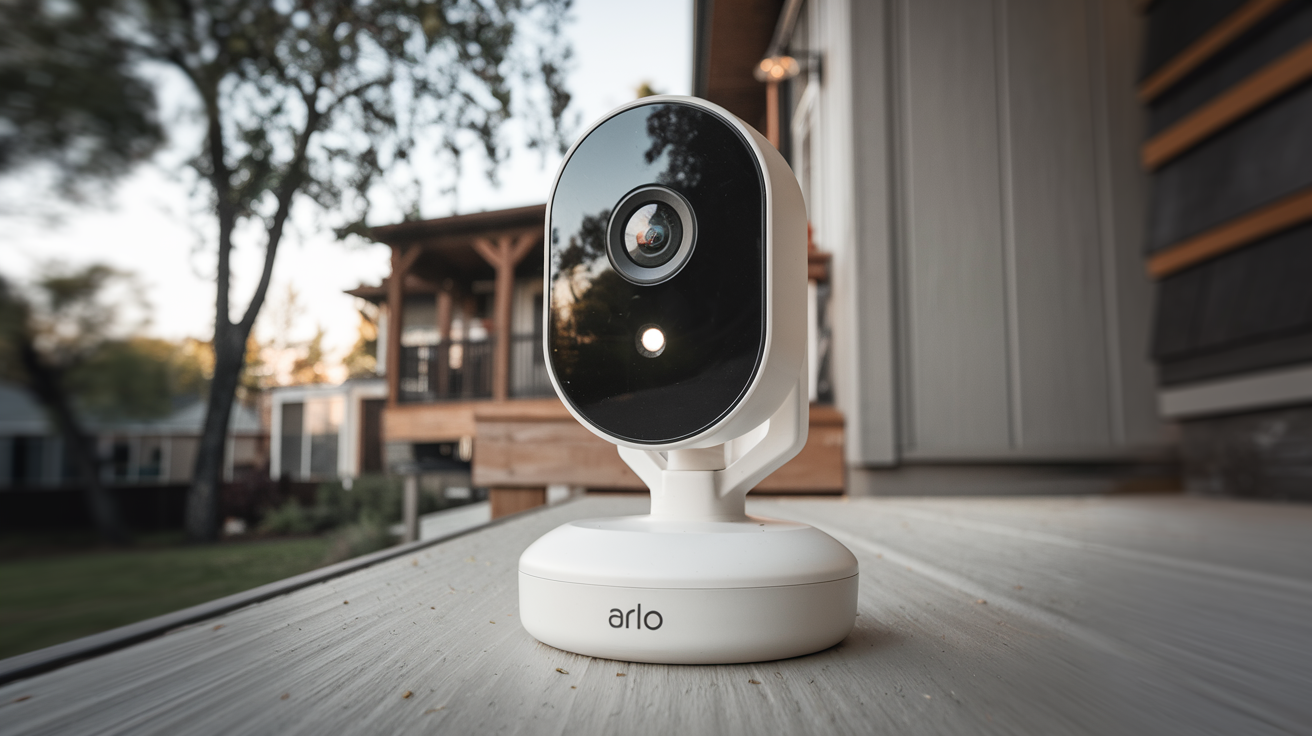
Arlo cameras are a popular choice for home security, known for their wireless design and smart features. If you're wondering "Who makes Arlo cameras?" and what makes them stand out, this comprehensive guide will delve into the company behind these innovative devices, their history, and what sets them apart in the competitive smart home market.
Arlo's Origins and Evolution
The story of Arlo cameras is intrinsically linked to the broader evolution of smart home technology and the rise of connected devices for security. While Arlo is a distinct brand today, its origins trace back to a larger, well-established technology company. Understanding this lineage is crucial to grasping the company's technological foundation and its strategic direction.
The Netgear Connection: A Foundation in Networking
Arlo was originally a brand under Netgear, a company renowned for its networking hardware. Netgear has a long-standing reputation for producing routers, switches, and other networking solutions that form the backbone of home and business internet connectivity. This background provided Arlo with a significant advantage from its inception. The expertise in wireless technology, network stability, and data transmission inherent in Netgear's core business directly translated into the development of reliable and high-performing wireless security cameras.
Launched in 2014, Arlo was established as Netgear's dedicated smart home division, focusing specifically on the burgeoning market for internet-connected cameras. The goal was to leverage Netgear's networking prowess to create a user-friendly, wire-free camera system that homeowners could easily install and manage. This strategic move allowed Arlo to operate with a degree of autonomy, fostering innovation within a specialized domain while still benefiting from the resources and infrastructure of its parent company.
The Spin-Off: Arlo Becomes an Independent Entity
As the smart home market matured and Arlo gained significant traction and brand recognition, a strategic decision was made to separate Arlo from Netgear. In 2018, Arlo was spun off as an independent, publicly traded company, operating under the name Arlo Technologies, Inc. This separation was a pivotal moment, allowing Arlo to sharpen its focus exclusively on developing and marketing its range of smart connected cameras and related accessories.
Becoming an independent entity meant Arlo could pursue its own strategic vision, allocate resources more directly to R&D for camera technology, and build its brand identity without being constrained by the broader product portfolio of Netgear. This move signaled Arlo's commitment to being a leader in the smart security camera space. The company's subsequent product launches and market performance have largely validated this strategic shift.
Early Innovations and Market Impact
From its early days, Arlo distinguished itself through several key innovations. The emphasis on wire-free design was a major differentiator, addressing a common pain point for consumers who wanted to install cameras without the hassle of running power cables. This was achieved through long-lasting, rechargeable batteries, a feat that required significant engineering effort.
Furthermore, Arlo cameras were among the first to offer high-definition video streaming, motion detection alerts sent directly to smartphones, and cloud storage options for recorded footage. These features, now commonplace, were revolutionary at the time and set a high bar for competitors. The intuitive mobile app, which served as the central hub for managing cameras, viewing live feeds, and accessing recordings, also played a crucial role in Arlo's early success. The brand quickly became synonymous with user-friendly, advanced wireless home security.
Who is Arlo Today?
Today, Arlo Technologies, Inc. stands as a prominent and independent player in the global smart home security market. Having successfully transitioned from a brand within Netgear to its own entity, Arlo has solidified its position as a specialist in connected camera systems, focusing on innovation, user experience, and a comprehensive ecosystem of products and services.
Arlo Technologies, Inc.: A Focused Leader
Arlo Technologies, Inc. is headquartered in San Jose, California, and operates globally. The company's sole focus is on designing, developing, manufacturing, and marketing a wide range of smart connected surveillance cameras and accessories. This singular focus allows Arlo to dedicate its resources and expertise to pushing the boundaries of what's possible in home security technology.
The company's mission revolves around providing peace of mind to consumers through advanced, easy-to-use, and reliable security solutions. This is reflected in their product development philosophy, which prioritizes features like high-quality video, intelligent detection, seamless connectivity, and robust cloud services. Arlo's independence has enabled it to forge its own path, collaborating with various technology partners and adapting swiftly to market trends.
Manufacturing and Supply Chain
Like many technology companies, Arlo designs its products in-house, leveraging its engineering and R&D capabilities. However, the actual manufacturing of Arlo cameras, as is common in the consumer electronics industry, is typically outsourced to third-party manufacturers, often located in Asia. This approach allows Arlo to benefit from specialized manufacturing expertise, economies of scale, and efficient production processes.
The company works closely with its manufacturing partners to ensure quality control and adherence to its rigorous standards. Supply chain management is a critical aspect of Arlo's operations, ensuring that components are sourced effectively and that finished products reach consumers reliably. While the specific manufacturing partners may not be publicly disclosed for competitive reasons, the company's commitment to product quality suggests a well-managed and carefully selected supply chain.
Global Presence and Market Reach
Arlo products are available in numerous countries worldwide, sold through a variety of retail channels, including major electronics stores, online marketplaces, and directly through the Arlo website. The company has established a significant global footprint, catering to diverse consumer needs and regulatory environments.
Their marketing and sales efforts are geared towards educating consumers about the benefits of smart home security and highlighting the unique features of Arlo's product line. The brand has cultivated a strong reputation for innovation and reliability, which has been instrumental in its international market penetration. As of 2025, Arlo continues to expand its reach, exploring new markets and strengthening its presence in existing ones through strategic partnerships and localized offerings.
Core Values and Philosophy
Arlo's core philosophy centers on empowering individuals to protect what matters most to them. This translates into a product design approach that emphasizes:
- Innovation: Continuously developing new features and technologies to enhance security and user experience.
- Simplicity: Making complex technology accessible and easy for everyday users to set up and manage.
- Reliability: Ensuring that cameras perform consistently and deliver dependable security monitoring.
- Connectivity: Facilitating seamless integration with other smart home devices and platforms.
- Privacy and Security: Implementing robust measures to protect user data and footage.
These values guide every aspect of Arlo's operations, from product development and manufacturing to customer service and marketing. The company strives to be a trusted partner in home security, providing solutions that offer both advanced functionality and genuine peace of mind.
Key Arlo Product Lines and Innovations
Arlo has consistently pushed the envelope in the smart security camera market, introducing a range of products designed to meet diverse needs. Their lineup is characterized by a commitment to wireless convenience, advanced imaging, and intelligent features.
The Arlo Camera Family: A Snapshot
Arlo's product portfolio is extensive, catering to various use cases from indoor monitoring to comprehensive outdoor surveillance. Key product lines include:
- Arlo Ultra Series: Positioned as their premium offering, featuring 4K HDR video, advanced AI detection, and integrated spotlights.
- Arlo Pro Series: A popular mid-range option offering 2K or 1080p video, two-way audio, and weather resistance.
- Arlo Essential Series: Designed for affordability and ease of use, providing 1080p video and core smart features for essential monitoring.
- Arlo Go Series: Cellular-enabled cameras for locations without Wi-Fi, offering flexibility for remote monitoring.
- Arlo Video Doorbells: Smart doorbells that integrate seamlessly with the Arlo camera ecosystem.
- Arlo Accessories: Including charging stations, solar panels, and mounts to enhance camera functionality and convenience.
Groundbreaking Features and Technologies
Arlo has been at the forefront of introducing and refining key technologies that have become industry standards:
- Wire-Free Design: The hallmark of Arlo, enabling easy installation without power cables using rechargeable batteries. This remains a significant selling point in 2025.
- 4K HDR Video: The Ultra series pioneered 4K video recording in consumer security cameras, offering unparalleled detail and clarity, crucial for identifying individuals and objects. HDR (High Dynamic Range) ensures balanced exposure in challenging lighting conditions.
- Advanced AI Detection: Arlo cameras utilize sophisticated algorithms for intelligent detection, differentiating between people, vehicles, animals, and packages. This reduces false alerts and provides more relevant notifications. As of 2025, this AI capability continues to be refined for greater accuracy and fewer false positives.
- Integrated Spotlight and Siren: Many Arlo models feature built-in spotlights to illuminate dark areas and deter intruders, along with a siren that can be activated remotely or automatically upon motion detection.
- Two-Way Audio: Allowing users to communicate with visitors or potential intruders through the camera's microphone and speaker via the Arlo app.
- Wide Field of View: Offering expansive viewing angles to cover more area with fewer cameras.
- Weather Resistance: Designed to withstand various environmental conditions, making them suitable for outdoor use in different climates.
- Color Night Vision: Moving beyond traditional black-and-white night vision, Arlo's color night vision provides more detail and context in low-light conditions.
The Arlo Smart Subscription Service
A critical component of the Arlo experience is its cloud-based subscription service, Arlo Secure. This service is essential for unlocking the full potential of Arlo cameras. Key features of Arlo Secure include:
- Cloud Storage: Securely storing recorded video clips in the cloud, accessible from anywhere.
- Intelligent Alerts: Advanced AI-powered notifications for specific event types (people, packages, etc.).
- Activity Zones: Allowing users to define specific areas within the camera's view to monitor for motion.
- Live Streaming: Accessing live video feeds from any Arlo camera.
- Extended Video History: Depending on the plan, users can access recordings for a longer duration.
In 2025, Arlo continues to enhance its Arlo Secure plans, often introducing tiered options that cater to different user needs, from single-camera coverage to whole-home security systems. The subscription model is a significant revenue stream for Arlo and is integral to the user experience, providing ongoing value and advanced features.
Innovation in Battery Technology
The challenge of battery life for wire-free cameras has always been a hurdle. Arlo has invested heavily in optimizing battery performance and offering convenient charging solutions. This includes:
- Long-Lasting Batteries: Designed to provide weeks or even months of operation on a single charge, depending on usage and settings.
- Rechargeable Batteries: Easily removable and rechargeable, minimizing the need for disposable batteries.
- Solar Power Accessories: For outdoor cameras, optional solar panels can continuously charge the battery, offering a truly maintenance-free solution.
- Charging Stations: Allowing multiple batteries to be charged simultaneously.
This focus on battery innovation underscores Arlo's commitment to the wire-free promise, making their cameras a practical choice for a wide range of installations.
Arlo vs. Competitors: A 2025-26 Perspective
The smart home security market is highly competitive, with numerous brands vying for consumer attention. Arlo faces strong competition from established tech giants and specialized security companies. Understanding how Arlo stacks up against its rivals in 2025-26 requires looking at key differentiators, market positioning, and evolving consumer demands.
Key Competitors in the Market
Arlo's primary competitors include:
- Google Nest (formerly Nest Cam): Known for its integration with the Google ecosystem, AI features, and sleek design.
- Ring (an Amazon company): Offers a wide range of affordable cameras, doorbells, and a robust subscription service, heavily integrated with Amazon's Alexa.
- Wyze: A budget-friendly option providing feature-rich cameras at very low price points, often requiring more technical user involvement.
- Eufy: Focuses on local storage options (SD cards) and privacy, appealing to users concerned about cloud-based data.
- Reolink: Offers a broad spectrum of cameras, including advanced features like PTZ (Pan-Tilt-Zoom) and PoE (Power over Ethernet) options, often at competitive prices.
- TP-Link (Kasa/Tapo): Provides a range of smart home devices, including cameras, known for their affordability and ease of use.
Arlo's Competitive Advantages
Despite the crowded market, Arlo maintains several key competitive advantages:
- Wire-Free Innovation: Arlo remains a leader in truly wire-free camera solutions, offering superior battery life and ease of installation compared to many competitors who rely on wired power or less efficient wireless designs.
- Premium Video Quality: The Arlo Ultra series, with its 4K HDR capabilities, often sets the benchmark for video clarity and detail, a crucial factor for advanced surveillance and evidence gathering.
- Sophisticated AI Features: Arlo's AI-driven detection, integrated into its Arlo Secure plans, offers a high degree of accuracy in differentiating threats, reducing false alarms, and providing actionable alerts.
- Independent Brand Focus: As a company solely dedicated to smart security cameras, Arlo can dedicate all its R&D and marketing efforts to this niche, fostering deep expertise and rapid innovation in its product category.
- Ecosystem Breadth: While competitors like Google and Ring have broad smart home ecosystems, Arlo's ecosystem focuses deeply on cameras and related accessories, creating a cohesive and powerful surveillance solution.
Areas Where Competitors May Excel
It's also important to acknowledge areas where competitors might have an edge:
- Price Point: Brands like Wyze and Eufy often offer significantly lower upfront costs for their cameras, making them more accessible to budget-conscious consumers.
- Local Storage Options: Eufy's emphasis on local storage (SD cards) appeals to users who prioritize privacy and wish to avoid recurring cloud subscription fees.
- Smart Home Integration: Google Nest and Ring offer deeper integration with their respective broader smart home ecosystems (Google Assistant, Amazon Alexa), which can be a deciding factor for users already invested in those platforms.
- Wired Options and Advanced Features: Competitors like Reolink often provide more advanced wired camera options (PoE) and specialized features like PTZ at competitive price points, catering to users with more complex installation requirements.
Market Trends and Arlo's Position (2025-26)
Several key trends are shaping the smart security camera market in 2025-26, and Arlo is strategically positioned to capitalize on them:
- Demand for Higher Resolution: Consumers increasingly expect higher resolution video (4K and beyond) for clearer identification. Arlo's Ultra series directly addresses this.
- AI-Powered Analytics: The sophistication of AI for object detection, facial recognition, and behavior analysis is becoming a standard expectation. Arlo's ongoing investment in AI for its Secure plans is a strong differentiator.
- Privacy Concerns: Growing awareness of data privacy is driving demand for secure cloud solutions and, for some, local storage options. Arlo's robust security protocols and optional subscription tiers aim to address this.
- Seamless Integration: The desire for interoperability between different smart home devices continues. Arlo's focus on its own ecosystem and integrations with major platforms like Amazon Alexa and Google Assistant remains important.
- Sustainability: Increasing consumer interest in eco-friendly products is leading to demand for solar-powered options and energy-efficient devices. Arlo's solar accessories align with this trend.
Arlo's strategy in 2025-26 appears to be focused on maintaining its leadership in premium wire-free technology, enhancing its AI capabilities, and providing a robust, secure, and user-friendly subscription service that justifies its premium positioning. While it may not compete on price with budget brands, its focus on quality, innovation, and advanced features continues to resonate with a significant segment of the market.
The Arlo Ecosystem and Integrations
A significant strength of Arlo is its carefully curated ecosystem of hardware and software, designed to work seamlessly together. This integrated approach enhances the user experience and expands the functionality of Arlo cameras beyond simple monitoring.
Hardware Synergy: Cameras, Base Stations, and Accessories
Arlo's hardware ecosystem is built around its range of cameras, which are often designed to work with specific accessories and, in some cases, a base station.
- Arlo Base Station (SmartHub): For many of its camera systems, particularly older models and some Pro series, a base station acts as the central hub. It connects to your home router via Ethernet and communicates wirelessly with the cameras. The base station can improve Wi-Fi range and security, and in some configurations, it allows for local storage via a USB drive. Newer models are increasingly moving towards direct Wi-Fi connectivity, reducing reliance on a separate base station for some users.
- Wire-Free Cameras: The core of the ecosystem, designed for easy placement anywhere within Wi-Fi range. Their battery-powered nature is a key selling point.
- Solar Panels: These accessories are designed to continuously charge compatible Arlo cameras, ensuring they remain powered outdoors without manual intervention. This is a significant convenience factor for outdoor installations.
- Charging Stations: For users with multiple cameras, charging stations allow for efficient recharging of spare batteries, minimizing downtime.
- Mounts and Accessories: A variety of mounting options, from magnetic mounts to weatherproof outdoor mounts, provide flexibility in camera placement.
The synergy between these hardware components ensures that users can create a customized security setup tailored to their specific needs, whether it's a single camera for a doorway or a multi-camera system for comprehensive property surveillance.
Software Integration: The Arlo App and Arlo Secure
The Arlo app is the central command center for all Arlo devices. It's available on iOS and Android and provides a user-friendly interface for:
- Live Viewing: Accessing real-time video feeds from any connected camera.
- Playback: Reviewing recorded footage stored in the cloud or on local storage.
- Notifications: Receiving instant alerts for motion detection, sound detection, or other events.
- Two-Way Audio: Communicating with individuals via the camera's microphone and speaker.
- Settings Management: Configuring camera settings, motion detection zones, and alert preferences.
- Arlo Secure Features: Accessing and managing the advanced features provided by the Arlo Secure subscription, such as AI-powered detection and cloud storage.
The Arlo Secure subscription service is integral to the Arlo ecosystem, unlocking advanced functionalities. As of 2025, Arlo continues to refine its subscription tiers, offering different levels of cloud storage, AI detection capabilities, and device coverage to cater to a broad range of user requirements. This model ensures ongoing revenue for Arlo and provides continuous value and feature enhancements to its users.
Third-Party Integrations and Smart Home Compatibility
While Arlo focuses on its own ecosystem, it also recognizes the importance of interoperability with other smart home platforms. This allows Arlo cameras to become part of a larger, more connected home.
- Amazon Alexa: Arlo cameras can be integrated with Amazon Alexa-enabled devices. This allows users to view live feeds on Echo Show devices, arm or disarm cameras with voice commands, and receive notifications through Alexa.
- Google Assistant: Similarly, Arlo integrates with Google Assistant. Users can ask Google Assistant to show them live feeds from their Arlo cameras on compatible smart displays or Cast-enabled TVs.
- IFTTT (If This Then That): Arlo supports IFTTT applets, enabling users to create custom automations. For example, an IFTTT applet could be set up to turn on smart lights when Arlo detects motion, or to log detected events in a spreadsheet.
- Other Smart Home Platforms: Depending on the specific model and region, Arlo may also offer integrations with other platforms, though Alexa and Google Assistant are the most prominent.
These integrations are crucial for users who want their security system to interact with other smart devices in their home, creating a more convenient and automated living environment. Arlo's commitment to these integrations ensures its cameras remain relevant and valuable within the broader smart home landscape.
The Future of the Arlo Ecosystem
Looking ahead, Arlo is likely to continue expanding its ecosystem by:
- Introducing new camera models with enhanced features (e.g., improved AI, higher resolutions, advanced night vision).
- Developing more specialized accessories to cater to niche use cases.
- Deepening its integrations with major smart home platforms and potentially exploring emerging standards like Matter.
- Further refining its Arlo Secure subscription service to offer more personalized and advanced features.
The strength of the Arlo ecosystem lies in its ability to provide a comprehensive, user-friendly, and highly functional smart security solution that is both powerful and adaptable.
Arlo Customer Support and Warranty
For any technology product, especially one related to home security, robust customer support and a reliable warranty are paramount. Arlo understands this and provides various channels for assistance and backing for its products.
Customer Support Channels
Arlo offers multiple avenues for customers to seek help and resolve issues:
- Online Help Center: Arlo's website features an extensive knowledge base, FAQs, troubleshooting guides, and setup tutorials. This is often the first and most efficient resource for common questions and issues.
- Community Forums: Arlo maintains a community forum where users can interact with each other, share tips, and seek advice. Company representatives may also participate in these forums.
- Email Support: Customers can submit support tickets via email for detailed inquiries. Response times can vary, but this channel is suitable for non-urgent issues that require in-depth troubleshooting.
- Phone Support: Arlo provides phone support for more immediate assistance. Operating hours and availability may vary by region, and it's advisable to check the official Arlo website for the most current contact information.
- Live Chat: For real-time text-based support, Arlo may offer live chat options on its website during specific business hours.
The company aims to provide comprehensive support to ensure a positive user experience, from initial setup to ongoing troubleshooting.
Warranty Information
Arlo typically offers a limited warranty on its hardware products. The specifics of the warranty can vary by region and product model, but generally, it covers defects in materials and workmanship under normal use.
- Standard Warranty Period: As of 2025, Arlo typically offers a one-year limited hardware warranty from the date of original purchase for most of its cameras and accessories.
- What is Covered: The warranty usually covers manufacturing defects. If a product is found to be defective, Arlo may, at its discretion, repair or replace the product.
- What is Not Covered: The warranty generally does not cover damage caused by accident, misuse, abuse, neglect, unauthorized modification or repair, acts of nature (like lightning or flood damage), or normal wear and tear. Battery performance degradation is also often excluded beyond a certain initial period.
- Proof of Purchase: A valid proof of purchase (original sales receipt) is typically required to make a warranty claim.
- Service Process: To initiate a warranty claim, customers usually need to contact Arlo customer support. They will guide the user through troubleshooting steps and, if necessary, provide instructions for returning the defective product.
It is always recommended for customers to review the specific warranty terms and conditions provided with their Arlo product or available on the official Arlo website for the most accurate and up-to-date information.
Arlo Secure Service Terms
It's important to distinguish between the hardware warranty and the terms of the Arlo Secure subscription service. The Arlo Secure service is a subscription, and its terms of service govern the availability and functionality of the cloud storage and AI features. While the hardware is covered by a warranty, the service itself is provided on a subscription basis, and its continuity is dependent on ongoing payments and Arlo's service availability.
Customer Satisfaction and Reputation
Arlo generally receives positive feedback regarding its product innovation and core functionality. Customer support experiences can be varied, as is common with large technology companies. Many users find the online resources and community forums helpful. For more complex issues, direct support channels are available, though wait times can sometimes be a factor.
The company's commitment to product updates and ongoing development of the Arlo Secure service indicates a dedication to improving the customer experience over time. By offering a combination of a solid hardware warranty and accessible support channels, Arlo aims to build trust and ensure that users can rely on their security systems.
The Future of Arlo Cameras
The smart home security landscape is in constant flux, driven by rapid technological advancements and evolving consumer expectations. Arlo, as a dedicated specialist in this field, is well-positioned to navigate these changes and continue innovating. Several key areas are likely to shape the future of Arlo cameras.
Advancements in AI and Machine Learning
Artificial intelligence will continue to be a cornerstone of Arlo's development. We can expect to see:
- Enhanced Object Recognition: More sophisticated AI that can accurately identify a wider range of objects and activities, such as specific types of vehicles, package delivery confirmation, and even potential security threats like loitering.
- Behavioral Analysis: AI that can learn normal patterns of activity around a property and alert users to anomalies, providing a more proactive security posture.
- Facial Recognition: While privacy concerns are significant, improved and opt-in facial recognition capabilities could allow Arlo cameras to distinguish between family members, friends, and strangers, enabling more personalized alerts.
- Reduced False Alerts: Continuous refinement of AI algorithms to further minimize false positives from non-threatening events like moving branches or shadows.
Higher Resolution and Improved Imaging
The demand for crystal-clear video will only grow. Future Arlo cameras are likely to feature:
- Beyond 4K: Exploration of even higher resolutions (e.g., 8K) for unparalleled detail, though practical implementation will depend on bandwidth and storage capabilities.
- Advanced Low-Light Performance: Significant improvements in night vision technology, including enhanced color night vision and better clarity in near-total darkness, potentially utilizing infrared and advanced sensor technologies.
- Wider Dynamic Range (WDR): Further enhancements in HDR to handle extreme lighting conditions, ensuring details are visible in both bright sunlight and deep shadows simultaneously.
- Improved Digital Zoom: Leveraging higher resolutions to provide clearer, more usable digital zoom capabilities without significant loss of quality.
Connectivity and Integration Evolution
Seamless connectivity and integration will remain critical:
- Wi-Fi 7 and Beyond: Adoption of newer Wi-Fi standards to support higher bandwidth requirements for 4K/8K video streaming and faster data transfer.
- Matter Standard: Increased support for the Matter smart home standard, facilitating easier and more robust integration with a wider array of smart home devices and platforms from different manufacturers.
- 5G and Cellular Connectivity: Expansion of cellular-enabled cameras (like the Arlo Go series) to provide reliable connectivity in more remote locations or as a backup in case of home internet outages.
- Edge Computing: Shifting more processing power to the camera itself (edge computing) for faster AI analysis and reduced reliance on cloud processing, improving response times and potentially enhancing privacy.
Sustainability and Power Efficiency
Environmental consciousness is a growing factor for consumers. Arlo is likely to focus on:
- Enhanced Battery Life: Continued optimization of power management to extend battery life even further.
- More Efficient Solar Charging: Development of more effective solar panels and power management systems for truly sustainable outdoor camera operation.
- Eco-Friendly Materials: Increased use of recycled and sustainable materials in product design and packaging.
User Experience and Subscription Services
Arlo will continue to refine its user experience and subscription offerings:
- Simplified Setup: Making it even easier for users to set up and configure their Arlo systems.
- Personalized Security Insights: The Arlo Secure service may evolve to provide more personalized insights and recommendations based on user activity and system performance.
- Flexible Subscription Models: Offering more granular and flexible subscription options to cater to diverse user needs and budgets.
By focusing on these key areas, Arlo is poised to maintain its position as a leader in the smart security camera market, offering innovative, reliable, and user-friendly solutions that adapt to the ever-changing technological landscape and consumer demands. The company's independent focus on cameras allows it to be agile and responsive, ensuring its products remain at the forefront of home security technology.
In conclusion, Arlo cameras are designed and developed by Arlo Technologies, Inc., an independent, publicly traded company that spun off from Netgear in 2018. This strategic independence has allowed Arlo to dedicate its full resources and expertise to becoming a leader in the smart home security camera market. With a strong foundation in networking technology inherited from its parent company and a continuous drive for innovation, Arlo has established itself through its wire-free designs, high-quality video, advanced AI features, and a comprehensive ecosystem centered around its Arlo Secure subscription service. While facing stiff competition, Arlo's focus on premium features, user experience, and ongoing technological advancements positions it strongly for the future. For those seeking reliable, easy-to-install, and feature-rich home security cameras, Arlo remains a top contender.