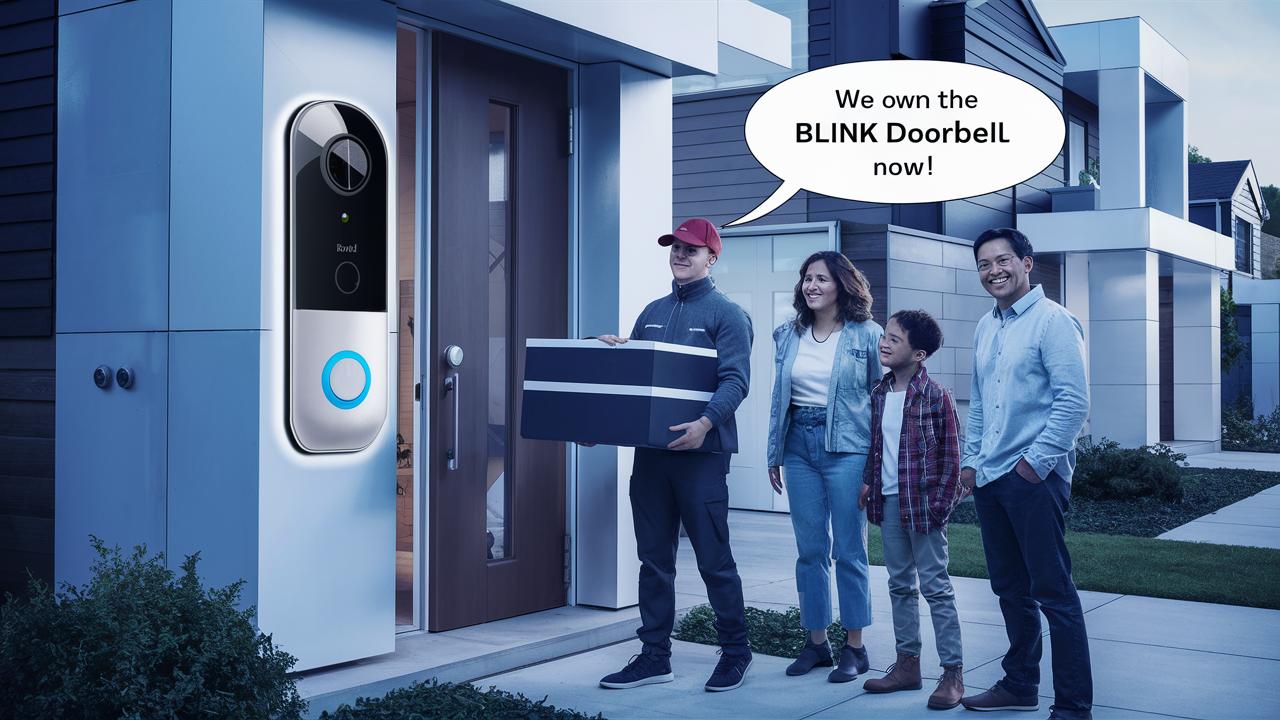
Curious about the ownership behind your Blink doorbell? This comprehensive guide dives deep into the corporate structure, revealing that Blink is a subsidiary of Amazon, a giant in the e-commerce and technology sectors. We'll explore the implications of this ownership for consumers and the smart home market.
Understanding Blink Ownership
When you purchase a Blink doorbell, you're investing in a smart home security device designed for ease of use and affordability. The question of "Who owns Blink doorbell?" is a common one, especially as consumers become more aware of the corporate entities behind the technology they integrate into their lives. The direct answer is that Blink is not an independent company operating in a vacuum. Instead, it is a brand and a product line owned by a larger, globally recognized technology conglomerate. This ownership structure has significant implications for product development, feature sets, data handling, and the overall user experience. Understanding this relationship is crucial for making informed decisions about your smart home ecosystem and for appreciating the strategic direction of Blink products in the competitive landscape of 2025 and 2026.
The Acquisition Story: How Amazon Came to Own Blink
The journey of Blink into the Amazon family is a testament to Amazon's aggressive expansion into the smart home market. Blink, originally founded in 2014 by Peter Besen and Don Boian, quickly gained traction for its wire-free, battery-powered video security cameras and doorbells, distinguishing itself with a focus on simplicity and cost-effectiveness. The company's innovative approach to power management, allowing its devices to run for extended periods on a single set of batteries, was a key selling point.
Amazon, already a major player in smart home technology with its Echo line of smart speakers and the acquisition of Ring, saw significant strategic value in Blink's offerings. The acquisition was officially announced in December 2018, with Amazon paying an estimated $1 billion for the company. This move was not just about acquiring a product line; it was about consolidating Amazon's position in the rapidly growing smart home security sector and leveraging Blink's technology and customer base to complement its existing portfolio. The integration of Blink into Amazon's broader smart home strategy was seen as a natural progression, aiming to create a more cohesive and interconnected ecosystem for consumers.
Who is Amazon? A Global Tech Powerhouse
To fully grasp the implications of Blink's ownership, it's essential to understand the entity that acquired it: Amazon. Founded by Jeff Bezos in 1994 as an online bookstore, Amazon has evolved into one of the world's largest and most influential technology companies. Its business spans e-commerce, cloud computing (Amazon Web Services - AWS), digital streaming (Amazon Prime Video), artificial intelligence (Alexa), and a significant presence in the consumer electronics and smart home markets.
As of 2025, Amazon's market capitalization places it among the top companies globally, reflecting its vast revenue streams and diverse business operations. Its commitment to innovation is evident in its continuous investment in research and development, pushing the boundaries of what's possible in areas like AI, robotics, and logistics. The company's strategic acquisitions, like that of Blink and Ring, are designed to strengthen its ecosystem, gather valuable user data (within privacy regulations), and offer a comprehensive suite of products and services that tie consumers into its platforms. Amazon's overarching goal is often to create a seamless, integrated experience for its customers, making its services indispensable. This ambition directly influences how brands like Blink are developed and marketed under its umbrella.
Implications of Amazon Ownership for Blink Users
The ownership of Blink by Amazon brings a cascade of effects that directly impact the user experience, product evolution, and the overall value proposition for consumers. These implications range from enhanced features and integrations to potential concerns regarding data privacy and the competitive landscape.
Product Development and Innovation
Under Amazon's stewardship, Blink has seen a steady stream of new products and feature updates. Amazon's vast resources in research and development, coupled with its extensive data analytics capabilities, allow for more rapid innovation and product refinement. This means that Blink devices are likely to benefit from advancements in areas such as AI-powered motion detection, improved video quality, and more robust cloud storage solutions. The focus remains on delivering affordable, easy-to-use smart home security, but with the backing of a tech giant, the pace of improvement can be accelerated. For instance, in 2025, we've seen enhanced firmware updates that leverage AI for more accurate person detection, a direct result of Amazon's investment in machine learning. Furthermore, Amazon's experience in scaling manufacturing and supply chains ensures that Blink products can reach a wider audience more efficiently. The development roadmap for Blink is now intrinsically linked to Amazon's broader smart home strategy, ensuring that new products are designed to fit within the larger Amazon ecosystem.
Integration with Alexa and Echo Devices
One of the most significant benefits of Blink being owned by Amazon is the deep integration with Alexa and other Echo devices. This synergy allows users to control their Blink cameras and doorbells using voice commands, view live feeds on Echo Show displays, and receive notifications through their Alexa-enabled speakers. For example, a user can simply say, "Alexa, show me the front door camera," and the live feed will appear on their Echo Show device. This seamless integration enhances convenience and creates a more cohesive smart home experience. As of 2026, this integration continues to deepen, with features like two-way audio communication through Alexa devices and the ability to arm or disarm Blink systems via voice commands becoming standard. This interconnectedness is a key strategy for Amazon, encouraging users to adopt more of its smart home products and services. The ability to receive alerts on your Echo device when motion is detected or someone rings the doorbell is a practical application of this integration that many users find invaluable.
Data Privacy and Security Concerns
While Amazon's ownership brings technological advantages, it also raises questions about data privacy and security, a common concern with any connected device, especially one owned by a company that collects vast amounts of user data. Blink, like other Amazon-owned smart home products, collects video footage, motion detection data, and user activity logs. Amazon states that this data is used to improve its services, personalize user experiences, and for security purposes. However, the sheer volume of data collected and the potential for its use in other Amazon services can be a point of concern for some users.
Amazon has implemented various security measures, including end-to-end encryption for video streams and secure cloud storage. However, the perception of privacy can vary. For instance, in 2025, there were ongoing discussions and regulatory reviews concerning how large tech companies handle user data from smart home devices. Blink users are encouraged to review Blink's privacy policy and Amazon's privacy policies carefully to understand how their data is collected, stored, and used. Features like granular privacy zones within the camera's field of view, which prevent recording in certain areas, and the ability to disable recording entirely, offer some control to users. Nevertheless, the underlying concern about data handling by a large tech conglomerate remains a factor for many consumers.
Pricing and Affordability
One of Blink's core value propositions has always been its affordability, and Amazon has largely maintained this focus. The acquisition has allowed Blink to benefit from Amazon's economies of scale in manufacturing and distribution, potentially leading to more competitive pricing. Blink devices are often available at price points significantly lower than some of their competitors, making smart home security accessible to a broader demographic. This strategy aligns with Amazon's overall mission to offer a wide selection of products at low prices. In 2025-26, Blink continues to offer entry-level video doorbells and cameras that are highly competitive. Furthermore, Amazon's Prime membership often provides additional discounts or bundled offers on Blink products, further enhancing their affordability for a significant portion of consumers. The Blink Subscription Plan, which offers cloud storage and extended warranties, is also priced competitively, adding to the overall cost-effectiveness of the Blink system.
Blink vs. Competitors: A Look at Ownership Structures
Understanding Blink's ownership within the context of its competitors provides a clearer picture of its strategic positioning in the smart home market. The smart doorbell and security camera market is populated by a diverse range of companies, each with different ownership structures and business models. This diversity influences their product strategies, pricing, and the overall user experience they offer.
Ring: Also Owned by Amazon
Perhaps the most significant comparison for Blink is with Ring, another prominent smart home security brand that is also owned by Amazon. Ring was acquired by Amazon in 2018 for over $1 billion, shortly before the Blink acquisition. Both brands operate under Amazon's umbrella but often cater to slightly different market segments or offer distinct product lines. Ring is generally perceived as offering a more premium range of products with more advanced features, while Blink often focuses on core functionality at a lower price point. However, there is increasing overlap and integration between the two brands within the Amazon ecosystem. For consumers, this means having choices within Amazon's smart home security offerings, each with its own set of advantages and price points. The shared ownership allows for potential cross-pollination of technologies and features, benefiting users of both brands.
Google Nest Doorbells: Owned by Google
Google, another tech giant, competes in the smart home space with its Nest brand, which includes video doorbells and security cameras. Google acquired Nest Labs in 2014 for $3.2 billion. Like Amazon, Google leverages its vast resources, AI expertise, and ecosystem (including Google Assistant and Google Home devices) to enhance its smart home offerings. Google Nest doorbells are known for their advanced AI features, such as facial recognition and package detection, and seamless integration with the Google ecosystem. The competition between Amazon (with Blink and Ring) and Google (with Nest) is a driving force in innovation within the smart home security market, pushing both companies to continuously improve their products and services.
Wyze Doorbells: Independent but Facing Competition
Wyze, a relatively newer player in the smart home market, has carved out a niche by offering extremely affordable smart home devices, including video doorbells. Unlike Amazon or Google, Wyze operates as an independent company, though it has faced its share of challenges and scrutiny regarding data security. Wyze's strategy has been to democratize smart home technology by making it accessible to everyone. Their product development is often community-driven, with a focus on rapid iteration based on user feedback. While independent, Wyze competes directly with Blink and other brands owned by larger corporations, often forcing them to innovate quickly and maintain competitive pricing. The success of Wyze demonstrates that there is still a market for value-driven smart home products, even amidst the dominance of tech giants.
Arlo Doorbells: Publicly Traded Company
Arlo Technologies, which spun off from Netgear in 2018, is a publicly traded company specializing in smart home security cameras and doorbells. As a public company, Arlo's strategies are driven by shareholder value, and it competes by focusing on premium features, robust hardware, and a strong emphasis on video quality and advanced analytics. Arlo products are often positioned at a higher price point, appealing to consumers who prioritize advanced features and are willing to pay a premium for them. Their ownership structure means they are not directly tied to the ecosystem of a single tech giant, offering an alternative for consumers who prefer to avoid being locked into one company's platform.
The Future of Blink Under Amazon
The trajectory of Blink under Amazon's ownership appears to be one of continued integration and expansion. As Amazon solidifies its position as a dominant force in the smart home market, Blink is poised to play a crucial role in its strategy. We can anticipate several key developments in the coming years (2025-2026 and beyond):
- Enhanced AI Capabilities: Expect further advancements in AI-driven features, such as more sophisticated person, package, and animal detection, as well as improved facial recognition capabilities. This will be powered by Amazon's extensive AI research and development.
- Deeper Ecosystem Integration: The synergy between Blink and Alexa will undoubtedly deepen. This could include more intuitive voice controls, richer notification options, and seamless integration with other Amazon smart home devices like smart locks and lighting.
- New Product Lines: While Blink is known for its doorbells and cameras, Amazon might leverage the brand to introduce new types of smart home security devices or expand its existing product range to cover more aspects of home monitoring.
- Subscription Service Evolution: The Blink Subscription Plan will likely evolve, potentially offering tiered options with more advanced features, cloud storage upgrades, or bundled services with other Amazon offerings.
- Global Expansion: With Amazon's global reach, Blink products are likely to become more widely available in international markets, bringing affordable smart home security to a broader audience worldwide.
- Focus on Interoperability: While Amazon's primary goal is to strengthen its own ecosystem, there might be a growing emphasis on ensuring Blink devices can communicate with other smart home standards, though this is likely to be secondary to internal integration.
The future of Blink is intrinsically linked to Amazon's vision for the connected home. As Amazon continues to invest heavily in smart home technology, Blink is well-positioned to benefit from these advancements, offering consumers increasingly capable and integrated security solutions. The challenge for Amazon will be to balance this innovation with ongoing user concerns about data privacy and security, ensuring that the trust of its customers remains paramount.
Conclusion: Who Truly Owns Your Blink Doorbell?
In summary, the answer to "Who owns Blink doorbell?" is unequivocally Amazon. Blink operates as a subsidiary brand under the vast umbrella of Amazon, a global technology titan. This ownership has profoundly shaped Blink's trajectory, infusing it with the resources, technological expertise, and strategic vision of its parent company. For consumers, this translates into a product line that benefits from enhanced innovation, seamless integration with the popular Alexa ecosystem, and competitive pricing.
While Amazon's ownership brings significant advantages, it also necessitates a mindful approach from users, particularly concerning data privacy and security. Understanding the implications of this corporate relationship is key to making informed choices about your smart home setup. As Amazon continues to expand its dominance in the smart home market, Blink is set to remain a vital component of its strategy, promising further advancements and deeper integration in the years to come. By leveraging Amazon's scale and innovation, Blink is well-positioned to continue offering accessible and effective smart home security solutions to a global audience.