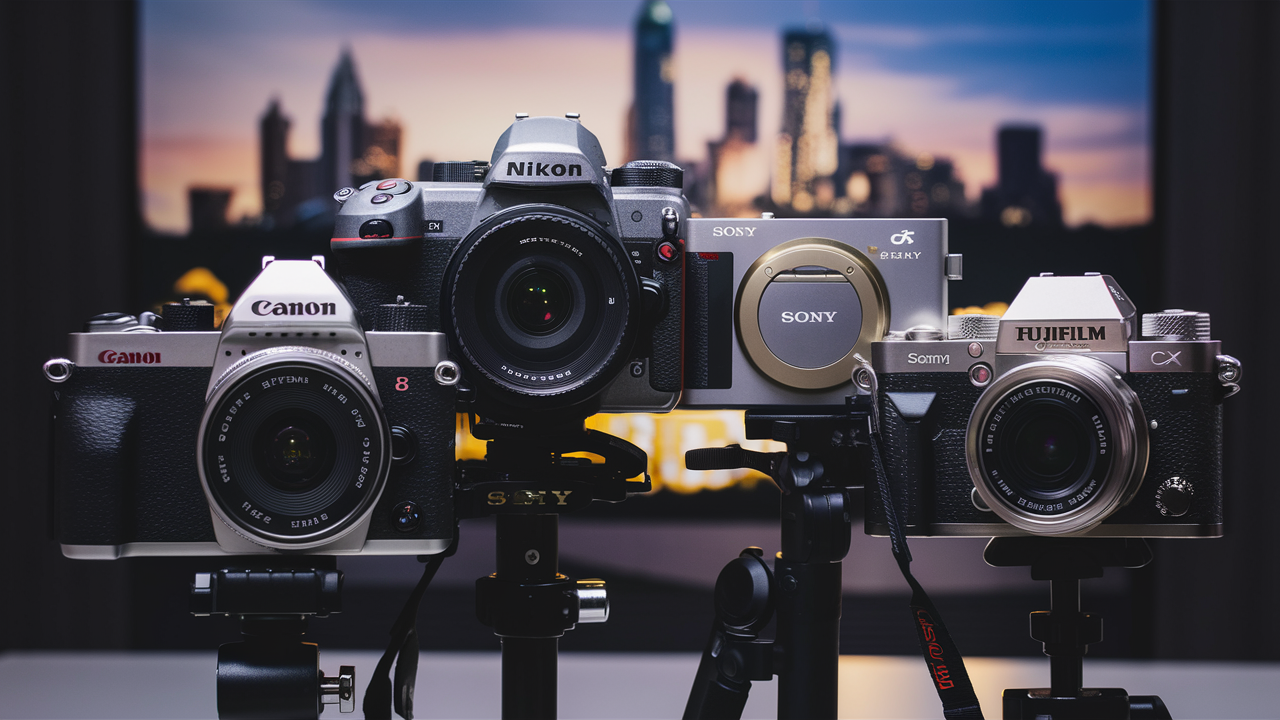
Determining the "best" camera brand is a deeply personal journey, influenced by your photographic needs, budget, and desired features. This comprehensive guide will navigate you through the leading manufacturers, helping you make an informed decision for your 2025-26 photography adventures.
Understanding Camera Brands
The camera market is a dynamic landscape, populated by established giants and innovative newcomers, each vying for the attention of photographers worldwide. When we talk about camera brands, we're referring to the companies that design, manufacture, and market digital cameras, along with their associated lenses and accessories. These brands have cultivated distinct philosophies, technological strengths, and brand loyalties over decades, sometimes even centuries, of innovation.
Understanding these brands goes beyond simply recognizing logos. It involves delving into their historical contributions, their current market positioning, their technological focus, and their overall impact on the photography industry. Each brand has carved out a niche by excelling in specific areas, whether it's sensor technology, autofocus systems, video capabilities, user interface design, or the sheer breadth and quality of their lens ecosystems.
For instance, some brands are renowned for their robust build quality and extensive professional lineups, catering to seasoned photojournalists and studio photographers. Others might be celebrated for their innovative mirrorless systems, pushing the boundaries of speed and image quality for enthusiasts and content creators. Still others might focus on user-friendliness and affordability, making photography accessible to beginners and hobbyists.
The evolution of digital photography has seen significant shifts. The rise of mirrorless technology has reshaped the market, with many brands shifting their primary focus and R&D efforts towards these more compact and technologically advanced systems. This has led to intense competition, with each brand striving to offer the most compelling features and performance to capture market share. As we look towards 2025-26, this competitive spirit is only intensifying, driving innovation at an unprecedented pace.
Furthermore, the concept of a "best" brand is subjective. What might be the ideal choice for a wildlife photographer needing extreme telephoto reach and rapid burst shooting will be entirely different from the needs of a landscape artist prioritizing dynamic range and color rendition, or a vlogger seeking advanced video features and compact portability. Therefore, a thorough understanding of what each brand offers, and how those offerings align with individual needs, is paramount.
This exploration will equip you with the knowledge to discern the unique selling propositions of each major player, enabling you to move beyond brand names and towards a camera system that truly empowers your creative vision. We'll examine the core strengths, typical user bases, and innovative technologies that define each significant brand in the current market, providing a solid foundation for your purchasing decision.
How to Choose the Right Camera Brand
Selecting the "best" camera brand isn't about finding a universally superior manufacturer, but rather identifying the brand that best aligns with your specific photographic goals, skill level, and budget. This requires a strategic approach, moving beyond superficial brand appeal to a deeper understanding of what each company offers.
The first crucial step is to define your primary use case. Are you an aspiring professional seeking a workhorse for events and portraits? A travel enthusiast who needs a compact yet capable camera? A nature photographer demanding weather sealing and exceptional autofocus? Or a budding videographer focused on cinematic quality? Your intended genre of photography will heavily influence which brands and their respective systems are most suitable.
Next, consider your budget. Camera systems, especially interchangeable lens cameras, involve not just the body but also a significant investment in lenses. Some brands offer more affordable entry points and a wider range of budget-friendly lenses, while others position themselves at the premium end, with higher-priced bodies and specialized, high-performance optics. Researching the cost of a typical lens kit for your needs within each brand's ecosystem is vital.
Sensor size is another critical factor. Full-frame sensors generally offer superior low-light performance and shallower depth of field, but come at a higher cost and in larger camera bodies. APS-C sensors provide a good balance of performance, size, and cost, making them popular for enthusiasts and many professionals. Micro Four Thirds (MFT) sensors offer the most compact systems, ideal for portability, though they may have slight trade-offs in low-light and depth-of-field compared to larger sensors.
The lens selection is arguably as important as the camera body itself. A brand might have a fantastic camera body, but if its lens lineup doesn't offer the focal lengths, apertures, or specialized lenses you require, it might not be the right fit. Look at the availability of prime lenses, zoom lenses, macro lenses, and telephoto options, as well as their quality and price points. The robustness and innovation within a brand's lens mount system are key indicators of its long-term viability and potential for future expansion.
Ergonomics and user interface are also highly personal. How does the camera feel in your hands? Are the buttons and dials intuitively placed? Is the menu system easy to navigate? Many brands have distinct operating philosophies. Some are known for their streamlined, modern interfaces, while others retain a more traditional, button-heavy approach. Trying to handle cameras from different brands in person, if possible, is invaluable.
Autofocus performance is crucial for capturing sharp images, especially for moving subjects. Research the specific autofocus systems offered by each brand and model. Features like subject tracking, eye-detection AF (for humans and animals), and low-light focusing capabilities can vary significantly. For videographers, the autofocus performance during video recording is equally important.
Video capabilities are increasingly a deciding factor for many photographers. If video is a priority, investigate frame rates, resolutions (4K, 8K), bit depth, color sampling, log profiles, and internal stabilization. Some brands have historically led in video features, while others are rapidly catching up.
Finally, consider the brand's reputation for reliability, customer support, and firmware updates. While difficult to quantify, a brand's track record can offer insights into its commitment to its customers and the longevity of its products. Looking at reviews and user forums can provide valuable anecdotal evidence.
By systematically evaluating these factors against your personal needs, you can move beyond the abstract question of "What is the best camera brand?" to a concrete answer: "What is the best camera brand *for me*?"
Top Camera Brands in 2025-26: A Deep Dive
The camera industry in 2025-26 is characterized by fierce competition, rapid technological advancements, and a clear dominance of mirrorless systems. While many brands offer excellent products, a few stand out for their market share, innovation, and comprehensive ecosystems. This section will provide an in-depth look at the leading contenders, examining their strengths, weaknesses, and target audiences.
The market is largely divided between brands that have successfully transitioned to mirrorless technology and those still maintaining DSLR lines, though the former is clearly the future. We'll focus on brands that are actively innovating and investing in mirrorless platforms, as these are the ones shaping the industry for the foreseeable future. The data and trends discussed here are based on industry analysis and projections for the 2025-26 period.
Key metrics for comparison include sensor technology (resolution, dynamic range, ISO performance), autofocus speed and accuracy, video capabilities, lens system breadth and quality, build quality, ergonomics, and overall value proposition. It's important to remember that "best" is subjective and depends heavily on individual needs, but by analyzing these objective and subjective factors, we can paint a clear picture of each brand's standing.
The following brands represent the pinnacle of camera manufacturing, each with a dedicated following and a compelling reason to be considered the "best" for a particular type of photographer. We will explore their current offerings and their strategic direction.
| Brand | Primary Strengths | Target Audience | Key Mirrorless Series (2025-26) | Lens Ecosystem Strength | Notable 2025-26 Trends |
|---|---|---|---|---|---|
| Canon | Excellent image quality, intuitive ergonomics, vast lens options (RF mount), strong video features. | Beginners to Professionals, Enthusiasts, Videographers. | EOS R series (R3, R5, R6 Mark II, R7, R10, R50, R100) | Very strong, expanding RF mount, extensive EF mount compatibility via adapter. | Continued push in high-resolution, advanced AF, and professional video features. |
| Nikon | Robust build, excellent high ISO performance, innovative Z mount, strong viewfinder experience. | Enthusiasts to Professionals, Landscape, Wildlife, Portrait photographers. | Z series (Z9, Z8, Z7 II, Z6 II, Z5, Z fc, Z50) | Rapidly expanding Z mount, good F mount compatibility. | Focus on high-speed shooting, AI-driven AF, and compact full-frame options. |
| Sony | Industry-leading autofocus, cutting-edge sensor technology, compact mirrorless bodies, extensive E-mount lens options. | Enthusiasts to Professionals, Videographers, Content Creators. | Alpha series (A1, A9 III, A7R V, A7 IV, A7S III, A6700, ZV series) | Extremely strong and diverse E-mount, with many third-party options. | Continued dominance in AF, AI integration, and specialized video cameras. |
| Fujifilm | Exceptional JPEG color science, retro styling, compact APS-C and medium format systems, strong film simulations. | Enthusiasts, Street Photographers, Travel Photographers, Creatives. | X series (X-T5, X-H2S, X-H2, X-S20, X100VI), GFX series (Medium Format) | Strong X-mount, growing GF mount for medium format. | Emphasis on JPEG quality, unique shooting experience, and expanding medium format. |
| Panasonic | Pioneering video features, excellent stabilization, strong Micro Four Thirds system. | Videographers, Enthusiasts, Travelers. | Lumix S series (S5 II, S1H), Lumix G series (GH6, G9 II), Lumix DC-FZ series. | Strong L-mount (full-frame) and Micro Four Thirds mount. | Continued focus on hybrid photo/video capabilities and advanced video codecs. |
This table provides a snapshot, but each brand deserves a closer look.
Canon: The Evergreen Contender
Canon has long been a titan in the imaging industry, and their transition to mirrorless with the EOS R system has been remarkably successful. For 2025-26, Canon continues to solidify its position by offering a diverse range of cameras that cater to nearly every segment of the market, from entry-level enthusiasts to seasoned professionals.
Canon's strengths lie in its user-friendly interfaces, excellent image quality, and an ever-expanding native RF lens mount. The RF lens lineup is particularly impressive, featuring a mix of high-performance professional lenses and more accessible options. For those transitioning from Canon's extensive DSLR history, the EF-to-RF adapter provides seamless compatibility with a vast library of older lenses, a significant advantage for many.
In the professional space, the EOS R3 and R5 continue to be benchmarks for speed, resolution, and autofocus performance. The R3 is a powerhouse for action and sports photography, while the R5 offers a compelling blend of high-resolution stills and advanced 8K video capabilities. For enthusiasts, the EOS R6 Mark II provides an exceptional balance of performance and value, making it a popular choice for a wide array of photographic pursuits.
Canon's commitment to video is evident across its lineup. Even its stills-focused cameras often boast impressive video specifications, including high frame rates, excellent autofocus during video recording, and good internal stabilization. The development of the RF lens mount, with its wide diameter and short flange distance, allows for the design of optically superior lenses, including incredibly fast f/1.2 primes and versatile zoom lenses.
For beginners and hobbyists, Canon offers accessible options like the EOS R100, R50, and R10, which provide a gateway into the EOS R system with intuitive controls and helpful shooting modes. These cameras are designed to grow with the user, offering a clear upgrade path to more advanced models.
Key Strengths for 2025-26:
- Ergonomics and Usability: Canon cameras are consistently praised for their comfortable grip, intuitive button layouts, and logical menu systems, making them a joy to use for extended periods.
- Image Quality: Canon's color science is renowned, producing pleasing skin tones and vibrant colors straight out of the camera, often requiring minimal post-processing.
- Autofocus System: Dual Pixel CMOS AF II is exceptionally fast and accurate, with advanced subject detection (human, animal, vehicle) that is highly reliable for both stills and video.
- Lens Ecosystem: The RF mount is rapidly maturing, offering a wide range of high-quality lenses for various needs, from ultra-wide zooms to powerful telephoto primes.
- Video Capabilities: Many EOS R cameras offer robust video features, including high-resolution recording, advanced codecs, and excellent AF performance during video.
Canon's strategy for 2025-26 appears to be one of continued refinement and expansion, focusing on enhancing autofocus, increasing resolution in key models, and further diversifying its RF lens offerings to cover every conceivable photographic scenario. They remain a safe and excellent choice for photographers of all levels.
Nikon: Innovation and Legacy
Nikon, another legacy brand with a storied history, has made a strong commitment to its Z mount mirrorless system. In 2025-26, Nikon continues to push boundaries with its high-end mirrorless cameras, renowned for their robust build, exceptional high-ISO performance, and innovative features.
The Nikon Z9 and Z8 have set new standards for professional mirrorless cameras, combining high resolution with blazing-fast shooting speeds and advanced autofocus. The Z9, in particular, is a flagship for its integrated grip, blackout-free shooting, and sophisticated subject tracking. The Z8 offers a similar performance profile in a more compact, non-grip body, making it incredibly versatile.
Nikon's sensor technology is consistently top-tier, delivering excellent dynamic range and impressive low-light performance. This makes their cameras particularly well-suited for landscape photographers and those shooting in challenging lighting conditions. The Z mount, with its wide diameter, allows for the design of optically superior lenses, and Nikon has been diligently expanding its S-Line of premium Z-mount lenses, which are known for their sharpness and build quality.
For enthusiasts, the Z6 II and Z7 II continue to offer a balanced mix of performance and resolution, while the more compact Z5 provides an accessible entry into the full-frame mirrorless world. Nikon also caters to the retro-styled APS-C market with the popular Z fc and Z50, which appeal to a younger demographic and those who appreciate a more tactile shooting experience.
Nikon's autofocus system, while perhaps not always perceived as being as universally advanced as Sony's in every single model, has seen significant improvements, particularly with the introduction of advanced AI-driven subject detection in its higher-end models. Their viewfinder experience is often considered among the best, offering clear, bright, and lag-free viewing.
Key Strengths for 2025-26:
- Build Quality and Durability: Nikon cameras, especially their professional lines, are built like tanks, designed to withstand demanding shooting environments.
- High ISO Performance: Nikon sensors excel in low-light conditions, producing clean images with minimal noise at higher ISO sensitivities.
- Viewfinder Experience: Nikon's electronic viewfinders are often praised for their clarity, brightness, and high refresh rates, providing a near-optical experience.
- Z Mount Lenses: The S-Line lenses are exceptional, offering superb image quality, fast apertures, and robust construction. The F-mount compatibility via adapter is also a significant plus.
- Innovative Features: Nikon has been at the forefront of integrating advanced computational photography and AI-driven features into its cameras.
Nikon's trajectory for 2025-26 indicates a continued focus on high-performance mirrorless systems, particularly in the professional and enthusiast segments. They are a strong contender for photographers who prioritize image quality, build, and a refined shooting experience, especially in challenging environments.
Sony: Disruptor and Leader
Sony has been a dominant force in the mirrorless camera market for years, and their Alpha series continues to lead the charge in 2025-26. Sony's innovation, particularly in sensor technology and autofocus, has set industry standards and forced competitors to adapt.
The Sony Alpha lineup is incredibly diverse, ranging from the ultra-high-end Alpha 1 and Alpha 9 III, which redefine speed and performance for professionals, to the versatile Alpha 7 series (A7R V for resolution, A7 IV for all-around performance, A7S III for low-light and video), and the compact, feature-rich APS-C models like the Alpha 6700 and the ZV series for content creators.
Sony's autofocus system is widely regarded as the best in the industry. Their Real-time Tracking and advanced AI-powered subject detection (human, animal, bird eye AF) are incredibly sticky and accurate, making it easier than ever to capture sharp images of fast-moving subjects. This is a significant advantage for sports, wildlife, and even casual portrait photographers.
Sensor technology is another area where Sony excels. They manufacture many of the sensors used by other camera brands, and their own implementations are often at the cutting edge, offering exceptional dynamic range, high resolution, and impressive low-light capabilities. The E-mount is also one of the most mature mirrorless mounts, with a vast array of native Sony lenses and a huge selection of high-quality third-party options from brands like Sigma, Tamron, and Samyang, offering unparalleled choice and value.
For videographers, Sony has consistently been a leader, with models like the A7S III and FX series offering class-leading video features, including high frame rates, excellent codecs, and sophisticated color science. Their commitment to hybrid shooting – excelling at both stills and video – is a key differentiator.
Key Strengths for 2025-26:
- Autofocus Performance: Sony's AF system is arguably the industry benchmark for speed, accuracy, and subject tracking capabilities.
- Sensor Technology: Consistently at the forefront of sensor innovation, offering exceptional dynamic range, resolution, and low-light performance.
- Lens Ecosystem: The E-mount boasts the widest selection of native and third-party lenses, offering immense flexibility and options for every budget.
- Compact Form Factor: Sony's mirrorless cameras often offer a smaller and lighter footprint compared to their DSLR predecessors, making them more portable.
- Video Capabilities: A leader in video features, with many models offering professional-grade recording options and excellent performance.
Sony's strategy for 2025-26 involves further refining its AI-driven autofocus, pushing resolution boundaries, and continuing to innovate in specialized video and high-speed shooting cameras. They are an excellent choice for photographers and videographers who demand cutting-edge technology, particularly in autofocus and sensor performance.
Fujifilm: Style and Substance
Fujifilm has carved out a unique and highly respected niche in the camera market, known for its exceptional JPEG color science, stylish retro designs, and a strong focus on the user experience. In 2025-26, Fujifilm continues to offer compelling options for enthusiasts and creatives who value image quality and a distinct photographic journey.
Fujifilm's X-series APS-C cameras are particularly popular, offering a superb balance of image quality, portability, and tactile controls. Models like the X-T5 and X-H2S/X-H2 offer high resolution and advanced features in beautifully designed bodies. The X-H2S, in particular, is a powerhouse for speed and video, while the X-T5 appeals to those who appreciate a more traditional shooting experience with its dial-based controls.
The standout feature for many Fujifilm users is its renowned color science and Film Simulations. These in-camera presets, inspired by classic Fujifilm films like Velvia, Astia, and Classic Chrome, produce stunning JPEGs directly from the camera, often reducing the need for extensive post-processing. This makes Fujifilm cameras a favorite among street photographers, travel photographers, and anyone who appreciates beautiful, ready-to-share images.
Fujifilm also offers a compelling medium format system with its GFX series. These cameras provide incredible detail and a unique aesthetic at a more accessible price point than traditional medium format, making large-format imaging available to a wider audience. The GF mount lenses are optically superb, complementing the large sensors.
The X-mount lens ecosystem is robust and growing, featuring a range of high-quality prime and zoom lenses that are optically excellent and often compact. Fujifilm's focus on creating a cohesive and enjoyable shooting experience, from the camera's design to its image output, is a key differentiator.
Key Strengths for 2025-26:
- Color Science and Film Simulations: Fujifilm's JPEGs are legendary for their pleasing colors and unique looks, often requiring minimal editing.
- Retro Design and Ergonomics: Many Fujifilm cameras feature classic dial-based controls and stylish, retro aesthetics that enhance the shooting experience.
- APS-C Performance: The X-series offers exceptional image quality, speed, and features in a compact and portable APS-C format.
- Medium Format Options: The GFX series provides a gateway to the incredible detail and aesthetic of medium format photography.
- JPEG Output: For those who prefer to shoot JPEGs, Fujifilm offers arguably the best in-camera processing available.
Fujifilm's strategy for 2025-26 likely involves continuing to refine its film simulations, expanding its X-mount and GF-mount lens lineups, and pushing the boundaries of APS-C and medium format performance. They are an excellent choice for photographers who prioritize a unique shooting experience, exceptional color output, and stylish, capable cameras.
Panasonic: Video Prowess
Panasonic has long been a champion of video quality in the hybrid camera space, and their Lumix brand continues to impress in 2025-26. While they offer excellent full-frame options with their L-mount S-series, their Micro Four Thirds (MFT) G-series cameras, particularly the GH line, remain legendary for their video capabilities.
The Lumix GH6, for instance, is a video powerhouse, offering internal 5.7K 60p recording, 4K 120p, and a host of professional video features like anamorphic recording, V-Log, and excellent image stabilization. For photographers, the GH6 and other G-series cameras provide a compact and versatile system with a vast array of MFT lenses available from Panasonic and other manufacturers like Olympus (now OM System).
Panasonic's full-frame L-mount cameras, such as the Lumix S5 II and S1H, also offer exceptional hybrid performance. The S5 II, in particular, introduced phase-detection autofocus to Panasonic's full-frame line, addressing a long-standing critique and making it a much more well-rounded stills and video camera. These cameras benefit from the growing L-mount alliance, which includes Sigma and Leica, offering a wide selection of high-quality lenses.
Panasonic's in-body image stabilization (IBIS) is consistently among the best in the industry, providing remarkably steady footage and allowing for sharper handheld shots, especially in low light. Their commitment to providing professional-level video features in accessible camera bodies makes them a top choice for content creators, documentary filmmakers, and hybrid shooters.
Key Strengths for 2025-26:
- Video Features: Panasonic is a leader in offering advanced video codecs, frame rates, resolutions, and professional video tools in their cameras.
- Image Stabilization: Their IBIS system is exceptionally effective, providing smooth footage and sharp stills.
- Micro Four Thirds System: Offers a compact, lightweight, and versatile system with a huge lens selection.
- Hybrid Performance: Excellent integration of stills and video capabilities, making them ideal for multi-disciplinary creators.
- L-Mount Alliance: Access to a growing range of high-quality full-frame lenses from Panasonic, Sigma, and Leica.
Panasonic's focus for 2025-26 will likely remain on pushing the boundaries of video technology in hybrid cameras, further developing their L-mount offerings, and enhancing their autofocus systems. They are an outstanding choice for anyone prioritizing video quality and features.
Other Notable Brands
While the "big five" (Canon, Nikon, Sony, Fujifilm, Panasonic) dominate the market, several other brands offer compelling products and cater to specific needs or enthusiast groups. Understanding these can broaden your options.
- Olympus (now OM System): Known for its robust Micro Four Thirds cameras, particularly the OM-D series. They excel in weather sealing, image stabilization, and unique features like High-Res Shot and Live Composite. The OM-1 is a standout for its speed and image quality.
- Pentax (Ricoh Imaging): While less prominent in the mirrorless race, Pentax maintains a loyal following for its rugged DSLRs, renowned for their weather sealing, ergonomic grips, and excellent optical viewfinders. The K-1 Mark II is a capable full-frame DSLR.
- Leica: A luxury brand synonymous with premium build quality, exceptional optics, and a timeless aesthetic. Leica cameras are expensive but offer a unique, minimalist shooting experience and superb image quality, particularly in their M-mount rangefinders and SL-series mirrorless cameras.
- Sigma: Primarily known for its high-quality lenses, Sigma also produces its own unique cameras like the fp and fp L, which are compact, full-frame, and highly modular, appealing to a niche of experimental and professional users.
- Hasselblad: A legendary name in medium and large format photography, Hasselblad continues to produce high-end medium format mirrorless cameras (X2D series) that offer unparalleled image quality and detail for professionals and high-end enthusiasts.
These brands, while perhaps not having the same market share as the giants, offer specialized solutions that can be perfect for specific photographers. For instance, an OM System camera might be the ultimate choice for an adventure photographer needing extreme durability, while a Hasselblad is the pinnacle for commercial photographers demanding the utmost in detail.
Camera Types and Brand Alignment
The "best" camera brand is inextricably linked to the type of camera you intend to buy. Different brands have historically excelled, and continue to excel, in specific camera categories. Understanding this alignment can significantly narrow down your choices.
Mirrorless Cameras
Mirrorless cameras are the current focus of innovation for almost all major brands. They offer a combination of advanced technology, compact size, and excellent image quality. For 2025-26, mirrorless is where you'll find the most cutting-edge features.
- Full-Frame Mirrorless: Brands like Sony (Alpha 7, Alpha 1), Canon (EOS R series), Nikon (Z series), and Panasonic (Lumix S series) are leaders here. Sony often leads in autofocus and sensor tech, Canon in ergonomics and color, Nikon in build and high ISO, and Panasonic in video.
- APS-C Mirrorless: Fujifilm (X series) is a standout for its color science and retro designs. Sony (Alpha 6000 series, ZV series) offers excellent AF and a vast lens selection. Canon (EOS R APS-C) provides accessible entry points. Nikon (Z fc, Z50) offers stylish options.
- Micro Four Thirds Mirrorless: Panasonic (Lumix G series) and OM System (OM-D series) are the primary players. These systems are known for their compact size, excellent stabilization, and extensive lens options, with Panasonic often leading in video features and OM System in ruggedness.
DSLR Cameras
While the industry has largely shifted to mirrorless, DSLRs are still relevant for some users, particularly those with existing lens investments or who prefer the optical viewfinder experience. Canon and Nikon remain the primary manufacturers.
- Canon DSLRs: Offer a wide range from entry-level (EOS Rebel series) to professional (EOS-1D X series). Known for their user-friendliness and excellent image quality.
- Nikon DSLRs: Also offer a broad spectrum from entry-level (D3xxx, D5xxx series) to professional (D6, D850). Praised for their robust build and high-ISO performance.
For 2025-26, new DSLR development is minimal, with most R&D focused on mirrorless. However, existing models remain capable tools.
Compact Cameras (Point-and-Shoot)
These cameras are designed for simplicity and portability, often with fixed lenses. Brands like Canon (PowerShot series), Sony (Cyber-shot series), and Panasonic (Lumix DC series) offer a range of options, from basic snapshot cameras to advanced compacts with larger sensors and versatile zoom lenses.
- Advanced Compacts: Models like the Sony RX100 series, Canon G7 X series, and Fujifilm X100 series offer larger sensors and premium features in a pocketable form factor, appealing to enthusiasts and content creators.
Specialty Cameras
These include action cameras, 360 cameras, and medium/large format cameras, each with specific brands dominating their niches.
- Action Cameras: GoPro is the undisputed leader.
- 360 Cameras: Insta360 and Ricoh are prominent.
- Medium/Large Format: Fujifilm (GFX series) and Hasselblad are the primary players in high-end digital medium format.
The brand that is "best" for you will depend heavily on which of these categories you fall into. For example, if you're looking for the most advanced video features in a mirrorless body, Panasonic or Sony might be your top contenders. If you prioritize JPEG color and a tactile shooting experience in an APS-C mirrorless, Fujifilm is hard to beat.
Future Trends in Camera Technology
The camera industry is not static; it's a rapidly evolving field driven by technological innovation and changing consumer demands. Looking ahead to 2025-26 and beyond, several key trends are shaping the future of photography and videography, influencing how camera brands develop their products.
AI Integration: Artificial Intelligence is no longer a buzzword; it's a fundamental driver of advancement. We're seeing AI used extensively in autofocus systems for subject detection and tracking, scene recognition, and even image processing for noise reduction and detail enhancement. Expect AI to become even more sophisticated, enabling cameras to anticipate user needs and automate complex tasks, leading to more intuitive and powerful shooting experiences. This could include AI-powered scene optimization, intelligent in-camera editing suggestions, and predictive autofocus that locks onto subjects before they even move.
Computational Photography: This trend, popularized by smartphones, is increasingly making its way into dedicated cameras. Computational photography uses advanced algorithms to combine multiple exposures or data points to create images that surpass the limitations of traditional optics and sensors. Techniques like advanced HDR, noise reduction, and even synthetic bokeh will become more prevalent. Brands may leverage this to create cameras that can capture incredible dynamic range or achieve shallow depth of field effects in ways previously impossible.
Enhanced Video Capabilities: The line between stills and video cameras continues to blur. For 2025-26, expect further advancements in video resolution (8K becoming more common and accessible), higher frame rates for slow-motion, improved internal codecs for greater flexibility in post-production, and more sophisticated RAW video recording options. Brands will also focus on improving in-body image stabilization, making handheld shooting smoother than ever, and integrating advanced audio features.
Sensor Technology Evolution: While resolution often grabs headlines, advancements in sensor technology are also focusing on improved dynamic range, better low-light performance (higher ISO capabilities with less noise), faster readout speeds for burst shooting and reduced rolling shutter, and new sensor architectures. Stacked sensors and global shutter technologies are becoming more common, particularly in high-end and professional cameras, eliminating rolling shutter artifacts entirely.
Connectivity and Workflow: As cameras become more integrated into digital workflows, expect enhanced connectivity options. Faster Wi-Fi and Bluetooth, improved smartphone app integration for remote control and image transfer, and even built-in cloud connectivity for direct uploads will become more standard. This streamlines the process from capture to sharing, which is crucial for content creators and social media users.
Sustainable Design and Materials: With increasing environmental awareness, camera manufacturers may begin to explore more sustainable materials and manufacturing processes. This could involve using recycled plastics, reducing packaging waste, and designing products for greater longevity and repairability.
Form Factor Innovation: While the mirrorless revolution has already slimmed down cameras, brands might continue to experiment with form factors. This could include even more compact full-frame cameras, modular systems, or cameras designed specifically for emerging use cases like advanced drone integration or immersive content creation.
The brands that best adapt to these trends, integrating them seamlessly into user-friendly and high-performing camera systems, will likely be the ones that define the market in the coming years. For consumers, this means an exciting future with ever-more capable and versatile imaging tools at their disposal.
Conclusion: Finding Your Perfect Camera Brand
The question "What is the best camera brand?" ultimately leads not to a single definitive answer, but to a personalized revelation. In 2025-26, the landscape is rich with innovation, with brands like Sony, Canon, Nikon, Fujifilm, and Panasonic offering exceptional tools for photographers of all levels. Sony continues to lead with its groundbreaking autofocus and sensor technology, making it a top choice for those demanding cutting-edge performance.
Canon remains a steadfast favorite for its intuitive ergonomics, excellent color science, and a comprehensive lens ecosystem that appeals to both beginners and professionals. Nikon impresses with its robust build, superior high-ISO performance, and a rapidly evolving Z-mount system. Fujifilm offers a unique, creative experience with its renowned color simulations and stylish designs, while Panasonic stands out for its unparalleled video capabilities, especially in the hybrid camera space.
When choosing, prioritize your needs: your budget, the types of photography you pursue, and your desired user experience. Consider the lens selection available for each brand's mount, as this will be a crucial part of your long-term investment. Whether you're a seasoned professional seeking the ultimate tool or a beginner eager to capture your first great shot, there is a camera brand and system out there perfectly suited for you.
By understanding the strengths and philosophies of each major manufacturer, you can confidently select a camera brand that not only meets your current needs but also empowers your creative journey for years to come. The "best" brand is the one that inspires you to shoot more, explore further, and capture the world as you see it.