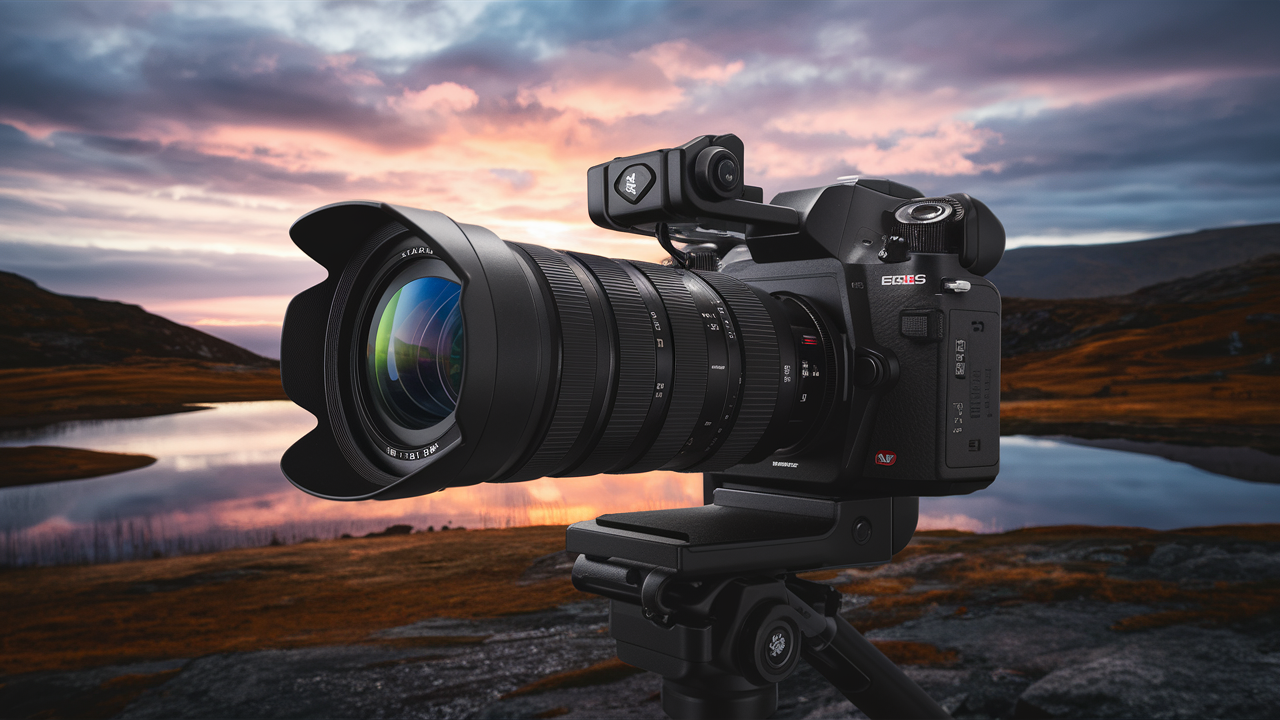
The quest for the "world's best camera" is a deeply personal one, often depending on individual needs and creative vision. While no single camera reigns supreme for everyone, this guide explores the top contenders across various categories, backed by 2025-26 data, to help you find the perfect fit for your photographic journey.
Understanding Camera Categories
The term "best camera" is inherently subjective, as the ideal tool for a landscape photographer will differ vastly from that of a sports journalist or a budding vlogger. To navigate this complex landscape, it's crucial to understand the primary categories of digital cameras available in 2025-26. Each category is designed with specific use cases and user skill levels in mind, offering a unique blend of features, performance, and price.
Mirrorless Cameras
Mirrorless cameras have largely dominated the high-end market in recent years, and 2025-26 sees them continue their reign. They are characterized by their compact size, advanced autofocus systems, excellent video capabilities, and the ability to use a wide range of interchangeable lenses. The absence of a mirror box allows for shorter flange distances, enabling smaller body designs and more efficient sensor utilization. They offer both electronic viewfinders (EVFs) and live view on rear LCDs, providing real-time exposure previews.
DSLR Cameras
Digital Single-Lens Reflex (DSLR) cameras, while perhaps seeing a slower pace of innovation compared to mirrorless, remain a formidable choice, especially for those already invested in their extensive lens ecosystems. They utilize a mirror and prism system to direct light from the lens to an optical viewfinder (OVF), offering a direct, lag-free view of the scene. DSLRs are known for their robust build, long battery life, and the tactile feedback of their controls. However, their size and weight are generally greater than mirrorless counterparts.
Compact Cameras (Point-and-Shoot)
Compact cameras, often referred to as point-and-shoot cameras, prioritize portability and ease of use. They typically feature a fixed lens, though some advanced models offer significant optical zoom ranges. These cameras are ideal for casual photographers, travelers, and those who want a high-quality camera that fits in a pocket. In 2025-26, many advanced compacts boast impressive sensor sizes, fast lenses, and sophisticated image processing, blurring the lines with entry-level interchangeable lens cameras.
Bridge Cameras
Bridge cameras aim to bridge the gap between compacts and DSLRs/mirrorless systems. They offer the handling and controls of a larger camera with a fixed, long-zoom lens, eliminating the need for multiple lenses. These are excellent for users who want versatility without the complexity or cost of interchangeable lenses, making them popular for wildlife, sports, and travel photography where quick focal length changes are beneficial.
Smartphone Cameras
It's impossible to discuss modern photography without acknowledging the incredible advancements in smartphone cameras. By 2025-26, flagship smartphones offer computational photography capabilities that rival dedicated cameras in many everyday scenarios. Features like AI-powered scene recognition, advanced HDR processing, and sophisticated night modes produce stunning results with minimal user input. While they still lag in optical zoom, low-light performance at extreme settings, and true artistic control, they are the most ubiquitous cameras in the world.
The Top Contenders: 2025-26
Identifying the "world's best camera" requires a nuanced approach, considering performance metrics, user reviews, and industry trends. For 2025-26, several models stand out across different segments, pushing the boundaries of what's possible in digital imaging. These cameras excel in areas such as sensor technology, autofocus speed, dynamic range, low-light performance, and video recording capabilities.
Key Performance Indicators for 2025-26
- Sensor Resolution & Size: Higher megapixel counts (often exceeding 50MP for full-frame) and larger sensor sizes (full-frame, medium format) generally translate to greater detail and better low-light performance.
- Autofocus Systems: Advanced AI-driven subject tracking, eye-AF for humans and animals, and wide AF coverage areas are critical for capturing sharp images of moving subjects.
- Image Stabilization: In-body image stabilization (IBIS) with 5-8 stops of compensation is becoming standard, crucial for handheld shooting and low-light conditions.
- Video Capabilities: 4K at high frame rates (60fps, 120fps), 8K recording, advanced codecs (ProRes, RAW), and professional video features like LOG profiles are highly sought after.
- Dynamic Range: The camera's ability to capture detail in both the brightest highlights and darkest shadows of a scene, crucial for high-contrast environments.
- ISO Performance: How well the camera handles noise at high ISO settings, directly impacting low-light photography.
- Build Quality & Ergonomics: Durability, weather sealing, and comfortable handling for extended shooting sessions.
- Lens Ecosystem: The availability and quality of native lenses for the camera mount.
The following sections will delve into specific camera models that are setting the benchmark in 2025-26, categorized by their primary strengths.
Professional DSLR and Mirrorless Champions
For professionals and serious enthusiasts demanding the utmost in image quality, speed, and versatility, the flagship DSLR and mirrorless cameras of 2025-26 are technological marvels. These cameras are engineered to handle the most demanding shooting scenarios, from fast-paced action to intricate studio work.
The Pinnacle of Mirrorless: Full-Frame Powerhouses
Mirrorless technology has advanced to a point where it consistently outperforms DSLRs in many key areas, particularly autofocus and video. The top-tier full-frame mirrorless cameras of 2025-26 offer a compelling combination of high resolution, incredible speed, and sophisticated features.
Sony Alpha a1 (or successor)
The Sony Alpha a1 (or its likely successor in 2025-26) continues to be a benchmark for hybrid shooting. It boasts a 50MP full-frame stacked Exmor RS CMOS sensor, capable of shooting 8K video at 30fps and 4K at 120fps. Its autofocus system is legendary, with real-time tracking for humans, animals, and birds, and an astonishing 30fps continuous shooting speed with full AF/AE tracking. The IBIS system provides up to 5.5 stops of stabilization. Its robust build and extensive lens selection make it a favorite for wildlife, sports, and commercial photographers. The processing power of its BIONZ XR engine ensures that even with such high resolution and speed, image quality remains exceptional, with excellent dynamic range and high ISO performance.
Canon EOS R5 / R5 Mark II (or successor)
Canon's EOS R5 has been a game-changer, and its successor in 2025-26 is expected to build upon its strengths. Known for its superb image quality, class-leading autofocus with deep learning algorithms, and impressive 8K RAW internal video recording, the R5 (or its successor) offers a well-rounded package. Its 45MP sensor delivers stunning detail, and the IBIS system is among the best, often working in tandem with lens stabilization for up to 8 stops of correction. The ergonomic design and intuitive user interface are also significant advantages for long shooting days. For portrait photographers, the accuracy of its eye-AF is unparalleled.
Nikon Z9 / Z8 (or successors)
Nikon's Z9 and Z8 have redefined professional mirrorless cameras with their integrated grip design (Z9) and compact body (Z8), both featuring a 45.7MP stacked CMOS sensor. They offer blackout-free shooting at up to 20fps in RAW, with incredibly fast and reliable autofocus that excels in tracking fast-moving subjects, including birds and vehicles. The Z9/Z8's 8K internal video recording capabilities, robust build, and intuitive controls make them formidable tools. Nikon's commitment to the Z-mount ensures a growing and high-quality lens lineup. The advanced subject detection algorithms are particularly noteworthy for their ability to lock onto and follow subjects through complex scenes.
DSLRs Still Holding Their Ground
While mirrorless dominates, professional DSLRs still offer unique advantages and remain relevant for many.
Canon EOS-1D X Mark III
The Canon EOS-1D X Mark III, even with the rise of mirrorless, remains a titan for sports and wildlife photographers. Its robust build, exceptional battery life, and optical viewfinder provide a shooting experience that many professionals still prefer. It features a 20.1MP full-frame sensor optimized for low light, a sophisticated 191-point AF system, and impressive burst rates. While its video capabilities are not as cutting-edge as its mirrorless counterparts, it remains a reliable workhorse for stills.
Nikon D6
Similarly, the Nikon D6 is a professional DSLR built for endurance and reliability. It offers a 20.8MP full-frame sensor, a powerful 105-point cross-type AF system, and a robust build designed to withstand extreme conditions. Its fast burst shooting and excellent low-light performance make it a strong contender for demanding assignments. The optical viewfinder offers a clear, unadulterated view of the scene.
Best for Videography and Filmmaking
The lines between still photography and videography have blurred significantly. Many cameras now excel at both, but some are specifically designed with filmmakers in mind, offering advanced video features that go beyond the capabilities of general-purpose cameras.
Sony FX3 / FX30 (and successors)
Sony's Cinema Line cameras, like the FX3 and FX30, are essentially cinema cameras in a compact, mirrorless body. The FX3, built on the Alpha 7S III platform, offers exceptional low-light performance with its 12MP full-frame sensor, 4K 120p recording, and 16-bit RAW external output. Its fan system allows for unlimited recording times. The FX30, an APS-C sibling, brings many of these professional video features to a more accessible price point, offering 4K 120p and advanced color science. These cameras are designed for solo operators and small production teams.
Panasonic LUMIX GH6 / S5 II (and successors)
Panasonic has long been a leader in video-centric mirrorless cameras. The LUMIX GH6, with its Micro Four Thirds sensor, offers incredible video specs, including internal 5.7K 60p recording and unlimited 4K 60p. Its robust heat management system allows for extended recording. The full-frame LUMIX S5 II and S5 IIX have also impressed with their combination of excellent video quality, advanced autofocus (a first for Panasonic's full-frame line), and professional video features like V-Log and RAW output options. The S5 IIX, in particular, offers even more advanced video capabilities for demanding professionals.
Blackmagic Pocket Cinema Camera 6K Pro
For those who prioritize cinematic image quality and workflow, Blackmagic Design's Pocket Cinema Camera series is hard to beat. The 6K Pro offers a Super 35 sensor, internal RAW recording (Blackmagic RAW), and a robust build with an integrated ND filter system. Its color science is renowned, and it integrates seamlessly into professional post-production pipelines. While its autofocus is not as advanced as Sony or Canon's, its image quality and flexibility for filmmakers are exceptional.
Compact and Travel Photography Powerhouses
Not everyone needs or wants a large, interchangeable lens system. For those seeking portability without compromising too much on image quality, advanced compact cameras and bridge cameras offer compelling solutions.
Sony RX100 VII (or successor)
The Sony RX100 series continues to impress with its pocketable size and impressive feature set. The RX100 VII (or its successor) packs a 1-inch 20.1MP sensor, a versatile 24-200mm equivalent zoom lens, and a sophisticated autofocus system borrowed from Sony's higher-end cameras. It offers 4K video recording and excellent image stabilization, making it an ideal travel companion for those who want high-quality images and video without the bulk.
Canon PowerShot G7 X Mark III
Canon's G7 X series is another popular choice for compact camera enthusiasts. The G7 X Mark III offers a 1-inch sensor, a bright 24-100mm equivalent f/1.8-2.8 lens, and excellent image quality for its size. It's particularly well-suited for vlogging and casual photography, with good 4K video capabilities and a flip-up screen. Its user-friendly interface makes it accessible for beginners.
Fujifilm X100V (or successor)
The Fujifilm X100V has garnered a cult following for its retro styling, excellent image quality from its APS-C sensor, and its fixed 23mm (35mm equivalent) f/2 lens. It offers a unique shooting experience with its hybrid viewfinder and superb JPEG output, thanks to Fujifilm's renowned film simulations. While it lacks zoom, its quality and character make it a favorite for street photography and everyday shooting. Its successor is highly anticipated for 2025-26.
Panasonic LUMIX ZS200 / TZ200 (or successor)
For those who need a significant zoom range in a compact body, the Panasonic LUMIX ZS200 (or TZ200) is a strong contender. It features a 1-inch sensor and a powerful 15x optical zoom (24-360mm equivalent), offering remarkable versatility for travel. It also includes 4K video recording and a built-in electronic viewfinder, making it a capable all-in-one solution.
Specialty Cameras and Emerging Tech
Beyond the mainstream categories, several specialty cameras and emerging technologies are shaping the future of photography.
Medium Format Mirrorless (e.g., Fujifilm GFX series, Hasselblad X2D)
For ultimate image quality, medium format cameras offer larger sensors than full-frame, resulting in exceptional detail, dynamic range, and shallow depth of field. Fujifilm's GFX series and Hasselblad's X2D are leading the charge in making medium format more accessible and user-friendly. These cameras are ideal for studio portraiture, landscape, and fine art photography where every detail matters.
Action Cameras (e.g., GoPro HERO12 Black, DJI Osmo Action 4)
Action cameras continue to evolve, offering incredible durability, wide-angle perspectives, and advanced stabilization. The latest models from GoPro and DJI provide stunning 5.3K and 4K video, advanced HDR, and features like horizon lock that keep footage perfectly level, even during extreme maneuvers. They are essential tools for adventure sports, vlogging, and capturing unique perspectives.
360-Degree Cameras (e.g., Insta360 X3)
360-degree cameras offer a unique way to capture immersive content. The Insta360 X3, for example, allows users to record everything around them and then reframe the footage in post-production, effectively acting as a virtual camera operator. These cameras are popular for virtual tours, immersive storytelling, and capturing unique perspectives that traditional cameras cannot.
Factors to Consider When Choosing
Selecting the "best" camera is a personal journey. To make an informed decision in 2025-26, consider these crucial factors that align with your photographic goals and budget.
1. Your Photography Needs and Goals
This is the most important starting point.
- What do you primarily shoot? (e.g., Portraits, landscapes, sports, wildlife, street, video, vlogging, travel)
- What is your skill level? (Beginner, enthusiast, professional)
- What are your budget constraints? (Consider camera body, lenses, accessories)
- Do you prioritize stills or video? Or a balance of both?
2. Sensor Size and Resolution
- Full-Frame: Generally offers the best image quality, low-light performance, and shallow depth of field. Ideal for professionals and serious enthusiasts.
- APS-C: A great balance of size, cost, and performance. Excellent for most users, offering good detail and low-light capabilities.
- Micro Four Thirds (MFT): Offers smaller, lighter camera bodies and lenses, with excellent image stabilization and video features. Good for travel and those prioritizing portability.
- 1-inch and smaller: Found in compact cameras and smartphones. Convenient but with limitations in low light and depth of field compared to larger sensors.
Resolution (megapixels) is important for detail, but sensor size and quality are often more critical for overall image performance, especially in challenging light.
3. Autofocus System
For capturing sharp images of moving subjects, an advanced autofocus system is essential. Look for:
- Wide AF point coverage across the frame.
- Fast and accurate subject detection (human eye, animal eye, vehicles).
- Reliable tracking of moving subjects.
- Performance in low light.
4. Lens Ecosystem
The camera body is only half the equation. The availability and quality of lenses for a particular mount are crucial for long-term satisfaction and creative flexibility.
- Native Lenses: Are there high-quality prime and zoom lenses available that meet your needs?
- Third-Party Support: Do reputable third-party manufacturers (Sigma, Tamron, etc.) offer lenses for the mount?
- Used Market: Is there a healthy used market for lenses if you're on a budget?
5. Video Capabilities
If video is a priority, consider:
- Resolution and frame rates (4K 60p, 4K 120p, 8K).
- Recording codecs and bit depth (RAW, 10-bit, Log profiles).
- Autofocus performance in video mode.
- In-body image stabilization for smooth handheld footage.
- Audio input/output options.
6. Ergonomics and Build Quality
A camera should feel comfortable in your hands, especially during long shooting sessions.
- Grip comfort and button layout.
- Weather sealing for shooting in adverse conditions.
- Durability of materials.
- Weight and size considerations.
7. Budget and Total Cost of Ownership
Don't forget to factor in the cost of essential accessories like memory cards, extra batteries, a camera bag, and potentially lenses and lighting equipment. The initial purchase price is just the beginning.
Future Trends in Camera Technology
The camera industry is in a constant state of evolution. Looking ahead to the next few years, several trends are poised to further redefine what we expect from our imaging devices.
AI Integration
Artificial intelligence is already playing a significant role in autofocus, scene recognition, and image processing. In the future, expect AI to become even more deeply integrated, offering:
- Smarter and more predictive autofocus systems that can anticipate subject movement.
- AI-powered image enhancement and noise reduction that produce near-perfect results in-camera.
- Automated editing and content creation assistance.
- Personalized shooting modes that adapt to user preferences and styles.
Computational Photography
While currently dominant in smartphones, computational photography techniques are increasingly being adopted by dedicated cameras. This involves using software to combine multiple exposures, enhance detail, and overcome the physical limitations of sensors and lenses. Expect more advanced HDR, low-light stacking, and even simulated bokeh effects achieved through computational means.
Advancements in Sensor Technology
We will likely see continued improvements in sensor design, leading to:
- Higher dynamic range and improved low-light performance across all sensor sizes.
- Faster readout speeds, enabling higher frame rates for both stills and video.
- New sensor architectures that offer greater efficiency and potentially new imaging capabilities.
- The continued rise of stacked sensors for extreme speed.
Connectivity and Workflow
The integration of cameras into a connected ecosystem will become more seamless.
- Faster wireless transfer speeds for images and video.
- Cloud-based editing and storage solutions directly from the camera.
- Improved integration with mobile devices and professional editing software.
- Potential for remote camera control and live streaming capabilities built into more devices.
Sustainability and Durability
As consumers become more environmentally conscious, manufacturers may focus on more sustainable materials and longer product lifecycles. Additionally, the demand for robust, weather-sealed cameras built to last will continue to grow, especially in professional and enthusiast segments.
The Continued Rise of Video
The demand for high-quality video content shows no signs of slowing down. Cameras will continue to offer more advanced video features, including higher resolutions, frame rates, and professional codecs, making them increasingly capable tools for filmmakers of all levels.
These trends suggest a future where cameras are not just image-capturing devices but intelligent, connected tools that seamlessly integrate into our creative workflows and lives.
In conclusion, the "world's best camera" is not a single entity but a spectrum of exceptional tools tailored to diverse needs. For professionals seeking the ultimate in speed and hybrid capabilities, the leading full-frame mirrorless cameras from Sony, Canon, and Nikon continue to set the pace in 2025-26, offering unparalleled autofocus, resolution, and video features. Filmmakers will find specialized powerhouses in the Sony FX line, Panasonic LUMIX series, and Blackmagic Design's cinema cameras. For those prioritizing portability, advanced compacts from Sony, Canon, and Fujifilm, alongside versatile bridge cameras, offer remarkable quality in smaller packages. As technology advances, expect even more innovation, with AI, computational photography, and enhanced connectivity shaping the future of imaging. Ultimately, the best camera for you is the one that empowers your creativity and best serves your specific photographic vision.