What The Best Doorbell Camera?
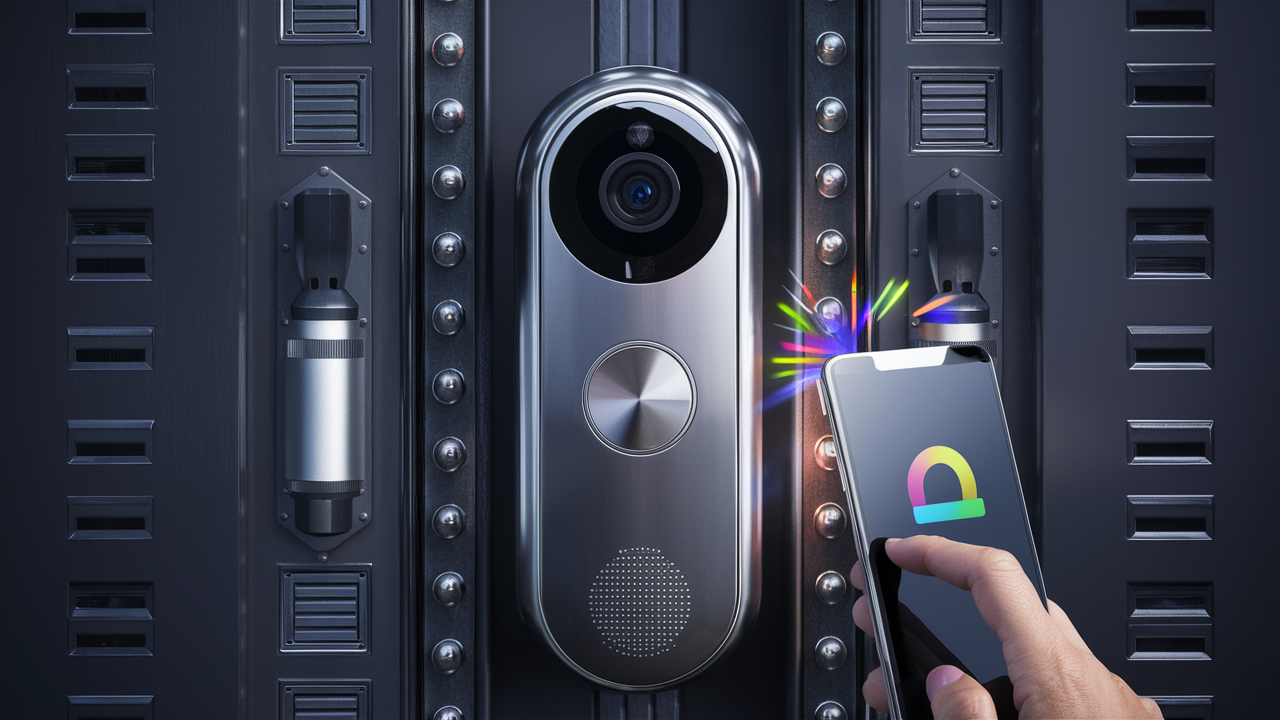
Finding the best doorbell camera involves balancing advanced features, reliable performance, and user-friendly operation. This guide will navigate you through the top options for 2025-26, helping you secure your home with cutting-edge technology and peace of mind.
Understanding Doorbell Cameras: More Than Just a Chime
In today's interconnected world, a doorbell camera has evolved from a simple security device into an indispensable component of a smart home. These devices offer a visual and auditory connection to your doorstep, allowing you to see, hear, and speak to visitors from anywhere using your smartphone or tablet. Beyond just answering the door, they provide a crucial layer of security, deterring potential intruders and offering valuable evidence in case of an incident. The market for doorbell cameras is booming, with an estimated 15% of US households expected to own one by the end of 2025, a significant jump from just 8% in 2022. This growth is fueled by increasing concerns about home security and the desire for greater convenience.
The core functionality of a doorbell camera is to stream live video of your front porch directly to your mobile device. However, the capabilities extend far beyond this basic feature. Advanced models offer motion detection, night vision, two-way audio communication, and even integration with other smart home devices. They act as a vigilant guardian, notifying you of any activity at your door, whether it's a delivery person, a friend, or an unexpected visitor. This constant connectivity provides peace of mind, allowing you to monitor your home even when you're away on vacation or at work. The evolution of this technology has made it more accessible and feature-rich than ever before, making it a worthwhile investment for most homeowners.
Key Features to Consider in 2025-26
When selecting the best doorbell camera for your needs, several key features stand out in the 2025-26 landscape. Understanding these will help you make an informed decision that aligns with your security priorities and budget.
Video Quality and Field of View
High-definition video is no longer a luxury; it's a necessity. Look for cameras offering at least 1080p resolution for clear, crisp images. For 2025-26, many premium models are pushing towards 2K or even 4K resolution, providing exceptional detail that can be crucial for identifying faces or license plates. Equally important is the field of view (FOV). A wider FOV, typically 160 degrees or more, ensures you can see more of your porch and surrounding area, minimizing blind spots. Some cameras offer a vertical FOV that is particularly useful for capturing packages left at your doorstep.
Motion Detection and Alerts
Advanced motion detection is a cornerstone of modern doorbell cameras. Instead of just alerting you to any movement, sophisticated systems can differentiate between people, vehicles, animals, and even package deliveries. This intelligent detection significantly reduces false alarms and ensures you receive relevant notifications. Customizable motion zones allow you to define specific areas to monitor, further refining alerts. The speed and accuracy of these alerts are critical; you want to know about activity in near real-time.
Night Vision Capabilities
Home security doesn't stop when the sun goes down. Robust night vision is essential for round-the-clock monitoring. Infrared (IR) night vision is standard, providing black-and-white images in low-light conditions. Some higher-end models offer color night vision, which uses ambient light to produce color images even in the dark, offering a more natural and detailed view. The range and clarity of the night vision are important factors to evaluate.
Two-Way Audio
The ability to communicate with visitors is a significant advantage. Two-way audio allows you to speak to and hear people at your door through your smartphone app. This is invaluable for directing delivery drivers, greeting guests, or even deterring potential threats by letting them know they are being watched and can be communicated with.
Power Source: Wired vs. Battery-Powered
Doorbell cameras come in two main power configurations: wired and battery-powered. Wired cameras often offer more consistent power and may support higher-resolution video and more advanced features. However, they require existing doorbell wiring. Battery-powered cameras offer greater installation flexibility, as they don't need to be connected to your home's electrical system. The trade-off is the need to recharge or replace batteries periodically. Battery life is a critical consideration for these models, with many 2025-26 models boasting extended battery life, sometimes lasting several months on a single charge.
Storage Options: Local vs. Cloud
Video footage needs to be stored somewhere. Options include local storage (on an SD card within the device) or cloud storage (uploaded to remote servers). Cloud storage offers the convenience of accessing footage from anywhere and provides a backup in case the device is stolen or damaged. However, it often requires a subscription fee. Local storage is a one-time purchase but may be less accessible remotely and vulnerable to physical theft. Some devices offer both options. Subscription costs for cloud storage are a significant factor in the overall cost of ownership, with many providers offering tiered plans based on storage duration and features.
Connectivity and Wi-Fi Strength
A reliable Wi-Fi connection is paramount for a doorbell camera to function effectively. Ensure your Wi-Fi signal is strong enough at your front door. Many manufacturers provide tools to test signal strength. Dual-band Wi-Fi support (2.4GHz and 5GHz) can offer better performance and stability. Poor connectivity can lead to delayed alerts, choppy video, and dropped connections.
Smart Home Integration
For those with an existing smart home setup, compatibility is key. Many doorbell cameras integrate with platforms like Amazon Alexa, Google Assistant, and Apple HomeKit. This allows for voice control, integration with smart locks, and triggering other smart devices based on doorbell activity. For instance, you could have your smart lights turn on when motion is detected at the door.
Weather Resistance
Your doorbell camera will be exposed to the elements, so it needs to be durable. Look for devices with an IP rating (e.g., IP65 or higher) indicating resistance to dust and water. This ensures reliable operation in rain, snow, and extreme temperatures.
Top Doorbell Camera Models: Our 2025-26 Picks
Based on performance, features, and user feedback, here are some of the leading doorbell cameras for 2025-26. We've categorized them to help you find the best fit for your specific needs.
Best Overall: Ring Video Doorbell Pro 2
The Ring Video Doorbell Pro 2 continues to impress with its advanced features and robust performance. It boasts 1536p HD+ video resolution with HDR, a 150-degree field of view, and advanced motion detection with 3D Motion Detection, which uses radar to pinpoint the exact location and distance of motion. Its color night vision provides clear images in low light. The Pro 2 is wired, ensuring continuous power. Integration with Alexa is seamless, and it offers robust customization for motion zones and alerts. The optional Ring Protect plan provides cloud storage and extended warranties.
Key Specifications:
- Video Resolution: 1536p HD+ with HDR
- Field of View: 150° horizontal, 150° vertical
- Power: Wired
- Night Vision: Color
- Audio: Two-way talk
- Connectivity: 2.4GHz and 5GHz Wi-Fi
- Smart Home: Amazon Alexa
- Storage: Cloud (subscription required)
Best Battery-Powered: Arlo Essential Video Doorbell Wire-Free
For those who prefer wire-free installation, the Arlo Essential is a top contender. It offers 1080p HD video, a 180-degree diagonal field of view with a unique square aspect ratio perfect for seeing packages, and color night vision. Its wire-free design means easy installation, and the rechargeable battery typically lasts several months. Arlo's AI-powered detection can distinguish between people, animals, and vehicles. It integrates with Alexa and Google Assistant. Cloud storage is available via an Arlo Secure plan.
Key Specifications:
- Video Resolution: 1080p HD
- Field of View: 180° diagonal
- Power: Rechargeable battery (wire-free)
- Night Vision: Color
- Audio: Two-way talk
- Connectivity: 2.4GHz Wi-Fi
- Smart Home: Alexa, Google Assistant
- Storage: Cloud (subscription required)
Best Value: Wyze Video Doorbell
The Wyze Video Doorbell offers an incredible feature set for its price point. It provides 1080p HD video, a 130-degree field of view, and a slim design. It requires a wired connection. Wyze is known for its affordability, and this doorbell is no exception. It includes motion detection and two-way audio. While it lacks some of the advanced AI features of higher-end models, it's an excellent option for budget-conscious consumers. It integrates with Alexa and Google Assistant. Local storage is supported via an SD card, and cloud storage is available with a subscription.
Key Specifications:
- Video Resolution: 1080p HD
- Field of View: 130° horizontal
- Power: Wired
- Night Vision: Infrared
- Audio: Two-way talk
- Connectivity: 2.4GHz Wi-Fi
- Smart Home: Alexa, Google Assistant
- Storage: Local (SD card) and Cloud (subscription option)
Best for Advanced Features: Nest Doorbell (Battery)
Google's Nest Doorbell (Battery) is a strong contender, offering excellent video quality (up to 960p HDR) and a 180-degree field of view. Its standout feature is its intelligent detection, which can recognize familiar faces if you subscribe to Nest Aware. It's battery-powered for flexible installation and boasts a sleek design. It integrates seamlessly with Google Assistant and other Google Home devices. The Nest Aware subscription is required for continuous recording and familiar face detection.
Key Specifications:
- Video Resolution: Up to 960p HDR
- Field of View: 180° diagonal
- Power: Rechargeable battery (wire-free)
- Night Vision: Infrared
- Audio: Two-way talk
- Connectivity: 2.4GHz Wi-Fi
- Smart Home: Google Assistant
- Storage: Cloud (subscription required)
Best for Package Detection: Eufy Security Dual Camera Doorbell
The Eufy Dual Camera Doorbell offers a unique dual-camera system: one for facial recognition at the door and another angled downwards to capture package deliveries. It provides 2K resolution and a wide field of view. Eufy emphasizes local storage (HomeBase 2 required), meaning no mandatory monthly fees for basic functionality, though cloud storage is an option. It offers AI human detection and integrates with Alexa and Google Assistant.
Key Specifications:
- Video Resolution: 2K
- Field of View: Wide angle + downward-facing package view
- Power: Wired
- Night Vision: Infrared
- Audio: Two-way talk
- Connectivity: 2.4GHz Wi-Fi
- Smart Home: Alexa, Google Assistant
- Storage: Local (HomeBase 2 required) and Cloud (optional)
Feature Comparison Table (2025-26)
| Feature | Ring Video Doorbell Pro 2 | Arlo Essential Video Doorbell Wire-Free | Wyze Video Doorbell | Nest Doorbell (Battery) | Eufy Security Dual Camera Doorbell |
|---|---|---|---|---|---|
| Video Resolution | 1536p HD+ | 1080p HD | 1080p HD | Up to 960p HDR | 2K |
| Field of View | 150° H / 150° V | 180° Diagonal | 130° H | 180° Diagonal | Wide + Package View |
| Power | Wired | Battery | Wired | Battery | Wired |
| Night Vision | Color | Color | Infrared | Infrared | Infrared |
| Storage | Cloud | Cloud | Local/Cloud | Cloud | Local |
| Subscription Required? | For full features | For full features | Optional | For full features | No (for basic) |
Installation and Setup: A Step-by-Step Guide
Installing a doorbell camera can seem daunting, but for most models, it's a straightforward DIY project. Here’s a general guide. Always refer to your specific model's manual for precise instructions.
Step 1: Preparation and Tools
Before you begin, gather the necessary tools. This typically includes a screwdriver set, a drill (if mounting to brick or stucco), a level, and potentially a wire stripper and pliers if you're dealing with existing wiring. For battery-powered models, ensure the battery is fully charged.
Step 2: Removing Your Existing Doorbell (if applicable)
If you're replacing an existing doorbell, turn off the power to your doorbell circuit at your home's breaker box. Then, carefully remove the old doorbell button. Disconnect the wires and cap them off temporarily to prevent shorts. If you have existing wiring, this will be the connection point for a wired doorbell camera.
Step 3: Mounting the Doorbell Camera
Most doorbell cameras come with a mounting bracket. Use a level to ensure it's straight on your wall. For wired installations, you'll need to feed the existing doorbell wires through the designated opening in the bracket. For battery-powered models, simply position the bracket where you want the camera to be. Drill pilot holes if necessary and secure the bracket with the provided screws. Some kits include angled wedges to adjust the camera's view.
Step 4: Connecting the Wires (for wired models)
Carefully connect the wires from your home's electrical system to the terminals on the back of the doorbell camera or its mounting bracket. Ensure a secure connection. Double-check the polarity if specified in the manual. Once connected, attach the doorbell camera to the mounting bracket.
Step 5: Powering On and Initial Setup
Once the doorbell is mounted and wired (or the battery is inserted), turn the power back on at the breaker box. The doorbell camera should power up. Follow the on-screen prompts or the instructions in the companion app to connect the doorbell to your home's Wi-Fi network. This usually involves downloading the manufacturer's app, creating an account, and following a guided setup process that often includes scanning a QR code.
Step 6: Configuring Settings in the App
After connecting to Wi-Fi, you'll use the app to configure your doorbell camera. This includes setting up motion detection zones, adjusting sensitivity, choosing alert preferences, enabling night vision settings, and configuring two-way audio. If your model supports it, you'll also set up cloud storage subscriptions or local storage options here.
Step 7: Testing and Adjustments
Test the doorbell by pressing the button and checking if you receive an alert and can see live video. Test motion detection by walking in front of the camera at different distances and angles. Adjust the mounting bracket or camera angle if needed to optimize the field of view and ensure you're capturing the desired areas without excessive false triggers. For battery-powered models, monitor battery life closely in the first few weeks to gauge usage patterns.
Integrating with Your Smart Home Ecosystem
The true power of a doorbell camera is often unlocked when it's integrated into a broader smart home ecosystem. This connectivity allows for enhanced automation, convenience, and security.
Voice Assistants: Alexa and Google Assistant
Most leading doorbell cameras are compatible with Amazon Alexa and Google Assistant. This means you can:
- Ask your smart display (like an Echo Show or Google Nest Hub) to "show me the front door" to view the live feed.
- Receive voice alerts when someone rings the doorbell or motion is detected.
- Use voice commands to trigger other smart home devices. For example, "Alexa, when the doorbell rings, turn on the porch light."
Smart Locks and Other Security Devices
Integrating your doorbell camera with smart locks can streamline the process of granting access to visitors. For instance, if you recognize a delivery person or a guest via the doorbell camera, you could remotely unlock your smart lock through the same app or via voice command. This integration can also extend to smart security systems, allowing your doorbell to arm or disarm other sensors based on its activity.
Automation Routines
Create custom routines that leverage your doorbell camera's triggers. Some popular automations include:
- Welcome Home: When motion is detected at the door after sunset, turn on the entryway lights.
- Away Mode: When you leave home, ensure your doorbell is set to its most sensitive motion detection and all indoor lights are off.
- Package Delivery Notification: If your doorbell has package detection, set up an alert to notify you specifically when a package is detected, perhaps even sending a quick notification to a smart speaker.
The flexibility of smart home platforms allows for endless customization, making your doorbell camera a central hub for managing your home's security and convenience.
Advanced Features and Future Trends
The doorbell camera market is constantly evolving, with manufacturers pushing the boundaries of what's possible. Here's a look at some advanced features and what the future holds.
AI-Powered Person and Package Detection
As mentioned, artificial intelligence is revolutionizing motion detection. Beyond simply detecting movement, AI can now accurately differentiate between people, vehicles, animals, and packages. This significantly reduces nuisance alerts and provides more actionable information. Expect AI capabilities to become even more sophisticated, potentially identifying specific individuals or even detecting unusual behavior patterns.
Facial Recognition Technology
Some premium models are incorporating facial recognition. By learning the faces of family members and frequent visitors, these cameras can provide more personalized alerts, such as "John is at the door." This feature, while raising privacy considerations, offers a new level of convenience and security for households. Strict data privacy policies and user control over data are crucial for the adoption of this technology.
Enhanced Two-Way Audio and Noise Cancellation
Future models will likely feature improved audio quality, with better noise cancellation to ensure clear conversations even in noisy environments. Some systems might even offer advanced features like pre-recorded quick replies or the ability to adjust audio sensitivity dynamically.
Improved Video Analytics and Forensic Search
Beyond live streaming, the ability to quickly search through recorded footage is becoming more important. Expect advancements in video analytics that allow for faster and more precise searching based on time, event type, or even specific objects detected in the frame. This is invaluable for reviewing security incidents.
Integration with Drone and Robotic Security
While still in its nascent stages, the long-term vision for smart home security includes integration with more advanced systems. Imagine a doorbell camera that can, in the event of a detected intrusion, dispatch a small drone or robotic unit for a closer inspection. This is likely several years away but represents the cutting edge of security technology.
Power Over Ethernet (PoE) Options
For wired installations, Power over Ethernet offers a robust and reliable solution, delivering both power and data over a single Ethernet cable. This eliminates the need for separate power adapters and can provide a more stable connection than traditional Wi-Fi for high-demand devices.
Privacy-Focused Designs
As concerns about data privacy grow, manufacturers are increasingly focusing on privacy-centric designs. This includes features like local storage as the default, end-to-end encryption, and transparent data usage policies. Users will have more control over their data and how it's stored and accessed.
Making the Final Decision: Your Perfect Match
Choosing the best doorbell camera hinges on your individual priorities, existing smart home setup, and budget. If you prioritize the absolute best video quality and advanced motion detection and have existing doorbell wiring, the Ring Video Doorbell Pro 2 is a top-tier choice.
For those seeking flexibility with a wire-free installation and excellent video quality, the Arlo Essential Video Doorbell Wire-Free is a compelling option, especially with its unique package-viewing aspect ratio. If budget is your primary concern, the Wyze Video Doorbell offers incredible value without significant compromises on core functionality.
For users deeply embedded in the Google ecosystem, the Nest Doorbell (Battery) provides seamless integration and intelligent features like familiar face recognition (with subscription). If you want to avoid recurring subscription fees and need specialized package detection, the Eufy Security Dual Camera Doorbell stands out.
Consider the following questions to guide your decision:
- Do you have existing doorbell wiring, or do you need a battery-powered solution?
- What is your budget, including potential subscription costs for cloud storage?
- Which smart home ecosystem (Amazon Alexa, Google Assistant, Apple HomeKit) do you primarily use?
- How important are advanced features like facial recognition or specialized package detection?
- What level of video clarity and field of view do you require?
By carefully evaluating these factors against the features and performance of the leading models for 2025-26, you can confidently select the doorbell camera that best secures your home and enhances your daily life.
In conclusion, the best doorbell camera for you in 2025-26 is a personalized choice that balances advanced technology with your specific needs. Whether you prioritize crystal-clear 4K video, the convenience of wire-free installation, seamless smart home integration, or budget-friendly solutions, the market offers an impressive array of options. Features like AI-powered motion detection, color night vision, and robust two-way audio are becoming standard, enhancing both security and convenience. By carefully considering factors such as video quality, power source, storage options, and smart home compatibility, you can find a device that not only alerts you to visitors but also provides invaluable peace of mind. Invest wisely in a doorbell camera that fits your lifestyle and secures your home effectively.