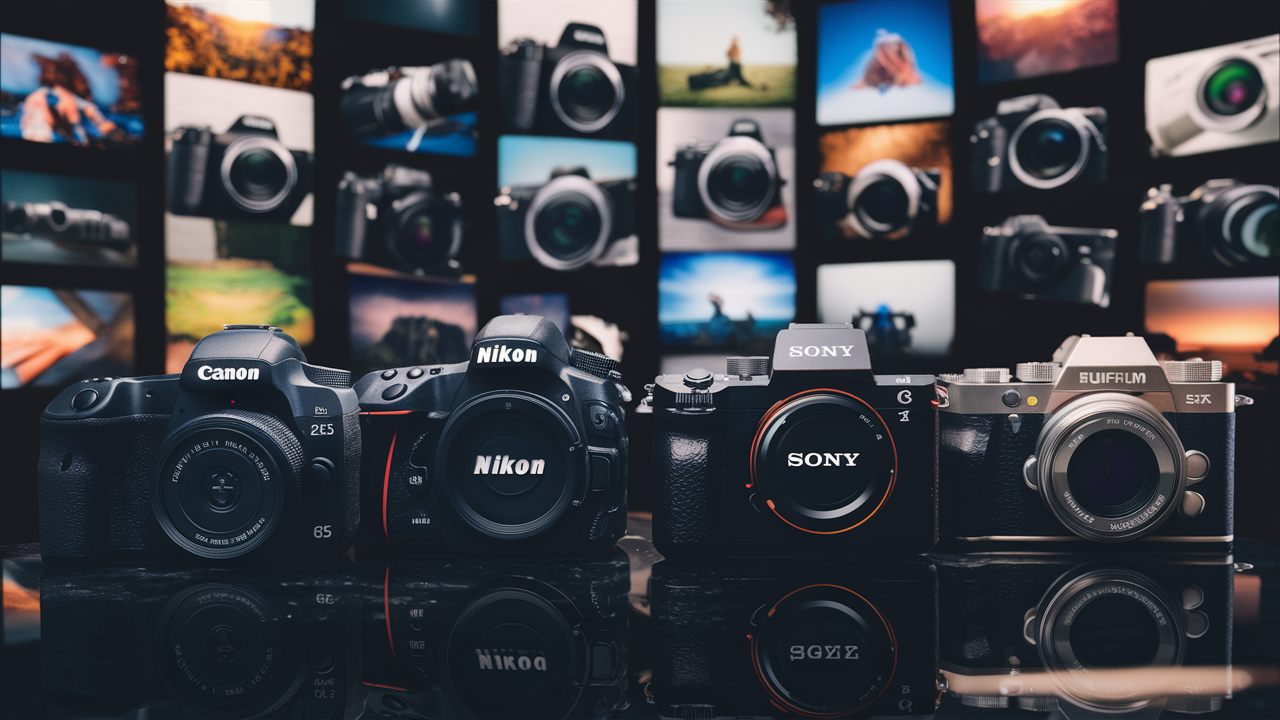
Choosing the "best" camera brand is a deeply personal journey, not a one-size-fits-all answer. This guide dives into the top contenders, analyzing their strengths, weaknesses, and ideal user profiles to help you find the perfect fit for your photographic aspirations, whether you're a beginner or a seasoned professional.
Understanding Camera Brands: More Than Just a Logo
The quest for the "best camera brand" is a common starting point for anyone looking to elevate their photography. However, the truth is, there's no single definitive answer. The camera industry is a dynamic landscape, with brands like Canon, Nikon, Sony, Fujifilm, Panasonic, and OM System (formerly Olympus) each offering distinct advantages and catering to different needs. What makes one brand superior for a landscape photographer might be entirely unsuitable for a budding vlogger. This guide aims to demystify these choices, providing a comprehensive overview of the leading camera manufacturers and helping you navigate the complex decision-making process. We'll explore their core philosophies, technological strengths, and how they align with various photography styles and budgets, ensuring you can make an informed choice that empowers your creative vision.
The Major Players: A Deep Dive
The camera market is dominated by a few key players, each with a rich history and a unique approach to imaging technology. Understanding their individual philosophies and product lineups is crucial for making an informed decision. We'll explore the strengths and typical user base for each of the most prominent brands in 2025-26.
Canon: The Ever-Reliable Choice
Canon has long been a titan in the photography world, renowned for its user-friendly interfaces, robust build quality, and exceptional color science. For decades, Canon cameras have been a go-to for both amateur enthusiasts and seasoned professionals, particularly in the realms of portraiture, weddings, and general-purpose photography. Their extensive range of EOS cameras, from the entry-level Rebel series to the professional-grade EOS R and 5D Mark IV, offers a familiar and intuitive experience. Canon's Dual Pixel CMOS AF system, a hallmark of their mirrorless cameras, provides incredibly smooth and accurate autofocus, making it a favorite for videographers and those who shoot fast-moving subjects.
In 2025-26, Canon continues to impress with its commitment to innovation in mirrorless technology. The EOS R system, featuring the RF mount, boasts an impressive array of high-performance lenses that leverage Canon's optical expertise. Their sensor technology consistently delivers pleasing skin tones and excellent dynamic range, making post-processing a joy. While perhaps not always the first to push the absolute bleeding edge of sensor resolution or frame rates compared to some competitors, Canon's strength lies in its well-rounded performance, reliability, and the sheer breadth of its lens selection, which includes both native RF lenses and a vast catalog of EF lenses adaptable to their mirrorless bodies.
Strengths:
- Exceptional color science, particularly for skin tones.
- User-friendly interfaces and intuitive menus.
- Excellent autofocus performance, especially with Dual Pixel AF.
- Wide range of lenses available, both new RF and adaptable EF.
- Robust build quality and reliable performance.
- Strong presence in the professional market for stills and video.
Consider Canon if: You value ease of use, excellent image quality straight out of the camera, and a reliable system for a variety of photographic pursuits, including portraits, events, and general shooting.
Nikon: Innovation and Performance
Nikon, another legacy brand, has consistently pushed the boundaries of imaging technology. Historically known for their DSLRs, Nikon has made a significant and successful transition into the mirrorless market with their Z system. Nikon cameras are often praised for their outstanding image quality, particularly in low light, and their rugged construction. They have a strong following among landscape, wildlife, and sports photographers who demand high performance and durability.
The Z mount, introduced with their mirrorless cameras, is designed for excellent light-gathering capabilities and allows for the development of exceptionally sharp and fast lenses. Nikon's dedication to sensor technology is evident in their high ISO performance and impressive dynamic range, which is crucial for capturing detail in both bright highlights and deep shadows. In 2025-26, Nikon continues to expand its Z mount lens lineup with a focus on professional-grade optics, complementing their high-resolution Z7 and versatile Z6 series cameras, as well as their more recent, faster-shooting models like the Z8 and Z9 which have set new standards for professional mirrorless performance.
Strengths:
- Superb image quality, especially in challenging lighting conditions.
- Excellent dynamic range for detailed images.
- Rugged and durable build quality, suitable for harsh environments.
- Innovative autofocus systems in their latest mirrorless models.
- Strong performance in high ISO shooting.
- Growing and impressive Z mount lens ecosystem.
Consider Nikon if: You need top-tier image quality, particularly in low light, prioritize robust build for demanding conditions, and are interested in high-performance optics for genres like landscape, wildlife, or sports photography.
Sony: Mirrorless Pioneers
Sony has been a driving force behind the mirrorless revolution, consistently innovating and pushing the envelope of what compact cameras can achieve. They are renowned for their cutting-edge sensor technology, lightning-fast autofocus systems, and impressive video capabilities. Sony cameras, particularly their Alpha series (A7, A9, A1), are favored by a wide range of users, from professional content creators and videographers to street photographers and travel enthusiasts.
In 2025-26, Sony continues to lead in sensor development, offering high-resolution sensors with incredible dynamic range and class-leading autofocus. Their Real-time Eye AF and subject tracking are among the best in the industry, making it incredibly easy to capture sharp images of moving subjects, even with minimal user intervention. The E-mount system has a vast and ever-expanding native lens selection, bolstered by a strong third-party lens market, offering photographers immense flexibility. Sony's commitment to firmware updates also means their cameras often improve over time, adding new features and enhancing performance.
Strengths:
- Industry-leading autofocus systems with advanced tracking.
- Exceptional sensor technology, offering high resolution and dynamic range.
- Pioneers in mirrorless camera development.
- Strong video features and capabilities across many models.
- Vast native and third-party lens selection for the E-mount.
- Compact and lightweight camera bodies.
Consider Sony if: You need the absolute best in autofocus tracking, value cutting-edge sensor technology for stills and video, and appreciate a wide range of lens options in a mirrorless format.
Fujifilm: Retro Style and Color
Fujifilm has carved out a unique niche by blending modern technology with classic, retro camera designs and a celebrated film simulation feature. Their X-series cameras are beloved for their tactile physical controls, beautiful aesthetics, and, most importantly, their superb JPEG image quality thanks to Fujifilm's proprietary color science, which is often lauded for its pleasing, film-like output.
In 2025-26, Fujifilm continues to refine its APS-C sensor technology, offering excellent image quality that rivals many full-frame cameras. Their X-T and X-Pro lines, in particular, appeal to photographers who enjoy a more engaging shooting experience, reminiscent of using traditional film cameras. The X-mount lens lineup is also highly regarded for its quality and optical performance. Beyond stills, Fujifilm has significantly improved its video capabilities, making their cameras a compelling choice for hybrid shooters. Their unique selling proposition remains their film simulations, which allow photographers to achieve stunning looks directly from the camera, minimizing the need for extensive post-processing.
Strengths:
- Exceptional JPEG image quality with renowned color science and film simulations.
- Beautiful, retro-inspired camera designs with tactile controls.
- Excellent APS-C sensor performance.
- High-quality X-mount lenses.
- Engaging shooting experience for photographers who enjoy manual control.
- Strong for street, travel, and portrait photography.
Consider Fujifilm if: You appreciate a classic shooting experience, love beautiful JPEGs with unique color profiles, and enjoy a camera that feels as good as it looks and performs.
Panasonic: Video-Centric Excellence
Panasonic, particularly with its Lumix G and S series, has established itself as a powerhouse for videographers and hybrid shooters. While they offer excellent still photography capabilities, their cameras often excel in video features, offering advanced codecs, internal recording options, and robust stabilization. The Lumix G series utilizes the Micro Four Thirds system, offering a compact and versatile platform, while the Lumix S series provides full-frame performance.
In 2025-26, Panasonic continues to push the boundaries in video technology, with models like the GH6 and S5 II offering professional-grade video features at accessible price points. Their focus on in-body image stabilization (IBIS) is consistently among the best, allowing for smooth handheld footage. The Lumix S series, with its L-mount alliance with Leica and Sigma, provides access to a growing and high-quality lens ecosystem. For creators who prioritize video alongside stills, Panasonic offers a compelling package of features, image quality, and innovative technology.
Strengths:
- Exceptional video features and recording capabilities.
- Industry-leading in-body image stabilization (IBIS).
- Excellent ergonomics and user interface for video shooters.
- Access to the growing L-mount lens system (full-frame) and Micro Four Thirds (MFT) system.
- Strong value proposition for hybrid shooters.
Consider Panasonic if: Video is a primary focus for your creative work, and you need advanced features, excellent stabilization, and robust codecs in your camera.
Olympus (OM System): Compact Powerhouses
Olympus, now operating under the OM System brand, has a long-standing reputation for producing incredibly compact, lightweight, and feature-rich cameras, particularly within the Micro Four Thirds system. Their cameras are renowned for their robust weather sealing, exceptional in-body image stabilization, and unique computational photography features like High-Res Shot and Live Composite.
In 2025-26, the OM System continues this legacy with cameras like the OM-1, which offers incredible speed, advanced autofocus, and professional-grade performance in a relatively small body. The Micro Four Thirds system, shared with Panasonic, provides access to a vast array of compact and often more affordable lenses. These cameras are ideal for travel, wildlife, and outdoor photography where portability and durability are paramount. Their IBIS is often considered the benchmark, allowing for incredibly sharp handheld shots even at slower shutter speeds.
Strengths:- Extremely compact and lightweight camera bodies.
- Industry-leading in-body image stabilization (IBIS).
- Excellent weather sealing and rugged build quality.
- Unique computational photography features (High-Res Shot, Live Composite).
- Access to the extensive Micro Four Thirds lens system.
- Fast burst shooting speeds and advanced autofocus.
Consider OM System if: Portability, durability, and advanced stabilization are top priorities, especially for outdoor, travel, or wildlife photography.
Leica: The Luxury and Legacy
Leica represents the pinnacle of photographic luxury, craftsmanship, and heritage. While significantly more expensive than other brands, Leica cameras are revered for their exceptional build quality, timeless design, and the unique, often analog, shooting experience they provide. They are not typically chosen for their cutting-edge technological specifications but rather for their unparalleled aesthetic, tactile feel, and the artistic intent they inspire.
In 2025-26, Leica continues to offer a range of M-mount rangefinder cameras, SL-mount mirrorless cameras, and Q-series fixed-lens cameras. Their lenses are legendary for their optical purity and sharpness. Owning a Leica is often considered an investment in a piece of photographic art. While their autofocus systems and sensor resolutions might not always match the top offerings from Sony or Canon, the image quality is undeniably superb, characterized by a distinct rendering and depth. They are favored by photographers who appreciate simplicity, manual control, and a deliberate approach to image-making.
Strengths:
- Unparalleled build quality and timeless design.
- Exceptional lens optics and unique rendering.
- Inspires a deliberate and artistic shooting experience.
- Strong heritage and brand prestige.
- Manual focus and control are central to the experience.
Consider Leica if: Budget is not a primary concern, and you prioritize craftsmanship, a unique shooting experience, and an artistic legacy in your photographic tools.
Key Factors in Camera Brand Selection
Beyond the brand names and their general reputations, several critical factors should guide your decision. These are the practical considerations that will determine which camera system best suits your individual needs and aspirations. By carefully evaluating each of these points, you can move closer to identifying the ideal camera brand for you.
Your Budget: How Much Can You Spend?
Camera systems vary dramatically in price. Entry-level mirrorless or DSLR cameras from brands like Canon, Nikon, Sony, Fujifilm, Panasonic, and OM System can be found for under $1000, often bundled with a kit lens. Mid-range options typically fall between $1000 and $2500, offering more advanced features and better build quality. Professional-grade cameras, especially full-frame mirrorless bodies, can easily exceed $3000, with high-end lenses adding significantly to the total cost. Leica cameras are in a class of their own, with entry points often starting above $5000 for bodies alone.
When budgeting, remember to factor in the cost of lenses, memory cards, a camera bag, and potentially accessories like external flashes or tripods. A more affordable camera body with excellent lenses can often outperform a more expensive body with limited lens options. Brands like Fujifilm and OM System often offer excellent value in their APS-C and Micro Four Thirds systems, respectively, allowing for a robust setup at a lower overall cost compared to full-frame systems from Canon, Nikon, or Sony.
Your Photography Style: What Do You Shoot?
The type of photography you engage in is perhaps the most significant determinant of the best camera brand.
- Landscape Photographers: Often prioritize high resolution, excellent dynamic range, and weather sealing. Brands like Nikon, Sony, and Canon (with their higher-end models) are strong contenders.
- Portrait Photographers: Value pleasing skin tones, excellent bokeh (background blur), and precise autofocus. Canon's color science and Sony's Eye AF are particularly beneficial here.
- Wildlife and Sports Photographers: Need fast and accurate autofocus, high burst shooting rates, and excellent telephoto lens options. Nikon's Z9, Sony's A1 and A9 series, and OM System's speed-focused cameras are top choices.
- Videographers and Content Creators: Look for advanced video codecs, high frame rates, excellent stabilization, and good autofocus for video. Panasonic, Sony, and Canon are leading the pack in this area.
- Street and Travel Photographers: Often prefer compact, lightweight, and discreet cameras with good image quality and intuitive controls. Fujifilm and OM System excel here, as do Sony's compact Alpha models.
- Beginners: Benefit from user-friendly interfaces, good autofocus, and affordable entry points. Canon and Nikon have historically been strong in this segment, with Sony and Fujifilm also offering excellent beginner-friendly options.
Ease of Use and Learning Curve
Some camera brands are known for their intuitive menus and user-friendly interfaces, making them ideal for beginners or those who prefer a less complicated shooting experience. Canon is often cited for its ease of use, with logical menu structures and familiar button layouts. Fujifilm's retro designs, while aesthetically pleasing, can also be very intuitive for those who appreciate physical dials and direct control over settings.
Other brands, like Sony, while offering immense power and customization, can have a steeper learning curve due to their extensive menu systems and advanced features. Nikon strikes a balance, offering powerful performance with generally well-organized menus. For absolute beginners, looking at entry-level models from Canon, Nikon, or Fujifilm is often a good starting point. Many brands offer excellent online resources and tutorials to help users learn their systems.
Lens Ecosystem and Future Growth
The camera body is only part of the equation; the lenses you use are equally, if not more, important. When choosing a brand, consider the breadth and depth of its lens ecosystem. Does the brand offer the specific types of lenses you need now and might need in the future (e.g., wide-angle, telephoto, macro, prime lenses)?
Sony's E-mount and Canon's RF mount have rapidly expanding native lens lineups. Nikon's Z mount is also growing quickly with high-quality optics. Fujifilm's X-mount offers a fantastic range of APS-C lenses. The Micro Four Thirds system (Panasonic and OM System) boasts the largest overall selection of lenses due to its long history and dual-brand support. Third-party manufacturers like Sigma and Tamron also produce excellent lenses for many of these mounts, offering more affordable alternatives and specialized options. Investing in a brand with a strong lens ecosystem ensures you won't be limited in your creative pursuits as your skills and needs evolve.
Build Quality and Durability
The physical construction of a camera is crucial, especially if you plan to shoot in challenging environments. Professional-grade cameras from Canon, Nikon, and Sony often feature magnesium alloy bodies, extensive weather sealing, and robust shutter mechanisms designed to withstand thousands of actuations. OM System cameras are also known for their excellent weather sealing and durability, particularly given their compact size.
Entry-level and mid-range cameras may use more plastic in their construction, which can make them lighter but potentially less durable. If you anticipate shooting in rain, dust, or extreme temperatures, prioritizing weather-sealed bodies and lenses from brands like Nikon, Canon, Sony, or OM System is advisable. Leica cameras are renowned for their exceptional build quality, often using brass and meticulously crafted components.
Video Capabilities for Creators
For photographers who also shoot video, the camera's video features are paramount. This includes factors like resolution (4K, 8K), frame rates (slow-motion options), internal recording codecs (e.g., 10-bit, ProRes), autofocus performance in video, and stabilization. Panasonic has long been a leader in video features, with models like the Lumix GH series and S5 II offering professional-grade video capabilities. Sony also excels with its Alpha series, providing excellent video quality and features across its lineup. Canon's EOS R system has also made significant strides in video performance.
When evaluating video capabilities, consider not just the raw specs but also how well the camera handles heat during long recordings, the quality of the audio inputs, and the ease of use for video production workflows. For many content creators in 2025-26, a hybrid camera that excels at both stills and video is a highly desirable trait.
Sensor Size: Full-Frame, APS-C, Micro Four Thirds
The sensor size is a fundamental aspect of a camera's performance, influencing image quality, low-light capability, depth of field, and the physical size of the camera and lenses.
- Full-Frame: These sensors are the largest, offering the best low-light performance, widest dynamic range, and shallowest depth of field. They are typically found in higher-end cameras from Canon, Nikon, and Sony, and are favored by professionals. Lenses designed for full-frame sensors tend to be larger and more expensive.
- APS-C: A smaller sensor size than full-frame, APS-C sensors offer a good balance of image quality, performance, and size. They are found in a wide range of cameras from Canon, Nikon, Sony, and Fujifilm. APS-C cameras and their lenses are generally more affordable and compact than their full-frame counterparts. Fujifilm exclusively uses APS-C sensors in its X-series.
- Micro Four Thirds (MFT): The smallest of the three common sensor sizes, MFT sensors are used by Panasonic and OM System. This smaller size allows for incredibly compact camera bodies and lenses, making them ideal for travel and portability. While they may not match full-frame in extreme low light or depth of field, MFT systems offer excellent image quality and a vast lens selection, often at a lower price point.
Your choice of sensor size will significantly impact the overall system's size, weight, cost, and performance characteristics. For many, APS-C or MFT offers more than enough capability for their needs.
Camera Brand Comparison 2025-26
To provide a clearer picture, here's a comparative overview of how the major brands stack up in 2025-26 across key areas. This table is a generalization, as individual models within each brand can vary significantly.
| Brand | Primary Sensor Size Focus | Strengths | Ideal For | Price Range (Body Only, General) |
|---|---|---|---|---|
| Canon | Full-Frame, APS-C | Color science, ease of use, AF, versatile lens system (RF/EF) | General purpose, portraits, weddings, events, hybrid creators | $500 - $7000+ |
| Nikon | Full-Frame, APS-C | Image quality, low light, dynamic range, ruggedness, Z mount | Landscape, wildlife, sports, professionals needing robust gear | $600 - $6000+ |
| Sony | Full-Frame, APS-C | Autofocus, sensor tech, video features, vast E-mount ecosystem | Content creators, hybrid shooters, professionals, general enthusiasts | $600 - $6500+ |
| Fujifilm | APS-C | JPEG quality, film simulations, retro design, tactile controls | Street, travel, portrait, photographers valuing aesthetics and JPEG output | $500 - $2500+ |
| Panasonic | Micro Four Thirds, Full-Frame (L-mount) | Video features, IBIS, ergonomics for video, L-mount/MFT ecosystems | Videographers, hybrid creators, travel photographers | $500 - $3000+ |
| OM System (Olympus) | Micro Four Thirds | Compact size, IBIS, weather sealing, computational photography | Travel, outdoor, wildlife, portability-focused photographers | $600 - $2200+ |
| Leica | Full-Frame (primarily), APS-C | Build quality, lens optics, heritage, artistic experience | Artistic photographers, collectors, those prioritizing craftsmanship and legacy | $5000 - $10000+ |
Making Your Final Decision
The journey to finding the "best camera brand" is ultimately a personal one. After dissecting the strengths of each major manufacturer, the most critical step is to align these brand characteristics with your individual needs, budget, and photographic aspirations. Don't get caught up in brand loyalty or the pursuit of the latest megapixel count if it doesn't serve your purpose. Instead, focus on how a particular system can empower your creativity.
Consider renting cameras from different brands that pique your interest. Holding them, navigating their menus, and shooting with them in real-world scenarios is invaluable. Read reviews, watch video comparisons, and most importantly, think about the types of photos and videos you envision creating. Are you chasing the ultimate low-light performance for astrophotography? Then Nikon or Sony might be your top contenders. Do you dream of capturing stunning portraits with beautiful bokeh? Canon's color science and autofocus could be a perfect match. If portability and unique aesthetics are key, Fujifilm or OM System might call to you. For creators prioritizing video, Panasonic and Sony offer compelling packages.
Ultimately, the best camera brand is the one that inspires you to shoot more, helps you achieve your creative vision, and fits seamlessly into your workflow and budget. By carefully considering the factors outlined in this guide, you are well-equipped to make an informed decision that will serve you for years to come. Happy shooting!