Best Security Cameras for Front Doors in 2026: What the Data Actually Shows
Front doors are not just where guests knock and packages land — they are, statistically, where most home burglars try first. That single fact shapes almost everything about how a front door security camera should be chosen, positioned, and configured. This guide draws on federal crime data, independent lab testing, and current manufacturer specifications to identify which cameras genuinely perform well at the front entrance, and why.
This is not a sponsored roundup. It's a research-based comparison intended to help homeowners and renters separate marketing claims from measurable performance.
Quick Answer
For most homes, a 2K-or-higher-resolution camera with on-device AI person detection, color night vision, and a field of view of at least 150 degrees offers the best front-door coverage. Among 2026 models, the Google Nest Cam and Arlo Video Doorbell 2K lead on video quality and smart-home integration, while the Tapo C460, Eufy S3 Pro, and Reolink Argus 4 Pro stand out for delivering subscription-free AI detection with local storage. Budget shoppers get strong value from the Wyze Video Doorbell, and households already inside the Ring or SimpliSafe ecosystem will find those doorbells the path of least friction.
Key Findings
Front doors account for roughly 34% of all burglar entry points — more than any other access point in the home, according to research compiled from FBI and ADT data.
Homes with visible security cameras see a documented drop in burglary attempts, and surveys of convicted burglars consistently find that most avoid homes with visible security equipment.
Subscription-free AI detection — once a premium feature — is now standard on several mid-range 2026 cameras, including models from Reolink, Eufy, and TP-Link's Tapo line.
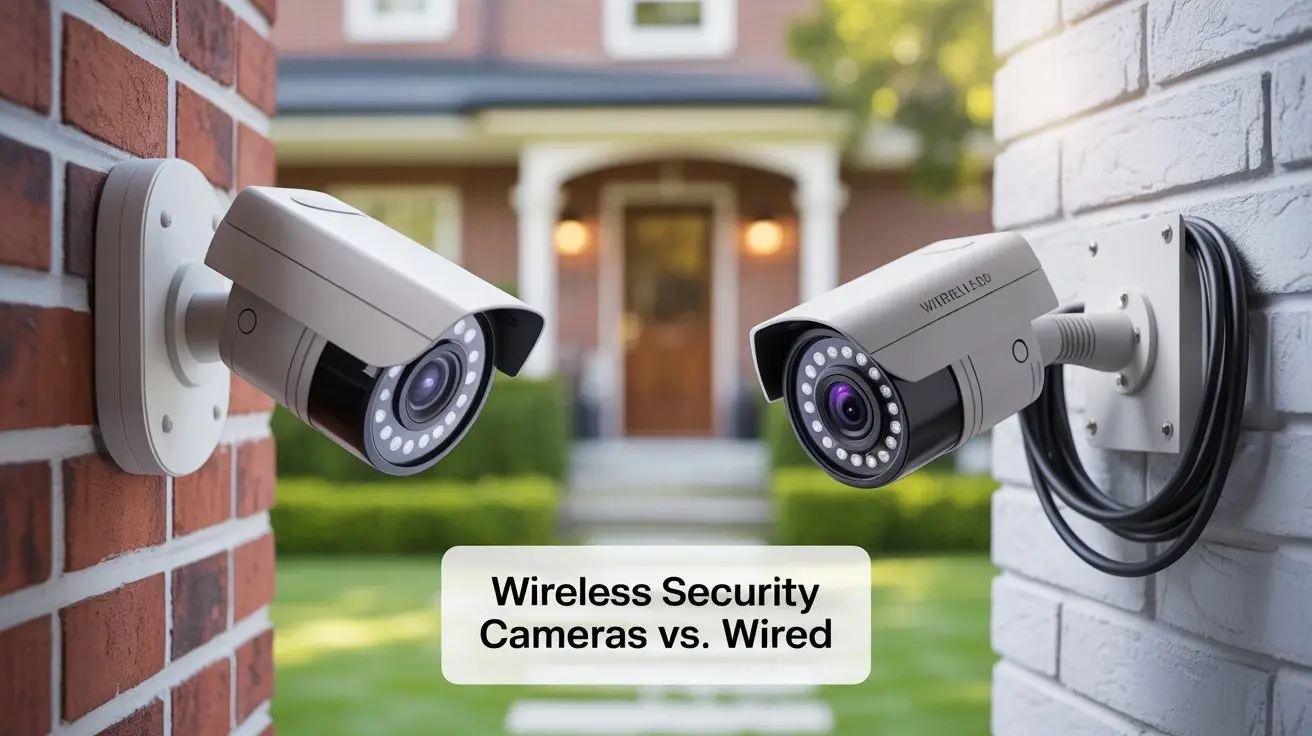
The gap between "wired doorbell" and "wireless/battery camera" has narrowed. Battery cameras with solar charging can now run indefinitely in most climates, removing the biggest historical objection to wire-free installs.
Independent lab testing (Consumer Reports, Security.org) shows video quality and AI accuracy no longer track neatly with brand reputation — some newer or lesser-known models now outperform legacy leaders on core metrics.
Why the Front Door Matters More Than Any Other Camera Position
Burglary in the United States has declined substantially over the past two decades, but the front door's position as the top entry point has remained remarkably stable. Compiled FBI and Bureau of Justice Statistics data shows front doors are used in roughly a third of break-ins, ahead of first-floor windows (about 23%) and back doors (about 22%). A meaningful share of burglars simply try the handle, and many report knocking first to check whether anyone answers before attempting entry.
That pattern has a direct implication for camera selection: a front door camera's job isn't only to record an incident after the fact. Its more important job is to be visible enough, and smart enough, to change a burglar's decision before anything happens. Surveys of convicted burglars have repeatedly found that a large majority say they would avoid a home with visible security cameras or alarm signage, and many say they'd switch to a different, less-protected target altogether.
That's why the strongest front door cameras in 2026 combine three things: image clarity good enough to identify a face or package, motion detection accurate enough to avoid alert fatigue, and a visible presence that signals the home is monitored.
Research Insights: What Changed in the 2026 Camera Market
Three shifts define this year's front door camera landscape, based on our review of current product specifications and independent testing data:
1. On-device AI has decoupled from subscription cost. For years, meaningful AI features — distinguishing a person from a passing car, recognizing a familiar face, filtering out pets — were locked behind monthly cloud plans from major brands like Ring and Arlo. That's no longer universally true. Several current-generation cameras now run person, vehicle, and animal detection locally on the device itself, with no recurring fee required for the core smart-alert experience. This matters most for consumers on fixed budgets or those wary of ongoing subscription creep.
2. Solar charging has gone from novelty to expectation. Battery-only cameras used to mean a recurring chore of removing and recharging the unit every few months. Solar panel add-ons — now often bundled or cheaply available — can keep a battery topped off with as little as an hour of direct sunlight per day in many climates, effectively making wire-free installation as maintenance-free as a wired unit.
3. Data privacy has become a differentiator, not an afterthought. Independent testing organizations now formally score cameras on data security and data privacy as separate categories, reflecting growing consumer awareness that a camera pointed at your front door is also a device connected to the internet. This has become especially relevant given recent U.S. regulatory scrutiny of certain foreign-manufactured networking hardware, which is a factor worth weighing for households with heightened security or supply-chain concerns.
Main Analysis: Top Front Door Security Cameras of 2026
1. Google Nest Cam (Battery) — Best for Google Home Households
The Nest Cam's biggest strength is ecosystem integration: it pairs natively with Google Assistant and Nest Hub displays, and its person, vehicle, animal, and familiar-face detection are handled with minimal setup friction. It's a strong pick for anyone already living in the Google smart-home ecosystem, though full functionality typically requires a Nest Aware subscription.
2. Arlo Video Doorbell 2K — Best Video Quality
In recent independent lab testing, the Arlo Video Doorbell 2K earned top marks for both data security and response time, along with strong video-quality scores. Arlo Secure Plus runs about $7.99/month for a single camera or $17.99/month for unlimited cameras (billed annually), while the newer Arlo Secure Premium tier, which adds 24/7 recording and professional monitoring, runs roughly $24.99/month. The tradeoff is clear: excellent hardware, but many of its best features are gated behind a subscription.
3. TP-Link Tapo C460 — Best Subscription-Free AI Value
The Tapo C460 has emerged as a genuine budget-to-mid-range leader, offering real on-device AI detection without a monthly fee and the option to store footage locally rather than in the cloud. For buyers focused purely on price-to-feature ratio, it's currently one of the strongest values in the category. Note: TP-Link's router products have drawn regulatory attention in the U.S. in 2026; this scrutiny has centered on routers rather than the Tapo camera line, but security-conscious households may want to factor that into their decision.
4. Eufy Video Doorbell C31 / eufyCam S3 Pro — Best Local Storage Option
Eufy's doorbell and camera lineup consistently scores well for data security in independent testing, with genuinely no-subscription-required local storage — up to 128GB via microSD on the doorbell, or up to 16TB with the optional HomeBase hub. The S3 Pro adds 4K resolution and BionicMind AI facial recognition when paired with the HomeBase S380, plus solar-friendly battery charging.
5. Reolink Argus 4 Pro — Best for No-Wiring Installs
Built for renters and homeowners who want to avoid drilling or rewiring, the Argus 4 Pro installs with a simple wall mount and saves footage directly to an onboard SD card, with no cloud subscription required to function. Its PoE-compatible siblings can extend signal reliably up to roughly 240 feet where wiring is available.
6. SimpliSafe Video Doorbell Pro — Best for Whole-Home Security Integration
SimpliSafe's doorbell stands out less for raw specs and more for how it functions inside a full SimpliSafe security system: smart motion detection, two-way audio, and an "Active Guard" outdoor monitoring feature work together to flag activity before someone even rings the bell — useful for busy entrances with frequent deliveries or foot traffic.
7. Wyze Video Doorbell — Best Budget Pick
At under $60, the Wyze doorbell delivers HD video, color night vision via its Starlight sensor, and a wide 3:4 aspect ratio that captures a full head-to-toe view — a meaningful advantage for identifying visitors at close range. Optional cloud storage through Cam Plus starts at roughly $2.99/month per camera, among the least expensive plans in the category.
Comparison at a Glance
Camera | Resolution | Subscription Required? | Best For |
|---|---|---|---|
Google Nest Cam | 1080p–2K | Mostly yes (Nest Aware) | Google Home households |
Arlo Video Doorbell 2K | 2K | Partial (AI features) | Best overall video quality |
Tapo C460 | 2K | No | Budget AI value |
Eufy C31 / S3 Pro | 2K–4K | No | Local storage priority |
Reolink Argus 4 Pro | 2K–4K | No | Renters, no-wiring installs |
SimpliSafe Doorbell Pro | 1080p | Yes, for full features | Whole-home security systems |
Wyze Video Doorbell | 1080p | Optional, low-cost | Tightest budget |
Frequently Asked Questions
Do I need a doorbell camera or a standalone security camera for my front door?
Doorbell cameras are ideal if you want doorbell-press notifications and two-way audio for visitors, while standalone cameras often offer wider fields of view and more flexible mounting. Many households use one of each, or a doorbell camera paired with a second wide-angle camera covering the driveway or walkway.
Does a visible security camera actually deter burglars?
Yes. Multiple surveys of convicted burglars report that a majority actively avoid homes with visible cameras or alarm signage, and homes without any security system are statistically more likely to be targeted than homes with one.
Do front door cameras require a monthly subscription?
Not necessarily. Several 2026 models, including options from Reolink, Eufy, and TP-Link's Tapo line, offer local storage and on-device AI detection with no subscription required. Brands like Ring, Arlo, and Nest generally reserve their most advanced features for paid cloud plans.
How much video resolution do I actually need for a front door camera?
2K resolution is generally the sweet spot for identifying faces and packages clearly without excessive storage demands. 1080p is acceptable for basic monitoring, while 4K offers the clearest detail but increases both storage needs and cost.
Is battery power reliable enough for a front door camera, or should I choose a wired model?
Battery cameras have improved significantly with solar-charging options that can keep them powered indefinitely in most climates. Wired or PoE models remain the most maintenance-free choice where running a cable is practical, particularly for continuous 24/7 recording.
What's the difference between forced entry and unlawful entry at a front door?
Forced entry involves breaking a lock, window, or door, while unlawful entry means the burglar simply walked in through an unlocked or unsecured door — a distinction that matters because a meaningful share of front door burglaries involve doors that were never properly locked in the first place.
Can a front door camera help with an insurance claim after a break-in?
Yes. Recorded footage can support a burglary claim and, in some cases, security camera installation may qualify homeowners for insurance discounts. Homeowners should check with their specific insurer regarding documentation requirements and available discounts.
Conclusion
The best front door security camera in 2026 depends less on brand reputation and more on which combination of video quality, AI accuracy, subscription cost, and installation method fits a specific household. What's changed meaningfully this year is that subscription-free AI detection, once a luxury feature, is now realistic and reliable across multiple price points. Given that front doors remain the single most common burglary entry point in the country, prioritizing a camera with strong motion detection and clear identification capability at that specific location is one of the highest-value security investments a homeowner can make. Readers comparing full entry-point security options, including locks and monitoring plans, can find additional research at HsforMe.com or reach a specialist at (888) 805-5456.