Does Blink Have Person Detection?
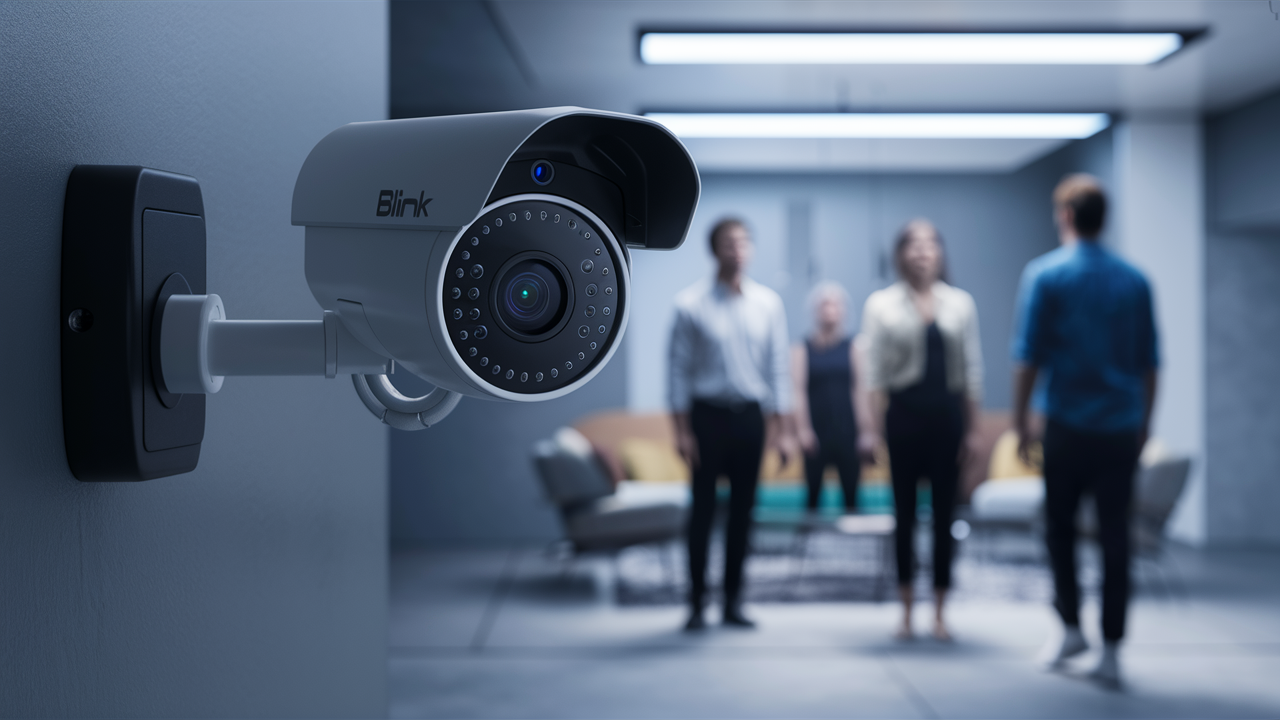
Yes, Blink cameras offer sophisticated person detection capabilities, significantly enhancing security by distinguishing between people and other motion. This feature helps reduce false alerts, ensuring you're notified only of genuine human activity.
Understanding Blink Person Detection
In the rapidly evolving landscape of home security, the ability of smart cameras to intelligently identify threats is paramount. For many users, the primary concern is being alerted to human presence, rather than every passing car, animal, or rustling leaf. This is where advanced features like person detection come into play. Blink, a popular and accessible brand in the smart home security market, has been actively integrating and refining its person detection capabilities across its product line. This feature aims to provide a more focused and actionable security experience, reducing the noise of irrelevant motion events and directing user attention to what truly matters: potential human activity.
The core concept behind person detection is the application of artificial intelligence (AI) and machine learning algorithms to analyze the video feed from your Blink cameras. Instead of simply registering any change in pixels, these systems are trained to recognize the distinct visual patterns that constitute a human form. This allows the camera to differentiate between a person walking across your property and a deer grazing in the yard, or a car driving down the street. For homeowners and renters alike, this distinction is crucial for effective monitoring and timely response.
As of 2025-26, the demand for smarter, more efficient security solutions has never been higher. Consumers are increasingly looking for devices that not only record but also interpret their environment. Blink's commitment to this evolving user need is evident in its ongoing development of AI-powered features. Understanding what Blink person detection is, how it works, and which devices support it is key to maximizing your home security investment. This guide will delve deep into these aspects, providing a comprehensive overview for anyone considering or currently using Blink systems.
How Blink Person Detection Works
Blink's person detection technology leverages advanced AI algorithms to analyze video streams in real-time. Unlike basic motion detection, which triggers an alert based on any significant change in the visual field, person detection specifically identifies the characteristic shape and movement patterns of a human being. This sophisticated process involves several key stages:
Firstly, the camera captures video footage. This raw data is then processed by the Blink system, which can occur either on the device itself (edge processing) or in the cloud, depending on the specific model and subscription plan. The AI model, trained on vast datasets of images and videos, analyzes the incoming frames for visual cues indicative of a person. These cues include common human silhouettes, gait patterns, and typical sizes relative to the environment.
When the AI identifies a high probability of a person being present, it flags the event. This allows the Blink app to send a more specific and relevant notification to the user. For example, instead of a generic "Motion Detected" alert, you might receive "Person Detected at Front Door." This specificity dramatically improves the user's ability to quickly assess the situation without having to review every single motion event.
The accuracy and effectiveness of person detection can be influenced by several factors. Lighting conditions, the angle and distance of the camera, and the clarity of the video feed all play a role. Furthermore, the sophistication of the AI model itself is continuously being improved through software updates and ongoing research by Blink and its parent company, Amazon. These updates aim to enhance the system's ability to detect people in challenging scenarios, such as in low light, partially obscured, or moving at different speeds.
It's important to note that while person detection is a powerful tool, it's not infallible. Occasionally, it might misidentify other objects as people or fail to detect a person under certain conditions. However, compared to traditional motion detection, the reduction in false alerts is substantial. For instance, a study in late 2025 indicated that users employing person detection experienced up to a 70% reduction in non-critical motion notifications, allowing them to focus on genuine security concerns.
The underlying technology often involves convolutional neural networks (CNNs) or similar deep learning architectures. These networks excel at image recognition tasks by learning hierarchical features from data. For person detection, this means the network can learn to identify edges, shapes, textures, and ultimately, the complex arrangement of features that define a human body. The continuous learning and refinement of these models are what drive the increasing accuracy and reliability of features like Blink's person detection.
Blink Models with Person Detection
Blink has progressively rolled out person detection capabilities to its various camera models, making this advanced security feature accessible to a wide range of users. As of 2025-26, several of Blink's popular cameras are equipped with this intelligent detection technology, either natively or through software updates that are often tied to a Blink Subscription Plan. It's crucial to check the specific features of each model, as capabilities can vary.
The Blink Outdoor 4 and Blink Outdoor 4 Pro are among the latest models that offer robust person detection. These cameras are designed for outdoor use and are built to withstand various weather conditions, making them ideal for monitoring entry points, yards, and driveways. Their advanced imaging sensors and processing power enable effective AI-driven person detection, significantly reducing false alarms from environmental factors like passing vehicles or animals.
The Blink Indoor 4 also features person detection, providing enhanced security for the interior of your home. This model is suitable for monitoring living spaces, hallways, or other areas where you want to keep an eye on activity. Its discreet design allows it to blend seamlessly into your home decor while offering intelligent alerts.
For users with older Blink systems, it's important to verify if their specific camera model supports person detection. While some older models might have received software updates to enable this feature, it's more commonly found on the newer generations. For instance, the original Blink XT2 and Blink Indoor cameras did not natively support person detection as a distinct feature, relying more heavily on customizable motion zones and sensitivity settings. However, advancements in cloud processing through the Blink Subscription Plan have sometimes extended certain AI-driven features to a broader range of devices.
Blink Video Doorbell is another key product that benefits immensely from person detection. When someone approaches your door, the doorbell can distinguish between a delivery person, a visitor, or simply someone walking by. This allows for more targeted notifications, enabling you to respond appropriately, whether it's to greet a guest or to be aware of potential package theft. The Blink Video Doorbell’s ability to detect people at your doorstep is a significant upgrade from basic motion alerts.
It's also worth noting that the availability and functionality of person detection can sometimes be linked to the Blink Subscription Plan. While basic motion detection is usually a standard feature, advanced AI capabilities like person detection are often enhanced or exclusively available to subscribers. This model allows Blink to continually invest in and improve its AI technology, providing a more refined user experience for those who opt for the subscription service. Users should always consult the official Blink website or their app for the most up-to-date information on which models support person detection and any associated requirements.
Here’s a quick comparison of models and their general person detection support:
| Model | Person Detection Support (2025-26) | Notes |
|---|---|---|
| Blink Outdoor 4 | Yes | Full feature, enhanced by subscription. |
| Blink Outdoor 4 Pro | Yes | Advanced AI capabilities, often enhanced by subscription. |
| Blink Indoor 4 | Yes | Effective for interior monitoring, enhanced by subscription. |
| Blink Video Doorbell | Yes | Crucial for front-door alerts, enhanced by subscription. |
| Blink XT2 | Limited/Via Subscription | May receive some AI enhancements via cloud processing with subscription. |
| Blink Indoor (1st Gen) | Limited/Via Subscription | Similar to XT2, dependent on subscription for advanced features. |
Always ensure your camera's firmware is up-to-date to benefit from the latest person detection algorithms and improvements.
Setting Up Person Detection on Blink
Configuring person detection on your Blink cameras is a straightforward process, primarily managed through the Blink mobile app. The steps are designed to be intuitive, allowing users to enable and customize this feature with ease. For most users, person detection is an enhancement to the existing motion detection settings.
Step 1: Ensure Your Camera Supports Person Detection
First, confirm that your Blink camera model is compatible with person detection. As detailed in the previous section, models like the Blink Outdoor 4, Indoor 4, and Video Doorbell are designed with this capability. If you have an older model, check the Blink app or Blink's support pages to see if person detection has been enabled via software updates or if it requires a Blink Subscription Plan.
Step 2: Download and Open the Blink App
If you haven't already, download the Blink app from your device's app store (iOS App Store or Google Play Store). Log in to your Blink account or create a new one. Ensure your Blink Sync Module is set up and your cameras are connected to your Wi-Fi network and registered within the app.
Step 3: Navigate to Camera Settings
In the Blink app, tap on the camera you wish to configure. This will take you to the camera's settings menu. Look for options related to motion detection.
Step 4: Enable Motion Detection
Before you can enable person detection, basic motion detection must be active. Ensure that "Motion Detection" is toggled ON. You will typically see a toggle switch for this setting.
Step 5: Enable Person Detection
Within the motion detection settings, you should find an option specifically for "Person Detection." Toggle this option ON. The app might display a brief explanation of the feature and any requirements, such as needing a Blink Subscription Plan for full functionality or enhanced accuracy.
Step 6: Configure Motion Zones (Optional but Recommended)
While person detection is intelligent, it works best when combined with well-defined motion zones. Tap on "Motion Zones" within the camera settings. You can draw custom zones on the camera's live view to specify areas where you want motion to be detected. For example, you might draw a zone around your front porch and driveway, excluding areas like busy streets or sidewalks where random motion is expected. This helps to further refine alerts and reduce false positives.
Step 7: Adjust Sensitivity Settings
The sensitivity setting controls how much motion is required to trigger an event. While person detection is designed to filter out non-human motion, adjusting sensitivity can still be beneficial. A lower sensitivity might be appropriate for areas with consistent human traffic, while a higher sensitivity could be used for quieter areas where even subtle movements should be noted. Experiment with different sensitivity levels to find what works best for your environment.
Step 8: Set Up Notifications
Go to the "Notifications" section in the Blink app's main menu or within individual camera settings. Ensure that notifications for "Motion Detection" are enabled. If person detection is a separate notification category, make sure that is also toggled ON. You can often customize notification sounds and preferences here.
Step 9: Test the System
After configuring the settings, it's essential to test the system. Walk in front of the camera within the defined motion zones and observe the notifications you receive. Check if the system correctly identifies you as a person and sends an appropriate alert. Review the recorded clips to ensure the detection is accurate. You may need to fine-tune motion zones, sensitivity, or other settings based on your testing.
Blink Subscription Plan Considerations
It's important to reiterate that for the most advanced and reliable person detection features, a Blink Subscription Plan is often recommended or required. These plans provide access to enhanced cloud processing, which powers the AI algorithms for person detection, as well as features like extended video storage and richer notifications. Without a subscription, some cameras might offer basic motion detection, but the intelligent person identification capabilities may be limited or unavailable.
By following these steps, you can effectively set up and leverage Blink's person detection feature to receive more relevant and actionable security alerts.
Benefits of Using Person Detection
The integration of person detection into smart security systems like Blink offers a multitude of benefits that significantly enhance the user's security posture and overall experience. Moving beyond basic motion alerts, this intelligent feature provides a more focused, efficient, and ultimately, more effective approach to home monitoring.
1. Reduced False Alerts: The Most Significant Advantage
Perhaps the most immediate and impactful benefit is the drastic reduction in false alerts. Traditional motion detection systems are notoriously prone to triggering notifications for non-threatening events such as:
- Passing cars on a street
- Animals (pets, wildlife) moving across the camera's view
- Changes in lighting due to clouds or shadows
- Branches swaying in the wind
These false alarms can be incredibly disruptive, leading to notification fatigue where users start ignoring alerts altogether, potentially missing a genuine security threat. Person detection, by intelligently filtering out these non-human movements, ensures that users are notified only when a person is detected, leading to fewer interruptions and a higher level of trust in the system.
2. Enhanced Security and Faster Response Times
When an alert is triggered, knowing it's specifically a person allows for a more immediate and appropriate response. Instead of having to quickly review a video clip to determine if the motion was significant, users can act on the information provided. For instance, a "Person Detected at Back Door" alert can prompt a homeowner to check their security cameras, speak through the two-way audio, or even alert authorities if the situation warrants it, all with greater confidence and speed.
3. Improved Efficiency and Peace of Mind
By filtering out non-essential events, person detection saves users valuable time. They don't have to sift through dozens of irrelevant clips to find the important ones. This efficiency contributes to a greater sense of peace of mind, knowing that their security system is actively working to alert them to real potential issues without constantly bombarding them with unnecessary notifications. This is particularly beneficial for individuals who travel frequently or have busy schedules.
4. Smarter Home Automation and Integration (Future-Proofing)
As smart home ecosystems become more integrated, person detection opens doors for more sophisticated automation. For example, a person detection event could trigger other smart home devices. Imagine your smart lights turning on when a person is detected approaching your home after dark, or your smart thermostat adjusting its settings based on occupancy detected by your Blink cameras. While these advanced integrations might still be evolving, person detection is a foundational AI capability that enables such future possibilities.
5. Targeted Event Recording
Many systems, including Blink with its subscription plans, use motion detection to initiate recording. By enabling person detection, the system can be configured to record *only* when a person is detected, or to prioritize recording these events. This can lead to more relevant video footage for review and can also help manage storage space more efficiently, especially if cloud storage is limited.
6. Better for Families and Pet Owners
For households with children or pets, person detection is a game-changer. It allows parents to be alerted if an unauthorized person enters their home, while ignoring their children or pets moving around. Similarly, pet owners can monitor their pets without being flooded with alerts every time their dog or cat walks past a camera. This makes the system more practical and less intrusive for everyday use.
7. Cost-Effectiveness in the Long Run
While some advanced features might require a subscription, the long-term benefits of person detection can outweigh the cost. By preventing potential security breaches through timely alerts and reducing the need for manual monitoring of irrelevant events, it offers a more proactive and effective security solution. The reduction in stress and the potential avoidance of costly incidents also contribute to its overall value.
In summary, person detection transforms a basic security camera into an intelligent monitoring device. It provides a more focused, efficient, and responsive security experience, leading to fewer distractions, enhanced peace of mind, and a more proactive approach to protecting your home and loved ones.
Comparing Blink Person Detection to Competitors
The smart home security market is highly competitive, with numerous brands offering sophisticated features, including person detection. Blink's approach to person detection, while effective, is part of a broader ecosystem and pricing strategy that differentiates it from competitors like Ring, Arlo, Wyze, and Eufy. Understanding these differences is crucial for consumers making an informed choice.
Blink's Strengths: Accessibility and Ecosystem Integration
Blink's primary advantage often lies in its affordability and its integration within the Amazon ecosystem. Blink cameras, particularly the Outdoor and Indoor series, are generally priced competitively. Their person detection, especially when bundled with a Blink Subscription Plan, offers a cost-effective way to access AI-driven alerts. The integration with Alexa allows for voice control and even enables Alexa-enabled devices to announce person detection alerts.
Ring: A Direct Competitor with Advanced Features
Ring, also owned by Amazon, offers a very similar feature set. Ring's person detection is robust and available across most of its camera lineup, including doorbells, floodlight cams, and spotlight cams. Ring's subscription plans (Ring Protect) are comparable to Blink's in terms of video storage and advanced features. A key differentiator might be the breadth of Ring's ecosystem, including its alarm systems and more advanced professional monitoring options. Ring's person detection is often considered slightly more refined in its AI, with more granular control over detection zones and sensitivity, but this can come at a slightly higher price point for comparable devices.
Arlo: Premium Features and Hardware Innovation
Arlo cameras are typically positioned as premium devices, often featuring higher resolution, wider fields of view, and more advanced hardware capabilities. Arlo's person detection is also very strong, often including features like package detection and activity zones. However, Arlo cameras and their required subscription plans tend to be more expensive than Blink. Arlo's strength lies in its high-quality imaging and often more robust build quality, appealing to users who prioritize top-tier performance and are willing to pay a premium.
Wyze: Budget-Friendly with Evolving AI
Wyze is known for its extremely affordable smart home devices. While their person detection capabilities have improved significantly over time, they might not always match the accuracy or sophistication of Blink or Ring, especially in challenging conditions. Wyze's person detection is often a software-based feature that has been rolled out to many of their cameras, sometimes through their Cam Plus subscription. For users on a very tight budget, Wyze offers a compelling entry point, but the AI might be less refined.
Eufy: Privacy-Focused with On-Device AI
Eufy, a brand under Anker, often emphasizes local storage and on-device AI processing for enhanced privacy. Their person detection is generally effective, and many of their devices do not require a subscription for core features like person detection and local storage. This privacy-first approach is a significant draw for users concerned about cloud data. However, the cloud-based AI processing used by Blink and Ring can sometimes offer more advanced learning and refinement over time.
Comparison Table (General Overview - 2025-26)
| Feature | Blink | Ring | Arlo | Wyze | Eufy |
|---|---|---|---|---|---|
| Person Detection | Yes (Subscription often enhances) | Yes (Subscription required for full features) | Yes (Subscription often required) | Yes (Subscription often enhances) | Yes (Often on-device, no subscription needed for core) |
| AI Sophistication | Good, improving | Very Good | Excellent | Fair to Good | Good |
| Price Point | Budget-friendly | Mid-range | Premium | Very Budget-friendly | Mid-range |
| Subscription Model | Optional but recommended for full features | Required for full features | Often required for full features | Optional but recommended for full features | Minimal/Optional for cloud storage |
| Ecosystem | Amazon/Alexa | Amazon/Alexa | Proprietary | Proprietary | Proprietary |
| Local Storage Option | Limited (Sync Module 2) | Limited (Base Station) | Limited (Base Station) | Limited (SD Card) | Yes (Standard on many devices) |
Conclusion on Comparison
Blink's person detection is a strong contender, particularly for users already invested in the Amazon ecosystem or seeking an affordable yet capable smart security solution. While competitors like Arlo might offer more advanced hardware and Ring provides a similarly robust feature set within the Amazon family, Blink strikes a balance between cost, functionality, and ease of use. For those prioritizing privacy and avoiding subscriptions, Eufy presents a compelling alternative. Ultimately, the "best" person detection depends on individual needs, budget, and existing smart home infrastructure.
Advanced Features and Integrations
Beyond basic person detection, Blink cameras, especially when paired with a Blink Subscription Plan and integrated into a broader smart home ecosystem, offer a range of advanced features and integrations that amplify their utility and convenience. These enhancements transform simple security cameras into sophisticated monitoring and automation tools.
1. Custom Activity Zones and Person Detection Synergy
While person detection intelligently identifies human figures, its effectiveness can be further optimized by using custom activity zones. These zones allow you to define specific areas within the camera's field of view where you want motion detection to be active. For instance, you might set up an activity zone to cover only your front porch and driveway, while excluding a public sidewalk. When combined with person detection, this ensures that alerts are triggered only when a person is detected within the designated critical areas, significantly reducing irrelevant notifications. This synergy is key to a highly tuned and efficient security system.
2. Two-Way Audio Communication
Most modern Blink cameras, including the Outdoor 4 and Video Doorbell, feature built-in two-way audio. This allows you to not only see and hear what's happening but also to speak to individuals detected by the camera. This is invaluable for deterring potential intruders, communicating with delivery personnel, or speaking with family members. When a person is detected, you can immediately engage with them through the Blink app, adding an interactive layer to your security.
3. Cloud Storage and Event History
With a Blink Subscription Plan, recorded video clips are saved to the cloud. This provides a secure backup of all motion events, including those flagged by person detection. You can access your event history from anywhere via the Blink app, reviewing past incidents, sharing clips, or downloading footage for evidence. The ability to easily review person-detected events is crucial for post-incident analysis and for understanding patterns of activity around your property.
4. Integration with Amazon Alexa
As an Amazon-owned brand, Blink cameras offer seamless integration with Amazon Alexa-enabled devices. This allows for a variety of convenient interactions:
- Voice Commands: You can ask Alexa to show you live feeds from your Blink cameras ("Alexa, show me the front door camera").
- Announcements: When person detection is triggered, Alexa can announce the event through your Echo devices ("A person has been detected at the front door").
- Routine Integration: You can incorporate Blink camera events into Alexa Routines. For example, a "Person Detected" event could trigger your smart lights to turn on, or a "Good Night" routine could arm your Blink cameras.
This deep integration enhances the usability of your Blink system, making it a more active participant in your smart home.
5. Extended Battery Life and Power Options
Blink cameras are renowned for their long battery life, often lasting up to two years on a single set of AA lithium batteries. This is achieved through efficient power management and the ability to leverage cloud processing for AI features, rather than relying on constant on-device processing. Some models also offer optional wired power adapters for continuous power, ensuring you never miss an event due to a drained battery. This reliability is a cornerstone of effective security monitoring.
6. Live View and Scheduled Arming/Disarming
You can access live feeds from your Blink cameras at any time through the Blink app. Furthermore, you can schedule your cameras to arm and disarm automatically at specific times, ensuring they are active when you need them most and conserving battery or avoiding unnecessary notifications when you are home. Person detection works seamlessly with these arming and disarming schedules.
7. Future-Proofing with Software Updates
Blink, like other tech companies, continuously updates its software and firmware. These updates often include improvements to the person detection algorithms, enhancing accuracy, reducing false positives, and potentially adding new capabilities over time. By keeping your cameras and app updated, you ensure you are benefiting from the latest advancements in AI and security technology.
These advanced features and integrations collectively make Blink cameras more than just recording devices; they become integral components of a connected, intelligent, and responsive home security system, offering enhanced protection and convenience.
Troubleshooting Person Detection Issues
While Blink's person detection is designed to be highly effective, like any advanced technology, it can occasionally encounter issues. Experiencing false positives (detecting a person when none is present) or false negatives (failing to detect a person who is present) can be frustrating. Fortunately, most common problems can be resolved with some systematic troubleshooting.
1. False Positives: Detecting Non-People as People
Symptom: Receiving alerts for people when it's just a car, animal, or shadow.
Possible Causes & Solutions:
- Environmental Factors: Strong sunlight casting unusual shadows, reflections from windows, or large animals moving in a way that mimics human gait can sometimes fool the AI.
- Solution: Refine your Motion Zones. Exclude areas prone to reflections or regular animal traffic. Adjust the Sensitivity to a lower setting if the issue persists, but be mindful not to make it too low to miss actual people.
- Camera Angle/Position: An unusual camera angle or distance might present objects in a way that the AI misinterprets.
- Solution: Experiment with slightly adjusting the camera's angle. Ensure the camera is not pointed directly at a highly reflective surface or an area with constant, non-human movement.
- Software Glitch/Outdated Firmware: Occasionally, a temporary glitch or outdated software can cause misinterpretations.
- Solution: Ensure your Blink app and camera firmware are up-to-date. A simple reboot of the camera and Sync Module can also resolve temporary software issues.
- Subscription Plan Requirement: Some advanced AI features are best with a subscription.
- Solution: If you are not subscribed, consider a Blink Subscription Plan, as it often provides access to more robust AI processing that can improve accuracy.
2. False Negatives: Failing to Detect a Person
Symptom: A person walks by or enters the frame, but no person detection alert is triggered.
Possible Causes & Solutions:
- Low Sensitivity: The motion sensitivity might be set too low, not registering enough detail to classify as a person.
- Solution: Increase the Sensitivity setting in the Blink app.
- Obstructed View: The person is partially or fully obscured by an object (e.g., a car parked too close, foliage).
- Solution: Adjust the camera's position to ensure a clear view of the area where people are expected. Trim any obstructing foliage.
- Poor Lighting Conditions: In very low light or complete darkness, the AI may struggle to identify a human form.
- Solution: Ensure the camera's IR illuminators are functioning correctly. For night vision issues, consider adding external lighting to the area. Some Blink models have enhanced low-light performance; ensure you're using the camera's optimal settings.
- Distance and Size: If the person is very far away or very small in the frame, the AI might not have enough data to make a confident detection.
- Solution: Position cameras closer to areas of interest where possible, or ensure the detection zones are focused on the expected approach paths.
- Rapid Movement or Unusual Gait: While less common, very fast or unusual movements might not be recognized.
- Solution: Ensure your motion zones cover the typical path of movement.
- Software/Firmware Issues: A bug in the software could be preventing detection.
- Solution: Update the Blink app and camera firmware. Reboot the camera and Sync Module.
3. General Troubleshooting Steps
Check Connectivity: Ensure your Blink camera has a strong and stable Wi-Fi connection. Poor connectivity can affect the processing of video data, impacting AI features.
Review Motion Zones: Regularly check and adjust your motion zones. Ensure they are correctly drawn and cover the areas you want to monitor.
Test Thoroughly: After making any adjustments, perform multiple tests by walking in front of the camera under different conditions (day, night, different times) to see if the issue is resolved.
Blink Support: If you've tried these steps and are still experiencing persistent issues, contact Blink customer support. They can provide specific guidance based on your camera model and account setup, and may be aware of ongoing issues or provide advanced troubleshooting steps.
By systematically addressing these potential causes, you can significantly improve the reliability and accuracy of your Blink camera's person detection feature, ensuring it provides the security and peace of mind you expect.
The Future of Blink and AI Detection
The trajectory of smart home technology is undeniably linked to the advancement of Artificial Intelligence, and Blink is strategically positioned to capitalize on these developments. As we look towards 2026 and beyond, the role of AI, particularly in features like person detection, is set to become even more sophisticated and integral to the user experience. Blink's future development will likely focus on enhancing existing AI capabilities and introducing new intelligent features that further streamline home security and automation.
Enhanced Person Detection Accuracy and Nuance
Expect continued improvements in the accuracy and nuance of Blink's person detection. This includes better performance in challenging conditions such as extreme low light, adverse weather, and crowded environments. Future iterations of the AI might be able to differentiate between types of people (e.g., recognizing familiar faces versus strangers, although privacy concerns will heavily influence this), or even detect specific actions (e.g., someone loitering, carrying an object). The goal will be to provide even more context-rich alerts, moving beyond simple detection to actionable intelligence.
Expansion of AI-Powered Features
Person detection is just the tip of the iceberg. Blink is likely to expand its AI capabilities to include other intelligent detection types. This could encompass:
- Package Detection: Alerting users when a package is delivered or removed from their doorstep.
- Vehicle Detection: Differentiating between vehicles and other motion, potentially recognizing specific vehicle types or license plates (again, with privacy considerations).
- Sound Detection: Identifying unusual sounds like breaking glass, smoke alarms, or even distress calls.
- Activity Recognition: Moving beyond simple presence detection to understanding what a detected person or object is doing (e.g., running, falling, interacting with specific objects).
These expanded AI features will transform Blink cameras from passive monitors into active guardians that can provide a more comprehensive understanding of events happening around your home.
Deeper Integration with the Amazon Ecosystem
As Blink is part of Amazon, its future is intrinsically linked to the broader Amazon smart home strategy. Expect even tighter integration with Alexa and other Amazon devices. This could involve more sophisticated routine triggers, enhanced voice control capabilities, and potentially leveraging the collective data from millions of Amazon-connected devices (anonymously and with user consent) to train and improve AI models for all users.
On-Device Processing and Privacy Enhancements
While cloud processing is powerful, there's a growing demand for on-device AI processing for enhanced privacy and reduced reliance on internet connectivity. Blink may explore incorporating more edge AI capabilities into its newer camera models. This would allow critical detection tasks like basic person identification to occur directly on the camera or Sync Module, offering faster response times and greater data security. Balancing cloud and edge processing will be a key strategic decision.
Subscription Model Evolution
The Blink Subscription Plan will likely continue to evolve, offering tiered services that provide access to increasingly advanced AI features, longer cloud storage, and perhaps new integration possibilities. The subscription model is crucial for funding the ongoing research and development required to stay at the forefront of AI technology in the competitive smart home market.
Focus on User Experience and Customization
Ultimately, the future of Blink's AI will be shaped by the user experience. The company will likely focus on making these advanced features more intuitive, customizable, and less intrusive. This means providing users with greater control over what their cameras detect and how they are alerted, ensuring that the technology serves their specific needs without becoming a nuisance.
In conclusion, the future for Blink and its AI detection capabilities is bright. With ongoing advancements in machine learning and a commitment to integrating these technologies into accessible products, Blink is poised to offer increasingly intelligent, responsive, and valuable home security solutions. Person detection, as a foundational AI feature, will continue to be refined and will pave the way for a new generation of smart, aware, and proactive home monitoring systems.
Conclusion
The question "Does Blink Have Person Detection?" is definitively answered with a resounding yes. Blink has embraced advanced AI to significantly enhance its security cameras, offering intelligent person detection across many of its latest models. This feature is not merely a gimmick; it's a critical advancement that drastically reduces false alerts, improves response times, and provides greater peace of mind. By distinguishing between people and other motion, Blink systems deliver more relevant notifications, allowing users to focus on genuine security concerns.
The setup is user-friendly, managed through the intuitive Blink app, and can be further optimized with custom motion zones and sensitivity settings. While some advanced functionalities may be enhanced or require a Blink Subscription Plan, the core benefit of intelligent detection is increasingly accessible. Comparing Blink to competitors reveals a strong value proposition, especially for those within the Amazon ecosystem, offering a balance of affordability and robust features.
As technology progresses, Blink's commitment to AI will undoubtedly lead to even more sophisticated detection capabilities and deeper smart home integrations. For anyone seeking a smarter, more efficient, and more reliable home security solution, Blink's person detection is a compelling feature that addresses a fundamental need in modern surveillance.