Vivint Smart Thermostat: The Ultimate Guide to Efficient Home Climate Control
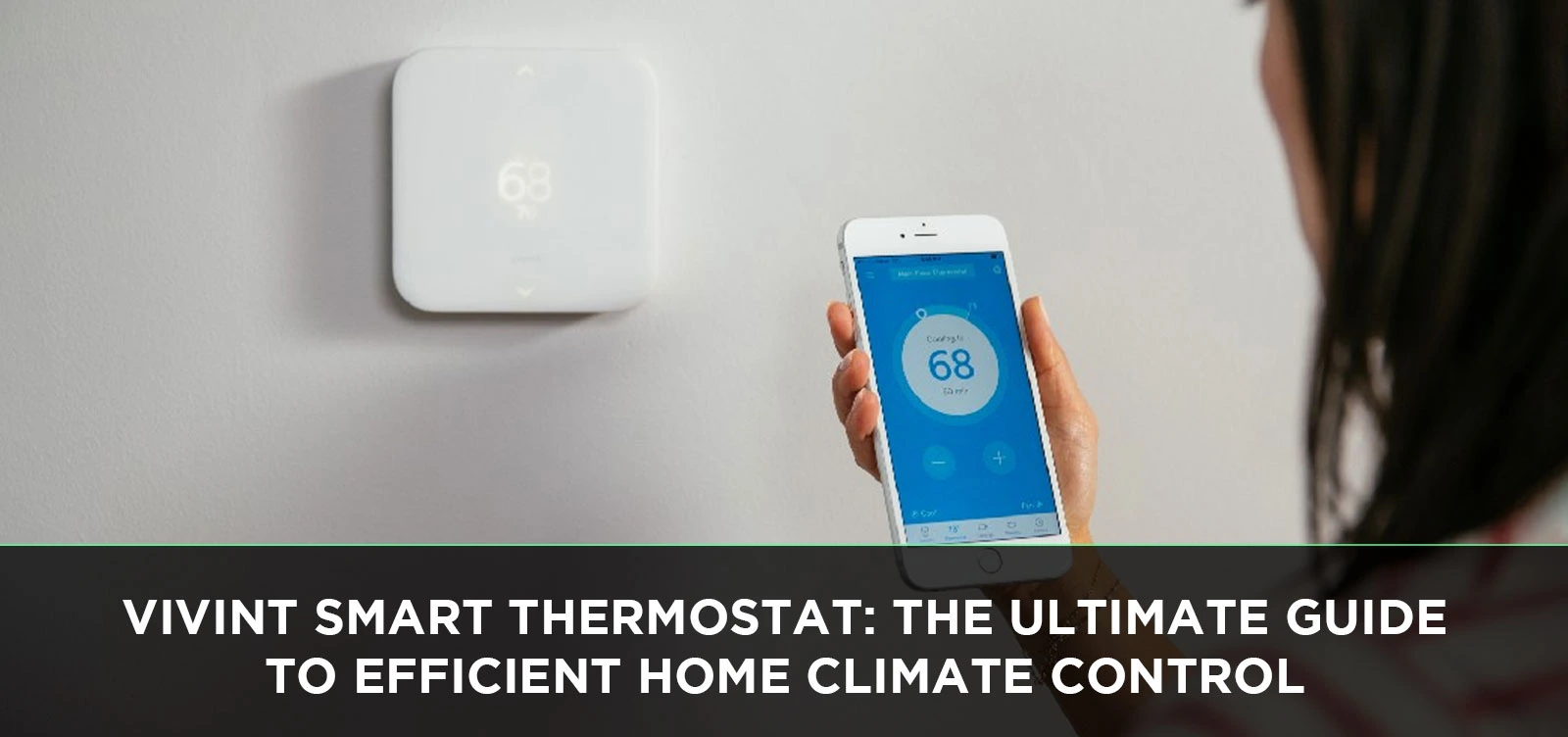
Unlock unparalleled home comfort and significant energy savings with the Vivint Smart Thermostat. This guide dives deep into its advanced features, seamless integration, and how it revolutionizes your climate control for a smarter, more efficient home in 2025-26.
Understanding the Vivint Smart Thermostat
In the rapidly evolving landscape of smart home technology, climate control stands as a cornerstone of both comfort and efficiency. The Vivint Smart Thermostat is not just another device; it's the central nervous system for your home's heating and cooling, designed to learn your habits, adapt to your lifestyle, and deliver optimal comfort while minimizing energy waste. As we navigate 2025-26, the demand for intelligent, connected homes has never been higher, and Vivint delivers precisely that with its sophisticated thermostat offering. This guide will delve into every facet of the Vivint Smart Thermostat, from its core functionalities to its advanced integrations, empowering you to make informed decisions about your home's climate control.
At its heart, the Vivint Smart Thermostat is engineered for simplicity and intelligence. It moves beyond basic temperature adjustments, offering features like geofencing, learning capabilities, and remote access through a user-friendly mobile application. This allows homeowners to not only set and forget their desired temperatures but also to actively manage their energy consumption from anywhere in the world. The device’s sleek, modern design also ensures it blends seamlessly with any home décor, making it a functional and aesthetic addition to your living space. By understanding the underlying technology and the benefits it provides, you can begin to appreciate why the Vivint Smart Thermostat is positioned as a leader in the smart home market for efficient climate control.
How it Works: Intelligent Automation
The Vivint Smart Thermostat operates on a principle of intelligent automation, leveraging a combination of sensors, learning algorithms, and connectivity to manage your home's temperature effectively. Unlike traditional thermostats that require constant manual adjustments, the Vivint system learns your preferred temperature settings over time. It observes when you typically adjust the temperature and begins to anticipate your needs. For instance, if you consistently lower the thermostat before bed, the Vivint thermostat will eventually learn this pattern and automatically adjust the temperature to your preferred nighttime setting without any input from you.
Furthermore, the thermostat utilizes advanced algorithms to optimize heating and cooling cycles. It considers factors such as outdoor temperature, humidity levels, and even the presence of occupants in the home (when integrated with other Vivint sensors) to make precise adjustments. This proactive approach ensures that your home is always at the desired temperature when you need it to be, and that energy isn't wasted when the house is empty or when optimal conditions are already met. The connectivity aspect is also crucial; it allows the thermostat to communicate with the Vivint app and other smart home devices, enabling remote control and sophisticated automation routines.
Design and User Interface
Vivint places a significant emphasis on both form and function, and their smart thermostat is a prime example. The device boasts a minimalist, modern aesthetic with a high-resolution touchscreen display. The interface is designed to be intuitive and easy to navigate, even for users who are new to smart home technology. Large, clear icons and straightforward menus make it simple to adjust temperatures, set schedules, and access advanced features.
The physical design is sleek and unobtrusive, typically featuring a clean white or black finish that complements a wide range of interior styles. The touchscreen is responsive and offers a smooth user experience. Beyond the physical interface, the accompanying Vivint app provides a comprehensive and equally user-friendly digital interface for controlling the thermostat from your smartphone or tablet. This dual-interface approach ensures that managing your home's climate is always convenient, whether you're standing in front of the device or miles away.
Key Features and Benefits of the Vivint Smart Thermostat
The Vivint Smart Thermostat is packed with features designed to enhance comfort, convenience, and energy savings. Understanding these capabilities is key to unlocking its full potential for your home.
Learning Capabilities
One of the most significant advantages of the Vivint Smart Thermostat is its ability to learn your household's patterns and preferences. Over time, it observes your manual adjustments to temperature and automatically creates a personalized schedule. This means that the thermostat becomes more efficient and tailored to your lifestyle without requiring you to manually program complex schedules. By 2025-26, this adaptive learning is becoming a standard expectation for smart thermostats, and Vivint excels in its execution, reducing energy waste by only heating or cooling when necessary.
Geofencing Technology
Geofencing allows the thermostat to detect when you are home or away based on your smartphone's location. When you leave a predefined radius around your home, the thermostat can automatically adjust to an energy-saving "away" mode. Conversely, as you approach your home, it can begin to adjust the temperature to your preferred "home" setting, ensuring you arrive to a comfortable environment. This feature is a powerful tool for maximizing energy efficiency, as it eliminates the need to manually adjust settings when leaving or returning.
Remote Access and Control
Through the Vivint app, you gain complete control over your home's climate from anywhere with an internet connection. Whether you're at work, on vacation, or simply in another room, you can monitor and adjust the temperature, change settings, and view energy usage reports. This level of remote access provides unparalleled convenience and peace of mind, allowing you to ensure your home is comfortable and secure at all times.
Energy Usage Reporting
The Vivint app provides detailed insights into your heating and cooling energy consumption. You can view historical data, track trends, and identify patterns that may be contributing to higher energy bills. This data empowers you to make more informed decisions about your energy usage and to identify opportunities for further savings. Understanding your consumption is the first step towards reducing it, and Vivint makes this process transparent and accessible.
Scheduling and Customization
While the thermostat learns your habits, you also retain the ability to create custom schedules. You can set specific temperatures for different times of the day and days of the week, catering to unique household routines. This flexibility allows for fine-tuning your comfort and energy management to perfectly match your lifestyle. For example, you can set a cooler temperature overnight and a warmer one during the day, or vice versa, depending on your preferences and the season.
Voice Control Integration
The Vivint Smart Thermostat seamlessly integrates with popular voice assistants like Amazon Alexa and Google Assistant. This enables hands-free control of your home's temperature. Simply use a voice command, such as "Hey Google, set the thermostat to 72 degrees," and your thermostat will respond accordingly. This adds another layer of convenience, especially when your hands are full or you prefer not to use your phone or the physical interface.
Humidity Control
Beyond just temperature, the Vivint Smart Thermostat can also help manage indoor humidity levels, especially when paired with compatible HVAC systems. Maintaining optimal humidity can significantly impact your perception of comfort and can also help prevent issues like mold growth or dry air. This holistic approach to climate control ensures a healthier and more comfortable living environment.
Installation and Setup: A Step-by-Step Guide
Installing the Vivint Smart Thermostat is a straightforward process, often handled by Vivint's professional installation team. However, understanding the steps involved can be beneficial. For those comfortable with DIY projects, the process typically involves a few key stages.
Pre-Installation Checklist
Before you begin, ensure you have the following:
- Compatibility Check: Verify that your HVAC system is compatible with the Vivint Smart Thermostat. Most standard 24-volt heating and cooling systems are compatible, but it's crucial to confirm.
- Tools: You'll likely need a screwdriver, wire stripper, pliers, and possibly a drill.
- Power Off: Crucially, turn off the power to your HVAC system at the breaker box before starting any wiring work.
- Existing Thermostat Removal: Carefully remove the cover of your old thermostat and take a picture of the wiring connections. This reference is invaluable.
- Label Wires: Label each wire according to the terminal it's connected to on your old thermostat.
Step 1: Removing the Old Thermostat
With the power off, gently detach the old thermostat's faceplate. Unscrew the base from the wall. Carefully disconnect the wires, ensuring each is labeled as per your earlier note. If there are wires that aren't connected to any terminals, they are likely "C" wires (common wires) or are not needed. The Vivint thermostat typically requires a C-wire for continuous power.
Step 2: Mounting the Vivint Thermostat Base
Feed the wires through the opening in the new Vivint thermostat's base plate. Position the base plate on the wall, using a level to ensure it's straight. Mark the screw hole locations, drill pilot holes if necessary, and secure the base plate to the wall with the provided screws.
Step 3: Connecting the Wires
Referencing the photo and labels of your old wiring, connect each wire to the corresponding terminal on the Vivint thermostat's base. Ensure each wire is securely fastened. If you have a C-wire, connect it to the "C" terminal. If you are missing a C-wire, Vivint may offer an adapter or require professional installation to ensure proper power delivery.
Step 4: Attaching the Thermostat Faceplate
Once all wires are connected, carefully align the Vivint thermostat's faceplate with the base and snap it into place. Ensure it's securely attached.
Step 5: Restoring Power and Initial Setup
Go back to your breaker box and restore power to your HVAC system. The Vivint thermostat should power on. Follow the on-screen prompts to connect it to your home's Wi-Fi network and link it to your Vivint account. The system will guide you through initial configuration, including identifying your HVAC system type and setting basic preferences.
Professional Installation vs. DIY
While DIY installation is possible for those with electrical experience, Vivint strongly recommends professional installation. Their trained technicians ensure the thermostat is installed correctly, wired properly, and fully integrated with your Vivint system. This guarantees optimal performance and avoids potential issues. For most users, especially those new to smart home technology or unsure about wiring, professional installation is the safest and most efficient option.
Mastering the Vivint App: Remote Control and Customization
The Vivint app is the central hub for managing your smart thermostat, offering a comprehensive suite of tools for remote control, scheduling, and monitoring. Its intuitive design makes it easy to harness the full power of your smart climate control system.
Navigating the App Interface
Upon opening the Vivint app, you'll typically see a dashboard that provides an overview of your smart home devices. The thermostat will be listed here. Tapping on the thermostat icon will bring you to its dedicated control screen. This screen usually displays the current temperature, the set temperature, and the system mode (e.g., heat, cool, auto, off). Large, easy-to-tap buttons allow for quick adjustments to the set temperature.
Setting and Adjusting Schedules
Within the app, you can create or modify your heating and cooling schedules. This is where you can define different temperature setpoints for various times of the day and days of the week. For example, you might set a schedule like this:
- Weekdays:
- 6:00 AM - 7:00 AM: 70°F (Wake Up)
- 7:00 AM - 8:30 AM: 68°F (Away - Morning)
- 8:30 AM - 5:00 PM: 74°F (Home - Daytime)
- 5:00 PM - 10:00 PM: 72°F (Home - Evening)
- 10:00 PM - 6:00 AM: 66°F (Sleep)
- Weekends:
- 8:00 AM - 11:00 AM: 72°F (Wake Up)
- 11:00 AM - 6:00 PM: 74°F (Home - Daytime)
- 6:00 PM - 11:00 PM: 72°F (Home - Evening)
- 11:00 PM - 8:00 AM: 66°F (Sleep)
The app makes it simple to drag and drop time slots or manually input desired temperatures and times. The "learning" feature will often suggest adjustments to these schedules based on your actual usage, which you can then accept or reject.
Utilizing Geofencing Features
The geofencing setup is also managed within the app. You'll define your "home" location and a geofence radius. Then, you'll specify the temperature settings for when the system detects you are "away" and when it detects you are "returning." This feature is crucial for automated energy savings, ensuring your system doesn't needlessly condition an empty house.
Accessing Energy Reports
The "Energy" or "Usage" section of the app provides valuable data. You can view daily, weekly, and monthly energy consumption for your HVAC system. These reports often break down usage by heating and cooling, helping you understand where your energy is being spent. By analyzing these reports, you can identify opportunities to optimize your schedules and further reduce costs. For instance, if you see consistently high energy use during specific hours, you might adjust your schedule accordingly.
Customizing Notifications and Alerts
The Vivint app allows you to set up custom notifications. You can receive alerts for extreme temperature fluctuations, filter change reminders, or if the system detects a potential issue. These alerts help you stay informed and proactive in maintaining your HVAC system and ensuring optimal performance.
Integrating with Other Vivint Devices
The app also facilitates the integration of the thermostat with other Vivint smart home devices. You can create custom "rules" or "scenes" that involve the thermostat. For example, you could create a "Goodnight" scene that lowers the thermostat, locks the doors, and turns off specific lights. This interconnectedness is a hallmark of the Vivint ecosystem.
Maximizing Energy Efficiency and Savings with Vivint
The Vivint Smart Thermostat is a powerful tool for reducing your home's energy consumption and, consequently, your utility bills. Its intelligent features are specifically designed to optimize how your HVAC system operates.
Understanding Energy Saving Features
The core of Vivint's energy-saving capabilities lies in its ability to avoid unnecessary heating and cooling. Traditional thermostats often run your system even when you're not home or when the desired temperature has already been reached. Vivint's thermostat combats this through:
- Learning Algorithms: By learning your schedule, it avoids conditioning an empty home and only runs when needed.
- Geofencing: Automatically sets back the temperature when you leave and prepares for your return, eliminating wasted energy while you're out.
- Smart Scheduling: Allows for precise temperature adjustments throughout the day to match occupancy and activity levels.
Quantifying Potential Savings (2025-26 Statistics)
According to recent industry reports and Vivint's own user data for the 2025-26 period, homeowners can expect significant savings. Studies indicate that smart thermostats, on average, can reduce heating and cooling costs by 10-15% annually. For an average household in the US, this could translate to savings of $100-$200 per year or more, depending on climate, home insulation, and HVAC system efficiency. Vivint's advanced features, particularly its predictive learning and geofencing, often push these savings towards the higher end of that spectrum. For example, a family that travels frequently or has irregular work schedules can see savings of up to 20% by leveraging geofencing effectively.
Optimizing Your Schedule for Savings
The key to maximizing savings is to leverage the thermostat's scheduling and learning capabilities to their fullest. Consider these strategies:
- Set Back Temperatures Appropriately: When you're asleep or away, set your thermostat a few degrees lower in the winter and a few degrees higher in the summer. The Vivint thermostat's learning feature will help you find the optimal balance between comfort and savings.
- Utilize Away Mode: Ensure geofencing is active and correctly configured. This is arguably the most impactful feature for immediate energy savings.
- Avoid Frequent Manual Adjustments: While you can always override the schedule, try to let the thermostat do its job. Frequent manual changes can confuse the learning algorithms and reduce efficiency.
- Monitor Energy Reports: Regularly check your energy usage reports in the Vivint app. Identify periods of high consumption and adjust your schedule or habits accordingly.
Impact of Humidity Control on Energy Use
Proper humidity control can also contribute to energy savings. In the summer, high humidity makes the air feel warmer, leading you to set your air conditioner to a lower temperature than necessary. By managing humidity, the Vivint thermostat can help you feel comfortable at higher temperatures, allowing your AC to run less. Conversely, in the winter, overly dry air can make your home feel colder, prompting you to turn up the heat. Maintaining optimal humidity levels (typically between 30-50%) enhances comfort and can lead to tangible energy savings.
Role of Professional Installation in Efficiency
A professional installation by Vivint ensures that the thermostat is correctly wired and configured for your specific HVAC system. An improperly installed thermostat can lead to inefficient operation, inaccurate readings, and increased energy consumption. Vivint technicians are trained to optimize the setup for maximum efficiency, making professional installation a worthwhile investment for long-term savings.
Seamless Integration with the Vivint Smart Home Ecosystem
The Vivint Smart Thermostat is not an isolated device; it's an integral part of the broader Vivint Smart Home ecosystem. This interconnectedness unlocks a new level of convenience, automation, and security for your home.
How it Works with Other Devices
When you have other Vivint devices, such as smart locks, security cameras, motion sensors, or smart lighting, the thermostat can interact with them to create sophisticated automation routines. These interactions are managed through the Vivint app, allowing you to build custom "rules" or "scenes" that enhance your daily life.
Example Automation Scenarios
Here are a few examples of how the Vivint Smart Thermostat integrates with other devices:
- "Away" Mode: When you arm your Vivint security system to "Away," the thermostat automatically switches to its energy-saving "away" mode. Simultaneously, smart locks can engage, and security cameras can begin recording.
- "Welcome Home" Scene: As you disarm your security system upon returning home, the thermostat can be programmed to return to your preferred "home" temperature. Smart lights can turn on in specific areas, and smart locks can disengage.
- Occupancy-Based Adjustments: When integrated with Vivint motion sensors, the thermostat can detect if a room is occupied. If a room has been empty for a set period, the thermostat can subtly adjust the temperature in that zone (if your HVAC system supports zoning) or signal the main thermostat to conserve energy.
- Security Alerts and Climate: In the event of a security breach detected by a motion sensor or door/window sensor, the thermostat could be programmed to adjust to a safe mode, perhaps turning off the HVAC to prevent the spread of smoke or other hazards, while simultaneously sounding an alarm and sending alerts to your phone.
- Energy Saving with Smart Lighting: You can create rules where if all lights are turned off (indicating everyone has left), the thermostat automatically enters its "away" mode.
Benefits of a Unified System
The advantages of this integrated approach are numerous:
- Enhanced Convenience: Automate multiple actions with a single command or event, simplifying your daily routines.
- Increased Energy Efficiency: Devices work together to ensure energy is not wasted when the home is empty or when conditions are already met.
- Improved Security: Climate control can play a role in home security, such as preventing damage from extreme temperatures or responding to emergencies.
- Greater Comfort: Your home can proactively adjust to your needs, ensuring a consistently comfortable environment.
- Simplified Management: Control all your smart home devices from a single, intuitive app.
Vivint Ecosystem vs. Third-Party Integrations
While many smart thermostats offer integration with platforms like Amazon Alexa or Google Home, the Vivint ecosystem provides a deeper, more seamless integration because all devices are designed to work together natively. This means that the communication between devices is typically faster, more reliable, and allows for more complex automation rules than what might be possible with disparate third-party devices. The Vivint app is the central control panel, offering a unified experience that is hard to replicate with a patchwork of different brands.
Vivint Smart Thermostat vs. The Competition: A 2025-26 Comparison
The smart thermostat market is competitive, with several major players vying for consumer attention. When comparing the Vivint Smart Thermostat to its main competitors in 2025-26, it's important to look at features, integration, cost, and overall user experience.
Comparison Table
Here's a comparative look at the Vivint Smart Thermostat against some popular alternatives:
| Feature | Vivint Smart Thermostat | Nest Learning Thermostat (Google) | Ecobee Smart Thermostat | Honeywell Home T9 |
|---|---|---|---|---|
| Learning Capabilities | Yes, highly adaptive | Yes, industry-leading | Yes, with remote sensors | Yes, with remote sensors |
| Geofencing | Yes, integrated with Vivint app | Yes (Nest Sense) | Yes (via app and sensors) | Yes (via app and sensors) |
| Remote Access | Yes, via Vivint app | Yes, via Google Home app | Yes, via Ecobee app | Yes, via Honeywell Home app |
| Energy Reporting | Detailed, integrated with Vivint ecosystem | Good, integrated with Google Home | Comprehensive, with savings reports | Good, with usage history |
| Voice Control | Yes (Alexa, Google Assistant) | Yes (Google Assistant, Alexa) | Yes (Alexa, Google Assistant) | Yes (Alexa, Google Assistant) |
| Integration with Smart Home Ecosystem | Deep integration with Vivint system | Good with Google Home, limited native | Excellent with Alexa, good with others | Good with Alexa and Google |
| Installation | Professional recommended (part of service) | DIY friendly, professional option | DIY friendly, professional option | DIY friendly, professional option |
| Cost Structure | Typically included with Vivint security/smart home package | One-time purchase | One-time purchase | One-time purchase |
Vivint's Unique Selling Proposition
Vivint's primary advantage lies in its fully integrated smart home system. While competitors like Nest and Ecobee offer excellent thermostats, they are often standalone devices that integrate with other smart home platforms. Vivint's thermostat is designed from the ground up to work seamlessly with Vivint's security, lighting, and other smart devices. This unified approach offers a level of automation and convenience that is difficult to achieve with a mix-and-match strategy. For users who are invested in or considering a comprehensive smart home security and automation system, Vivint provides a cohesive and powerful solution.
When Vivint is the Best Choice
Vivint is an excellent choice for homeowners who:
- Are looking for a comprehensive smart home security and automation system.
- Value deep integration between all their smart devices.
- Prefer professional installation and ongoing support.
- Want a thermostat that learns and adapts but also offers robust remote control and reporting through a single app.
- Are willing to commit to a service package that includes the thermostat.
When Competitors Might Be Preferred
Competitors might be a better fit for:
- Individuals who only want a smart thermostat and no other smart home services.
- Those who prefer a one-time purchase without monthly service fees.
- Users who are already heavily invested in a different smart home ecosystem (e.g., Google Home, Amazon Alexa) and want maximum compatibility with those specific platforms.
- DIY enthusiasts who want full control over installation and configuration without professional involvement.
Troubleshooting Common Issues and Accessing Support
While the Vivint Smart Thermostat is designed for reliability, like any electronic device, occasional issues may arise. Knowing how to troubleshoot common problems and where to find support can save you time and frustration.
Thermostat Not Powering On
Cause: No power to the thermostat, incorrect wiring, or a tripped breaker.
Solution:
- Ensure the power to your HVAC system is on at the breaker box.
- Double-check that the thermostat is properly seated on its base.
- Verify that the wiring is correct and secure, especially the C-wire connection if applicable. If unsure, contact Vivint support.
Wi-Fi Connectivity Issues
Cause: Weak Wi-Fi signal, incorrect Wi-Fi password, or router issues.
Solution:
- Restart your Wi-Fi router and modem.
- Ensure the thermostat is within range of your Wi-Fi signal. Consider a Wi-Fi extender if the signal is weak.
- Confirm you are using the correct Wi-Fi password.
- Try reconnecting the thermostat to your Wi-Fi network through the Vivint app or the thermostat's on-screen menu.
HVAC System Not Responding
Cause: Incorrect wiring, system faults, or communication errors.
Solution:
- Verify that the system mode (heat, cool, auto) is set correctly on the thermostat.
- Check your HVAC system's air filter; a clogged filter can restrict airflow and cause system shutdowns.
- Ensure the power to your HVAC system is on.
- If the issue persists, it may indicate a problem with your HVAC unit itself. Contact Vivint support for further diagnostics.
Inaccurate Temperature Readings
Cause: Thermostat placement, direct sunlight, or drafts.
Solution:
- Ensure the thermostat is not located in direct sunlight, near heat sources (like lamps or vents), or in areas with significant drafts.
- If using remote sensors, ensure they are placed in appropriate locations and are communicating correctly.
- Calibrate the thermostat if an offset is available through the Vivint app or settings menu.
Geofencing Not Working
Cause: Location services disabled, incorrect geofence settings, or app permissions.
Solution:
- Ensure location services are enabled for the Vivint app on your smartphone.
- Verify that your home address and geofence radius are correctly set in the app.
- Make sure your smartphone's battery optimization settings are not preventing the Vivint app from running in the background.
Accessing Vivint Support
Vivint offers several avenues for customer support:
- Online Knowledge Base: The Vivint website features a comprehensive knowledge base with articles, FAQs, and troubleshooting guides for all their products, including the smart thermostat.
- Vivint App: The app itself often provides access to support resources or allows you to initiate a support request.
- Phone Support: Vivint provides 24/7 customer support via phone. You can typically find the support number on their website or within your account portal.
- Professional Technicians: For issues that cannot be resolved remotely or through self-help, Vivint can dispatch a professional technician to your home.
When contacting support, it's helpful to have your account information ready and to be able to describe the issue in detail, including any error messages you might be seeing.
The Future of Smart Thermostats: What's Next for Vivint?
The evolution of smart home technology is relentless, and the smart thermostat is at the forefront of this innovation. As we look ahead to the next few years, Vivint and the industry as a whole are poised to introduce even more sophisticated features that will further enhance home comfort, energy efficiency, and overall intelligence.
Advancements in AI and Machine Learning
Expect to see even more advanced AI and machine learning capabilities integrated into smart thermostats. This will go beyond simple pattern recognition to predictive analytics. For instance, thermostats might learn to anticipate weather changes and pre-emptively adjust your home's temperature for optimal comfort and energy savings. They could also learn to identify anomalies in your HVAC system's performance before they become major issues, alerting you to potential problems proactively.
Enhanced Occupancy Sensing and Zoning
While current occupancy sensing is often based on smartphone location or basic motion detection, future thermostats will likely employ more advanced sensors, potentially including thermal imaging or even subtle acoustic analysis, to determine not just if someone is home, but precisely where they are and what their comfort needs might be. This will lead to more granular control over home zoning, ensuring that energy is only used to condition occupied spaces, further boosting efficiency.
Integration with Smart Grids and Demand Response
As smart grids become more prevalent, smart thermostats will play a crucial role in demand response programs. Utility companies will be able to communicate with smart thermostats to subtly adjust energy usage during peak demand periods, helping to stabilize the grid and reduce the need for expensive, less efficient "peaker" power plants. Homeowners who participate in these programs can often receive financial incentives, turning their thermostat into a source of income or savings.
Voice and Gesture Control Evolution
Voice control will continue to become more natural and intuitive. Expect thermostats to understand more complex commands and engage in more conversational interactions. Gesture control, allowing users to adjust settings with simple hand movements, might also become more common, offering another layer of effortless interaction.
Vivint's Role in the Future
Vivint, with its strong foundation in integrated smart home systems, is well-positioned to lead in these future advancements. Their commitment to a unified ecosystem means that as new technologies emerge, they can be seamlessly integrated into the Vivint platform. This ensures that Vivint users will continue to benefit from cutting-edge climate control technology that works harmoniously with their entire smart home, providing unparalleled comfort, efficiency, and security for years to come.
The Vivint Smart Thermostat represents a significant leap forward in home climate control. Its intelligent learning capabilities, remote access, seamless integration with the broader Vivint ecosystem, and robust energy-saving features make it a top-tier choice for homeowners seeking comfort and efficiency in 2025-26. By understanding its features and optimizing its use, you can significantly reduce your energy bills while enjoying a perfectly regulated home environment. Whether you're looking to upgrade your existing system or build a comprehensive smart home, the Vivint Smart Thermostat is an investment that pays dividends in comfort, convenience, and savings.